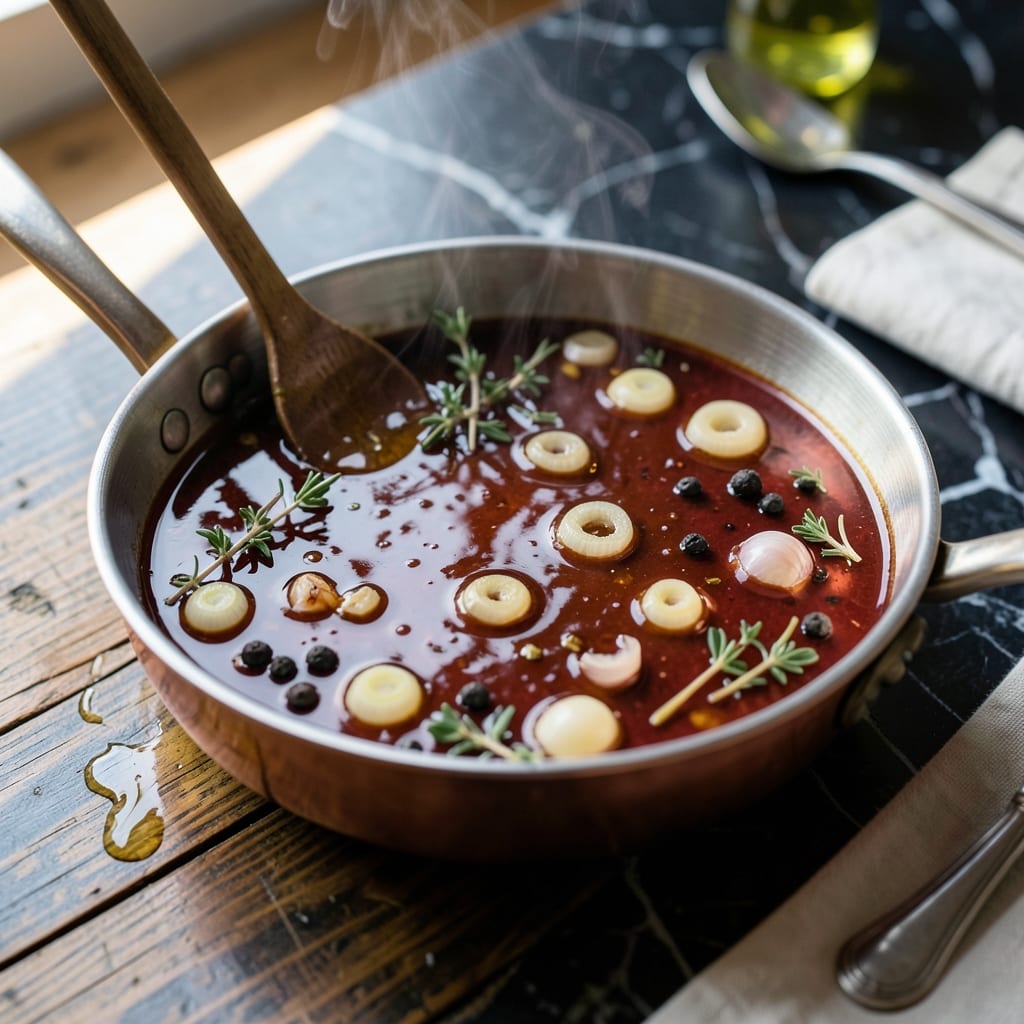
This balsamic reduction with honey transforms ordinary vinegar into a silky, complex glaze that elevates everything it touches. The addition of honey creates a perfect balance between tangy and sweet, making it far more versatile than traditional versions.
The process is simple but precise: simmer balsamic vinegar with honey until it reduces by half, creating a thick, syrupy consistency. This concentrated mixture develops deep, caramelized flavors that work beautifully as a drizzle, dip, or marinade component.
What you get is a glossy, restaurant-quality sauce that clings to foods and adds sophistication to both simple weeknight meals and special occasion dishes. Its rich color and balanced sweetness make it ideal for finishing platters or enhancing presentations.
Store in an airtight container for up to a month, though you’ll likely use it all much sooner. This is one kitchen staple worth keeping on hand.
Ingredients for Balsamic Reduction Recipe Honey
A few pantry staples transform into a glossy, restaurant-worthy glaze with sweet depth.
| Ingredient | Amount | Notes |
|---|---|---|
| Balsamic Vinegar 🍷 | 2 cups | Aged, high-quality preferred |
| Honey 🍯 | ½ cup | Local or raw for depth |
| Shallot 🧅 | 1 whole | Finely minced for aroma |
| Garlic Clove 🧄 | 1 clove | Crushed for subtle flavor |
| Black Peppercorns 🌶️ | ½ tsp | Freshly cracked for brightness |
| Fresh Thyme Sprigs 🌿 | 2 pieces | Optional, for herbal depth |
| Unsalted Butter 🧈 | 1 tbsp | For glossy finish (optional) |
| Sea Salt 🧂 | ¼ tsp | Fine grain, to taste |
[recipe_ingredient_scaler]
The balsamic vinegar is the foundation here—splurge on aged, high-quality stuff. I grab mine from Trader Joe’s or Whole Foods for that deep, complex flavor. Local honey adds a floral note that balances the tang, so hit up your farmers market if you can. The shallot and garlic are subtle but essential (don’t skip them). Fresh thyme is my secret weapon for an extra layer of sophistication.
No honey? Maple syrup works at a 1:1 ratio but the flavor profile shifts. Shallot can be yellow onion at half the amount. Skip the thyme if you must, but fresh herbs are worth it. For a vegan version, swap the butter for olive oil—the shine won’t suffer. The salt can be eyeballed, but measure the vinegar precisely for consistency.
This keeps 1 month in the fridge (if it lasts that long). Store in a glass jar to show off that gorgeous color. The flavors deepen over time, so make a double batch—you’ll use it on everything.
Why You’ll Love This Recipe
- Five Minute Simmer: I just dump everything in a saucepan and let it reduce while I prep the rest of dinner.
- Sweet-Tangy Balance: The honey mellows the vinegar’s bite, and the shallot and garlic add depth that’s ridiculous on grilled chicken or strawberries.
- Drizzle on Everything: I’ve used it on caprese salads, roasted veggies, even vanilla ice cream—honestly, it works everywhere.
- Stores Like a Dream: A small batch keeps in the fridge for weeks, so I always have a fancy touch ready without last-minute stress.
Step-by-Step Instructions for Balsamic Reduction with Honey
Here’s the method I use to create a glossy, restaurant-quality reduction every time.
Step 1: Sauté Aromatics for Depth of Flavor
Heat a medium saucepan over medium heat. Finely mince the shallot and add it to the dry pan. Cook for 2-3 minutes, stirring frequently, until it becomes translucent and just begins to soften.
Add the crushed garlic clove and the 0.5 tsp Black Peppercorns, then cook for another 30 seconds until the garlic releases its aroma. If using, add the 2 pieces Fresh Thyme Sprigs at this stage. This foundational step builds the aromatic base that elevates the simple vinegar and honey.
Step 2: Combine Vinegar and Honey for Reduction
Pour in all 2 cups Balsamic Vinegar and the 0.5 cup Honey. Stir well to dissolve the honey completely. The mixture will look thin at first, but the natural sugars in both the honey and vinegar will create the perfect consistency as it reduces.
Increase heat to medium-high and bring the mixture to a gentle boil. Stir occasionally to prevent sticking, but avoid constant stirring, which can interfere with the reduction process. You’ll notice the liquid beginning to thicken at the edges first.
Step 3: Simmer Until Syrupy and Glossy
Once boiling, reduce heat to medium-low to maintain a steady simmer. The reduction should bubble gently but not vigorously. Cook for 15-20 minutes, watching as the volume decreases by about half and the liquid begins to coat the back of a spoon.
Here’s the thing—balsamic reduction thickens significantly as it cools, so remove it from heat when it’s still slightly thinner than your desired final consistency. You’ll know it’s ready when it leaves a visible trail on the back of a spoon that holds for a few seconds.
Step 4: Finish with Butter and Salt
Remove the pan from heat and discard the Fresh Thyme Sprigs if used. Stir in the 1 tbsp Unsalted Butter until fully melted. This adds a luxurious sheen and rounds out the sharp acidity of the vinegar.
Taste and adjust seasoning with the 0.25 tsp Sea Salt, adding more if needed. The salt enhances all the flavors without making the reduction taste salty. Pour into a heatproof jar or bowl and let cool completely. It will continue to thicken as it cools.
Step 5: Store and Use Your Glaze
Once cooled, transfer to an airtight container. The reduction will keep in the refrigerator for up to 2 weeks. For the best texture, let it come to room temperature before using—cold reduction will be thicker and less pourable.
Drizzle over roasted vegetables, grilled meats, or fresh berries. The balance of sweet honey and tangy vinegar creates a versatile finishing touch that elevates simple dishes to restaurant quality.
Pro Tips For Making Balsamic Reduction Recipe Honey
- Simmer Low and Slow: Keep the heat at medium-low—any higher and the honey will burn before the vinegar reduces. I learned this the hard way after scrapping two batches that turned bitter.
- Mince the Shallots Fine: Finely dice the shallot so it melts into the reduction rather than floating as chewy bits. Sounds fussy, but it actually changes the texture.
- Skip the Boiling Vinegar: Resist the urge to boil the balsamic aggressively at the start—it’ll reduce too fast and lose its depth. Start warm, then patience does the work.
- Strain the Peppercorns: Crush the black peppercorns lightly before adding, then strain them out at the end. This isn’t the prettiest method, but it’s the tastiest—no one wants to bite into a whole peppercorn.
Flavor Customization for This Recipe
Herbal Variations
Swap fresh thyme sprigs for rosemary or oregano—use 1 sprig rosemary or 2 tsp dried oregano for a bold twist. I love how rosemary adds a piney depth, while oregano brings a Mediterranean flair. 🌿
Spice Infusions
For warmth, add ¼ tsp red pepper flakes with the aromatics. A pinch of ground cinnamon (about ⅛ tsp) pairs surprisingly well with honey, adding a subtle sweetness. Black pepper is my go-to, but these spices take it to another level.
Citrus Brightness
Add 1 strip of orange zest or 1 tsp lemon juice at the end for a bright contrast. The citrus cuts through the richness and balances the sweetness beautifully. Remove the zest before storing to prevent bitterness.
Sweetener Swaps
Replace honey with maple syrup at a 1:1 ratio for a deeper, earthier flavor. Brown sugar (about ⅓ cup packed) works too but adds a molasses note. Each sweetener changes the profile, so taste as you go.
Savory Boosters
Add 1 tbsp soy sauce or 1 tsp fish sauce for umami depth. I use low-sodium soy sauce to avoid overpowering the glaze. These additions are subtle but transform the reduction into a savory powerhouse.
Texture Play
For a chunkier glaze, skip straining and leave the finely minced shallot and garlic in the mix. For ultra-smooth, strain through a fine-mesh sieve after cooking. I prefer the texture of the former for most uses. ✨
Nutrition Facts
Frequently Asked Questions
How long does it take to reduce?
Expect about 15-20 minutes of simmering time. The exact duration depends on your pan size and heat level, but you’ll see the volume decrease by about half.
Can I use a different sweetener?
Maple syrup works at a 1:1 ratio, but brown sugar or agave will alter the flavor slightly. Taste as you go to adjust sweetness.
Why did my reduction turn out too thin?
It likely needed more time. Simmer until it coats the back of a spoon, remembering it thickens further as it cools. Avoid high heat, which can cause burning.
What’s the best way to store it?
Use an airtight container in the fridge for up to 2 weeks. Let it come to room temperature before using for the best consistency.

Trained in classic French technique but raised on slow-cooked ribs and spicy rubs, she blends culinary skill with smoke and soul.
- Recipe for Boneless Pork Chops in Cast Iron Skillet: Sear and Baste to Juicy Perfection - October 3, 2026
- Recipe for Boneless Cross Rib Roast: Slow-Roasted Beef with Herb Crust - October 3, 2026
- Hamburgers in Sauce Recipe Crock Pot: Slow-Cooked Savory Delight - October 3, 2026