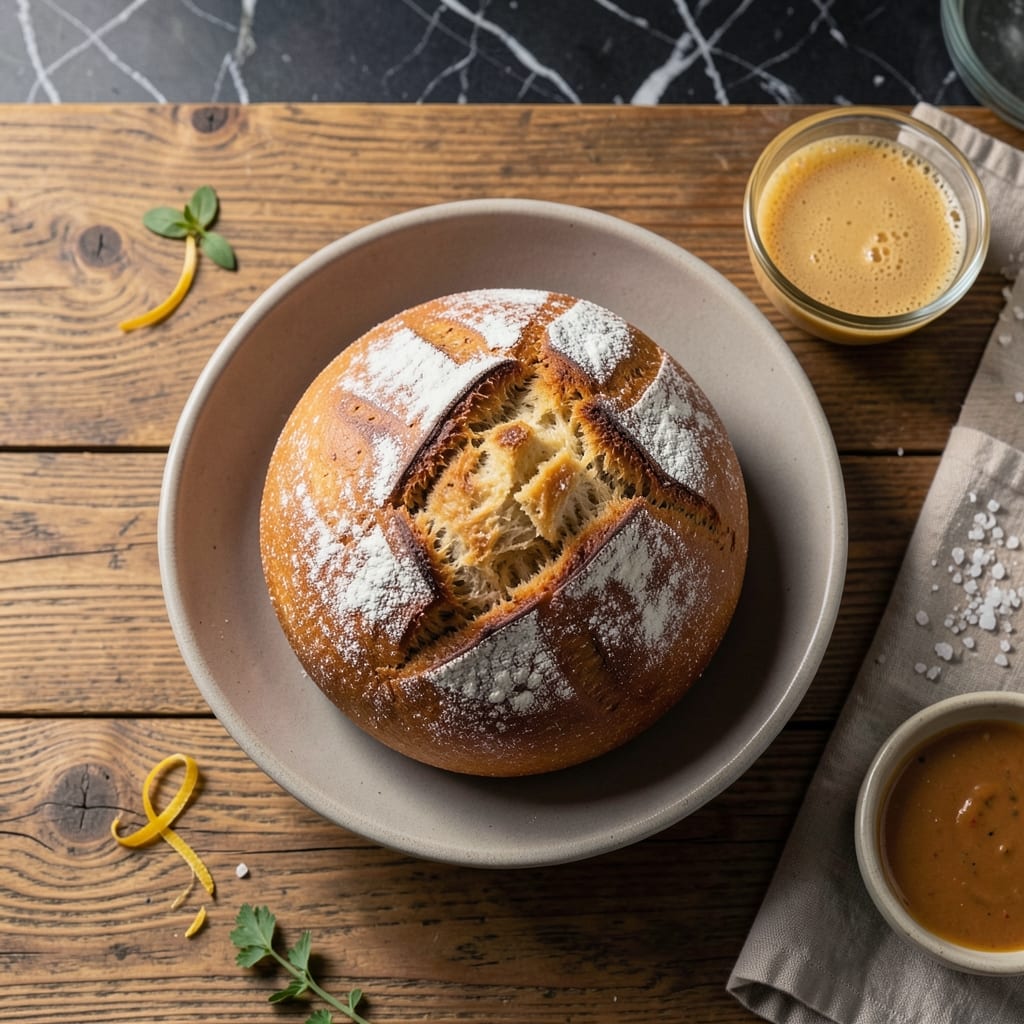
This kefir bread recipe combines the tangy complexity of fermented kefir with traditional yeast for an exceptionally light and fluffy artisan loaf. The result is a bread with outstanding texture and subtle depth of flavor.
I developed this method after experimenting with various fermentation techniques, discovering that kefir enhances both the rise and the keeping qualities of the bread. The process requires minimal hands-on time with maximum reward.
The crust bakes to a perfect golden brown while the interior remains airy and soft. The kefir contributes a mild tang that complements the natural sweetness of the flour without overpowering.
This loaf makes excellent toast and sandwich bread, staying fresh for days. The technique is straightforward yet yields professional-quality results.
Ingredients for Kefir Bread Recipe with Yeast
Simple ingredients create a tangy, airy loaf with professional texture and depth.
| Ingredient | Amount | Notes |
|---|---|---|
| Bread Flour 🌾 | 4 cups | All-purpose works in a pinch |
| Plain Kefir 🥛 | 1 ½ cups | Room temperature, unsweetened |
| Active Dry Yeast 🍞 | 2 ¼ tsp | One standard packet |
| Warm Water 💧 | ¼ cup | 105-110°F for yeast activation |
| Granulated Sugar 🍚 | 1 tbsp | Feeds the yeast |
| Salt 🧂 | 2 tsp | Fine sea salt preferred |
| Unsalted Butter 🧈 | 2 tbsp | Melted and cooled |
| Honey 🍯 | 2 tbsp | Optional for slight sweetness |
| Olive Oil 🫒 | 1 tbsp | For bowl greasing |
| Large Egg 🥚 | 1 whole | Optional for enriched dough |
[recipe_ingredient_scaler]
The bread flour provides the necessary gluten structure—King Arthur is a reliable brand with consistent protein content. Kefir should be plain and unsweetened; Lifeway or Nancy’s are widely available. Yeast freshness is critical—check the expiration date and store unopened packets in the freezer. For best results, use a kitchen thermometer to ensure water is between 105-110°F for proper yeast activation.
No kefir? Plain yogurt thinned with milk (1:1 ratio) works as a substitute, though the tang will be milder. Whole wheat flour can replace up to 25% of the bread flour for a denser, nuttier loaf. If avoiding eggs, simply omit—it’s a vegetarian recipe, but the egg adds richness. The honey can be swapped for maple syrup or agave if you prefer a vegan option.
Dough rises best in a warm, draft-free spot (like an oven with the light on). Store cooled bread wrapped in a clean towel for 2-3 days at room temperature, or slice and freeze for up to 3 months. The flavor deepens after a day, making it ideal for toast.
Why You’ll Love This Recipe
- No-Knead Magic: Honestly, I just mix the kefir, yeast, and flour, let it rise, and bake—no fancy techniques or sore arms.
- Tangy Perfection: The kefir gives it this subtle sourness that pairs so well with the yeasty warmth, it’s ridiculously good.
- Breakfast to Dinner: I’ve served it as toast with jam in the morning and alongside soup at night—it never feels out of place.
- Budget Stretcher: A cup of kefir and basic pantry staples make two loaves, so it’s my go-to when I need to feed a crowd without breaking the bank.
Step-by-Step Instructions for Kefir Bread With Yeast
Here’s the method. Straightforward, tested, works every time.
Step 1: Activate the Yeast and Prepare Wet Ingredients
In a small bowl, combine the 2.25 tsp Active Dry Yeast, 1 tbsp Granulated Sugar, and 0.25 cup Warm Water. Stir gently and let sit for 5-10 minutes until the mixture becomes frothy and doubles in volume—this confirms the yeast is active and ready to work.
In a separate large mixing bowl, whisk together the 1.5 cups Plain Kefir, 2 tbsp Honey, 2 tbsp Unsalted Butter, and 1 whole Large Egg until smooth. The kefir should be at room temperature to prevent shocking the yeast. This wet mixture forms the base of your dough.
Step 2: Incorporate Dry Ingredients and Knead
Gradually add the 4 cups Bread Flour and 2 tsp Salt to the wet ingredients. Use a wooden spoon to stir until the dough comes together into a shaggy mass. The dough will be slightly sticky at this stage, which is normal.
Turn the dough out onto a lightly floured surface and knead for 8-10 minutes by hand. I use the heel of my palm to push the dough forward, then fold it back, rotating a quarter turn each time. The dough is ready when it becomes smooth, elastic, and only slightly tacky to the touch.
Step 3: First Rise Until Doubled
Lightly grease a large bowl with the 1 tbsp Olive Oil and place the kneaded dough inside, turning to coat all sides. Cover the bowl with a clean kitchen towel or plastic wrap and let it rise in a warm, draft-free place for 1-2 hours, or until doubled in size.
The ideal environment is 75-80°F. I often place the bowl near a slightly warm oven or on top of the refrigerator. The dough should spring back slowly when pressed lightly with a finger. If it doesn’t rise properly, ensure your yeast was fresh and the water temperature was correct.
Step 4: Shape, Second Rise, and Bake
Gently punch down the risen dough to release air, then shape it into a round loaf. Place it on a parchment-lined baking sheet. Using a sharp knife, make a shallow cross or decorative slash on top—this controls expansion and creates a beautiful artisanal look.
Cover loosely and let it rise again for 30-45 minutes until puffy. Preheat your oven to 375°F during the last 15 minutes of rising. Bake for 25-30 minutes until the loaf is golden brown and sounds hollow when tapped on the bottom.
If the top browns too quickly, tent loosely with foil. The internal temperature should reach 190-200°F when fully baked. Transfer to a wire rack and let it cool for at least 20 minutes before slicing—this prevents a gummy texture.
Pro Tips For Making Kefir Bread Recipe With Yeast
- Activate Yeast First: Bloom the yeast in warm water with a pinch of sugar for 5-10 minutes until frothy—I learned this the hard way after a few dense loaves that never rose properly.
- Use Room-Temp Kefir: Cold kefir straight from the fridge can shock the yeast. Let it sit out for 30 minutes so it mixes smoothly into the dough.
- Skip Over-Kneading: Kefir makes the dough softer, so resist the urge to knead beyond 8-10 minutes—any longer and the bread turns tough.
- Add Flour Gradually: Bread flour absorbs liquid differently. Start with 3 cups, then add more only if the dough is still sticky after a minute of mixing.
Best Sauces and Condiments for This Dish
Sweet Spreads
This bread’s subtle tang pairs wonderfully with sweet toppings. I love spreading 2 tbsp salted butter and drizzling 1 tbsp local honey from my farmers market. The contrast of sweet and tangy is magical. 💛
Savory Options
For a savory twist, try whipped feta cheese mixed with 1 tsp olive oil and a pinch of black pepper. The creamy saltiness complements the bread’s mild acidity perfectly.
Breakfast Favorites
My Sunday morning go-to is cream cheese with smoked salmon and capers. The bread’s light texture holds up beautifully to these bold flavors without overpowering them.
Mediterranean Style
Channel my Sicilian roots with olive tapenade or hummus. I make mine with 1 can chickpeas, 2 tbsp tahini, and a squeeze of lemon for brightness.
Simple Classics
Sometimes the best approach is simplest. Garlic butter with fresh parsley or a sprinkle of Parmesan cheese lets the bread’s natural flavor shine through. 🌟
Jam Pairings
Fruit preserves work beautifully here. Try strawberry jam or apricot preserves for a sweet breakfast treat. The acidity in the jam enhances the bread’s tangy notes.
Nutrition Facts
Frequently Asked Questions
Can I use store-bought kefir for this?
Plain, unsweetened store-bought kefir works perfectly. Just ensure it’s at room temperature before mixing.
Why add yeast if kefir is already fermented?
The kefir provides flavor and moisture, while yeast ensures a reliable rise. Together they create a lighter texture with a subtle tang.
What if my dough doesn’t rise?
Check your yeast freshness and water temperature (105-110°F). Also ensure the rising environment is warm (75-80°F).
How do I store leftovers?
Keep wrapped in a towel at room temperature for 2-3 days or freeze slices for up to 3 months. The flavor improves after a day!

Trained in classic French technique but raised on slow-cooked ribs and spicy rubs, she blends culinary skill with smoke and soul.
- Indian Lamb Curry Recipe Pressure Cooker: Fragrant Spices in a Fraction of the Time - October 3, 2026
- Recipe for Oven Roasted: Golden Crisp Perfection Without the Fryer - October 3, 2026
- Recipe for Fried Pork Chops With Flour: Crispy Crust and Juicy Centers - October 3, 2026