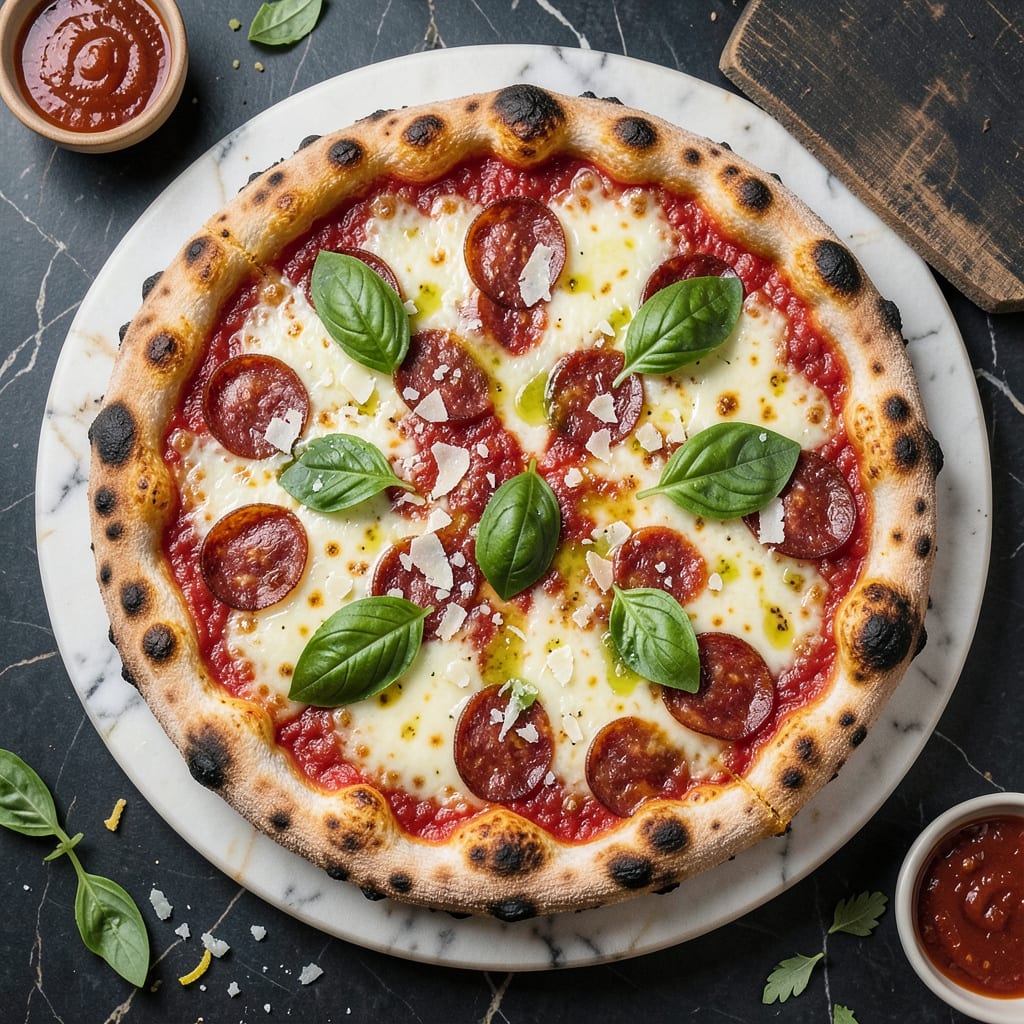
There’s something about fresh basil on pizza that turns a good slice into something extraordinary. I remember the first time I tried a proper Margherita pizza—just tomato, mozzarella, and those vibrant green leaves. The difference was shocking. That bright, peppery freshness cuts through the richness and makes every bite taste alive.
Here’s the thing—most people get the timing wrong. Basil isn’t meant to be baked until crispy (unless you’re going for a specific texture). The magic happens when you add those leaves fresh right after the pizza comes out of the oven. The residual heat gently wilts them just enough to release their aroma without losing that fresh herb flavor.
I’ve tested this with everything from classic tomato sauce to garlic white sauce bases. The key is using whole leaves—don’t chop them. Tear them by hand if you must, but keep them visible. That pop of green isn’t just pretty; it signals freshness before you even take a bite.
Whether you’re making a quick weeknight pizza with store-bought dough or going all-out with homemade crust, this basil technique works. The herb elevates even the simplest cheese pizza into something that tastes like it came from your favorite neighborhood pizzeria. No fancy equipment needed—just good ingredients and perfect timing.
📚 In This Guide
- What You’ll Need
- Instructions
- Tips and Common Mistakes
What Youll Need
- ● Fresh basil leaves – ½ cup (loosely packed), preferably Genovese basil for the best flavor 🌿
- ● Pre-baked pizza – 1 (12-inch) pizza, homemade or store-bought
- ● Extra-virgin olive oil – 1-2 tbsp, for drizzling
- ○ Fresh mozzarella – 8 oz (optional, if adding fresh slices before basil)
- ○ Parmigiano-Reggiano – ¼ cup, freshly grated (optional but recommended)
- ○ Crushed red pepper flakes – ½ tsp (optional, for heat lovers)
- ● Sea salt or flaky salt – 1 pinch, for finishing
- ● Pizza stone or baking sheet (if reheating pizza)
- ● Sharp kitchen shears or knife (to snip or chop basil)
- ● Pastry brush (for olive oil drizzling)
- ● Pizza cutter or large chef’s knife
- ● Serving platter or wooden cutting board
Instructions for Adding Basil Leaves to Pizza
Here’s the professional technique to elevate your pizza with fresh basil like an Italian pizzaiolo.
Select and Prepare the Basil
Choose fresh basil leaves that are vibrant green with no signs of wilting or browning. I prefer Genovese basil for its sweet, slightly peppery flavor and tender leaves that won’t overwhelm your pizza. Gently rinse the leaves under cool water and pat them completely dry with paper towels—any moisture will cause them to wilt when they hit the hot pizza.
For best results, use whole leaves rather than chopped basil. The heat from the pizza will gently wilt them, releasing their aromatic oils without turning them bitter. If your leaves are particularly large (over 2 inches), you can tear them into smaller pieces by hand—this prevents them from dominating each bite.
Time the Application Perfectly
Add the basil leaves during the final 1-2 minutes of baking, or immediately after removing the pizza from the oven. The residual heat will gently wilt the leaves while preserving their bright green color and fresh flavor. If you add them too early, they’ll turn black and bitter; too late, and they won’t properly adhere to the cheese.
For Neapolitan-style pizzas baked at 800°F+, I add basil the moment the pizza comes out of the oven—the extreme heat carries over beautifully. For home oven pizzas baked at 500-550°F, sprinkle the leaves on during that last minute of baking when the cheese is fully melted but before it starts to brown.
Apply with Proper Technique
Distribute the basil leaves evenly across the pizza’s surface, placing them directly on the melted cheese. I like to arrange them in a single layer with slight overlap—this creates visual appeal while ensuring every bite gets that fresh basil note. Press them gently into the cheese so they adhere but don’t submerge them completely.
For Margherita pizzas, I use a classic pattern: place a single basil leaf in the center and arrange the rest in a circular pattern outward. This traditional presentation highlights the basil’s freshness against the red sauce and white mozzarella. The leaves should look intentionally placed, not randomly scattered.
Finish with Complementary Elements
After adding the basil, I immediately finish the pizza with a drizzle of extra virgin olive oil and a sprinkle of flaky sea salt. The oil helps the basil adhere and adds a glossy sheen, while the salt enhances the herb’s natural sweetness. A light grating of Parmigiano-Reggiano over the basil adds umami depth that complements the fresh herb beautifully.
Let the pizza rest for 2-3 minutes before slicing—this allows the basil to gently wilt from the residual heat while the cheese sets slightly. The ideal finished pizza will have basil leaves that are just beginning to soften at the edges but still maintain their vibrant color and fresh aroma.
Tips and Common Mistakes
Mastering the art of adding basil to pizza transforms a good slice into something extraordinary. Here’s what I’ve learned from years of perfecting this technique.
Timing is Everything: In Step 2, those 1-2 minutes before removing the pizza from the oven are critical. I’ve found that adding basil too early results in blackened, bitter leaves, while waiting until after baking can leave them too raw. For home ovens at 500-550°F, aim for that final minute of baking when the cheese is fully melted but not yet browning. The residual heat will perfectly wilt the leaves while preserving their vibrant color and fresh flavor.
Basil Selection Matters: As mentioned in Step 1, Genovese basil is ideal, but here’s what nobody tells you—look for leaves that are slightly cupped rather than flat. These hold their shape better when exposed to heat. I also recommend selecting leaves that are roughly the same size (about 1-1.5 inches) for consistent coverage. Avoid any leaves with even the slightest browning at the edges, as these will turn bitter much faster during those crucial 1-2 minutes in the oven.
The Finishing Touch: Step 4’s resting period of 2-3 minutes isn’t just about letting the cheese set—it’s when the magic happens with the basil. During this time, the leaves absorb just enough heat to release their essential oils without losing their freshness. I always drizzle the olive oil immediately after adding basil, then let the pizza rest uncovered. This allows any excess moisture from the leaves to evaporate rather than making the crust soggy.
Presentation Pro Tip: When arranging your basil in Step 3, think like a painter. Place the largest leaves first as your “anchor points,” then fill in with smaller leaves. For a classic Margherita, I like to create a sunburst pattern starting from the center—this isn’t just pretty, it ensures even distribution of flavor in every slice. Press the leaves just firmly enough so they stay put when sliced, but don’t embed them completely in the cheese.
Pro Tips for Basil Leaves On Pizza
- Mastering the art of adding basil to pizza transforms a good slice into something extraordinary. Here’s what I’ve lea…
- Timing is Everything: In Step 2, those 1-2 minutes before removing the pizza from the oven are critical. I’ve found t…
- Basil Selection Matters: As mentioned in Step 1, Genovese basil is ideal, but here’s what nobody tells you—look for l…
Frequently Asked Questions
Got questions about adding basil leaves to your pizza? You’re not alone! Here are the most common queries—with quick, practical answers to help you nail that fresh, herby finish.
Can I add basil before baking the pizza?
Nope! Fresh basil burns easily in the oven. Add it after baking (or in the last 1-2 minutes max) to preserve its bright flavor and vibrant color. Dried basil can go on before baking, but fresh is always best for that restaurant-style pop.
What’s the best time to add basil leaves to pizza?
Toss them on immediately after pulling the pizza from the oven. The residual heat will gently wilt the leaves, releasing their aroma without cooking them. For cold pizzas (like a caprese-style slice), add basil just before serving.
Can I use dried basil instead of fresh?
You can, but the flavor won’t be the same. Dried basil lacks the bright, peppery kick of fresh. If substituting, use 1/3 the amount (e.g., 1 tsp dried = 1 tbsp fresh) and sprinkle it on before baking. Fresh is always the winner for that authentic Italian taste!
Why does my basil turn black on pizza?
Blackened basil usually means it was added too early or exposed to high heat. To avoid this, pat leaves dry (excess moisture steams them), add post-bake, and keep pizza away from direct heat (like a broiler). Store basil properly too—keep stems in water until use!
What are good alternatives if I don’t have basil?
For a similar fresh herb vibe, try:
- Arugula (peppery, bold)
- Spinach (mild, slightly earthy)
- Oregano (dried works best—add pre-bake)
- Thai basil (anise-like twist for fusion pizzas)
Fresh basil leaves on pizza aren’t just a garnish—they’re the secret to restaurant-quality flavor in every bite! 🌿 Whether you’re topping a classic Margherita or experimenting with bold combinations, this simple herb elevates your pie from good to unforgettable. The key? Add it after baking to preserve its bright, aromatic magic.
Ready to take your pizza game further? Grab a bunch of basil, fire up the oven, and start with a simple homemade dough recipe—your taste buds will thank you! 🍕✨

Trained in classic French technique but raised on slow-cooked ribs and spicy rubs, she blends culinary skill with smoke and soul.
- Recipe for Boneless Pork Chops in Cast Iron Skillet: Sear and Baste to Juicy Perfection - October 3, 2026
- Recipe for Boneless Cross Rib Roast: Slow-Roasted Beef with Herb Crust - October 3, 2026
- Hamburgers in Sauce Recipe Crock Pot: Slow-Cooked Savory Delight - October 3, 2026