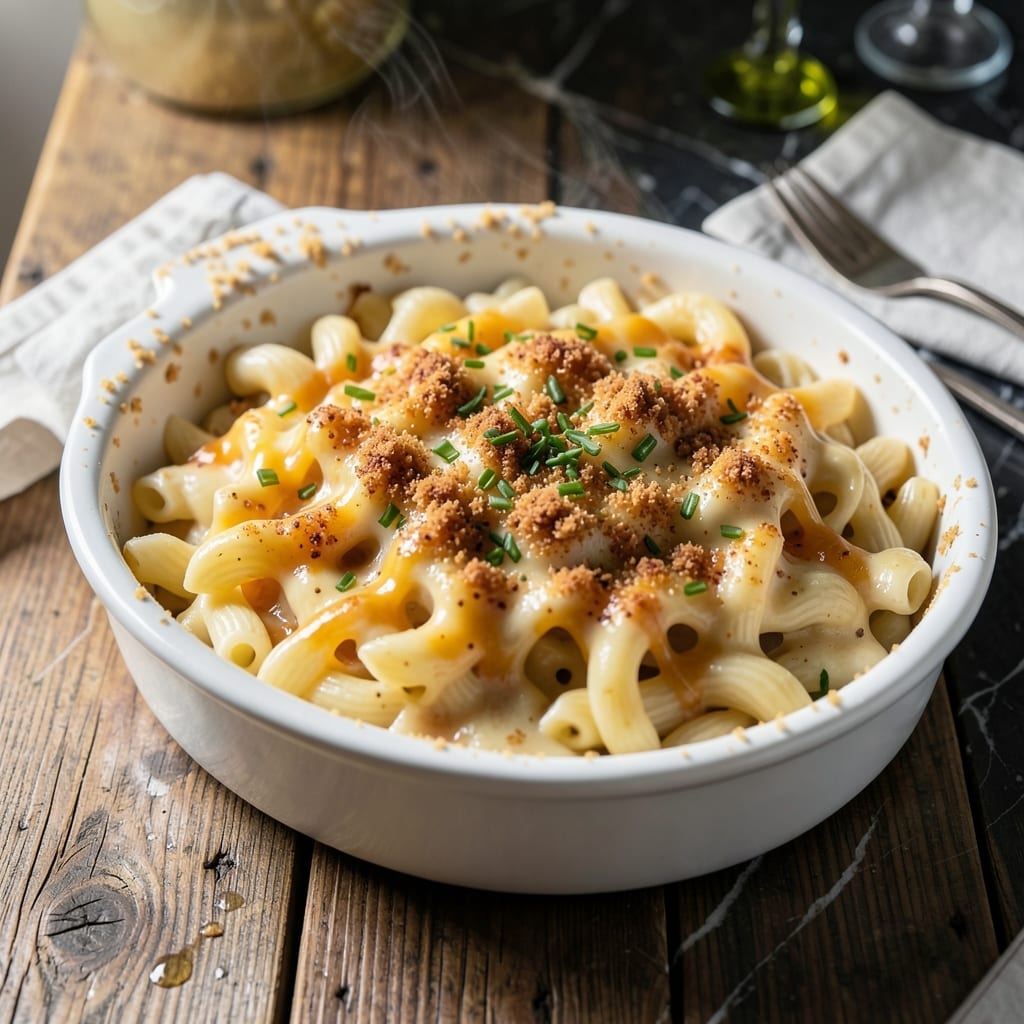
There’s a reason classic béchamel macaroni and cheese remains a timeless favorite—it delivers velvety sauce and perfectly cooked pasta in every bite.
I developed this method to create that ideal balance between creamy sauce and al dente noodles without the risk of a broken or grainy texture.
What you’ll achieve is a dish that feels special enough for company but simple enough for a weeknight, with a sauce that clings beautifully to every piece of pasta.
The technique is straightforward: build a proper roux, whisk in milk gradually, then fold in cheese for a sauce that’s rich without being heavy.
Ingredients for Bechamel Macaroni and Cheese
Classic ingredients build that velvety sauce and perfectly cooked pasta in every bite.
| Ingredient | Amount | Notes |
|---|---|---|
| Elbow Macaroni 🍝 | 12 oz | Al dente texture preferred |
| Whole Milk 🥛 | 4 cups | Full-fat for creaminess |
| Unsalted Butter 🧈 | ½ cup | For roux base |
| All-Purpose Flour 🌾 | ⅓ cup | For roux thickening |
| Sharp Cheddar Cheese 🧀 | 2 cups | Freshly grated from block |
| Gruyere Cheese 🧀 | 1 cup | Freshly grated for depth |
| Parmesan Cheese 🧀 | ½ cup | Freshly grated, fine texture |
| Whole Nutmeg 🌰 | 0.125 tsp | Freshly grated preferred |
| Kosher Salt 🧂 | 1 tsp | Diamond Crystal preferred |
| White Pepper 🌶️ | ½ tsp | Freshly ground for subtle heat |
| Dijon Mustard 🟡 | 1 tsp | For depth of flavor |
| Bay Leaf 🍃 | 1 whole | For milk infusion |
[recipe_ingredient_scaler]
The cheese selection is critical here. Sharp cheddar provides the backbone, while Gruyere adds nutty depth—Whole Foods or Murray’s Cheese have great options. Always grate your own (pre-shredded has anti-caking agents that make the sauce grainy). For the milk, whole milk is non-negotiable—lower fat versions won’t give you that luxurious mouthfeel. I grab mine from Trader Joe’s when I’m doing a big batch.
No Gruyere? Fontina or Monterey Jack work as substitutes. Want to add a smoky note? Swap one-third the amount of cheddar for smoked gouda. The nutmeg might seem optional, but freshly grated makes a noticeable difference. If you’re out of white pepper, black pepper works (just use less). For the mustard, regular yellow mustard at half the quantity gets you close.
The sauce can be made 2 days ahead and reheated gently with extra milk. Cooked macaroni keeps 3-4 days in the fridge, but it absorbs sauce as it sits. This freezes beautifully for 3 months—portion before freezing for easy reheating. Always add a splash of milk when reheating to restore creaminess.
Why You’ll Love This Recipe
- One-Pot Wonder: I love that I only dirty one saucepan—boil the pasta, make the béchamel, melt the cheddar, all in the same pot.
- Velvety Sharp Bite: The roux thickens the milk into this luscious base, and sharp cheddar cuts through with that tangy punch I crave.
- Feeds the Crowd: Honestly, it stretches to eight servings without breaking the bank—just elbow macaroni and a block of cheese.
- Better Next Day: The sauce soaks into the noodles overnight, so leftovers taste even richer. Yes, even cold straight from the fridge.
Step-by-Step Instructions for Bechamel Macaroni and Cheese
Here’s the method that guarantees creamy, dreamy results every single time.
Step 1: Cook the Elbow Macaroni Al Dente
Bring a large pot of salted water to a rolling boil. Add the 12 oz Elbow Macaroni and cook according to package instructions, but stop 1 minute short of the recommended time. You want it slightly underdone because it’ll finish cooking in the sauce.
Drain the pasta in a colander, but don’t rinse it. The surface starch helps the sauce cling better. Give it a quick toss in the colander to prevent sticking, then set aside while you make the bechamel. This timing ensures the macaroni absorbs the sauce without turning mushy.
Step 2: Infuse the Whole Milk and Make the Roux
In a heavy saucepan, heat the 4 cups Whole Milk with the 1 whole Bay Leaf over medium heat until small bubbles form at the edges and steam rises—do not boil. Remove from heat, cover, and let steep for 5 minutes to infuse the milk with subtle floral notes.
In a separate heavy pot, melt the 0.5 cup Unsalted Butter over medium heat. Once foaming subsides, whisk in the 0.33 cup All-Purpose Flour and cook for 2-3 minutes until the mixture turns pale golden and smells nutty. This roux is your sauce’s backbone—don’t rush it.
Step 3: Build the Bechamel Sauce
Slowly pour the warm milk into the roux, a little at a time, whisking constantly to prevent lumps. Once all the milk is incorporated, return the pot to medium-low heat and whisk frequently for 8-10 minutes until the sauce thickens enough to coat the back of a spoon.
Remove the bay leaf. Stir in the 1 tsp Kosher Salt, 0.5 tsp White Pepper, 0.125 tsp Whole Nutmeg, and 1 tsp Dijon Mustard. The nutmeg adds warmth, the mustard cuts through the richness, and the white pepper provides subtle heat without speckling your sauce.
Step 4: Incorporate the Cheeses and Finish
Reduce heat to low and add the cheeses in stages: first the 2 cups Sharp Cheddar Cheese and 1 cup Gruyere Cheese, stirring until fully melted. Then add the 0.5 cup Parmesan Cheese, stirring until the sauce is smooth and glossy.
Taste and adjust seasoning. The sauce should be thick but pourable. If it’s too thick, whisk in a splash of the pasta water. Remove from heat and fold in the cooked elbow macaroni until every piece is generously coated. The residual heat will finish cooking the pasta perfectly.
Step 5: Rest and Serve
Let the macaroni and cheese rest off heat for 2-3 minutes before serving. This brief pause allows the sauce to thicken slightly and the flavors to meld. The texture should be creamy, not soupy, with each bite delivering that perfect balance of cheesy richness and al dente pasta.
Serve immediately while hot. For an extra touch, top with additional freshly grated Parmesan. The bechamel base ensures a velvety sauce that coats every curve of the macaroni without separating or turning greasy.
Pro Tips For Making Bechamel Macaroni And Cheese
- Cook the Roux Longer: I learned this the hard way—after adding flour to melted butter, keep it on medium heat for 2-3 minutes, stirring constantly, until it turns a light golden color. This removes the raw flour taste and gives your bechamel a richer base.
- Grate Your Own Cheese: Skip the pre-shredded stuff; it contains anti-caking agents that make your sauce grainy. Freshly grated sharp cheddar melts smoothly and actually changes the outcome.
- Temper Your Milk: Before adding milk to the roux, warm it slightly in the microwave or on the stove for about 1 minute. Cold milk can cause the roux to seize up, and you’ll spend forever whisking out lumps—yes, even if you’re impatient like me.
- Undercook the Pasta: Drain your elbow macaroni 1-2 minutes before it’s fully done. It’ll finish cooking in the hot bechamel, soaking up that cheesy goodness without turning mushy.
Regional Styles of This Recipe
French Classic Style
In France, this dish is called croque-monsieur macaroni—a nod to the croque-monsieur sandwich. The French use Comté cheese instead of cheddar, and often add a touch of cognac or white wine to the béchamel for depth. The result is sophisticated but still comforting.
Southern Comfort Twist
Down South, they love their mac and cheese extra rich. I’ve seen recipes that fold in cream cheese or top it with buttery breadcrumbs. Some even add a dash of hot sauce to the béchamel for a subtle kick. It’s a hearty, indulgent take that’s perfect for potlucks. 💛
New England Tradition
In New England, baked macaroni and cheese is king. They start with a béchamel base, then layer it with pasta and cheese, top it with buttery breadcrumbs, and bake until golden. The key is using sharp cheddar and a hint of mustard powder in the sauce for tang.
Italian-Inspired Version
For an Italian spin, I swap the cheddar for fontina and add Parmigiano-Reggiano to the béchamel. A pinch of freshly grated nutmeg and a splash of pasta water help create a silky texture. This version feels lighter but just as flavorful.
Midwest Casserole Style
The Midwest loves a good casserole, and their mac and cheese is no exception. They often add canned tuna or diced ham to the béchamel for protein, then bake it with a crispy breadcrumb topping. It’s a nostalgic, filling dish that’s a staple at family gatherings.
British Pub Classic
In the UK, they often serve macaroni and cheese as a side dish in pubs. Their version uses a simple béchamel with mature cheddar and sometimes English mustard for a sharp, tangy flavor. It’s served creamy, not baked, and pairs perfectly with a pint. 🍺
Nutrition Facts
Frequently Asked Questions
Why use a roux for this sauce?
A roux of butter and flour creates the silky base that prevents the cheese from separating. It thickens the milk into a velvety sauce that clings perfectly to the pasta.
Can I make this ahead?
Yes! Assemble the dish completely, then refrigerate for up to 2 days. Reheat gently on the stove with a splash of milk to restore creaminess.
What if my sauce turns grainy?
This usually happens if the cheese is added too quickly or at too high heat. Remove from heat, whisk in a splash of warm milk, and stir until smooth.
Can I bake this version?
Transfer to a buttered dish, top with breadcrumbs, and bake at 375°F for 15-20 minutes until golden.

Trained in classic French technique but raised on slow-cooked ribs and spicy rubs, she blends culinary skill with smoke and soul.
- Recipe for Boneless Pork Chops in Cast Iron Skillet: Sear and Baste to Juicy Perfection - October 3, 2026
- Recipe for Boneless Cross Rib Roast: Slow-Roasted Beef with Herb Crust - October 3, 2026
- Hamburgers in Sauce Recipe Crock Pot: Slow-Cooked Savory Delight - October 3, 2026