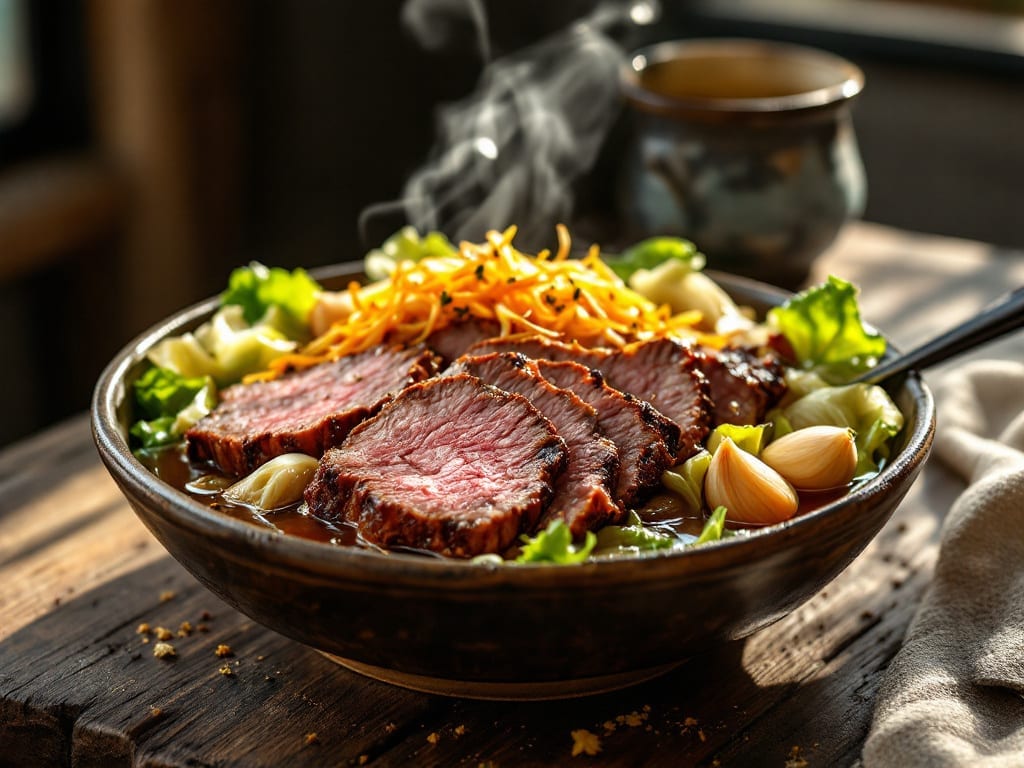
This beef brisket and cabbage recipe transforms tough cuts into melt-in-your-mouth tenderness while cabbage softens into sweet, savory perfection. The day I realized French technique could elevate my rubs changed how I approach slow-cooked meats—this dish proves it.
A perfect balance of smoky depth and tender textures, it’s the kind of meal that turns weeknights into celebrations.
The secret lies in the slow simmer: brisket breaks down over hours, while cabbage absorbs rich flavors from the same pot. No fancy equipment needed—just time, patience, and a well-seasoned rub.
I’ve perfected this method to deliver restaurant-quality results at home, with minimal effort after the initial prep. The cabbage becomes irresistibly tender, soaking up every bit of the brisket’s smoky aroma.
By the time you serve this dish, you’ll have a table full of golden, fall-apart brisket slices paired with cabbage that’s caramelized at the edges and silky in the center. The aroma alone will have everyone gathering around, and the first bite delivers that perfect harmony of textures and flavors.
This is comfort food at its finest, worth every minute of the slow cook.
Serve with crusty rolls to soak up the juices or a simple green salad to balance the richness. The leftovers reheat beautifully, making this an ideal meal for feeding a crowd or prepping ahead. Let’s get cooking—your taste buds will thank you.
Ingredients for beef brisket and cabbage
Six ingredients transform tough brisket into melt-in-your-mouth perfection with cabbage that caramelizes into sweet silkiness.
| Ingredient | Amount | Notes |
|---|---|---|
| Beef Brisket 🥩 | 4 lb | Flat cut, well-marbled preferred |
| Green Cabbage 🥬 | 1 whole | Heaviest head, about 2 lbs |
| Yellow Onion 🧅 | 2 whole | Yellow or red, medium size |
| Garlic Cloves 🧄 | 6 cloves | Fresh, peeled and smashed |
| Beef Broth 💧 | 2 cups | Low-sodium preferred, homemade or store-bought |
| Apple Cider Vinegar 🍎 | ¼ cup | For tangy depth |
| Dark Brown Sugar 🍯 | ½ cup | Packed, for caramelization |
| Smoked Paprika 🌶️ | 2 tbsp | For authentic smoky flavor |
| Ground Black Pepper 🌶️ | 1 ½ tbsp | Freshly cracked preferred |
| Kosher Salt 🧂 | 1 ½ tbsp | For seasoning and curing |
| Fresh Thyme 🌿 | ¼ cup | Leaves only, chopped |
| Bay Leaves 🍃 | 2 whole | For aromatic depth |
| Olive Oil 🫒 | ¼ cup | Extra-virgin for searing |
[recipe_ingredient_scaler]
The brisket makes or breaks this dish, so don’t skimp. Look for a well-marbled flat cut at your butcher—the fat keeps it juicy. I always ask for it to be trimmed of excess fat but left with good marbling. Costco or Whole Foods have great options, or check the meat counter at Trader Joe’s for pre-cut brisket. The cabbage should be heavy for its size—green cabbage is ideal, but red works too. If you can’t find a whole head, grab two smaller ones. The onions and garlic? Yellow onions add sweetness, while garlic brings depth—don’t skip the smashing for extra flavor.
No smoked paprika? Regular paprika plus a pinch of liquid smoke gets you close. Fresh thyme missing? Dried thyme at one-third the amount works in a pinch, but fresh is worth hunting down. The apple cider vinegar adds tang—substitute white vinegar if that’s what you’ve got. For the brown sugar, muscovado or turbinado adds extra caramel notes, but regular dark brown works fine. The beef broth? Homemade is best, but low-sodium store-bought cuts the salt. If you’re short on time, a bouillon cube dissolved in water is a decent shortcut.
This dish tastes even better the next day—plan ahead. The brisket keeps for 4-5 days in the fridge, while the cabbage can last 5-6 days if stored separately. For longer storage, freeze the brisket in portions for up to 3 months. I always make a double batch and freeze half—nothing beats coming home to a slow-cooked meal waiting for you. The cabbage reheats beautifully in the same pot with a splash of broth. Leftovers make fantastic sandwiches or tacos—just slice the brisket thin and pile it high.
Why You’ll Love This Recipe
- One-Pan Magic: I swear by this—just toss the brisket, cabbage, onions, and garlic into one pot with broth, and walk away. The cabbage softens while the brisket tenderizes itself, no flipping or fussing required. (Yes, even on a Tuesday night.)
- Deep, Smoky Richness: That slow-cooked brisket falls apart at the touch, and the cabbage soaks up all the savory broth like a sponge. The garlic and onion caramelize into something sweet and sticky—honestly, it’s the kind of flavor that makes you slow down and savor every bite.
- Leftovers for Days: This recipe actually improves the next day. The flavors meld into something even deeper, and reheating it is a breeze—just a splash of broth and a quick warm-up. I’ve fed my family for three meals with one cook, and no one complains about repeats.
- Budget Feast: A whole brisket and a head of cabbage stretch farther than you’d think. Between us, this is my go-to when I need to feed a crowd without breaking the bank. Plus, the broth makes extra gravy—because why not?
Step-by-step instructions for beef brisket and cabbage
Here’s how to transform tough brisket into fork-tender perfection alongside melt-in-your-mouth cabbage.
Prepare the Brisket for Maximum Flavor
Begin by trimming any excess fat from the 4 lb beef brisket, leaving about ¼ inch of fat cap for moisture during cooking. Pat the meat completely dry with paper towels—this step is crucial for developing that beautiful crust later. In a small bowl, combine 2 tbsp smoked paprika, 1.5 tbsp kosher salt, 1.5 tbsp ground black pepper, and 0.25 cup chopped fresh thyme. Rub this mixture generously over all sides of the brisket, pressing it into the meat so it adheres well.
Place the seasoned brisket on a plate and let it sit at room temperature for 1 hour. This resting period allows the seasoning to penetrate the meat and ensures even cooking. While it rests, prepare your cabbage and aromatics: Remove the core from the 1 whole green cabbage and cut it into 8 equal wedges. Peel and halve the 2 whole yellow onions, then slice them into ½-inch thick rounds. Smashed the 6 cloves garlic cloves with the side of your knife to release their aroma.
Sear the Brisket and Build the Base
Heat a large Dutch oven over medium-high heat until it’s very hot. Add 0.25 cup olive oil and let it shimmer for about 1 minute. Carefully place the brisket fat-side down in the pot and sear undisturbed for 5 minutes until a deep golden-brown crust forms. Flip the brisket and sear the other side for another 5 minutes. The goal is to develop maximum flavor through browning before we slow-cook the meat.
Remove the brisket from the pot and set it aside. In the same Dutch oven, add the cabbage wedges, onion slices, and smashed garlic cloves. Sear everything for 5 minutes, stirring occasionally, until the onions begin to soften and the cabbage edges turn slightly translucent. This quick sear builds even more flavor into the vegetables before we add the liquids.
Simmer Until Fork-Tender
Return the brisket to the Dutch oven. Add 2 cups beef broth, 0.25 cup apple cider vinegar, 0.5 cup packed dark brown sugar, and the 2 whole bay leaves. Stir everything together just enough to combine, then bring the mixture to a gentle simmer over medium heat. Once simmering, reduce the heat to low and cover the pot with a tight-fitting lid. Here’s the key: The brisket needs to cook slowly and gently for 3 to 4 hours until it reaches an internal temperature of 195°F and is fork-tender.
Check the brisket periodically and add ¼ cup of water if the liquid level gets too low. The vegetables should be cooking in their own juices, becoming increasingly tender as they absorb the rich brisket flavors. The cabbage will soften beautifully while the onions caramelize slightly, creating a perfect balance of textures in every bite. Your kitchen will fill with an incredible aroma that signals the meal is nearly ready.
Rest and Serve with Confidence
Once the brisket reaches 195°F and a fork slides through it with minimal resistance, remove it from the pot and transfer to a cutting board. Tent loosely with aluminum foil and let it rest for 20 minutes. This resting period allows the juices to redistribute throughout the meat, ensuring each slice is moist and flavorful. While the brisket rests, skim any excess fat from the cooking liquid in the Dutch oven and return the vegetables to the pot.
Slice the brisket against the grain into ½-inch thick pieces and serve it alongside the cabbage and onions. The brisket should be incredibly tender, falling apart easily with just a fork. The cabbage will be perfectly soft with just enough bite, infused with the rich flavors of the slow-cooked meat. Serve immediately with crusty bread to soak up all the delicious juices from the pot.
Pro Tips For Making Beef Brisket And Cabbage
- Trim the Fat First: Slice off the thickest layer of fat from the brisket before cooking—it’s the stuff that turns to grease and steams your cabbage instead of caramelizing. I learned this the hard way when my first batch ended up soggy and greasy rather than crisp-tender.
- Shred Cabbage Coarse: Tear the cabbage into uneven chunks, not thin shreds—this keeps it from turning to mush while still breaking down. Thin slices cook too fast and lose their texture, no matter how low you go with the heat.
- Don’t Rush the Sear: Let the brisket sit in the hot pan for 3-4 minutes per side before moving it—this builds a crust that locks in flavor, not just color. I used to flip too soon, and the meat ended up dry and bland.
- Deglaze with Broth: After browning the onions and garlic, splash in ½ cup of beef broth right away to scrape up the fond—this adds depth to the sauce without extra effort. Skipping this step means missing out on the richest part of the flavor.
Wine and beer pairings for these flavors
Red Wine Harmony
For brisket’s deep, smoky richness, reach for a bold Cabernet Sauvignon from Napa Valley—its dark fruit and tannins cut through the fat beautifully. I love Caymus Vineyards or Opus One for their balance of power and elegance.
The acidity refreshes your palate between each tender bite of brisket and caramelized cabbage. 🍷
Malbec Magic
Argentinian Malbec offers a perfect match with its juicy blackberry notes and velvety texture. Look for Catena Zapata or Trapiche—these wines complement the sweetness of the caramelized cabbage while standing up to the brisket’s intensity. The slight earthiness in Malbec echoes the smoky paprika in your rub.
Beer Pairing Basics
A crisp American pale ale like Fat Tire from New Belgium cleanses the palate between bites. The hoppy bitterness balances the brisket’s richness while the malt sweetness harmonizes with the cabbage’s caramelized edges.
For something heartier, try a Belgian dubbel like Westmalle Dubbel—its caramel and spice notes mirror the dish’s complexity.
Cider Complement
Don’t overlook hard apple cider—it’s a perfect match for this dish’s rustic charm. Look for Angry Orchard Crisp Apple or Woodchuck Hard Cider. The apple notes echo the vinegar in your recipe while the slight effervescence cuts through the richness. Serve it slightly chilled for the best experience.
Local Lager Lift
For a crowd-pleasing option, serve a German-style pilsner like Stella Artois or Spaten Optimator**. The crisp, clean profile highlights the brisket’s smokiness while the slight malt sweetness complements the caramelized cabbage. This is my go-to when hosting—everyone loves the contrast between the rich brisket and light beer.
Nutrition facts
Frequently asked questions
How do I know when the brisket is perfectly tender?
Use the fork test—when it slides through with minimal resistance and the meat falls apart easily, it’s ready. The internal temperature should reach 195°F. The cabbage should be fork-tender but still hold its shape slightly, with caramelized edges.
Can I use a slow cooker instead of a Dutch oven?
Follow the same steps, but sear the brisket first in a skillet. Transfer everything to the slow cooker and cook on low for 8-10 hours or high for 5-6 hours. The cabbage will soften beautifully in the juices.
What if my brisket is too tough after cooking?
Overcooking is the most common mistake. Check the internal temperature at 195°F—never let it exceed 205°F. If it’s still tough, slice thinly against the grain and serve with extra cabbage to help tenderize it. For next time, ensure you’re using a well-marbled flat cut.
Can I make this recipe with point-cut brisket instead of flat?
Yes, but you’ll need to adjust cooking times. Point-cut brisket has more connective tissue and fat, so it may take 1-2 extra hours to reach tenderness. Trim excess fat first and monitor closely. The cabbage preparation remains the same.
How can I add extra flavor to the cabbage?
Try adding ½ cup of apple juice or 1 tbsp of Dijon mustard to the cooking liquid. For deeper flavor, sprinkle the cabbage with 1 tsp of caraway seeds or ½ tsp of juniper berries before simmering. These additions complement the smoky brisket beautifully.

Trained in classic French technique but raised on slow-cooked ribs and spicy rubs, she blends culinary skill with smoke and soul.
- Best Smoked Oxtail Recipe: Deep-Rich Flavor After Low-and-Slow Cooking - October 14, 2026
- Pit Boss Smoked Prime Rib Roast Recipe: Bark-to-Bone Crispness in 4 Hours - October 14, 2026
- Smoked Tuna Steak Recipe: Seared Crust Meets Silky Centers - October 14, 2026