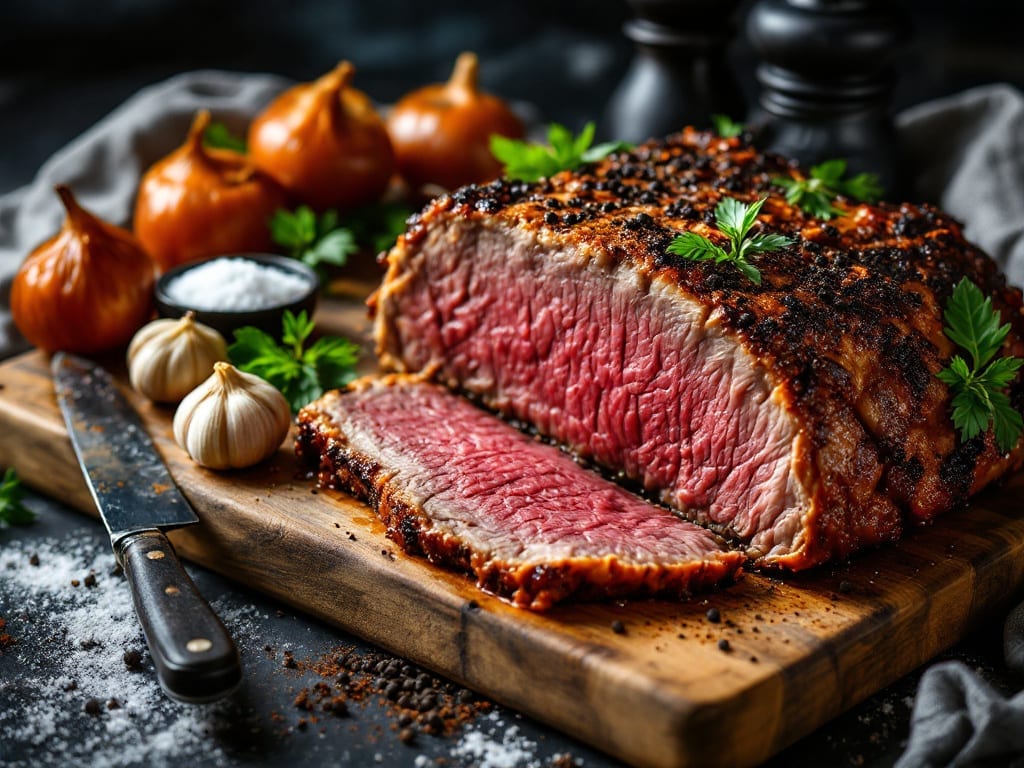
Grandma’s beef brisket recipe is the kind of dish that transforms a simple Sunday dinner into a family gathering worth waiting for—slow-smoked until it practically melts in your mouth.
The secret lies in patience, a well-seasoned rub, and letting the meat work its magic over hours in the oven or smoker. I first learned this method from my grandmother, who swore by the “low and slow” approach that creates that signature fork-tender texture we all crave.
What sets this recipe apart is the balance between simplicity and tradition. You’ll start with a basic dry rub of salt, pepper, garlic powder, and smoked paprika, but the real magic happens during the cooking process.
The brisket develops deep, smoky flavors while staying incredibly tender, thanks to the collagen breaking down over time. This isn’t a quick meal—it’s a labor of love that rewards you with meat so tender it falls apart at the touch.
The result is a brisket that’s rich, flavorful, and perfectly balanced between smoky and savory notes. Each slice reveals layers of juicy meat with just the right amount of bark on the outside.
Serve it sliced thin against crusty bread with homemade BBQ sauce, or let everyone carve their own portions for a true family-style meal. This is comfort food at its finest—warm, inviting, and impossible to resist.
Whether you’re hosting a holiday feast or just craving a taste of home, this recipe delivers restaurant-quality results with a personal touch. The key is in the details: proper resting time, precise temperature control, and knowing when to pull it from the heat.
Trust me, once you try this method, you’ll never buy brisket again—it’s that good. Let’s get started on creating a brisket that’ll have everyone asking for seconds.
Ingredients for grandma’s beef brisket
The core ingredients for Grandma’s legendary brisket—simple but powerful for that signature smoky tenderness.
| Ingredient | Amount | Notes |
|---|---|---|
| Beef Brisket 🥩 | 5 lb | Whole packer cut, good marbling |
| Yellow Onion 🧅 | 1 whole | Yellow or red, sliced |
| Garlic Cloves 🧄 | 8 cloves | Peeled, smashed for rub |
| Kosher Salt 🧂 | 2 tbsp | Diamond Crystal preferred |
| Freshly Ground Black Pepper 🌶️ | 1 tbsp | Coarsely ground |
| Smoked Paprika 🌶️ | 2 tbsp | High quality, not sweet |
| Granulated Garlic Powder 🧄 | 1 tbsp | Not garlic salt |
| Dried Thyme 🌿 | 1 tsp | Or 1 tbsp fresh |
| Brown Sugar 🍯 | 1 tbsp | Light or dark |
| Apple Cider Vinegar 🍏 | 2 tbsp | For spritzing |
| Beef Broth 💧 | 1 cup | Low-sodium preferred |
| Crusty Bread 🍞 | 1 loaf | For serving, optional |
| Homemade BBQ Sauce 🍅 | ½ cup | Store-bought works too |
| Unsalted Butter 🧈 | 2 tbsp | For basting |
[recipe_ingredient_scaler]
The brisket is the star, so pick a well-marbled packer cut—the fat is what keeps it moist. I always get mine from Costco or local butchers—they carry the best quality. Look for bright red meat with good white fat marbling. If you’re buying pre-cut, check the weight—this recipe is built for a 5-pound brisket, but adjust if yours is smaller. The onions and garlic? Yellow or red onions both work, but red adds a nice color contrast. For the spices, Penzeys or bulk bins have the freshest options—avoid the dusty stuff in small jars.
No smoked paprika? Regular paprika plus a pinch of liquid smoke gets you close. Fresh thyme out of season? Dried at half the amount works fine. The apple cider vinegar is key for that tangy bark—substitute lemon juice in a pinch. For the BBQ sauce, I make my own with ketchup, molasses, and spices, but Sweet Baby Ray’s is a solid shortcut. The butter for basting? Full-fat, unsalted—none of that low-fat nonsense here. And if you’re serving this to a crowd, grab an extra loaf of that artisan sourdough from the bakery section—it makes all the difference.
Brisket keeps beautifully—wrap the cooked portion in foil with a bit of broth and refrigerate for up to 5 days. For leftovers, slice thin and reheat in the oven at 300°F until warm. The bark? Freeze slices with sauce for quick sandwiches later. I always make a double batch—this meat disappears fast. Store the raw brisket in the fridge for up to 3 days before cooking, or freeze for up to 6 months wrapped tightly in butcher paper.
Why You’ll Love This Recipe
- I’ll be real: this is my go-to when I don’t want to fuss. Toss the brisket in the oven, chop the onions and garlic in five minutes, and you’re done. No last-minute stress, no takeout calls—just reliable, satisfying comfort food on the table.
- Five-Ingredient Magic: I swear by this—just brisket, onion, garlic, salt, and pepper. That’s it. No fancy rubs or hours of prep. The onions caramelize right in the pan while the garlic infuses everything, and suddenly you’ve got a dish that tastes like it simmered all day.
- Crispy-Creamy Payoff: Between us, this brisket is ridiculously good. The outside gets that golden, crackly crust from the salt and pepper, while the inside stays tender enough to melt in your mouth. Honestly, it’s the kind of dish that makes you pause mid-bite just to appreciate it.
- Leftovers That Shine: Here’s what sold me—this recipe actually improves the next day. The flavors meld even more, and it’s perfect for sandwiches, tacos, or just reheated with a sprinkle of fresh herbs. My freezer’s always stocked with it, and I never regret it.
Step-by-step instructions for Grandma’s beef brisket
Here’s how to transform a tough cut into melt-in-your-mouth perfection using Grandma’s trusted method.
Prepare and Season the Brisket
Begin by trimming the fat cap of the 5 lb beef brisket down to about ¼ inch thickness using a sharp boning knife. This ensures even cooking while preserving enough fat to keep the meat moist. Pat the entire surface dry with paper towels – moisture is the enemy of that beautiful bark we’re after.
In a small bowl, combine the 2 tbsp kosher salt, 1 tbsp freshly ground black pepper, 2 tbsp smoked paprika, 1 tbsp granulated garlic powder, 1 tsp dried thyme, and 1 tbsp brown sugar. Mix well to create a balanced rub that will penetrate the meat. Generously coat all sides of the brisket with this mixture, pressing it into the surface so it adheres well. Let the seasoned brisket sit at room temperature for 1 hour before cooking – this allows the rub to penetrate and the meat to cook more evenly.
Smoke the Brisket Low and Slow
Set up your smoker to maintain a steady temperature of 225°F using hickory or oak wood chips. Place the seasoned brisket fat-side up on the smoker grate – this allows the rendered fat to baste the meat as it cooks. Close the lid and resist the urge to open it frequently, as each time you do, you lose valuable heat and smoke.
Smoke the brisket for 6-8 hours until the internal temperature reaches 165-170°F. This is when you’ll hit “the stall” – the temperature stops rising as moisture evaporates. Don’t be alarmed; this is completely normal. During this time, you’ll develop that beautiful mahogany bark on the exterior. The reason we wait until this point to wrap is that the bark is what carries all that wonderful smoky flavor.
Wrap and Finish Cooking
Once the brisket reaches 165-170°F internally, remove it from the smoker and wrap it tightly in heavy-duty aluminum foil. This technique, known as the “Texas crutch,” helps you power through the stall while maintaining that crispy exterior. Return the wrapped brisket to the smoker and continue cooking until the internal temperature reaches 200-205°F, which should take another 4-6 hours.
Here’s where Grandma’s special touch comes in: while the brisket is wrapped, prepare a spritz by combining 1 cup beef broth with 2 tbsp apple cider vinegar. Every hour during the final cooking stage, carefully unwrap the brisket, pour this mixture over it, and rewrap tightly. This keeps the meat moist and adds depth of flavor. The brisket is done when it’s fork-tender and the internal temperature reaches 200-205°F.
Rest and Serve
Remove the brisket from the smoker and transfer it to a cutting board. Let it rest for at least 1 hour, wrapped in the aluminum foil. This resting period is crucial as it allows the juices to redistribute throughout the meat, ensuring every slice is moist and flavorful. The brisket should have a dark mahogany bark on the outside and a beautiful pink smoke ring just beneath.
While the brisket rests, prepare to serve by warming the 1 loaf crusty bread in the oven. To serve, slice the brisket against the grain into ¼-inch thick slices. Arrange the slices on a platter and drizzle with the 0.5 cup homemade BBQ sauce. Top each slice with a small pat of the 2 tbsp unsalted butter, melted and spread evenly. Serve immediately with the warm crusty bread on the side.
Pro Tips For Making Grandma’S Beef Brisket
- Trim the Fat First: Don’t skip this step—even if the butcher says it’s “fine.” Scrape off that thick fat cap on the brisket’s edge with a knife. Too much fat renders into grease, drowning your onions and garlic instead of crisping them. I learned this the hard way when my garlic turned to mush instead of golden brown.
- Sear in Batches: A crowded pan steams the meat instead of searing it. Work in two batches if needed—high heat, no rushing. The Maillard reaction (that browned, flavor-packed crust) only happens when the meat hits the pan with space. Yes, it takes longer, but that crust is non-negotiable for brisket.
- Salt the Onions: Toss your sliced onions and minced garlic with a pinch of kosher salt before cooking. It draws out moisture, so they caramelize faster and deeper. I was skeptical until I tried it—now my onions taste like they simmered twice as long. (Pro tip: Use a non-reactive pan for this.)
- Rest Before Slicing: Let the brisket sit under foil for 10 minutes after cooking. Cutting it too soon sends all that juicy goodness pooling on your cutting board instead of staying in the meat. I know, I know—you’re hungry now. But trust the process. Your first slice will be worth the wait.
Best sauces and condiments for this recipe
Classic BBQ Sauce
Grandma’s go-to was a homemade tomato-based sauce with a perfect balance of sweetness and tang.
I blend 1 cup ketchup, ½ cup apple cider vinegar, ¼ cup molasses, 2 tbsp Worcestershire sauce, 1 tbsp smoked paprika, 1 tsp garlic powder, and 1 tsp onion powder. Simmer for 15 minutes to thicken, then drizzle over sliced brisket.
For extra richness, add 1 tbsp butter at the end. 🍅
Creamy Horseradish Sauce
This tangy sauce cuts through the richness beautifully. Mix ½ cup sour cream, 2 tbsp prepared horseradish, 1 tbsp Dijon mustard, 1 tsp lemon juice, and a pinch of salt.
Spread on warm brisket slices or serve as a dipping sauce for crusty bread. I like to add a touch of honey (1 tsp) to balance the heat. 🌶️
Onion Gravy
For a comforting, savory option, sauté 1 cup diced onions in 2 tbsp butter until caramelized, then deglaze with 1 cup beef broth. Stir in 2 tbsp cornstarch mixed with 2 tbsp cold water to thicken.
This gravy soaks up perfectly into brisket sandwiches or pairs well with mashed potatoes. 🧅
Spicy Pepper Jelly
A Southern favorite that adds a sweet-spicy kick. I use ½ cup pepper jelly (like Mace’s or Cumberland), 1 tbsp apple cider vinegar, and a pinch of cayenne.
Warm it gently before serving over sliced brisket. The jelly’s tang complements the smoky flavors while adding a bright contrast. 🌶️
Garlic Butter Baste
For a quick finishing touch, melt 2 tbsp butter with 3 minced garlic cloves and a pinch of salt. Brush this over the brisket during the last 30 minutes of cooking or drizzle over slices before serving. The garlic adds a fresh, aromatic note that elevates every bite. 🧄
Pickled Red Onions
Quick-pickle 1 cup thinly sliced red onions in a mix of ½ cup apple cider vinegar, 1 tbsp sugar, and ½ tsp salt for 30 minutes.
The onions add a crisp, tangy crunch that balances the richness of the brisket. Serve as a topping or alongside slices. 🧅
Nutrition facts
Frequently asked questions
How do I know when the brisket is done?
Use a meat thermometer to check the internal temperature. The brisket is done when it reaches 200-205°F—this is when the collagen fully breaks down for that signature fork-tender texture. The stall (where the temperature plateaus) is normal and happens around 165-170°F.
Can I cook this brisket in the oven instead of a smoker?
Preheat your oven to 225°F and use a water pan or aluminum tray on the bottom rack to add moisture. Cook uncovered for 6-8 hours until it hits 165°F, then wrap tightly in foil and cook another 4-6 hours until it reaches 200-205°F. The bark will be less smoky but still delicious.
What’s the best way to slice brisket for sandwiches?
Slice the brisket against the grain (perpendicular to the muscle fibers) into ¼-inch thick slices. This shortens the muscle fibers, making each bite incredibly tender. Use a sharp carving knife and work quickly to keep the meat hot. For sandwiches, layer slices with crusty bread, coleslaw, and your favorite sauce.
Why did my brisket turn out dry?
Dry brisket usually happens from overcooking or not wrapping it after the stall. Always wrap the brisket in foil once it hits 165°F to trap moisture. Also, avoid cutting into it too early—let it rest for at least 1 hour before slicing. The internal temp should never exceed 205°F.
How far ahead can I prepare the rub?
You can mix the dry rub up to 1 week in advance and store it in an airtight container. For best flavor, apply it to the brisket 1 hour before cooking, but if you’re short on time, 30 minutes works too. Just don’t skip the room-temperature step—it helps the meat cook evenly.

Trained in classic French technique but raised on slow-cooked ribs and spicy rubs, she blends culinary skill with smoke and soul.
- Best Smoked Oxtail Recipe: Deep-Rich Flavor After Low-and-Slow Cooking - October 14, 2026
- Pit Boss Smoked Prime Rib Roast Recipe: Bark-to-Bone Crispness in 4 Hours - October 14, 2026
- Smoked Tuna Steak Recipe: Seared Crust Meets Silky Centers - October 14, 2026