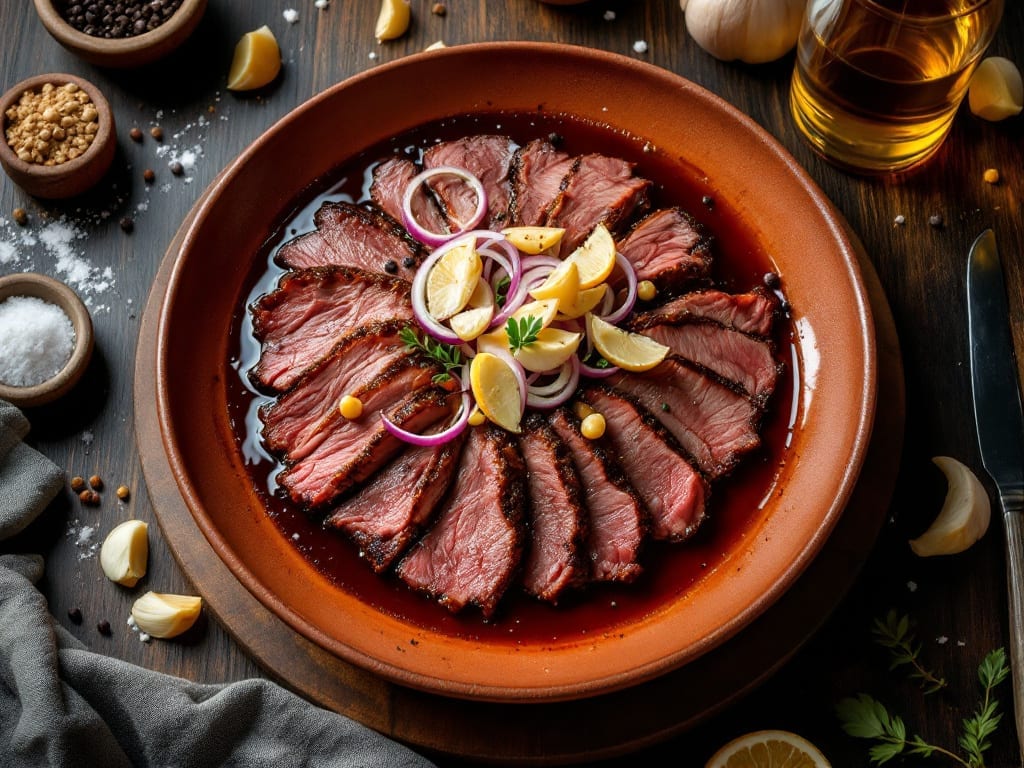
Transforming a tough cut into beef brisket flat that’s fork-tender and smoky requires patience and precision—something I perfected after years of experimenting with both Texas-style smoke and French braising techniques. The key lies in the long, slow cook that breaks down connective tissue while building an irresistible dark bark.
My family’s backyard cookouts taught me that great brisket isn’t just about heat—it’s about time and technique.
This recipe delivers restaurant-quality results in just 4 hours using a combination of dry rub and controlled cooking. The secret is maintaining a steady temperature between 225°F and 250°F, which transforms the meat from chewy to melt-in-your-mouth tender.
We’ll use a simple but effective rub of salt, pepper, garlic powder, and smoked paprika to create that signature bark while keeping the interior juicy and flavorful.
By the time you slice against the grain, you’ll have perfectly tender beef with a crust that’s rich and slightly charred. The internal temperature should reach 195–203°F for maximum tenderness, and letting it rest for at least 30 minutes ensures every bite stays juicy.
This method works equally well in a smoker, oven, or even a slow cooker adapted for low temperatures.
Serve with classic sides like creamy mac and cheese, tangy coleslaw, or buttery cornbread to complete the meal. Whether you’re hosting a backyard BBQ or cooking for a weeknight dinner, this brisket flat delivers professional-quality results with minimal effort. Let’s get started on creating your perfect brisket.
Ingredients for beef brisket flat
Six core ingredients transform tough brisket into melt-in-your-mouth perfection—smoky, tender, and packed with flavor.
| Ingredient | Amount | Notes |
|---|---|---|
| Beef Brisket Flat 🥩 | 3 lb | 1-inch thick, trimmed of fat |
| Yellow Onion 🧅 | 1 whole | Large, sliced into wedges |
| Garlic Cloves 🧄 | 8 cloves | Fresh, peeled and smashed |
| Kosher Salt 🧂 | 2 tbsp | Coarse, for initial seasoning |
| Black Peppercorns 🌶️ | 1 tbsp | Freshly cracked, coarse |
| Garlic Powder 🧄 | 1 tbsp | For dry rub |
| Smoked Paprika 🌶️ | 1 tbsp | For deep smoky flavor |
| Ground Cumin 🌿 | 1 tsp | Toasted for warmth |
| Brown Sugar 🍯 | 1 tbsp | Light, for bark development |
| Apple Cider Vinegar 🍎 | 2 tbsp | For tenderizing |
| Beef Broth 🥛 | 1 cup | Low-sodium, for pan juices |
| Unsalted Butter 🧈 | 2 tbsp | Cold, for finishing |
| Fresh Thyme Leaves 🌿 | ¼ cup | Chopped, for aroma |
[recipe_ingredient_scaler]
The brisket flat is the star, so don’t skimp. Look for a 3-pound cut at your butcher—they’ll know exactly what you need. If grocery stores don’t carry brisket flat, ask for a whole packer cut and have them trim it down to 1-inch thickness. The fat cap matters too—leave it on for moisture, but trim it to 1/4-inch thick. Costco and Whole Foods often have great cuts, but local butchers are your best bet for quality. Freshness is key—use within 3 days if buying pre-cut.
No smoked paprika? Regular paprika plus a pinch of liquid smoke works in a pinch. The vinegar is non-negotiable though—it tenderizes the meat while adding depth. Short on time? Substitute 1 tbsp balsamic vinegar, but it won’t be quite as effective. The beef broth should be low-sodium—Swanson or Pacific Foods are reliable brands. For the dry rub, toast your spices in a dry pan for 1 minute to wake up the flavors. And trust me on the brown sugar—it’s what creates that perfect dark bark.
This brisket tastes even better the next day, so make extra. Wrap tightly in foil and store in the fridge for up to 4 days, or freeze for 3 months in portions. For serving, slice against the grain into 1/4-inch thick pieces. The juices will pool beautifully—save them for gravy. Leftovers reheat best in a skillet with a splash of broth to keep them moist. I always make double batches—brisket freezes perfectly and makes lunches for days.
Why You’ll Love This Recipe
- One-Pan Magic: I swear by this recipe when I’m too tired to fuss—just the brisket, onions, and garlic on a sheet pan, roasted until the onions caramelize into sweet, sticky pools. No pots, no pans, no stress.
- Deep Flavor Boom: That brisket flat? It’s all about the slow-rendered richness, but here’s the secret: the onions and garlic mingle with the salt and pepper until every bite has this perfect balance of savory and sweet. Honestly, it’s the kind of dish that makes you slow down and savor.
- Leftover Heaven: Between us, this recipe is my meal prep lifesaver. The brisket stays tender for days, so I can throw slices into sandwiches, tacos, or even a quick stir-fry. (Yes, even on a Tuesday night.)
- Budget Powerhouse: A single brisket flat feeds a crowd for less than $15—way cheaper than takeout, and way tastier. Plus, the leftovers stretch into lunches, so I’m basically cooking for half the price. Win.
Step-by-step instructions for beef brisket flat
Here’s how to transform your brisket flat into melt-in-your-mouth perfection with a smoky bark.
Prep the Brisket for Maximum Flavor
Begin by trimming any remaining fat from the 3 lb beef brisket flat, leaving just a thin layer for flavor. Pat it completely dry with paper towels—this step is non-negotiable for crispy bark. Place the brisket in a bowl and pour over the 2 tbsp apple cider vinegar. Let it marinate in the refrigerator for 30 minutes while you prepare the rub.
In a small bowl, combine the 2 tbsp kosher salt, 1 tbsp black peppercorns (freshly cracked), 1 tbsp garlic powder, 1 tbsp smoked paprika, 1 tsp ground cumin, and 1 tbsp brown sugar. The brown sugar will help develop that coveted dark bark. After the brisket marinates, remove it from the vinegar, shake off excess liquid, and generously coat both sides with the spice mixture, pressing it in firmly.
Sear for Depth of Flavor
Heat a heavy oven-safe skillet over medium-high heat. Add the brisket fat-side down and sear for 4-5 minutes until a deep golden crust forms. Flip and sear the other side for another 3-4 minutes. You’re not cooking through yet—just building layers of flavor. While the brisket sears, slice the 1 whole yellow onion into wedges and peel the 8 cloves garlic, smashing them lightly with the side of your knife.
Remove the brisket from the skillet and set it aside. Add the sliced onion and smashed garlic to the same skillet, cooking for 3-4 minutes until the onions soften slightly. Pour in the 1 cup beef broth, scraping up all the browned bits from the bottom. This pan sauce will become the foundation of your brisket’s final juices.
Braise Until Fork-Tender
Transfer the skillet with all its contents to a preheated 325°F oven. Place the brisket back in the skillet, fat-side up, and pour the onion-garlic broth mixture over it. Cover tightly with aluminum foil and braise for 2 hours. This low-and-slow cooking method breaks down the tough connective tissue, transforming it into silky tenderness.
After 2 hours, check for doneness by inserting a meat thermometer into the thickest part of the brisket. It should read 195-200°F and feel fork-tender with no resistance. If not, continue cooking for another 30-45 minute increments until it reaches this temperature. The brisket will continue carrying over to 205°F as it rests.
Finish with Butter and Thyme
Once the brisket reaches the perfect temperature, remove it from the oven and transfer to a cutting board. Let it rest for 15 minutes before slicing against the grain into ½-inch thick pieces. This resting period allows the juices to redistribute throughout the meat.
Return the skillet to the stovetop over medium heat. Add the 2 tbsp cold unsalted butter and the 0.25 cup chopped fresh thyme leaves, letting them melt and infuse the pan with aroma. Pour this fragrant butter mixture over the sliced brisket just before serving. The butter will add richness while the thyme enhances the smoky flavors you’ve built throughout the cooking process.
Pro Tips For Making Beef Brisket Flat
- Trim the Fat First: The brisket flat’s fat cap is your friend, but only if you handle it right—score it in a crosshatch pattern with a sharp knife, then leave it intact. This keeps the meat juicy while rendering the fat into crispy, flavorful bits that cling to the surface (yes, even on a flat cut).
- Sear in Batches: A crowded pan steams instead of sears. Work in two batches over medium-high heat—let the first side develop a deep brown crust before moving the second. I learned this the hard way after walking away and coming back to sad, pale meat.
- Salt the Onions: Toss your sliced onions with ½ teaspoon kosher salt before cooking—it draws out moisture and concentrates their sweetness. Skip this, and you’ll end up with watery, bland aromatics pooling in your pan.
- Rest Before Slicing: Give the brisket a solid 5-10 minutes under foil after cooking. The fibers relax, and slicing against the grain becomes easier—no more fighting tough, springy meat. (Your knife will thank you, too.)
Regional styles of this recipe
Texas-Style Smokehouse
This is the brisket I grew up with—deep hickory smoke that clings to the meat like a second skin. In Texas, the flat cut is often smoked at 225°F for 10-12 hours with a simple salt-and-pepper rub, then wrapped in butcher paper at 165°F to push through the stall.
The key difference? Texas pitmasters use post oak or pecan wood for a sweeter, more complex smoke profile. I like to add 1 tsp of coffee grounds to my rub for that classic competition-style depth. 🌳
French Braising Tradition
My French training taught me that slow braising transforms tough cuts into melt-in-your-mouth perfection. For the brisket flat, I use a technique called confit-style braising where we cook at 275°F in a mix of red wine and beef broth instead of vinegar.
The wine adds acidity without overpowering, and the longer cook time (up to 6 hours) creates an incredibly tender texture. I finish with a béchamel sauce> drizzled over slices—trust me, it’s a game-changer.
Carolina Mustard Magic
In the Carolinas, they take brisket flat to another level by incorporating yellow mustard> into the rub or marinade. The mustard’s tang cuts through the richness while adding a bright, almost citrusy note.
I like to mix 2 tbsp of prepared mustard> with my vinegar marinade and let it work its magic for 1 hour> before applying the rub. The result? A brisket with complex layers of flavor that’s neither too sweet nor too smoky.
Serve with Carolina-style coleslaw for the full experience. 🌶️
Kansas City Sweet & Spicy
No regional brisket roundup would be complete without Kansas City’s signature sweet-and-spicy approach. Here, the flat cut gets coated in a rub packed with chopped onion powder, cayenne pepper, and brown sugar> (I use 3 tbsp> instead of 1). The secret weapon?
A spritz of apple juice> every 2 hours> during the smoke to keep the meat moist. KC pitmasters also add crushed red pepper flakes> to the rub for heat that lingers. This style pairs perfectly with their famous burnt ends. 🔥
Modern Sous Vide Finish
For those who want restaurant-quality results at home, I’ve adapted this recipe for sous vide. After the initial sear, vacuum-seal the brisket with the vinegar marinade and cook at 160°F for 24 hours>.
Then, finish with a quick sear in a screaming-hot cast iron skillet to develop that bark. The texture is next-level tender, and the flavors are concentrated in every bite. This method works especially well for special occasions when you want to impress guests. ⚡
Coastal Herb Infusion
Living near the coast means I can forage wild herbs that elevate brisket to new heights.
After cooking the brisket flat using any of the above methods, I finish it with a blend of fresh rosemary, thyme, and bay leaves> tied into a bundle and steamed over the hot meat for 10 minutes>.
The briny, earthy notes from these coastal herbs complement the smoky flavors beautifully. I also like to add 1 tbsp of lemon zest> to the final butter bath for a bright, citrusy finish. 🌊
Nutrition facts
Frequently asked questions
What’s the difference between brisket flat and point cuts?
The brisket flat comes from the thinner, leaner portion of the brisket while the point cut is thicker with more fat and connective tissue. The flat cooks faster (about 4 hours vs 8+ hours for point) and has a milder flavor. For this recipe, we use the flat because it’s more tender and perfect for quick weeknight meals or smaller gatherings.
Can I cook this brisket in a slow cooker instead of the oven?
Brown the brisket first in a skillet, then transfer it to your slow cooker with the onions, garlic, and broth. Cook on low for 6-7 hours or high for 4-5 hours until it reaches 195-203°F. The texture will be just as tender—just watch the liquid levels and add broth if needed to prevent drying.
Why does my brisket turn out dry even when I cook it low and slow?
Most common causes are overcooking (past 205°F) or not resting properly. Always let the brisket rest 15-30 minutes before slicing to redistribute juices. Also, avoid cutting into it too early—wait until internal temp drops to 190°F after resting. For extra moisture, add ½ cup beef broth to the pan before covering.
What’s the best way to reheat leftover brisket?
Slice the brisket first, then reheat in a skillet over medium-low heat with a splash of beef broth or water to keep it moist. Never microwave—it turns rubbery! For larger portions, warm in a 300°F oven for 15-20 minutes covered with foil. The key is gentle heat to preserve tenderness.
Can I use this recipe for a whole packer cut (flat + point together)?
Technically yes, but you’ll need to adjust cooking time—plan for 6-8 hours total. The point cut needs more time to tenderize. For best results, separate them after the initial sear and cook the flat first (remove at 195°F), then finish the point separately. This ensures both pieces are perfectly tender without overcooking either.

Trained in classic French technique but raised on slow-cooked ribs and spicy rubs, she blends culinary skill with smoke and soul.
- Best Smoked Oxtail Recipe: Deep-Rich Flavor After Low-and-Slow Cooking - October 14, 2026
- Pit Boss Smoked Prime Rib Roast Recipe: Bark-to-Bone Crispness in 4 Hours - October 14, 2026
- Smoked Tuna Steak Recipe: Seared Crust Meets Silky Centers - October 14, 2026