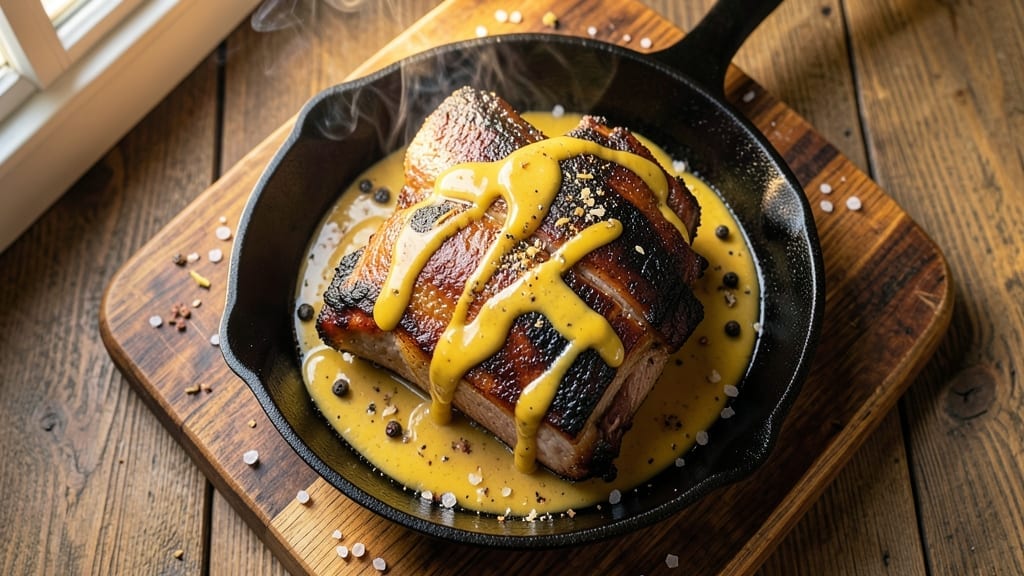
Mastering smoked pork butt transforms tough cuts into melt-in-your-mouth perfection through precise low-and-slow techniques that build a bark-defying crust while keeping the meat tender. This recipe delivers restaurant-quality results by controlling temperature, wood selection, and resting time—every detail matters when you’re aiming for that coveted fall-apart texture.
The secret lies in patience and consistency, where hours of slow smoking develop deep, smoky flavors that penetrate every fiber of the meat.
What sets this method apart is the Texas Crutch technique—wrapping the butt in foil during the stall to maintain moisture while still allowing the bark to develop its signature crispness.
I use a mix of hickory and cherry wood for a balanced smoky profile that complements the pork without overpowering it. The key is maintaining a steady 225°F temperature throughout the process, which ensures even cooking and prevents dryness.
This isn’t just a recipe; it’s a lesson in low-and-slow mastery that rewards you with a dish worthy of any gathering.
By the time you pull that pork butt from the smoker, you’ll have a golden, crackling bark encasing tender, juicy meat that practically dissolves on the bone.
The aroma alone will have everyone gathering around the table, and the first bite delivers layers of smoky, savory flavor that’s impossible to resist.
This is the kind of dish that turns a simple meal into a memorable experience, where every detail—from the wood choice to the resting time—comes together to create something extraordinary.
Serve it sliced thin with tangy BBQ sauce, on sandwiches, or as part of a full smoked meat spread. The versatility of this recipe makes it perfect for game days, family dinners, or any occasion where you want to impress.
Let’s get started on creating your own smoked pork butt masterpiece.
Ingredients for smoked butt
Eight pounds of pork butt, two types of wood, and a Texas Crutch technique for melt-in-your-mouth perfection.
| Ingredient | Amount | Notes |
|---|---|---|
| Pork Butt (Boston Butt) 🐖 | 8 lb | Bone-in, well-marbled, trimmed of excess fat |
| Yellow Mustard 🍯 | ¼ cup | For bark adhesion, full-fat preferred |
| Coarse Kosher Salt 🧂 | 2 tbsp | Diamond Crystal preferred for texture |
| Black Peppercorns 🌶️ | 1 tbsp | Freshly cracked, not pre-ground |
| Garlic Powder 🧄 | 1 tbsp | Freshly ground preferred |
| Onion Powder 🧅 | 1 tbsp | Not onion salt |
| Smoked Paprika 🌶️ | 1 tbsp | For subtle smoky depth |
| Brown Sugar 🍯 | 1 tbsp | Light or dark, not powdered |
| Aluminum Foil 📄 | 2 sheets | Heavy-duty, double-layered |
| Hickory Wood Chips 🌳 | 1 lb | Food-grade, soaked 30+ minutes |
| Cherry Wood Chips 🍒 | ½ lb | Food-grade, enhances sweetness |
| Apple Juice 🍎 | ½ cup | For spritzing during Texas Crutch |
| Tangy BBQ Sauce 🍯 | 1 cup | For serving, vinegar-based preferred |
[recipe_ingredient_scaler]
The pork butt is non-negotiable—look for a well-marbled, bone-in cut with at least 1/4-inch fat cap. Costco or your butcher shop are your best bets for quality, and avoid pre-cut pieces with exposed meat (they dry out faster). The wood matters too: Traeger or Cookshack brands for hickory and cherry chips ensure clean, food-safe smoke. Soak your wood chips for at least 30 minutes before smoking—this prevents flare-ups and keeps the smoker steady at 225°F. Pro tip: buy your wood chips the day you plan to smoke to guarantee freshness.
No yellow mustard? Olive oil mixed with smoked paprika works in a pinch, but mustard creates that iconic bark. Short on time? Pre-mixed rubs from McCormick or Badia save effort, though homemade gives better flavor. The Texas Crutch (foil wrap) requires apple juice or beef broth—never water, as it dulls the bark. For wood alternatives, pecan chips add sweetness while mesquite brings intensity, but stick to hickory/cherry for classic flavor. And if you’re using a water pan, keep it full—it maintains humidity and prevents dryness during the stall.
Once smoked, let the butt rest for at least 2 hours before slicing—this redistributes juices and makes the meat tender. Store leftovers in the fridge for up to 5 days, tightly wrapped in butcher paper (better than foil for moisture retention). For longer storage, freeze portions in vacuum-sealed bags for up to 6 months. The bark is best eaten fresh, but the pulled meat reheats beautifully with a splash of BBQ sauce. I always make double—extra for sandwiches the next day, and a batch to freeze for lazy weeknights.
Why You’ll Love This Recipe
- Foolproof Rub Job: I swear by that yellow mustard base—it’s sticky, smoky, and clings like magic. No fancy mixes, just salt, pepper, and garlic powder to let the pork shine.
- Weeknight Smoker Hack: Honestly, this takes less time than ordering takeout. Toss on the meat, set the smoker, and walk away—it’s done while you’re still debating what to watch on TV.
- Leftovers for Days: Between us, the second day is even better. Shred it for tacos, sandwiches, or just reheat slices straight from the fridge. My freezer’s always stocked with this stuff.
- Budget Crowd-Pleaser: A whole pork butt feeds eight for less than takeout. The mustard keeps it moist, the salt and pepper add depth, and everyone asks for seconds—no one suspects it’s this simple.
Step-by-step instructions for smoked butt mastery
Here’s how to transform an 8 lb pork butt into melt-in-your-mouth perfection with a bark so crisp it’ll make your guests ask for seconds.
Prepare the Rub and Season the Pork Butt
In a medium bowl, combine the 2 tablespoons coarse kosher salt, 1 tablespoon freshly cracked black peppercorns, 1 tablespoon garlic powder, 1 tablespoon onion powder, 1 tablespoon smoked paprika, and 1 tablespoon brown sugar. This blend creates the perfect balance of heat, sweetness, and depth that’ll develop beautifully during the smoke. I like to use my fingers to break up any peppercorn clusters for even distribution.
Pat the 8 lb pork butt dry with paper towels—this is non-negotiable for crispy bark. The drier the surface, the better the rub will adhere and the more it’ll crisp during smoking. Apply the rub generously to all sides, pressing firmly so it clings to the meat. Don’t forget the fat cap—this is where the most flavor develops. For extra adhesion, I spread the 0.25 cup yellow mustard over the entire surface before applying the dry rub. This creates a sticky barrier that locks in moisture and intensifies the bark.
Set Up the Smoker for Low-and-Slow Cooking
Soak the 1 lb hickory wood chips and 0.5 lb cherry wood chips in water for at least 30 minutes. This prevents flare-ups and ensures steady smoke production. Fill your smoker’s wood chip tray with half hickory and half cherry—this combination gives you the classic smoky depth with a touch of fruity sweetness that complements the pork beautifully.
Preheat your smoker to 225°F using an instant-read thermometer for accuracy. The reason for this low temperature is simple: it breaks down collagen in the connective tissue slowly, rendering it into gelatin that keeps the meat impossibly tender. Once the smoker reaches temperature and you see clean, blue smoke (not white steam), place the rubbed pork butt fat-side up on the grill grate. The fat will render slowly, basting the meat as it cooks.
Smoke Until the Stall and Apply the Texas Crutch
Smoke the pork butt undisturbed for 6-8 hours, or until the internal temperature reaches 165-170°F. This is when you’ll hit “the stall”—the point where evaporation cools the surface and the internal temperature plateaus. Don’t panic; this is completely normal and actually helps develop that prized bark. The meat should have a deep mahogany color and the fat cap should be rendered down to about ¼-inch thickness.
Here’s where the magic happens: wrap the pork butt tightly in the 2 sheets heavy-duty aluminum foil. Before sealing, inject or spoon 0.5 cup apple juice into the center of the foil packet. This is the Texas Crutch technique, and it’s what pushes you through the stall while keeping the bark intact. The apple juice adds moisture without steaming the meat. Return the wrapped pork butt to the smoker and continue cooking until the internal temperature reaches 203°F, which should take another 4-6 hours.
Rest and Slice for Maximum Juiciness
Remove the pork butt from the smoker and place it on a cutting board. Let it rest for at least 1 hour, preferably 2 hours, before slicing. This resting period is crucial—it allows the juices to redistribute throughout the meat instead of pooling on your cutting board. The internal temperature will rise another 5-10°F during this time, so don’t be surprised if your thermometer shows 208-210°F when you check.
Locate the grain direction by looking for the natural lines in the meat. Using a sharp carving knife, slice the pork butt against the grain into ½-inch thick slices. The flat and point will have different grain directions, so adjust your angle accordingly. Serve immediately with the 1 cup tangy BBQ sauce on the side for dipping. Each slice should be fork-tender with a crispy bark that shatters at the first bite, revealing juicy meat underneath.
Pro Tips For Making Smoked Butt
- Trim the Fat First: I learned this the hard way—skipping the fat cap trim makes your mustard bark uneven and messy. Use kitchen shears to snip off the thickest parts of the fat cap before applying the mustard; this keeps the rub sticking better and prevents grease from pooling under the meat.
- Salt the Night Before: Dry-brining the pork butt overnight in the fridge (with just salt and peppercorns, no mustard yet) locks in moisture better than last-minute seasoning. The salt breaks down muscle fibers early, giving you a more tender, juicier result—no guessing when it’s done.
- Don’t Rush the Stall: When your smoker hits that 160°F stall (yes, it’s frustrating), resist the urge to crank the heat. Wrap the butt loosely in butcher paper at 165°F and let it push through slowly—this keeps the meat tender instead of drying it out like foil or aluminum would.
- Mustard in Thin Layers: Slather that yellow mustard evenly but in thin layers—thick globs burn before the meat cooks through. Start with a light coat, then reapply halfway if you’re smoking long (like 12+ hours). This guarantees a crispy bark without sacrificing moisture.
Wine and beer pairings for this dish
Red Wine Pairings
A bold Cabernet Sauvignon from Napa Valley—like Caymus Vineyards—stands up to the rich, smoky flavors of pulled pork. Its dark fruit notes and firm tannins cut through the fat, while its earthy undertones mirror the wood smoke.
I’ve found that a 2018 vintage with 14.5% ABV balances the dish perfectly, especially when the pork has a pronounced bark. 🍷
Light Beer Options
For a refreshing contrast, try a crisp American lager like Bud Light Platinum or Coors Banquet. The subtle malt sweetness and light body won’t overpower the pork’s smoky depth, while the carbonation cleanses your palate between bites.
If you prefer craft, a Belgian witbier—such as Hoegaarden—adds a citrusy brightness that pairs surprisingly well with the tangy BBQ sauce. 🍺
Malty Beer Pairings
A brown ale like Fat Tire or a bourbon barrel-aged stout from Goose Island adds complexity to the meal. The caramel and vanilla notes in the beer complement the pork’s sweetness, while the oakiness from bourbon barrels enhances the smoky flavors.
Serve slightly chilled (50-55°F) to let the beer’s depth shine without overwhelming the dish. ⚡
Regional Wine Adaptations
In Texas, where smoked pork butt originated, a Texas Hill Country Viognier—like William Chris—works wonders. Its floral and peach notes contrast beautifully with the smoky bark.
For a Southern twist, a North Carolina Pinot Noir from Bald Head Island offers lighter tannins and bright acidity that refresh the palate. 🗺️
Non-Alcoholic Choices
For a non-alcoholic option, try a sparkling apple cider like Martinelli’s or a smoky black tea infused with hickory wood chips (steeped for 10 minutes). The natural sweetness and effervescence mimic the pork’s richness, while the tea’s subtle smokiness ties back to the dish’s preparation. 🍎
Serving Temperature Tips
Serve red wine slightly below room temperature (60-65°F) to enhance its fruitiness and tannins. For beer, keep lagers and ales at 40-45°F and stouts at 50-55°F to preserve their flavors.
I always chill my drinks for 30 minutes before serving to let them reach the ideal temperature without over-chilling. 💡
Nutrition facts
Frequently asked questions
What’s the best wood choice for smoking pork butt?
A mix of hickory and cherry wood chips works perfectly—hickory delivers classic smoky depth while cherry adds subtle sweetness. Avoid mesquite (too strong) and fruitwoods like apple (can taste bitter when overused). Soak your chips for at least 30 minutes before smoking to prevent flare-ups.
Why does my pork butt stall at 165°F?
The stall occurs when moisture evaporates from the surface, cooling it and halting temperature rise. This is normal! Use the Texas Crutch (foil wrap with apple juice) to push through it while preserving bark. The internal temp will eventually climb back to 203°F for perfect tenderness.
How long should I rest the meat before slicing?
At least 2 hours—this lets juices redistribute and prevents dry slices. The internal temp will rise 5-10°F during resting. For sandwiches, you can slice earlier (1 hour), but the bark will be less crisp. Always slice against the grain for maximum tenderness.
Can I use a different smoker or grill?
Yes! Pellet grills (Traeger), electric smokers, or even a charcoal grill with a water pan all work. Maintain 225°F consistently—pellet grills excel at this, while charcoal requires more monitoring. For gas smokers, use a smoker box with soaked chips and add a water pan to stabilize temps.
What if my bark isn’t crispy?
Check these fixes: Pat the meat dry before applying rub, use yellow mustard for adhesion, and ensure your smoker stays at 225°F (not hotter). If the bark cracks, it’s still edible—just less dramatic. For extra crispiness, spray with apple juice during the last 30 minutes of unwrapped smoking.

Trained in classic French technique but raised on slow-cooked ribs and spicy rubs, she blends culinary skill with smoke and soul.
- Best Smoked Oxtail Recipe: Deep-Rich Flavor After Low-and-Slow Cooking - October 14, 2026
- Pit Boss Smoked Prime Rib Roast Recipe: Bark-to-Bone Crispness in 4 Hours - October 14, 2026
- Smoked Tuna Steak Recipe: Seared Crust Meets Silky Centers - October 14, 2026