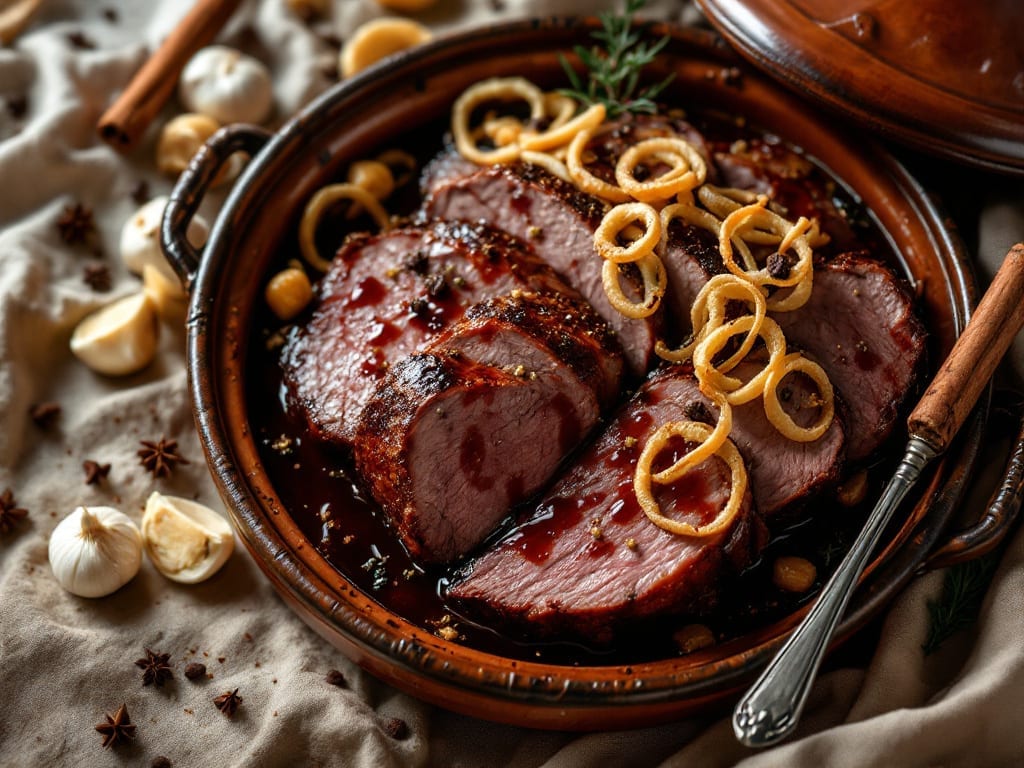
This beef brisket for Hanukkah recipe transforms a classic Shabbat staple into a centerpiece worthy of the Festival of Lights. The slow-simmered spice rub—blended with cinnamon, cloves, and a touch of sweet wine—honors tradition while delivering melt-in-your-mouth tenderness.
It’s the kind of dish that brings families together, where every bite carries the warmth of holiday memories.
The secret lies in the three-stage cooking process: a deep, aromatic rub, a long braise in red wine and broth, and a final crisping in the oven. This method ensures the brisket stays juicy at the core while developing a caramelized crust that’s impossible to resist.
Unlike quick weeknight meals, this brisket rewards patience with layers of flavor that evolve over hours.
What you’ll end up with is a golden, glistening brisket that’s rich with spices, tender enough to slice with a fork, and infused with the deep, complex notes of Hanukkah-inspired ingredients.
The aroma alone will fill your home with the spirit of the season, while the taste—savory, slightly sweet, and perfectly balanced—makes it a dish worth celebrating.
Serve it alongside latkes, a tangy horseradish sauce, or a simple green salad to round out the meal. This brisket isn’t just food; it’s a tradition you’ll look forward to year after year. Let’s get started on creating a Hanukkah centerpiece that feels like home.
Ingredients for beef brisket for hanukkah
Eight spices, one brisket, a tradition that tastes like home. Here’s what you’ll need for a Hanukkah centerpiece that’s rich, tender, and full of holiday warmth.
| Ingredient | Amount | Notes |
|---|---|---|
| Beef Brisket 🥩 | 4 lb | Whole packer cut, good marbling |
| Red Wine 🍷 | 1 ½ cups | Dry cabernet or merlot, not sweet |
| Beef Broth 🍲 | 2 cups | Low-sodium preferred, homemade or store-bought |
| Brown Sugar 🍯 | ½ cup | Light or dark, packed |
| Ground Cinnamon 🌿 | 1 tbsp | Freshly ground for warmth |
| Whole Cloves 🌶️ | 4 whole | Crushed lightly for depth |
| Ground Allspice 🌶️ | 1 tsp | Or substitute nutmeg |
| Ground Black Pepper 🌶️ | 1 tbsp | Freshly cracked preferred |
| Diamond Crystal Kosher Salt 🧂 | 2 tbsp | For seasoning and brining |
| Extra-Virgin Olive Oil 🫒 | 2 tbsp | For searing brisket |
| Yellow Onion 🧅 | 1 whole | Peeled, roughly chopped |
| Garlic Cloves 🧄 | 6 cloves | Peeled, smashed |
| Fresh Rosemary 🌿 | ¼ cup | Chopped, or 1 tbsp dried |
| Fresh Thyme 🌿 | ¼ cup | Leaves only, or 1 tbsp dried |
| Honey 🍯 | 2 tbsp | For glaze, local preferred |
[recipe_ingredient_scaler]
The brisket is the star, so don’t cut corners. Whole packer cuts from a trusted butcher—like D’Artagnan or your local kosher market—have the best marbling for flavor. If you’re buying from the grocery store, check for bright red color and visible fat (that’s where the flavor hides). A 4-pound brisket feeds 8 generously, but if you’re feeding a crowd, grab a 6-pounder. The spices? Penzeys or Spicewalla for the good stuff, but the bulk bins at Whole Foods work too. Just make sure your cinnamon and allspice are fresh—if they smell like dust, toss ’em.
No red wine? Dry sherry or apple cider works in a pinch, but wine’s acidity tenderizes the meat. Short on cloves? Substitute with 1 tsp ground cloves, but crushed whole gives that deep, aromatic bite. The brown sugar can be swapped for maple syrup or agave if you’re avoiding refined sugar. Fresh herbs are ideal, but dried thyme and rosemary at half the amount won’t ruin the dish. And if you’re out of honey, molasses or agave adds the same sweet depth for the glaze. The beef broth? Homemade is best, but even the canned stuff from Kirkland or Pacific Foods will do.
This brisket tastes even better the next day, so plan ahead. Wrap it tightly in foil and refrigerate for up to 4 days, or freeze for 3 months—just thaw overnight in the fridge. The leftovers? Reheat slowly in the oven with a splash of broth to keep it moist. I always make extra because sandwiches the next day are a thing—crusty bread, mustard, and a sprinkle of those caramelized spices. Trust me, you’ll want seconds.
Why You’ll Love This Recipe
- One-Pot Magic: I swear by this recipe—just sear the brisket, dump in the red wine and broth, and let it slow-cook. No chopping, no fuss, just hands-off perfection while you light candles or set the table.
- Hanukkah Spice Bomb: That cinnamon and brown sugar? It’s like a warm hug for your taste buds. The wine deepens the richness, and the slow cook turns tough meat into melt-in-your-mouth goodness—no one will guess it’s the same brisket from last week.
- Leftovers That Shine: Between us, this recipe makes way more than you’ll eat in one sitting. Slice the extra for sandwiches or reheat it in foil for a lazy weeknight dinner—still just as tender and packed with flavor.
- Budget Crowd-Pleaser: A whole brisket feeds a family for days, and the ingredients won’t break the bank. The wine adds depth without costing a fortune, and the cinnamon ties it all to Hanukkah without needing fancy spices. Win-win.
Step-by-step instructions for beef brisket with Hanukkah spice rub
Here’s how to transform a simple brisket into a showstopping centerpiece worthy of your Hanukkah table.
Prepare the Brisket with Spiced Olive Oil Rub
Pat the 4 lb beef brisket dry with paper towels, removing any excess moisture from the surface. This step is crucial for developing that signature crispy bark we’re after. In a small bowl, combine the 2 tbsp extra-virgin olive oil with 1 tbsp ground cinnamon, 1 tsp ground allspice, 1 tbsp ground black pepper, and 1 tbsp ground black pepper. Rub this aromatic mixture all over the brisket, pressing firmly so it adheres to every crevice.
Place the brisket fat-side up in a shallow dish and sprinkle 1 tbsp of the diamond crystal kosher salt evenly over the surface. Cover and refrigerate for at least 4 hours, preferably overnight. This dry-brining process enhances flavor penetration and creates that perfect crust. Here’s the thing—don’t skip this step. I’ve learned the hard way that proper seasoning time makes all the difference in the final texture and taste.
Sear the Brisket for Maximum Flavor
Remove the brisket from the refrigerator 30 minutes before cooking to bring it to room temperature. Preheat your oven to 300°F. Heat a large Dutch oven over medium-high heat and add the brisket fat-side down. Let it sear undisturbed for 10 minutes until a deep golden-brown crust forms. You’ll know it’s ready when you see the fat beginning to render and the edges start to crisp.
Flip the brisket and sear the other side for another 10 minutes. This two-sided sear locks in juices and creates that beautiful mahogany crust we’re aiming for. Once both sides are well-browned, remove the brisket from the Dutch oven and set it aside on a plate. The residual heat will keep it warm while we build the braising liquid.
Build the Hanukkah-Inspired Braising Liquid
In the same Dutch oven, add 1 whole yellow onion (roughly chopped) and 6 cloves garlic (smashed). Cook for 3 minutes until the onions soften slightly and release their sweet aroma. Pour in the 1.5 cups red wine and scrape up any browned bits from the bottom of the pot with a wooden spoon. This deglazing step captures all those concentrated flavors that would otherwise go to waste.
Add the 2 cups beef broth, 0.5 cup brown sugar, 4 whole cloves (lightly crushed), 0.25 cup fresh rosemary, and 0.25 cup fresh thyme. Bring the mixture to a gentle simmer, then return the brisket to the pot, fat-side up. The liquid should come about halfway up the sides of the brisket. Cover with a tight-fitting lid and transfer to the preheated 300°F oven.
Slow-Braise Until Fork-Tender
Braise the brisket for 3 hours, then check for doneness. Here’s what you’re looking for: the internal temperature should reach 195°F in the thickest part of the meat, and a fork should slide in with minimal resistance. If it’s not quite there, continue cooking in 30-minute increments until it reaches this perfect tenderness. Real talk: brisket cooking times vary, so don’t rush this step.
Once the brisket reaches the proper temperature, carefully remove it from the pot and transfer to a cutting board. Tent loosely with aluminum foil and let it rest for 30 minutes. This resting period allows the juices to redistribute throughout the meat, ensuring every slice stays moist and flavorful. During this time, you can reduce the braising liquid on the stovetop if you want a thicker sauce to serve alongside.
Glaze and Serve with Tradition
In a small saucepan, combine the 2 tbsp honey with 2 tablespoons of the reduced braising liquid. Simmer over medium heat until the mixture thickens slightly, about 2-3 minutes. Brush this glaze evenly over the brisket, then return it to the oven for 5 minutes to caramelize the surface. This final step adds a beautiful shine and enhances the sweet-spiced flavors that honor Hanukkah traditions.
Slice the brisket against the grain into ¼-inch thick pieces and serve family-style with the braising sauce spooned over the top. The combination of tender meat, rich sauce, and aromatic spices creates a dish that’s perfect for your Hanukkah celebration. Each bite delivers layers of flavor that pay homage to both culinary tradition and festive occasion.
Pro Tips For Making Beef Brisket For Hanukkah
- Trim the Fat First: Slice off that thick fat cap before searing—it’s not just for flavor, it’s for even cooking. I learned this the hard way when my brisket turned into a greasy brick instead of tender slices. Aim for about a ¼-inch layer left; it’ll render beautifully into the pan while keeping the meat juicy.
- Deglaze with Wine Early: Don’t wait until the end to add that red wine—pour it in right after searing to scrape up those browned bits. The alcohol evaporates fast, but those bits pack serious depth. If you’re short on time, use a splash of beef broth instead, but the wine’s acidity cuts through the richness better.
- Don’t Crowd the Pan: Sear the brisket in batches if needed—overcrowding steams instead of browns. I used to toss everything in at once, and my brisket ended up gray and sad. A hot pan and space mean a proper crust, which locks in those cinnamon-sweet flavors later.
- Rest Under Foil: After braising, tent the brisket with foil and let it sit for 15 minutes before slicing—yes, even if you’re starving. The residual heat keeps it juicy, and skipping this step means dry, stringy slices. (Your guests won’t notice if you do, but you will.)
Troubleshooting this recipe
Uneven Cooking
If your brisket emerges with some sections still tough or undercooked, it’s likely due to uneven heat distribution in your oven. I’ve found that older ovens or those without convection fans can create hot spots.
To fix this, place your Dutch oven on a sturdy baking sheet and rotate it 180 degrees halfway through cooking. Also, ensure your brisket is placed on the middle rack where heat is most consistent.
If you’re using an oven thermometer, verify your oven’s actual temperature—many run 25°F hotter or colder than set. 🌡️
Dry or Tough Meat
Overcooking is the usual culprit here, but it can also happen if your brisket wasn’t properly rested. If your meat feels dry or fibrous, check the internal temperature—it should never exceed 205°F. The 30-minute rest after removing it from the oven is non-negotiable; this allows juices to redistribute.
For extra moisture, add ½ cup beef broth to the Dutch oven during the final 30 minutes of cooking. I’ve also had success using a meat thermometer with an alert function (like the Thermoworks Smoke) to avoid overcooking.
Bark Falling Off
A brittle, flaking crust usually means the brisket wasn’t seared properly or the oven temperature fluctuated too much. To prevent this, sear the brisket until it develops a deep golden-brown crust on both sides—this takes patience, but it’s worth it.
After searing, transfer the brisket to a warm (300°F) oven immediately to maintain that crust. If your oven isn’t stable, consider using a slow cooker on low for the braising phase instead, as it maintains more consistent temperatures. 🔥
Sauce Too Thin or Too Thick
If your braising liquid ends up watery, reduce it on the stovetop after removing the brisket—simmer uncovered for 10-15 minutes until it thickens slightly.
For a thicker sauce from the start, add 1 tbsp cornstarch or arrowroot powder mixed with 2 tbsp cold water during the final 10 minutes of braising. Conversely, if it’s too thick, stir in ¼ cup warm beef broth to loosen it up.
Pro tip: Skim off any excess fat that rises to the surface while reducing to prevent greasiness.
Spices Overpowering
The cinnamon and cloves in this recipe are meant to shine, but if they taste too strong, it’s likely because the brisket didn’t absorb enough liquid during braising.
To balance the flavors, add 1 tbsp apple cider vinegar or lemon juice to the braising liquid during the final 30 minutes of cooking. This adds acidity that cuts through the richness.
If the spices still overpower, reduce the amount of whole cloves to 2-3 and use ½ tsp ground cloves instead for a more subtle flavor. 🌶️
Brisket Not Tender Enough
If your brisket feels chewy or lacks tenderness, it likely didn’t cook long enough. The key is patience—brisket needs to reach 195-205°F internal temperature in the thickest part. If it’s not there after 3 hours, add another 30-60 minutes and check again.
For extra tenderness, try the Texas Crutch method: Wrap the brisket tightly in butcher paper or foil after 2.5 hours of cooking, then return it to the oven. This helps break down collagen faster.
Also, ensure you’re slicing against the grain—this shortens the muscle fibers and makes each bite more tender.
Nutrition facts
Frequently asked questions
Can I make this brisket ahead of time for Hanukkah?
This brisket tastes even better the next day, making it perfect for holiday prep. Wrap it tightly in foil and refrigerate for up to 4 days or freeze for 3 months. Thaw overnight in the fridge, then reheat gently in the oven with a splash of beef broth to keep it moist. Leftovers make amazing sandwiches—just add crusty bread and a sprinkle of those caramelized spices.
What sides pair best with this Hanukkah brisket?
Classic choices include crispy latkes, roasted root vegetables, or a simple green salad with lemon vinaigrette. For a traditional touch, serve with horseradish cream or apple sauce to balance the rich flavors. The wine-braised sauce also works beautifully drizzled over mashed potatoes or egg noodles. Think of it as a complete Shabbat/Hanukkah feast!
Can I substitute the red wine with something else?
Yes, but choose carefully! Dry sherry, apple cider, or even grape juice work in a pinch. The wine’s acidity tenderizes the meat, so avoid sweet wines or juices with added sugar. For a kosher-friendly option, use kosher wine (like Manischewitz) or a non-alcoholic red wine substitute. The flavor will be slightly different but still delicious.
How do I know when the brisket is fully cooked?
Use a meat thermometer to check the thickest part—it should reach 195-205°F. The fork test works too: a fork should slide in with minimal resistance. If it’s still firm after 3 hours, add another 30-60 minutes. Never skip the 30-minute rest before slicing—this lets juices redistribute for maximum tenderness.
Can I make this in a slow cooker instead of the oven?
Sear the brisket first, then transfer it to a slow cooker with all the braising ingredients. Cook on low for 8-10 hours or high for 5-6 hours. The slow cooker maintains consistent heat, which is ideal for even cooking. Just add a splash of broth if the sauce gets too thick. The result will be just as tender and flavorful!

Trained in classic French technique but raised on slow-cooked ribs and spicy rubs, she blends culinary skill with smoke and soul.
- Best Smoked Oxtail Recipe: Deep-Rich Flavor After Low-and-Slow Cooking - October 14, 2026
- Pit Boss Smoked Prime Rib Roast Recipe: Bark-to-Bone Crispness in 4 Hours - October 14, 2026
- Smoked Tuna Steak Recipe: Seared Crust Meets Silky Centers - October 14, 2026