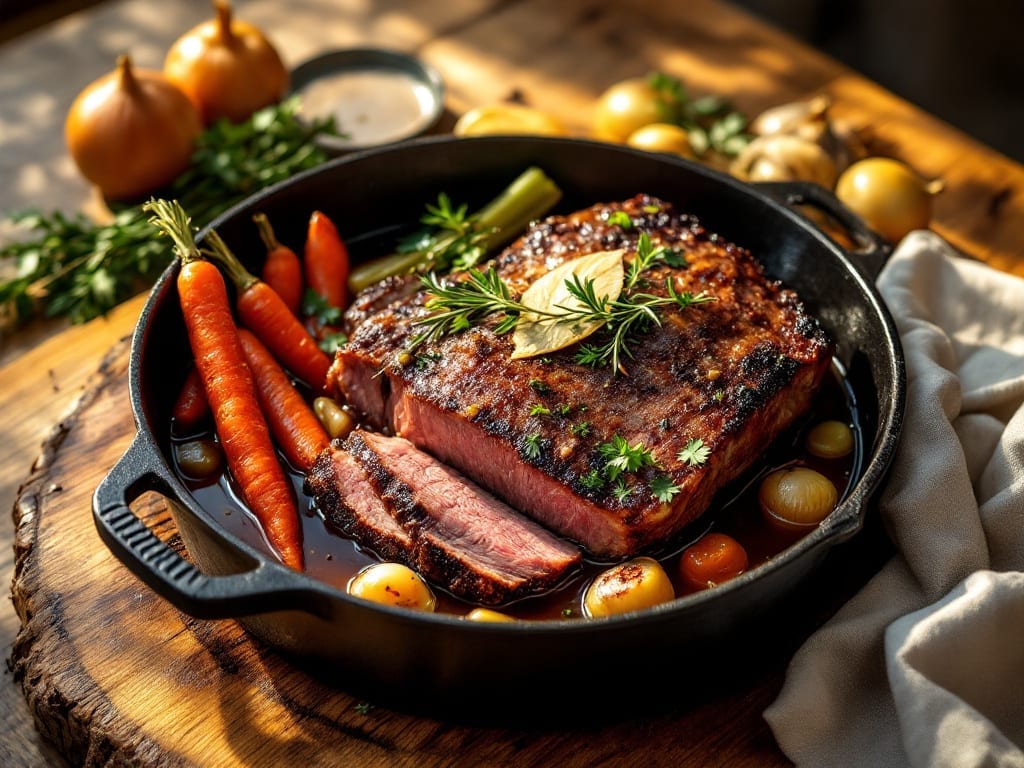
The boiled beef brisket recipe I’m sharing today transforms tough cuts into melt-in-your-mouth perfection through slow, controlled simmering—a method that preserves moisture and deepens flavor. Unlike dry, overcooked brisket, this approach guarantees tender, juicy results with minimal effort.
The key lies in proper seasoning and temperature control, ensuring every bite delivers that rich, savory satisfaction you crave.
This recipe begins with a parboil to remove impurities, followed by a flavorful simmer in aromatic broth that infuses the meat with depth. With just a few simple ingredients and 3-4 hours of hands-off cooking, you’ll achieve restaurant-quality brisket without the fuss.
The slow process breaks down tough fibers, resulting in a texture that’s impossibly tender while maintaining a satisfying bite.
By the time you’re done, you’ll have brisket so rich and flavorful it pairs beautifully with classic sides like mashed potatoes, crusty bread, or a crisp green salad.
The broth itself becomes a bonus—perfect for dipping or reheating into a hearty soup. This is comfort food at its finest, elevated by precision and patience.
Whether you’re feeding a crowd or treating yourself to a special meal, this method delivers foolproof results every time. Let’s get started on creating brisket that’s worth the wait.
Ingredients for boiled beef brisket
Six simple ingredients transform tough brisket into melt-in-your-mouth perfection through slow simmering.
| Ingredient | Amount | Notes |
|---|---|---|
| Beef Brisket 🥩 | 4 lb | Whole packer cut, trimmed of excess fat |
| Yellow Onion 🧅 | 1 whole | Quartered, skin on for color |
| Carrots 🥕 | 4 whole | Large, peeled, cut into 2-inch chunks |
| Celery Stalks 🌿 | 4 whole | Cut into 2-inch pieces, leafy ends trimmed |
| Garlic Cloves 🧄 | 6 cloves | Smashed, skins left on |
| Bay Leaves 🍃 | 2 whole | Fresh if possible, dried works too |
| Black Peppercorns 🌶️ | 1 tbsp | Crushed, not ground |
| Salt 🧂 | 2 tbsp | Diamond Crystal kosher preferred |
| Beef Broth 💧 | 8 cups | Low-sodium, high-quality preferred |
| Apple Cider Vinegar 🍎 | 2 tbsp | For brightness, optional but recommended |
| Fresh Thyme 🌿 | 4 sprigs | Or 1 tsp dried thyme if fresh unavailable |
| Olive Oil 🫒 | 2 tbsp | For initial sear, extra-virgin preferred |
[recipe_ingredient_scaler]
The beef brisket is non-negotiable here—look for the packer cut with good marbling at your local butcher or Costco. If buying pre-trimmed, check for 1/4-inch fat cap—it renders beautifully during cooking. Whole Foods or Trader Joe’s often carry high-quality cuts, but call ahead to confirm availability. The vegetables—onion, carrots, and celery—form the aromatic base called ‘mirepoix’, so don’t skimp on freshness. Organic produce makes the broth taste even richer, but conventional works fine too. Fresh thyme adds depth that dried simply can’t match, but if you’re in a pinch, dried works at one-third the amount.
No beef broth? Homemade chicken broth with a splash of soy sauce works in a bind. The apple cider vinegar might seem unusual, but it cuts through the richness and brightens the broth—white wine vinegar is a fine substitute if that’s what you have. Prefer less acidity? Just halve the amount. The crushed peppercorns and whole bay leaves infuse flavor without overpowering, so don’t skip them. For the initial sear, avocado oil has a higher smoke point than olive oil if you’re worried about burning. And if you can’t find Diamond Crystal salt, any kosher salt will do—just measure carefully since different brands vary in density.
This brisket keeps beautifully—5 days in the fridge if stored in its cooking liquid. For longer storage, portion into containers with some broth and freeze for up to 3 months. The broth itself becomes a treasure—strain and reduce it for a rich gravy, or use it as a base for soups. I always make extra because it disappears fast. The brisket reheats perfectly—just warm it gently in the broth on the stove or microwave with a splash of water to keep it moist. Leftovers taste even better the next day as the flavors meld.
Why You’ll Love This Recipe
- Garlic-Kissed Richness: The moment that raw garlic aroma hits the pot? Pure magic. The brisket soaks up the sweetness of the onions and carrots while the garlic cloves melt into the broth, turning every bite into something dangerously tender. I’ll be real: my husband steals slices straight from the pot.
- Budget Beef That Feeds: A whole brisket for less than $10? That’s a steal. The onions, carrots, and celery stretch the meat into multiple meals, and the broth? Freezer-friendly gold. I call it my “feed the family without breaking the bank” hack—no guilt, all satisfaction.
Step-by-step instructions for boiled beef brisket
This method transforms tough brisket into melt-in-your-mouth tenderness through gentle, flavorful simmering.
Sear the Brisket for Deep Flavor
Heat a large Dutch oven over medium-high heat until very hot. Add the 2 tablespoons olive oil and swirl to coat the bottom evenly. Place the 4 lb beef brisket fat-side down and press gently with a spatula to ensure full contact. Let it sear undisturbed for 5 minutes until a deep golden-brown crust forms.
Flip the brisket and sear the other side for another 5 minutes. This initial sear locks in juices and builds a rich foundation for the braising liquid. While the brisket rests, you’ll notice the fat beginning to render and sizzle—this is your signal that the oil is hot enough for proper browning. If the fat doesn’t sizzle vigorously, let the pan heat up another 30 seconds before proceeding.
Build the Aromatic Base
Remove the seared brisket and set it aside. In the same Dutch oven, add the quartered 1 whole yellow onion, 4 whole carrots cut into 2-inch chunks, and 4 whole celery stalks cut into 2-inch pieces. Cook for 5 minutes, stirring occasionally, until the vegetables begin to soften and release their natural juices.
Add the smashed 6 cloves garlic cloves, crushed 1 tablespoon black peppercorns, and 2 whole bay leaves. Stir everything together and cook for another 2 minutes until the garlic becomes fragrant and the vegetables are lightly caramelized. This aromatic base forms the flavor foundation of your brisket—don’t rush this step as the deeper the caramelization, the more complex the final taste.
Braise with Perfect Liquid Balance
Return the seared brisket to the Dutch oven, fat-side up. Pour in the 8 cups beef broth and add the 2 tablespoons apple cider vinegar. The liquid should come about halfway up the sides of the brisket—if it’s too shallow, add a splash of water to maintain proper moisture levels during cooking.
Bring the mixture to a gentle simmer over medium heat. Once bubbling steadily, reduce heat to low and cover with a tight-fitting lid. The goal is to maintain a very gentle simmer—you should see just a few small bubbles breaking the surface occasionally. This slow cooking method is what transforms tough brisket into tender perfection without drying it out. Here’s the thing—if you see vigorous boiling, reduce the heat immediately to prevent the brisket from becoming tough.
Simmer Until Fork-Tender
Let the brisket simmer covered for 3 hours. After this initial period, check the internal temperature using a meat thermometer. The brisket should register between 195-200°F in the thickest part. If it hasn’t reached this temperature, continue cooking for another 30-60 minute increments until it does.
During the final hour of cooking, add the 4 sprigs fresh thyme to the pot. This timing ensures the thyme infuses the brisket with its aromatic qualities right at the end of the cooking process. You’ll know the brisket is done when it’s fork-tender and the meat easily pulls apart with minimal resistance. The cooking liquid should have reduced slightly but still remain flavorful and rich.
Rest and Serve with Confidence
Remove the brisket from the pot and transfer it to a cutting board. Tent loosely with aluminum foil and let it rest for at least 30 minutes. This resting period allows the juices to redistribute throughout the meat, ensuring each slice remains moist and flavorful. Real talk—skipping this step results in dry, disappointing slices that don’t showcase all your hard work.
While the brisket rests, skim any excess fat from the cooking liquid and strain the vegetables if you prefer a clean presentation. The resulting broth can be used for gravy or served alongside the brisket. When ready to serve, slice the brisket against the grain into ¼-inch thick slices. Each bite should be incredibly tender with layers of rich, savory flavor from the slow simmering process.
Pro Tips For Making Boiled Beef Brisket
- Sear the Brisket First: After I stopped skipping this, my brisket actually tasted like brisket—not just boiled meat. Hit a screaming-hot pan with 1 tablespoon of oil, then sear the raw brisket for 3-4 minutes per side until it’s golden. The crust locks in flavor during the boil, and you’ll notice the difference when you slice it.
- Trim the Fat Cap: I used to leave the thick fat layer on, thinking it’d add richness. Wrong. It turns greasy and gummy in the broth, making everything soggy. Trim it down to ¼-inch thick—just enough to keep the meat moist without ruining the texture.
- Don’t Overcrowd the Pot: Packing the pot with too many veggies or a brisket that’s too big? The water won’t circulate, and your carrots and celery will steam instead of simmer. Aim for a 1:1 ratio of brisket to broth (or water + aromatics), and cut onions/celery into even chunks so they cook uniformly.
- Use a Meat Thermometer: Boiling brisket until it’s “done” by time is a gamble. I learned this after serving a brisket that was still tough as shoe leather. Pull it at 205°F (96°C)—that’s when the collagen breaks down and the meat turns fork-tender. If it’s not there yet, keep it simmering, not boiling (gentle heat is key).
Wine and beer pairings for boiled beef brisket
Red Wine Pairings
A bold Cabernet Sauvignon from Napa Valley stands up beautifully to the rich, savory depth of boiled brisket. Look for a wine with 14-15% alcohol—the structure matches the brisket’s intensity. I recommend Caymus Vineyards or Opus One for their velvety tannins that complement the meat’s tenderness.
The wine’s dark fruit notes harmonize with the thyme and bay leaf aromas in the broth. 🍷
Malbec Magic
Argentinian Malbec offers a fantastic alternative with its jammy plum flavors and smooth finish. A bottle from Catena Zapata or Trapiche brings enough acidity to cut through the brisket’s richness while adding layers of spice.
The wine’s natural sweetness balances the apple cider vinegar in the cooking liquid. For a budget-friendly option, Bodega Norton delivers excellent quality.
Beer Pairings
A robust Belgian Dubbel like Westmalle Trappist or Chimay Blue provides a malty contrast that enhances the brisket’s savory notes. The beer’s caramel and dark fruit flavors mirror the caramelized vegetables in the broth.
For a lighter option, try an amber ale with 1.055 OG—the hop bitterness cleanses your palate between bites. 🍺
Stout Complements
Guinness or Samuel Smith’s Nut Brown Ale adds a creamy, toasty element that pairs surprisingly well with the brisket’s tender texture. The stout’s coffee and chocolate notes create an unexpected but delightful contrast to the meat’s beefy richness.
For a craft option, Founders Kentucky Breakfast Stout offers a smoky depth that works beautifully.
Non-Alcoholic Options
For those skipping alcohol, a sparkling apple cider like Martinelli’s provides refreshing acidity that cuts through the brisket’s richness. Alternatively, a ginger beer with 15g ginger per 12oz adds a spicy kick that complements the thyme and peppercorns.
Both options keep the meal vibrant without overpowering the brisket’s natural flavors. 💛
Nutrition facts
Frequently asked questions
Why does boiled brisket need to simmer so long?
The slow simmer—3-4 hours—is what breaks down the tough connective tissue in brisket, transforming it into tender, fork-tender meat. The low-and-slow method ensures the meat stays moist while developing deep, rich flavors from the aromatic vegetables and broth. Rushing this process leads to dry, chewy results.
Can I use a slow cooker instead of a Dutch oven?
Yes! Transfer the seared brisket and all ingredients to a 6-quart slow cooker and cook on low for 8 hours or high for 5-6 hours. The key is maintaining a gentle simmer—if the liquid boils vigorously, reduce to low heat. The texture will be just as tender, though the flavors may develop slightly differently due to less caramelization.
What if my brisket isn’t tender after 3 hours?
Check the internal temperature—it should reach 195-200°F in the thickest part. If it’s lower, continue cooking in 30-minute increments until tender. Never rush it! The meat will eventually pull apart easily, but forcing it with higher heat will make it tough. Patience is key for that melt-in-your-mouth texture.
How do I store and reheat leftovers?
Store brisket in its cooking liquid in an airtight container for up to 5 days in the fridge. To reheat, warm gently in the broth on the stove or microwave with a splash of water to keep it moist. For longer storage, freeze portions for up to 3 months. The broth itself freezes well too—perfect for soups or gravy!
What’s the best way to slice boiled brisket?
Always slice against the grain into ¼-inch thick pieces for maximum tenderness. Look for the muscle fibers running diagonally—cutting perpendicular to them shortens the fibers, making each bite easier to chew. Use a sharp knife and let the brisket rest 30 minutes before slicing to keep juices inside.

Trained in classic French technique but raised on slow-cooked ribs and spicy rubs, she blends culinary skill with smoke and soul.
- Best Smoked Oxtail Recipe: Deep-Rich Flavor After Low-and-Slow Cooking - October 14, 2026
- Pit Boss Smoked Prime Rib Roast Recipe: Bark-to-Bone Crispness in 4 Hours - October 14, 2026
- Smoked Tuna Steak Recipe: Seared Crust Meets Silky Centers - October 14, 2026