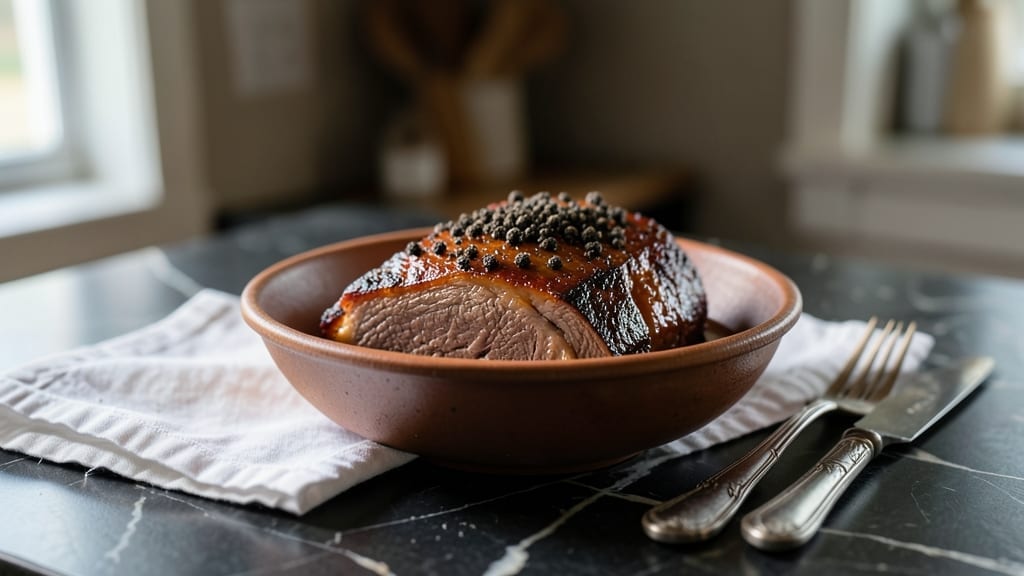
A beef brisket one-pot recipe transforms tough cuts into melt-in-your-mouth tenderness without the usual hassle of multiple pans or long marinating. This method preserves all that rich, deep flavor while keeping prep simple—just one pot, minimal cleanup, and hours of hands-off cooking.
The secret lies in slow, even heat and a well-balanced blend of spices that penetrate deep into the meat.
What sets this apart is how effortlessly it delivers restaurant-quality results at home. You start with a proper sear to lock in juices, then let the slow cooker or oven do the work while you focus on other tasks.
The one-pot design ensures every drop of flavorful liquid gets absorbed into the meat, creating a dish that’s both hearty and elegant.
By the time you’re done, you’ll have perfectly tender brisket that practically falls apart at the touch of a fork, all infused with aromatic spices and a rich, savory sauce.
The best part? It’s ready to serve directly from the pot, with minimal effort. This is comfort food at its finest—bold, satisfying, and built for sharing.
Pair it with crusty bread to soak up every last bit of that flavorful sauce, or serve alongside roasted potatoes for a complete meal. The one-pot approach makes this brisket perfect for busy weeknights or special gatherings—no stress, just delicious results.
Ingredients for beef brisket one pot
A few simple ingredients transform tough brisket into melt-in-your-mouth perfection—all in one pot.
| Ingredient | Amount | Notes |
|---|---|---|
| Beef Brisket 🥩 | 3 lb | Flat cut, trimmed of hard fat |
| Yellow Onion 🧅 | 1 whole | Diced, medium size |
| Garlic Cloves 🧄 | 6 cloves | Peeled, rough chopped |
| Beef Broth 💧 | 2 cups | Low-sodium preferred |
| Red Wine 🍷 | 1 cup | Bold, dry variety |
| Tomato Paste 🍅 | ¼ cup | Smooth, no sugar added |
| Chicken Broth 💧 | 1 cup | Low-sodium preferred |
| Brown Sugar 🍚 | 2 tbsp | Light or dark |
| Smoked Paprika 🌶️ | 1 tbsp | For deep flavor |
| Ground Black Pepper 🌶️ | 1 tsp | Freshly ground preferred |
| Kosher Salt 🧂 | 1 ½ tsp | Adjust to taste |
| Fresh Thyme 🌿 | ¼ cup | Leaves only, chopped |
| Bay Leaves 🍃 | 2 whole | Dried, standard size |
| Olive Oil 🫒 | 2 tbsp | Extra-virgin for richness |
[recipe_ingredient_scaler]
The brisket is the star here, so pick a 3-pound flat cut—it’s leaner and more tender than point cuts. Trim off any thick fat caps (leave a thin layer for flavor). Costco or Whole Foods usually carry good-quality brisket, but check your local butcher too. If you can’t find a flat cut, a point cut works, but it’ll need a little more time. The onions and garlic? Yellow onions add sweetness, but red onions work too if you’ve got them. Just make sure they’re fresh—no rubbery ones here.
No red wine? Beef broth with a splash of balsamic vinegar does the trick. Fresh thyme is ideal, but dried at one-third the amount works in a pinch. The tomato paste can be from a tube or a can—just make sure it’s smooth. For the brown sugar, light or dark both work, but dark adds a hint of molasses flavor. The smoked paprika is key—Penzeys or Trader Joe’s have great options. If you’re short on time, pre-chop the onions and garlic to save 10 minutes of prep.
This brisket reheats beautifully—honestly tastes better the next day as everything melds. Keeps in the fridge for 4-5 days or freeze portions for 3 months. I like to portion it into containers so I can grab a meal for lunch all week. The sauce thickens as it cools, so add a splash of broth if it’s too stiff when reheating. Serve with crusty bread to soak up every last drop of that rich sauce.
Why You’ll Love This Recipe
- One-Pot Magic: I love that this brisket doesn’t require a separate roasting pan or extra cleanup—just one Dutch oven, and you’re golden. The sear on the brisket and caramelized onions happen in the same pot where it braises, so I’m not juggling dishes or stressing over multiple pots.
- Red Wine & Thyme Surprise: The bold red wine and fresh thyme create a sauce that’s rich but not heavy—it’s the kind of flavor that makes you go back for seconds. That tomato paste and brown sugar? They balance the acidity of the wine and turn the liquid into something almost like a velvety gravy.
- Feeds a Crowd (or Leftovers): This recipe makes enough for a small gathering, but honestly, I always have leftovers. The brisket keeps for days in the fridge, and the sauce gets even better reheated. I freeze portions too—perfect for lazy weeknights when I don’t want to cook.
- Budget-Friendly Luxury: Brisket is cheaper than steak, and with just a few pantry staples like smoked paprika and thyme, this feels like a restaurant meal without the price tag. The 3-pound cut feeds everyone well, and the ingredients stretch further than you’d think.
Step-by-step instructions for slow-cooked beef brisket
This method delivers melt-in-your-mouth brisket with rich, caramelized flavors—all in one pot.
Sear the Brisket for Deep Flavor
Heat a large Dutch oven over medium-high heat and add the 2 tablespoons olive oil. Let it get hot enough so a drop of water sizzles when you flick it in. Place the 3 lb beef brisket fat-side down in the pot and press gently with a spatula for 1 minute—this prevents curling and ensures even contact. Let it sear undisturbed for 5-6 minutes until a deep golden-brown crust forms.
Flip the brisket and repeat on the other side for another 5-6 minutes. The fat should render out and bubble vigorously. Remove the brisket and set it aside on a plate. You’ll notice the bottom of the pot is coated with fond—those browned bits are packed with flavor we’ll develop into sauce later. Don’t wipe them out, as they’re essential for building depth.
Build the Aromatic Base
In the same Dutch oven, add the 1 diced yellow onion and 6 rough chopped garlic cloves. Cook over medium heat for 5 minutes, stirring occasionally, until the onions soften and become translucent. You’ll smell that sweet, caramelizing aroma—this is when the onions release their natural sugars and deepen the flavor profile.
Sprinkle in the 1 tablespoon smoked paprika and 1 teaspoon ground black pepper, stirring for 30 seconds to toast the spices. This step awakens their flavors and prevents them from tasting raw. Add the ¼ cup tomato paste and stir for another 1 minute until it loses its raw taste. Pour in the 1 cup red wine, scraping up any browned bits from the bottom with a wooden spoon. Let this simmer for 3-4 minutes until the wine reduces by half and becomes syrupy.
Layer the Braising Liquid
Return the brisket to the pot, fat-side up. Add the 2 cups beef broth, 1 cup chicken broth, 2 tablespoons brown sugar, 1½ teaspoons kosher salt, ¼ cup chopped fresh thyme, and 2 bay leaves. The liquid should come about halfway up the sides of the brisket—this ensures it stays submerged and cooks evenly.
Here’s the thing—don’t be tempted to add more liquid. The brisket releases its own moisture as it cooks, and we want that concentrated flavor. Bring everything to a gentle simmer, then reduce heat to low. The liquid should bubble softly—if it’s boiling vigorously, turn the heat down further. Cover the pot and let it cook for 3 hours undisturbed. This slow cooking breaks down the connective tissue, transforming tough meat into tender slices.
Finish and Rest for Maximum Tenderness
After 3 hours, check the brisket’s tenderness by inserting a fork into the thickest part. If it slides in easily with no resistance, it’s ready. If not, continue cooking for another 30-60 minutes. The internal temperature should reach 200-205°F—this is when the collagen fully melts and the meat becomes fork-tender.
Remove the brisket from the pot and let it rest on a cutting board for 15-20 minutes. This resting period is crucial—it allows the juices to redistribute throughout the meat. While it rests, skim any excess fat from the surface of the braising liquid. You can use this reduced sauce as-is or strain it for a smoother consistency. Slice the brisket against the grain into ¼-inch thick pieces and serve with the sauce spooned over the top.
Pro Tips For Making Beef Brisket One Pot
- Press the Brisket Flat: That 1-minute press with the spatula when searing isn’t just about looks—it flattens the brisket so it doesn’t curl up and steam instead of sear. I used to skip this, and half my batches ended up with uneven browning. Trust me, the extra 60 seconds now saves you from dry spots later.
- Don’t Rush the Wine Reduction: Those 3-4 minutes of simmering the red wine until it’s syrupy might feel slow, but cutting it short means a thin, watery sauce. I learned this after making sauce that tasted like diluted wine—now I set a timer and resist the urge to stir constantly. Let it bubble away undisturbed.
- Salt the Broth Last: Adding the 1½ teaspoons kosher salt to the broth after the wine reduces and just before covering the pot keeps the seasoning balanced. Salt earlier, and you’ll end up with a bland sauce because the wine’s acidity mutes the flavor. This is the thing that actually changes the outcome—no exaggeration.
- Skip the Extra Broth: I know, I know—you’re used to covering meat in liquid. But this recipe’s magic comes from the brisket’s own juices mingling with the reduced wine and caramelized onions. The liquid should only come halfway up the brisket. Resist the urge to add more, even if it looks scary. Your future self will thank you when the sauce isn’t watery.
Storing and reheating your leftovers
Refrigerator Storage
After your brisket cooks, let it cool for no more than 2 hours before transferring to airtight containers. I use glass Pyrex containers with snap-on lids—they keep flavors fresh and prevent odors from mixing.
Store your brisket in the fridge at 40°F or below for up to 4-5 days. The flavors actually deepen overnight as the spices meld together. 💪
Freezing for Later
This brisket freezes beautifully for up to 3 months without losing texture. I portion it into quart-sized freezer bags (squeeze out excess air) or shallow glass containers. Label with the date—it’s easy to forget!
When ready to eat, thaw overnight in the fridge for even reheating. Don’t rush it—thawing too quickly can make the meat tough. ❄️
Reheating on the Stovetop
For best results, reheat your brisket in a heavy-bottomed pot over medium-low heat. Add ¼ cup beef broth or water to prevent sticking and keep the sauce from drying out.
Cover and simmer for 10-15 minutes, stirring occasionally. Taste and adjust seasoning—brisket often needs a pinch of salt after reheating. This method preserves that melt-in-your-mouth tenderness. 🔥
Microwave Revival
For quick meals, microwave individual portions covered with a damp paper towel. Heat on 50% power for 2-3 minutes, then stir and continue in 1-minute intervals until reaching 165°F.
Add a splash of broth if the sauce looks too thick. This method works best for smaller portions—big chunks can dry out. ✨
Sauce Management
If your braising sauce thickens too much in storage, thin it with 1-2 tablespoons beef broth before reheating. For extra richness, stir in 1 teaspoon of the brown sugar while warming.
The sauce tastes even better the second day—it’s like a flavorful gravy that’s ready to serve. I love spooning it over my brisket slices before eating. 💫
Nutrition facts
Frequently asked questions
Why is it important to sear the brisket before slow cooking?
Searing creates a flavorful crust called fond that adds depth to your dish. This step locks in juices and develops a rich, caramelized base in the pot—key for that restaurant-quality taste. Skipping it means missing out on the most intense flavors!
Can I substitute another type of broth for the beef broth?
Yes! If you don’t have beef broth, use chicken broth as a close alternative. It still adds moisture and flavor, though the taste will be slightly milder. Avoid water—it won’t carry the same depth. The 2 cups beef broth in the recipe is ideal for balancing richness.
What if my brisket isn’t tender after 3 hours?
Check the internal temperature—it should reach 200-205°F. If it’s not there yet, cook for another 30-60 minutes at low heat. Overcrowding the pot or using a small Dutch oven can slow cooking. For extra tenderness, add ½ cup extra broth and let it cook longer.
How do I know when the red wine has reduced enough?
Watch for the liquid to halve in volume and turn syrupy, about 3-4 minutes of simmering. It should coat the back of a spoon—this means the alcohol has mostly evaporated and the flavors are concentrated. No need to wait for it to dry completely!
Can I make this brisket in a slow cooker instead of a Dutch oven?
Yes! Transfer the seared brisket and aromatics to a slow cooker, add the braising liquid, and cook on low for 8-10 hours or high for 5-6 hours. The texture will be slightly different, but still tender. Just ensure the liquid stays just below the top of the meat.

Trained in classic French technique but raised on slow-cooked ribs and spicy rubs, she blends culinary skill with smoke and soul.
- Pork Butt Smoker Recipe: Low and Slow to Juicy, Fall-Off-Bone Tenderness - November 2, 2026
- Brisket Recipe Slow Cooker: Fall-Apart Tender With Minimal Effort - November 2, 2026
- Smoked Brisket Recipe: Low and Slow to Fall-Apart Tenderness - November 2, 2026