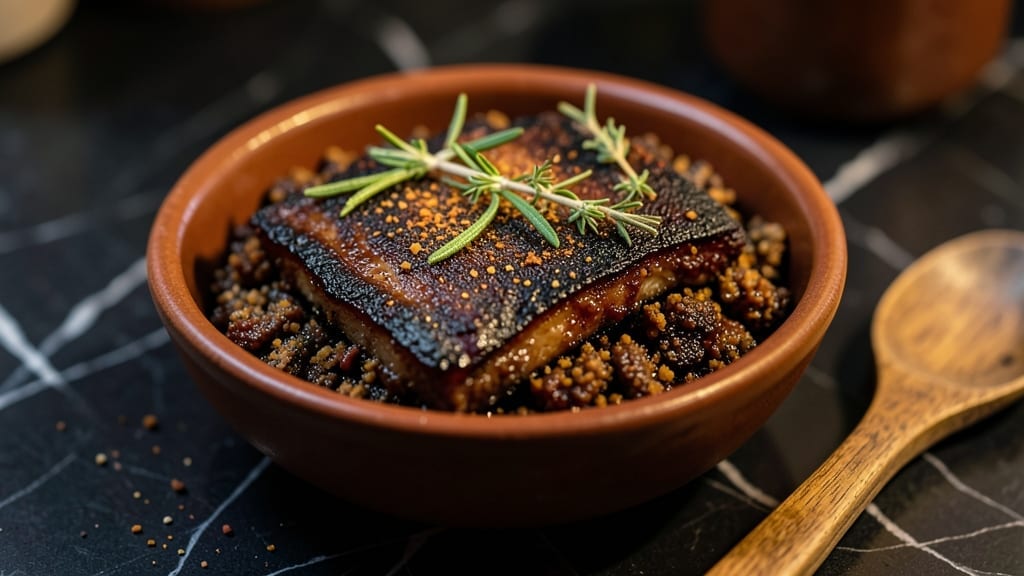
This smoked pork rib rub recipe delivers the bold, balanced spice blend that transforms tough ribs into fall-off-the-bone perfection—exactly the kind I developed after years of competing on the Southeast BBQ circuit.
Growing up in small-town Georgia, I learned that the right rub isn’t just about flavor; it’s about creating that perfect bark while keeping the meat tender underneath. The secret lies in the precise ratio of sweet, smoky, and savory spices that work together to form an irresistible crust.
What makes this rub stand out is its professional balance—just enough heat to wake up your taste buds without overpowering the natural sweetness of the pork.
I use a mix of smoked paprika, brown sugar, and coarse kosher salt as the foundation, then layer in garlic powder, onion powder, and a touch of cayenne for depth.
This blend isn’t just for competition-level ribs; it’s the same formula I use for my own heritage pigs on the farm, where every bite tells a story.
The result is ribs with a deeply caramelized crust that cracks under pressure, revealing juicy, tender meat beneath. The rub develops even more complexity as it smokes, creating layers of flavor that make every bite unforgettable.
Whether you’re cooking for a crowd or treating yourself to a solo feast, this spice blend ensures your ribs will be the star of the show—no matter the occasion.
Make a large batch and store it in an airtight container for up to six months, so you’re always ready to elevate your next smoke session. The versatility of this rub means it works just as well for pulled pork or brisket, making it a must-have in any pitmaster’s arsenal.
Let’s get started on creating your signature flavor profile.
Ingredients for best smoked pork rib rub
Nine spices, one perfect blend. The secret to competition-worthy ribs starts right here.
| Ingredient | Amount | Notes |
|---|---|---|
| Smoked Paprika 🌶️ | 3 tbsp | High-quality, smoky flavor |
| Light Brown Sugar 🍯 | 2 tbsp | Packed, for caramelization |
| Coarse Kosher Salt 🧂 | 2 tbsp | Diamond Crystal preferred |
| Garlic Powder 🧄 | 1 tbsp | Freshly ground preferred |
| Onion Powder 🧅 | 1 tbsp | Finely ground for even distribution |
| Ground Black Pepper 🌶️ | 1 tsp | Freshly cracked for heat |
| Cayenne Pepper 🔥 | ½ tsp | Adjust for desired heat |
| Ground Cumin 🌿 | 1 tsp | Toasted for deeper aroma |
| Mustard Powder 🍯 | ½ tsp | Yellow mustard preferred |
| Black Peppercorns 🌶️ | ¼ tsp | Crushed for texture |
[recipe_ingredient_scaler]
The smoked paprika is non-negotiable—Penzeys or McCormick make the best stuff, but the bulk bins at WinCo or Whole Foods work too. Look for deep red color and a strong smoky aroma. Brown sugar should be light, not dark—Domino or C&H are reliable brands. I always buy kosher salt in bulk from Costco; the coarse granules cling better to the ribs. For the cayenne, Dave’s Gourmet
No smoked paprika? Regular paprika plus a pinch of liquid smoke gets you close, but it won’t have the same depth. Swap mustard powder for dijon powder at half the amount. Running low on cumin? Ground coriander at the same quantity works in a pinch. The black peppercorns? Crush them lightly with a mortar and pestle—this adds texture that pre-ground pepper can’t match. Store your spices in airtight containers away from light; they’ll stay potent for up to a year. This rub keeps for 6-12 months in a sealed container, so make a big batch. I portion mine into quart-sized jars—one for ribs, one for pulled pork. Double-check your measurements; the smoky-sweet balance is delicate. For extra bark, add 1 tbsp of cornstarch to the mix. Trust me, this rub is worth the effort—every bite will tell the story of your smoke session.
Why You’ll Love This Recipe
- No-Fuss Seasoning: Honestly, this rub is the kind of recipe that makes you feel like a pro—even if you’ve never held a spatula in your life. Just toss those 10 ingredients in a bowl, mix, and boom: you’ve got a flavor bomb ready to go. No fancy techniques, no overcomplicating—just pure, unfussy seasoning that turns plain ribs into something special.
- Smoky-Sweet Sensation: That combination of smoked paprika and light brown sugar? Chef’s kiss. The paprika gives you that deep, woodsy smoke you crave, while the sugar caramelizes into a sticky, glossy crust that’ll have everyone begging for seconds. And the cayenne? Just enough heat to make it dangerous—like eating dessert with a little kick.
- Batch It Like a Boss: I make this rub in bulk because, let’s be real, who wants to measure out spices every time they grill? It keeps for up to a year in a jar, so you’re always ready for game day, BBQ parties, or even just a lazy Sunday dinner. Plus, it’s the perfect excuse to impress your friends without the last-minute stress.
- Budget-Friendly Powerhouse: This isn’t one of those recipes that breaks the bank. A few tablespoons of spices and a little sugar go a long way—you’ll have enough to season ribs for a crowd without spending a fortune. And if you’re feeding a family or hosting a tailgate, the ribs will be the star of the show, not the price tag.
Step-by-step instructions for creating the best smoked pork rib rub
This bold spice blend delivers fall-off-the-bone tenderness with every bite.
Combine the Dry Ingredients Thoroughly
In a medium bowl, add the 3 tablespoons smoked paprika and 2 tablespoons light brown sugar. Use your hands or a fork to break up any clumps in the brown sugar—this ensures even distribution later. The smoked paprika will give your ribs that signature smoky depth, while the brown sugar creates a beautiful caramelized crust.
Next, add the 2 tablespoons coarse kosher salt, 1 tablespoon garlic powder, and 1 tablespoon onion powder. The coarse salt enhances flavor penetration, while the garlic and onion powders build a savory foundation. Sprinkle in the 1 teaspoon ground black pepper and ½ teaspoon cayenne pepper—the cayenne adds just enough heat to wake up your taste buds without overpowering.
Finally, add the 1 teaspoon ground cumin, ½ teaspoon mustard powder, and ¼ teaspoon black peppercorns. The cumin brings earthy warmth, the mustard powder adds a subtle tang, and the peppercorns contribute a delicate crunch. Mix everything together until fully combined—you should see no streaks of individual spices.
Adjust for Heat and Texture Preferences
Taste the mixture before applying it to your ribs. If you prefer a milder heat, reduce the cayenne pepper slightly—start with ¼ teaspoon instead of ½ teaspoon. For extra boldness, increase it to ¾ teaspoon. The mustard powder can also be adjusted: omit it entirely for a neutral profile or double it to 1 teaspoon for a sharper kick.
Here’s the thing—this rub works best when applied generously. You want a thick, even coating that clings to the ribs. If the mixture feels too dry, add 1 teaspoon water and mix again. The goal is a paste-like consistency that will stick to the meat without falling off during smoking.
Apply the Rub to Your Ribs
Pat your ribs dry with paper towels—moisture is the enemy of a good bark. Now, take the rub and press it firmly into every inch of the meat, including the bones. Don’t be shy—this is where the magic happens. The coarse texture of the salt and spices will create those beautiful crusty edges while the sugar caramelizes for a sticky, flavorful glaze.
Let the rubbed ribs sit at room temperature for 30 minutes before smoking. This allows the spices to penetrate the meat slightly and ensures even cooking. If you’re short on time, a 15-minute rest still works, but the longer rest yields better results. Real talk: Skipping this step can lead to uneven seasoning and less flavorful bark.
Smoke to Perfection
Smoke your ribs at 225°F using your preferred wood—hickory or oak are classic choices. The rub will develop a dark, glossy bark as it cooks, which is your visual cue that the spices are working their magic. For fall-off-the-bone tenderness, aim for an internal temperature of 195-203°F—this is when the collagen breaks down and the meat becomes incredibly tender.
Don’t rush this part. The rub needs time to meld with the meat and create that perfect balance of smoky, sweet, and spicy flavors. If you’re using a water pan, check it occasionally to ensure it doesn’t run dry—this helps maintain moisture in the ribs. Once the probe test confirms tenderness, let the ribs rest for 15-20 minutes before serving. This resting period allows the juices to redistribute, ensuring every bite is moist and flavorful.
Pro Tips For Making Best Smoked Pork Rib Rub
- Toast Your Cumin First: I learned this the hard way—skipping the toast step means your cumin will taste dull and one-dimensional. Heat 1 teaspoon of ground cumin in a dry skillet over medium-low for 30 seconds until fragrant, then let it cool before mixing into the rub. That extra aroma makes a real difference in the final flavor.
- Pack That Sugar: The recipe calls for packed light brown sugar, not scooped. Tap your measuring spoon into the container to settle the sugar, then level it off—this ensures the right amount for caramelization. Trust me, loose sugar won’t give you that deep, sticky bark you’re after.
- Press the Rub Hard: Don’t just sprinkle the rub—dig your fingers into the meat, especially around the bones and crevices. The goal is to get that spice paste into the ribs, not just on top. If it feels like you’re overdoing it, you’re probably not.
- Rest the Ribs: That 30-minute room-temperature rest isn’t optional—it’s when the spices actually start working. I used to skip it and wondered why my bark never formed properly. Let the meat breathe, and you’ll get even cooking and a crust that sticks. (Yes, even if you’re impatient like me.)
Common mistakes when making this dish
Over-Salted Ribs
This is the most common mistake I see—especially when using coarse kosher salt. 2 tablespoons is plenty, but if you’re using table salt, you might accidentally double the amount. Too much salt draws out moisture from the meat, leaving you with dry, salty ribs instead of juicy perfection.
Always measure your salt with a kitchen scale for precision—trust me, it makes a difference. 🧂
Skipping the Rest
After applying the rub, many home cooks rush straight to the smoker. But that 30-minute rest at room temperature is critical—it lets the spices penetrate the meat and creates that beautiful bark.
I once saw a pitmaster skip this step entirely and ended up with uneven seasoning and a less flavorful crust. Patience here pays off in big ways.
Uneven Rub Application
When you’re in a hurry, it’s easy to slap the rub on haphazardly. But you want that thick, even coating—especially on the bones. Use your hands to press the rub firmly into every nook and cranny.
If the mixture feels dry, add 1 teaspoon of water to create a paste-like consistency that clings better. This ensures every bite has that perfect spice balance.
Ignoring the Sugar
The 2 tablespoons of light brown sugar isn’t just for flavor—it’s what creates that gorgeous caramelized crust. Skipping it means missing out on the sweet-savory contrast that makes ribs irresistible.
Plus, the sugar helps draw out moisture during smoking, which then reabsorbs for juicy results. Don’t be tempted to swap it for something else—this is non-negotiable.
Wrong Wood Choice
While the rub itself doesn’t directly interact with the wood, the wrong choice can ruin your flavor balance. Hickory and oak are classic for ribs, but fruitwoods like cherry or apple can overpower the rub’s complexity.
I once used mesquite by accident and ended up with ribs that tasted more like campfire than pork. Stick to traditional woods to let the rub shine. 🔥
Underestimating Heat
The ½ teaspoon cayenne pepper is meant to add subtle heat, not turn your ribs into a ghost pepper challenge. If you’re not used to spice, start with ¼ teaspoon and adjust to taste.
Too much heat can overwhelm the natural sweetness of the pork and make the rub taste one-dimensional. Balance is key—this isn’t a chili recipe, after all!
Nutrition facts
Frequently asked questions
Can I make this rub ahead of time?
This rub keeps beautifully for 6-12 months when stored in an airtight container. I like to portion mine into quart-sized jars so I always have it ready for ribs or pulled pork. Just make sure to keep it in a cool, dark place away from moisture.
What if my rub feels too dry when applying it?
No problem! If the mixture is too dry, add 1 teaspoon of water and mix until you get a paste-like consistency. This helps it cling better to the ribs during smoking. The key is even coverage—don’t be afraid to get your hands involved and press it firmly into every nook.
Can I use this rub on other meats besides ribs?
This rub works like a charm on pulled pork, brisket, and even chicken. The spice balance makes it versatile, though you might want to adjust the cayenne amount for chicken if you prefer milder flavors. I’ve used it successfully on pork shoulders too—just apply generously and let it rest before cooking.
Why does the recipe call for coarse kosher salt?
The coarse texture of kosher salt creates better flavor penetration and helps form that beautiful bark on the ribs. It’s less processed than table salt, so you get more flavor for your money. If you only have table salt, use 1 tablespoon instead of 2 tablespoons of kosher salt for the same effect.
How do I adjust the heat level if I’m not used to spicy food?
Start with ¼ teaspoon of cayenne instead of ½ teaspoon to begin with. You can always add more later, but you can’t take it away! The mustard powder also adds subtle heat—reduce or omit it if you prefer a milder profile. Taste as you go and adjust to your preference.

Trained in classic French technique but raised on slow-cooked ribs and spicy rubs, she blends culinary skill with smoke and soul.
- Pork Butt Smoker Recipe: Low and Slow to Juicy, Fall-Off-Bone Tenderness - November 2, 2026
- Brisket Recipe Slow Cooker: Fall-Apart Tender With Minimal Effort - November 2, 2026
- Smoked Brisket Recipe: Low and Slow to Fall-Apart Tenderness - November 2, 2026