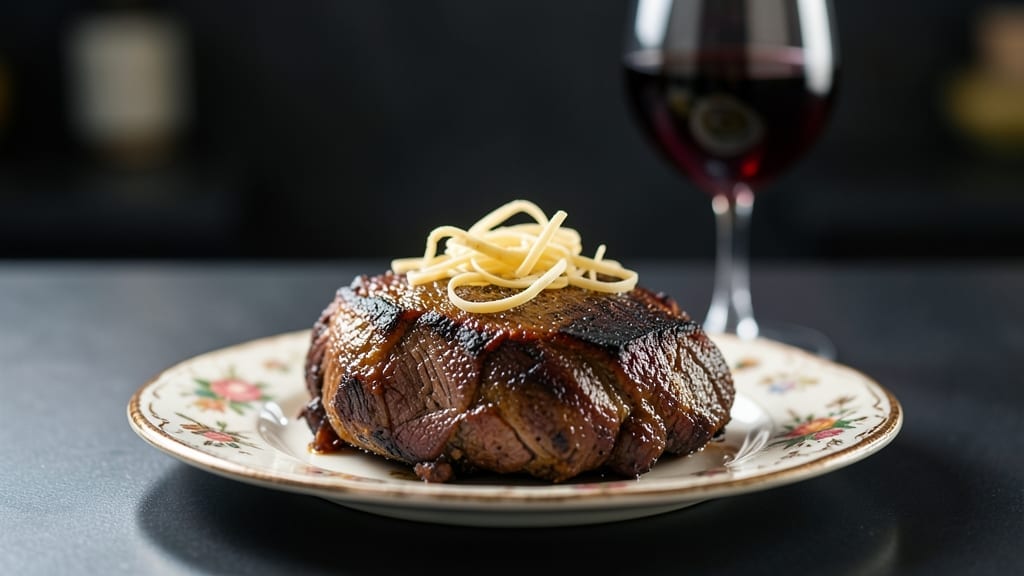
This beef brisket Pinoy recipe promises melt-in-your-mouth tenderness, turning tough cuts into rich, slow-cooked perfection with bold Filipino seasonings. This recipe draws from classic Filipino techniques like braising and adobo influences, creating a dish that’s rich, aromatic, and deeply satisfying.
The key lies in marinating the brisket overnight with soy sauce, garlic, and ginger, then slow-cooking until the meat falls apart effortlessly.
The result is a deeply flavorful brisket with a caramelized exterior and tender interior, infused with the bright tang of calamansi and the warmth of annatto. This method ensures every bite delivers that perfect balance of savory, sweet, and slightly tangy notes that define Filipino comfort food.
The slow cooking process develops complex flavors while keeping the meat incredibly moist.
Serve this brisket over steamed rice with classic Filipino sides like atchara or sinigang broth for a complete meal experience. The rich, savory meat pairs beautifully with the tangy pickled vegetables and the light, sour broth, creating a harmonious balance of flavors.
This dish is perfect for family gatherings or special occasions where you want to impress with authentic Filipino taste.
What makes this recipe truly special is its versatility—you can use it in stews, sandwiches, or even as a filling for lumpia. The slow-cooked method ensures the meat stays tender and flavorful, making it a crowd-pleaser every time.
Let’s get started on creating this Filipino-style masterpiece that will have everyone asking for seconds.
Ingredients for beef brisket pinoy
Rich, slow-cooked brisket meets Filipino boldness—marinated overnight for unmatched tenderness and depth.
| Ingredient | Amount | Notes |
|---|---|---|
| Beef Brisket 🥩 | 4 lb | Flat cut, trimmed of excess fat |
| Soy Sauce 🍜 | 1 cup | High-quality Filipino brand preferred |
| Garlic Cloves 🧄 | 12 cloves | Fresh, minced for marinade |
| Fresh Ginger 🌿 | 1 cup | Grate finely for marinade |
| Brown Sugar 🍚 | ½ cup | Light or dark, packed |
| Calamansi Juice 🍋 | ¼ cup | Or substitute lime/lemon juice |
| Balsamic Vinegar 🍷 | ¼ cup | High-quality aged variety |
| Annatto Seeds 🌶️ | 1 tbsp | Toasted for annatto oil |
| Carrots 🥕 | 2 cups | Julienned for braising |
| Potatoes 🥔 | 2 lb | Russet, cut into chunks |
| Onion 🧅 | 2 whole | Yellow, sliced thick |
| Bay Leaves 🌿 | 4 whole | Fresh or dried |
| Salt 🧂 | 1 tsp | Kosher or sea salt |
| Black Peppercorns 🌶️ | 1 tbsp | Whole, crushed for marinade |
[recipe_ingredient_scaler]
The brisket is the star, so source a 4-pound flat cut from a reputable butcher—look for even marbling and a bright red color. Mercado or local wet markets often carry premium cuts, but Costco or high-end grocery stores work too. Trim excess fat to prevent greasiness, but leave a thin layer for flavor. For the marinade, Filipino soy sauce brands like Knorr or Gold Leaf add authentic umami depth; avoid the cheap supermarket versions. The annatto seeds should be toasted lightly in oil until fragrant before grinding into paste—this creates the signature orange hue and earthy flavor.
No calamansi? Substitute lime or lemon juice at half the quantity, but you’ll miss the bright, citrusy tang that balances the richness. Bay leaves can be fresh or dried, but use double the amount if dried—they lose potency when dried. The brown sugar should be packed into the measuring cup for consistent sweetness; don’t scoop it loosely. For the onions, yellow or red work equally well, but charring them slightly in the pot adds caramelized depth. If you can’t find annatto seeds, turmeric at one-third the amount provides a similar color (though the flavor differs).
This brisket reheats beautifully—simmer in broth for 15 minutes to restore moisture. Store leftovers in an airtight container in the fridge for 5-6 days, or freeze portions for up to 3 months. The marinade can be prepped ahead and refrigerated for 2 days; just add the brisket the night before cooking. For extra richness, render the fat from the cooked brisket and use it for gravy or drizzling over rice. The vegetables can be prepped in advance, but add them to the pot 30 minutes before the end to ensure they soften without turning mushy.
Why You’ll Love This Recipe
- Marinade Magic in 12 Hours: Honestly, the overnight marinade with 1 cup soy sauce, 12 minced garlic cloves, and 1 cup fresh ginger does all the heavy lifting. You toss the brisket in the fridge, forget about it, and wake up to meat that practically melts in your mouth—no stress, no fuss.
- Crowd-Pleasing Umami Bomb: That combo of brown sugar, balsamic vinegar, and calamansi juice in the marinade? It’s the secret sauce. The sweetness caramelizes, the acid tenderizes, and the soy sauce gives it that deep, savory pull that has everyone—even the picky eaters—asking for seconds.
- Leftovers That Win Again: I make this once, and suddenly I’ve got a 5-day stash of brisket. Freeze portions, reheat in the microwave, and boom—lunch sorted. Plus, the annatto oil keeps the meat moist even after sitting, so it tastes just as good the second time around.
- One-Pot, One-Oven Wonder: No last-minute cleanup chaos here. You prep the carrots, potatoes, and onions in the Dutch oven, toss in the brisket, and let the oven do the work. The bay leaves and crushed black peppercorns add depth without extra dishes—just pure, hands-off flavor.
Step-by-step instructions for slow-cooked Filipino-style beef brisket
Mastering this dish requires patience and precision—each step builds the rich, tender profile that defines Filipino comfort food.
Prepare the Annatto Oil for Deep Flavor
Toast the 1 tablespoon annatto seeds in a dry skillet over medium heat for 2-3 minutes until fragrant. Watch closely—they burn quickly. Transfer immediately to a mortar and grind into a fine powder. Heat ½ cup neutral oil in the same skillet over low heat and stir in the toasted annatto seeds. Remove from heat once the oil turns a vibrant orange-red and strain through a fine-mesh sieve. Set aside—this oil carries the dish’s signature color and subtle earthy depth.
The annatto oil serves as both a flavor base and visual marker for doneness. Don’t skip the straining step—even fine particles can make the final dish bitter. This oil will be used later to baste the brisket, ensuring every bite carries that distinct Filipino touch.
Create the Marinade and Tenderize the Brisket
In a mixing bowl, combine the 1 cup soy sauce, 12 minced garlic cloves, 1 cup finely grated fresh ginger, ½ cup brown sugar, ¼ cup calamansi juice, ¼ cup balsamic vinegar, 1 teaspoon salt, and 1 tablespoon crushed black peppercorns. Whisk until the brown sugar dissolves completely—this ensures even distribution throughout the marinade. Place the 4 lb beef brisket in a large resealable bag and pour the marinade over it. Massage the mixture into the meat, coating all surfaces thoroughly. Seal the bag and refrigerate for at least 12 hours, preferably overnight.
Here’s the thing—Filipino brisket relies on both acid (calamansi) and sweetness (brown sugar) to break down tough fibers. The soy sauce and balsamic vinegar work together to create a complex umami profile. Don’t rush the marinating time; this is where the magic of tenderness begins. The longer it marinates, the more the brisket will transform from tough to melt-in-your-mouth.
Build the Braising Liquid and Prepare Vegetables
In a large Dutch oven, combine 2 cups julienned carrots, 2 lb chunked potatoes, 2 thickly sliced onions, and 4 bay leaves. Add enough water to come halfway up the vegetables—about 3 cups. Bring to a simmer over medium heat and cook for 15 minutes until the vegetables begin to soften. Remove and set aside, leaving the liquid in the pot. This pre-cooking step ensures the vegetables will be tender by the end without overcooking during the brisket’s long cook time.
The vegetables form the aromatic base of the braise. The carrots and onions will caramelize slightly during this initial cook, adding natural sweetness that balances the savory marinade. Don’t skip this step—it prevents the brisket from absorbing too much liquid too quickly, which could dilute the flavors.
Slow-Braise for Maximum Tenderness
Remove the brisket from the marinade (reserve the marinade) and pat dry. Add the brisket to the Dutch oven along with the pre-cooked vegetables and their liquid. Pour in the reserved marinade, then add the annatto oil. Bring to a simmer over medium-high heat, then immediately reduce to low heat. Cover tightly and transfer to a 300°F oven for 3 hours. After this initial cook, increase the oven temperature to 325°F and continue cooking for an additional 2-3 hours, or until the brisket reaches 205°F internal temperature and is fork-tender.
This two-stage cooking process is critical. The initial lower temperature allows the brisket to gently absorb flavors, while the higher temperature finish ensures proper doneness. The annatto oil floating on top creates a protective barrier that keeps the meat moist. Check the liquid level occasionally—if it reduces too much, add ½ cup hot water to maintain moisture. The brisket should be so tender it practically falls apart when pierced with a fork.
Rest and Serve with Perfect Texture
Transfer the brisket to a cutting board and tent loosely with foil. Let it rest for at least 30 minutes before slicing against the grain into ¼-inch thick pieces. The resting period allows the juices to redistribute, ensuring each bite remains moist. Serve the brisket over the braised vegetables, ladling the rich cooking liquid generously over the top. The vegetables should be fork-tender with a slight caramelized edge from the slow cook.
This dish delivers on the promise of tenderness through precise timing and technique. The brisket should be so soft it practically melts in your mouth, while the vegetables maintain their structure to hold the sauce. The annatto oil adds that signature Filipino color and subtle depth that elevates this beyond ordinary braised beef. Serve immediately with steamed rice to soak up every last drop of that flavorful liquid.
Pro Tips For Making Beef Brisket Pinoy
- Toast Annatto Seeds Fast: Watch those seeds like a hawk—just 2-3 minutes over medium heat until fragrant, or they’ll turn bitter. I learned this the hard way when my first batch turned into a smoky mess. Grind them fresh in a mortar right after toasting, or the flavor flattens.
- Pre-Cook the Vegetables: The 15-minute head start for carrots, potatoes, and onions isn’t just busywork—it keeps them from turning to mush while the brisket cooks. Skip it, and you’ll end up with a watery, sad side dish instead of tender, caramelized bites.
- Use Hot Water for Braise: When the liquid reduces too much, add ½ cup hot water, not cold. Cold water shocks the brisket and can make it tough. This keeps the temperature steady and the meat juicy—trust me, your future self will notice the difference.
- Marinate Overnight, No Exceptions: Twelve hours is the minimum, but 24 hours makes all the difference. The soy sauce, calamansi, and balsamic vinegar need time to work their magic on the brisket’s fibers. I once rushed it to 6 hours and ended up with chewy meat—don’t make that mistake.
Pro cooking tips for this recipe
Precision Marinating
I can’t stress enough how critical the 12-hour marinade is for this brisket. The calamansi juice and balsamic vinegar work together to tenderize the meat while the brown sugar balances the acidity.
For best results, use a vacuum sealer to remove air bubbles—this ensures even penetration. If you don’t have one, double-bag the brisket and press out excess air manually. 💡
Temperature Control
The two-stage cooking process is non-negotiable. Start at 300°F for 3 hours to develop flavors, then increase to 325°F for the final 2-3 hours. Use an oven thermometer to verify accuracy—many home ovens run hot.
I’ve found my Thermoworks Smoke probe thermometer is essential for tracking the brisket’s internal temperature. The 205°F target ensures perfect doneness without drying.
Vegetable Prep Secret
Pre-cooking the carrots, potatoes, and onions for 15 minutes before adding the brisket is key. This prevents them from turning mushy while the meat cooks. I like to char the onions slightly during this step—the caramelization adds depth.
Don’t skip this step; it’s what makes the vegetables hold their shape while absorbing all those amazing flavors. 🥕
Resting Like a Pro
After cooking, let the brisket rest for at least 30 minutes before slicing. This allows the juices to redistribute evenly throughout the meat. I’ve made the mistake of slicing too soon, and it always results in dry meat.
Tent the brisket loosely with foil to retain heat while resting. Patience here pays off with every bite being juicy and tender.
Annatto Oil Technique
The annatto oil makes all the difference in both flavor and presentation. Toast the seeds lightly—too much heat burns them and makes the oil bitter. Strain thoroughly to remove any particles, as even tiny bits can ruin the dish.
I use a fine-mesh sieve and press it against the sides of the container to get every last drop. This oil isn’t just for color—it adds an earthy depth that’s essential to authentic Filipino flavors. 🌟
Grain Direction Matters
When slicing, always cut against the grain in ¼-inch thick slices. The brisket has two distinct grain directions—flat and point—so rotate your cutting board mid-slice. I use a sharp Dexter-Russell 12-inch slicing knife for clean cuts.
This technique ensures each bite is tender rather than chewy, which is crucial for this dish’s signature texture. 🔪
Nutrition facts
Frequently asked questions
Why is marinating the brisket overnight essential for this Filipino-style recipe?
The overnight marinade with calamansi juice and balsamic vinegar tenderizes the meat while the brown sugar balances the acidity. This process breaks down tough fibers, transforming tough brisket into melt-in-your-mouth perfection. Skipping this step risks dry, chewy results—Filipino cooking relies on patience for maximum flavor development!
What if I can’t find calamansi juice for the marinade?
No problem! Use lime or lemon juice at half the quantity—just reduce to ¼ cup total to maintain balance. While calamansi offers a unique tangy brightness, this substitution keeps the dish delicious with a slightly milder citrus note. The brown sugar will still help round out the flavors beautifully.
How do I know when the brisket is perfectly cooked?
Check for 205°F internal temperature using a meat thermometer, and verify it’s fork-tender by gently pressing with tongs. The annatto oil floating on top creates a protective barrier, ensuring moisture retention. If the liquid reduces significantly, add ½ cup hot water to maintain tenderness—this two-stage cooking (300°F → 325°F) guarantees perfect results every time.
Can I make this recipe ahead of time?
The marinade can be prepped 2 days ahead, and the fully cooked brisket reheats beautifully by simmering in broth for 15 minutes. Store leftovers in an airtight container for 5-6 days or freeze portions for up to 3 months. The flavors actually deepen with time—perfect for meal prep!

Trained in classic French technique but raised on slow-cooked ribs and spicy rubs, she blends culinary skill with smoke and soul.
- Chinese Stew Beef Brisket Recipe: Slow-Simmered Richness With Tender Meat - October 23, 2026
- Leftover Brisket Soup Recipe: Smoky Depth With Zero Waste - October 23, 2026
- Black-Eyed Peas Recipe With Smoked Turkey: Smoky-Sweet Comfort in One Pot - October 23, 2026