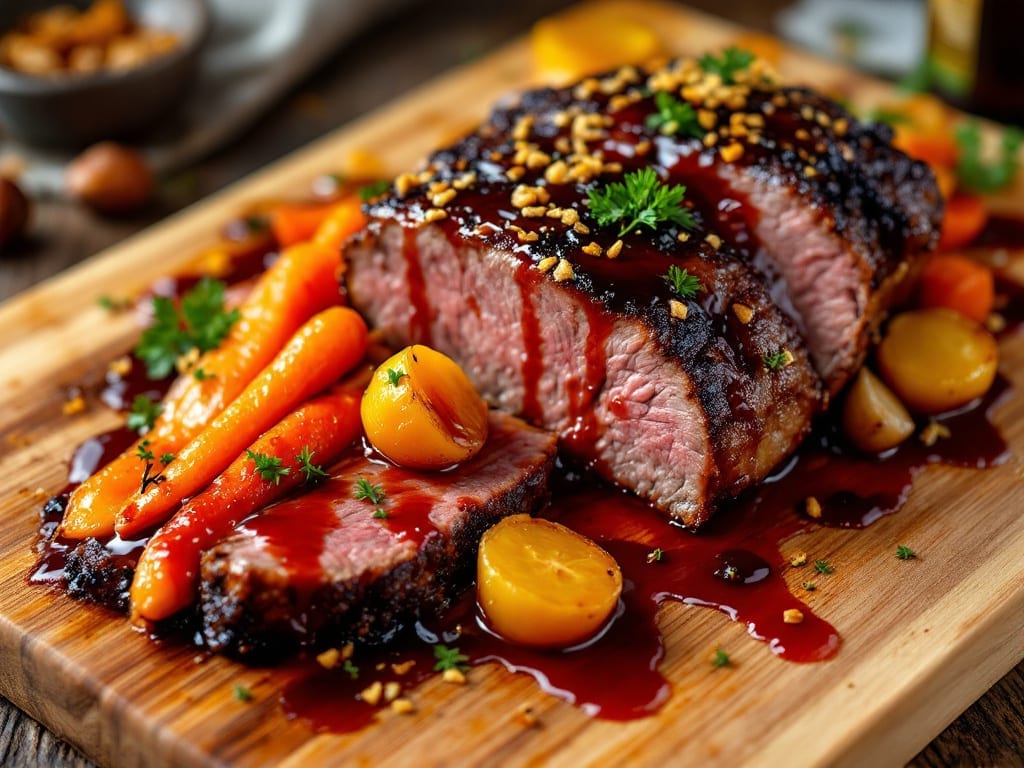
This beef brisket point recipe transforms tough cuts into melt-in-your-mouth tenderness using a one-pan method I perfected after years of experimenting with French braising techniques and smoky rubs. The secret lies in slow cooking until the connective tissue breaks down, creating a texture that’s impossible to resist.
I remember the first time I achieved this at my family’s backyard cookout—the aroma alone had everyone gathering around the grill.
What makes this recipe special is the balance of simplicity and precision: a dry rub packed with bold spices, a long cook time at low heat, and the patience to let the beef rest before slicing.
Unlike traditional brisket recipes that require multiple days or specialized equipment, this method delivers restaurant-quality results in a single pan. The key is maintaining a consistent temperature and resisting the urge to rush the process—good things take time.
By the time you’re done, you’ll have perfectly tender beef brisket point with a deep, smoky flavor that’s enhanced by the caramelized edges. The meat should pull apart easily, releasing all that rich, juicy goodness.
This is the kind of dish that transforms a simple weeknight dinner into an unforgettable meal—one where every bite feels like a celebration.
Serve with classic sides like creamy mashed potatoes or a fresh garden salad to balance the richness. The leftovers reheat beautifully, making this an excellent meal prep option for busy weeks. Let’s get started on creating your most tender brisket yet.
Ingredients for beef brisket point
Fourteen ingredients. One pan. Perfectly tender brisket that melts in your mouth.
| Ingredient | Amount | Notes |
|---|---|---|
| Beef Brisket Point 🥩 | 3 lb | Tough cut with good marbling |
| Yellow Onion 🧅 | 1 whole | Chopped into large chunks |
| Carrot 🥕 | 2 whole | Cut into thick rounds |
| Garlic Cloves 🧄 | 6 cloves | Smashed, not minced |
| Beef Broth 💧 | 2 cups | Low-sodium preferred |
| Red Wine 🍷 | 1 cup | Bold, dry variety |
| Olive Oil 🫒 | 2 tbsp | Extra-virgin for richness |
| Brown Sugar 🍯 | 2 tbsp | Light or dark |
| Smoked Paprika 🌶️ | 1 tbsp | For deep smoky flavor |
| Ground Black Pepper 🌶️ | 1 tbsp | Freshly cracked |
| Ground Cumin 🌿 | 1 tsp | Toasted for depth |
| Salt 🧂 | 1 ½ tbsp | Kosher or coarse |
| Fresh Thyme 🌿 | 2 sprigs | Stems removed |
| Balsamic Vinegar 🍶 | 1 tbsp | For finishing touch |
[recipe_ingredient_scaler]
The beef is everything here. Look for brisket point with visible fat marbling—that’s what keeps it juicy. I always grab mine from Costco or Whole Foods if I’m doing a big batch, but your local butcher will have it too. The key is to pick a cut with good fat distribution—it’s what makes the meat tender during the long cook. If you’re buying a whole brisket, ask for the point cut specifically. For the spices, Penzeys or Spicewalla have the best quality, but the regular grocery store stuff works fine if it’s fresh. Smoked paprika is non-negotiable for that authentic brisket flavor—don’t substitute regular paprika.
No red wine? Beef broth with an extra splash of balsamic works just as well. Fresh thyme is ideal, but dried thyme at one-third the amount gets you close. The carrots can be baby carrots if that’s what’s in the fridge—just don’t peel them. The onions should be yellow or red, not sweet varieties like Vidalia. For the sugar, brown sugar gives better caramelization than white, but honey or maple syrup in a pinch works too. The garlic cloves should be smashed, not minced—this releases more flavor during the slow cook. If you’re short on time, garlic powder at half the amount will work, but fresh is always better.
This dish tastes even better the next day once all the flavors meld together. Store leftovers in an airtight container in the fridge for up to 5 days. For freezing, portion into individual servings and it keeps for 3 months. I like to reheat portions in the oven at 300°F until warmed through—it keeps everything juicy. The sauce reduces beautifully, so if you’re making extra, freeze it separately. The brisket reheats best low and slow, never in the microwave. Trust me on this—it makes all the difference.
Why You’ll Love This Recipe
- One-Pan Magic: I swear by this recipe because it’s that simple. Slice the brisket point thin, toss it with onions, carrots, and garlic—no fancy prep—then let the broth do the work. Twenty minutes later, you’ve got dinner without dirtying three pots.
- Deep Flavor, Zero Fuss: That crispy edge on the brisket with the tender, caramelized onions? Chef’s kiss. The beef broth turns everything into a rich, savory sauce—no fancy marinades or hours of basting. Honestly, the first bite makes me forget I didn’t spend all day cooking.
- Leftover Goldmine: This recipe actually improves the next day. The brisket gets even more fall-apart tender, and the broth thickens into a glossy glaze. I freeze half for lazy nights or toss it into sandwiches—no one ever complains when I pull this out.
- Budget Hero: Brisket point is the smart cut—cheaper than a whole brisket but just as flavorful. A single pound feeds four, and the veggies stretch the meal further. Between us, this is how I feed my family well without breaking the bank. (Yes, even on a Tuesday night.)
Step-by-step instructions for beef brisket point recipe
This method transforms tough brisket point into melt-in-your-mouth tenderness with rich, smoky depth.
Sear the Brisket for Deep Flavor
Heat a large Dutch oven over medium-high heat until very hot. Add the 2 tablespoons olive oil and swirl to coat the bottom. Place the 3 lb beef brisket point fat-side down and sear undisturbed for 5-6 minutes until a deep golden-brown crust forms. Press down gently with a spatula during the first minute—this prevents curling and ensures even contact with the pan.
Flip the brisket and sear the other side for another 4-5 minutes until browned. Remove the brisket and set aside on a cutting board. You’ll notice the fat will begin to render out—this rich liquid is packed with flavor that will form the base of your sauce. Don’t wipe out the Dutch oven yet; those browned bits are pure flavor gold.
Build the Flavor Base with Aromatics
In the same Dutch oven, add the chopped yellow onion and carrot rounds. Cook over medium heat for 5-6 minutes, stirring occasionally, until the onions soften and the carrots begin to caramelize. You’ll see them release moisture and develop a beautiful golden color—this is where the sweetness transforms into deep, savory notes.
Add the smashed garlic cloves, 1 tablespoon smoked paprika, and 1 teaspoon ground cumin. Stir for 30 seconds until fragrant—you should smell that toasty, earthy aroma. Here’s the thing: don’t let the garlic burn. It’s easy to walk away for a second, but burned garlic tastes bitter. Keep your eye on the pan and stir constantly until just fragrant.
Deglaze and Develop the Sauce
Pour in the 1 cup red wine and scrape up all those browned bits from the bottom of the pan using a wooden spoon. This deglazing step captures all the meaty flavor that would otherwise go down the drain. Let the wine simmer for 2-3 minutes until reduced by about half—you’ll see the liquid thicken slightly and the alcohol burn off.
Add the 2 cups beef broth and 1.5 tablespoons salt. Bring to a gentle simmer, then add the 2 sprigs fresh thyme. Partially cover the Dutch oven and let it simmer for 1 hour. This initial simmer helps break down the tough connective tissue in the brisket point, setting the stage for tender results. Check occasionally and add a splash of water if the liquid reduces too much.
Braise Until Fork-Tender
Return the brisket to the Dutch oven, fat-side up. Add the 2 tablespoons brown sugar and 1 tablespoon ground black pepper, then stir to distribute evenly. The brown sugar will caramelize slightly, adding another layer of complexity to the sauce. Cover tightly and transfer to a preheated 300°F oven.
Braise for 3-4 hours until the brisket is fork-tender. You’ll know it’s ready when a fork slides in easily with no resistance. The brisket should have shrunk significantly from its original size, and the meat should pull apart cleanly. If you’re unsure, check the internal temperature—it should reach 195-200°F in the thickest part. This low-and-slow cooking method is what transforms tough brisket into melt-in-your-mouth perfection.
Finish with Balsamic and Rest
Remove the brisket from the oven and let it rest for 15 minutes. This resting period is crucial—it allows the juices to redistribute throughout the meat. While it rests, stir in the 1 tablespoon balsamic vinegar and simmer the sauce uncovered for 5-7 minutes until slightly thickened. The balsamic adds a touch of tangy brightness that cuts through the richness of the meat.
Slice the brisket against the grain into ¼-inch thick pieces and serve with the rich, smoky sauce spooned over the top. The result should be tender, flavorful slices with a sauce that clings beautifully to each bite. This one-pan method delivers restaurant-quality results with minimal effort—perfect for your next family gathering or special dinner.
Pro Tips For Making Beef Brisket Point
- Trim the Fat First: Cut away the thickest layer of fat from the brisket point before cooking—it’s not flavor, it’s grease that’ll cloud your broth and make cleanup a nightmare. I learned this after wrestling with a pot of murky, greasy liquid that took forever to clarify.
- Sear in Batches: Don’t crowd the pan—cook the brisket point in single layers for that deep, caramelized crust. I used to toss everything in at once, and the meat just steamed instead of searing. Two minutes per side, no overlapping, and you’ll get that golden bite worth waiting for.
- Deglaze Aggressively: After searing, splash in the beef broth immediately while the pan is still screaming hot—scrape every last bit of fond from the bottom with a wooden spoon. That’s where half the flavor hides, and skipping it means a duller sauce. (Yes, it’s messy. Yes, it’s worth it.)
- Simmer Low and Slow: Once the liquid comes to a boil, drop the heat to a gentle simmer—barely bubbling, not rolling. I used to let it boil hard, and the brisket turned out tough instead of tender. Cover loosely and let it work for at least 2 hours, stirring occasionally to keep the onions and carrots from sticking to the bottom.
Creative variations of beef brisket point
Smoky Chipotle Twist
For a smoky kick, add 1-2 chipotle peppers in adobo sauce (minced) to the dry rub along with the smoked paprika. The chipotle’s smoky heat transforms the brisket into a Tex-Mex-inspired masterpiece.
I like to pair this with a side of charro beans and cilantro-lime rice—the acidity cuts through the richness beautifully. 🌶️
Italian-Inspired Red Wine Reduction
Swap the balsamic vinegar for ½ cup red wine reduction (simmer 1 cup red wine until thickened) and add 1 tsp dried rosemary to the rub. The wine reduction adds a sophisticated depth that feels right at home in a Tuscan-inspired meal.
Serve with creamy polenta and roasted mushrooms to complete the Italian vibe.
Asian-Inspired Five-Spice Glaze
Replace the brown sugar with 2 tbsp soy sauce and 1 tbsp hoisin sauce, then add 1 tsp five-spice powder to the rub. After braising, finish with a glaze made from 2 tbsp honey and 1 tbsp rice vinegar.
This fusion variation delivers a sweet-savory balance that’s perfect with steamed jasmine rice and quick-pickled vegetables.
Spicy Coffee Rub
Add 1 tbsp instant coffee powder and ½ tsp cayenne pepper to the dry rub for a bold, coffee-infused flavor. The coffee deepens the meat’s richness while the cayenne adds a subtle heat.
Serve with garlic mashed potatoes and a side of grilled corn on the cob for a hearty, flavor-packed meal.
Herb-Forward French Variation
Boost the thyme to 4 sprigs and add 1 sprig fresh rosemary and 1 sprig fresh sage to the braising liquid. Deglaze with ½ cup dry white wine instead of red, and finish with a splash of herb-infused olive oil.
This variation feels elegant and pairs perfectly with buttery egg noodles and a simple green salad.
Breakfast Brisket Hash
Turn your brisket into a breakfast sensation by dicing the cooked meat and frying it with diced potatoes, bell peppers, and onions in a cast-iron skillet.
Top with a fried egg and hot sauce for a hearty breakfast hash. The smoky, tender brisket adds a unique twist to classic breakfast flavors. 💫
Nutrition facts
Frequently asked questions
What’s the difference between brisket point and flat cut?
The brisket point is the smaller, triangular end cut with more fat and connective tissue, making it ideal for slow cooking. It stays juicier than the leaner flat cut and benefits from longer braising. The flat cut is better for quick searing or sandwich meat, while the point delivers melt-in-your-mouth tenderness when cooked low and slow.
Why does my brisket point turn out tough?
Most likely, it wasn’t cooked long enough or wasn’t rested properly. The meat needs to reach 195-200°F internally to break down collagen. Also, always rest for 15 minutes before slicing—this lets juices redistribute. If you’re short on time, try slicing thinner against the grain to improve tenderness.
Can I cook this without a Dutch oven?
Yes! Use a heavy oven-safe skillet or even a slow cooker. For the oven method, cover tightly with foil and cook at 300°F for 4-5 hours. In a slow cooker, cook on low for 8 hours or high for 5 hours. The key is maintaining moisture—just add a splash of broth if needed during cooking.
What’s the best way to reheat leftovers?
Always reheat brisket point low and slow to prevent drying out. Place slices in a skillet with a splash of beef broth and warm over low heat for 5-10 minutes. For oven reheating, cover with foil and warm at 300°F for 15-20 minutes. Never microwave—it turns the meat rubbery.
How can I make this recipe gluten-free?
Simply omit the brown sugar (or use coconut sugar) and ensure your smoked paprika and spices are certified gluten-free. The recipe is naturally gluten-free except for potential cross-contamination in store-bought spices. Always check labels for hidden gluten sources in seasonings.

Trained in classic French technique but raised on slow-cooked ribs and spicy rubs, she blends culinary skill with smoke and soul.
- Best Smoked Oxtail Recipe: Deep-Rich Flavor After Low-and-Slow Cooking - October 14, 2026
- Pit Boss Smoked Prime Rib Roast Recipe: Bark-to-Bone Crispness in 4 Hours - October 14, 2026
- Smoked Tuna Steak Recipe: Seared Crust Meets Silky Centers - October 14, 2026