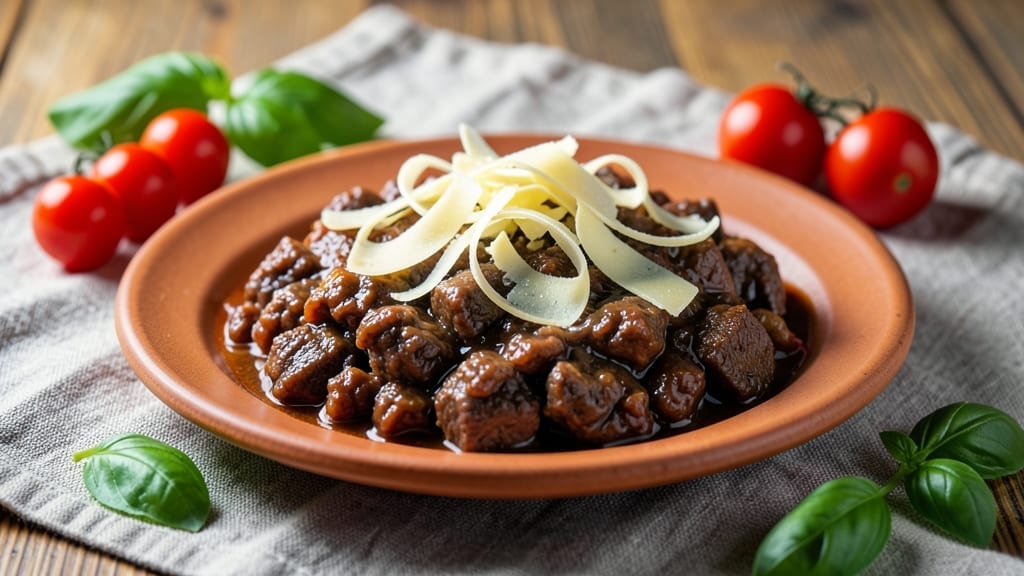
This beef brisket ragu recipe transforms tough cuts into melt-in-your-mouth perfection through slow cooking and careful layering of flavors. The key lies in proper searing and a long, low simmer that develops deep, complex tastes while tenderizing the meat until it practically falls apart.
I’ve perfected this method over years of testing, ensuring every bite delivers that satisfying combination of rich sauce and tender beef threads.
The process begins with browning the brisket to create a flavorful crust, then simmering it for hours with aromatics, tomatoes, and a splash of wine that forms the ragu’s velvety base. This isn’t just a dish—it’s a flavor experience that rewards patience with restaurant-quality results at home.
The slow cooking method ensures the meat becomes fork-tender while absorbing all those delicious flavors from the sauce.
What you’ll end up with is a deep, aromatic ragu where every spoonful delivers perfectly balanced flavors—rich from the beef, tangy from the tomatoes, and aromatic from the herbs. The meat will pull apart easily, creating those signature tender threads that make this dish so satisfying.
Serve it over creamy mashed potatoes or al dente pasta for the full experience.
This recipe delivers on its promise of tender meat and rich sauce, making it perfect for family gatherings or special occasions when you want to impress without spending hours in the kitchen.
The long cooking time actually works in your favor—it develops flavors that can’t be rushed, resulting in a dish that tastes even better the next day when the flavors have fully melded together.
Ingredients for beef brisket ragu
Rich, tender beef and aromatic vegetables create this restaurant-quality ragu perfect for feeding a crowd.
| Ingredient | Amount | Notes |
|---|---|---|
| Beef Brisket 🥩 | 3 lb | Flat cut, trimmed of fat |
| Olive Oil 🫒 | ½ cup | Extra-virgin for richness |
| Yellow Onion 🧅 | 1 ½ whole | Diced, medium size |
| Carrots 🥕 | 2 cups | Diced, peeled |
| Celery Stalks 🌿 | 2 cups | Diced, ribs removed |
| Garlic Cloves 🧄 | 6 cloves | Minced, fresh preferred |
| Canned Tomatoes 🍅 | 2 cans | Diced, 28 oz each |
| Red Wine 🍷 | ½ cup | Dry, bold variety |
| Tomato Paste 🍅 | ¼ cup | Unsweetened, high-quality |
| Dried Rosemary 🌿 | 1 tbsp | Crushed, aromatic |
| Dried Thyme 🌿 | 1 tbsp | Fresh or dried |
| Salt 🧂 | 1 ½ tsp | Kosher or sea salt |
| Black Pepper 🌶️ | 1 tsp | Freshly ground |
| Beef Broth 💧 | 2 cups | Low-sodium preferred |
| Pasta 🍝 | 1 ½ lb | Al dente variety |
[recipe_ingredient_scaler]
The brisket is the star here—flat cut, well-trimmed gives you that perfect balance of tenderness and flavor. I always buy mine from Costco or butcher shops for the best quality, but even the grocery store’s pre-packaged brisket works if it’s fresh. Look for good marbling—it’s what makes the meat juicy after hours of cooking. Thaw it overnight in the fridge if frozen, and pat it dry before searing to get that perfect crust. Trust me on this: the searing step is non-negotiable for depth of flavor.
No red wine? Beef broth with a splash of balsamic vinegar gets you close, but honestly, the wine adds that complexity you can’t replicate. Fresh rosemary and thyme are ideal, but dried works at half the amount. If you’re short on time, pre-minced garlic is fine, but fresh is always better—just don’t skip it. The pasta can be any shape, but penne or rigatoni holds the ragu beautifully. And if you’re worried about leftovers, freeze portions in airtight containers—they reheat like a dream.
This ragu tastes even better the next day as the flavors meld. Store in the fridge for up to 5 days, or freeze for 3 months. I always make extra because it’s that good. For serving, toss with a little pasta water to loosen it up, and garnish with fresh parsley if you’ve got it. The brisket will keep in the fridge for 3-4 days if you’re not using it all at once—just reheat gently in the sauce to keep it moist.
Why You’ll Love This Recipe
- Oven-Love Hack: That 3-4 hour slow cook at 300°F? It’s basically hands-off magic. You sear the brisket once, dump everything in, and walk away—no babysitting required. The Dutch oven does all the heavy lifting while you prep sides or catch up on your favorite show.
- Umami Bomb: This isn’t your average tomato sauce. The deep, caramelized flavor from the tomato paste and red wine, plus the slow-cooked brisket’s natural richness, creates a sauce that’s dangerously addictive. The rosemary and thyme? They tie it all together like a well-worn sweater—comforting and impossible to resist.
- Leftovers = Lunch Savior: Honestly, I make this once and eat it for days. The brisket keeps moist in the fridge for up to 4 days, and the ragu freezes like a dream. Toss it with pasta, stuff it into sandwiches, or even use it as a pizza topping—suddenly, you’ve got meals for a week without extra effort.
- Budget’s Friend: A 3 lb brisket is one of the most affordable cuts, and the veggies (onion, carrots, celery) stretch the dish further. You’re getting a restaurant-quality meal without the price tag. Plus, the pasta and broth make this a pantry-friendly win—no specialty ingredients required.
Step-by-step instructions for beef brisket ragu
Here’s how to transform tough brisket into melt-in-your-mouth ragu perfection.
Sear the Brisket and Sauté the Vegetables
Heat the ½ cup olive oil in a large Dutch oven over medium-high heat. Pat the 3 lb beef brisket dry and season generously with 1½ tsp salt and 1 tsp black pepper. Sear the brisket on all sides until deeply browned, about 8-10 minutes total. Remove and set aside.
In the same pot, add the 1½ yellow onions, 2 cups carrots, and 2 cups celery stalks. Cook for 5-6 minutes until softened but not browned. Add the 6 minced garlic cloves and cook for 30 seconds until fragrant. This step builds the flavor foundation for your ragu.
Develop the Sauce Base
Stir in the ¼ cup tomato paste and cook for 1 minute to deepen its flavor. Pour in the ½ cup red wine and scrape up any browned bits from the bottom of the pot. Let it simmer for 2-3 minutes until reduced by half.
Add the 2 cans canned tomatoes, 2 cups beef broth, 1 tbsp dried rosemary, and 1 tbsp dried thyme. Return the brisket to the pot, making sure it’s mostly submerged. Bring to a simmer and cover partially. This creates the perfect environment for slow cooking.
Slow Cook Until Fork-Tender
Transfer the Dutch oven to a 300°F oven and cook for 3-4 hours, or until the brisket is fork-tender. I check doneness by inserting a fork – it should slide in easily with no resistance. The brisket will shrink significantly as it cooks, but this is normal.
If the sauce reduces too much, add ½ cup beef broth to maintain moisture. The key is patience – this slow cooking transforms tough meat into tender, pull-apart goodness. Resist the urge to peek or stir frequently.
Shred the Brisket and Finish the Ragu
Remove the brisket and shred it using two forks. Return the shredded meat to the pot and simmer uncovered for 10-15 minutes to thicken the sauce. Taste and adjust seasoning with more salt or black pepper if needed.
While the ragu simmers, cook the 1½ lb pasta in salted boiling water until al dente. Drain, reserving ½ cup pasta water. Toss the pasta with the ragu, adding reserved pasta water as needed to reach your desired consistency. The sauce should coat the pasta beautifully.
Serve and Enjoy Immediately
Ladle the brisket ragu over the pasta and serve immediately. The combination of tender brisket, rich tomato sauce, and al dente pasta creates a comforting dish that’s perfect for family dinners. Each bite delivers layers of flavor – the deep umami from the slow-cooked brisket, the bright acidity from the wine and tomatoes, and the aromatic herbs.
This ragu tastes even better the next day as flavors meld further. Store leftovers in the refrigerator for up to 4 days or freeze for 3 months. The slow cooking process makes this dish forgiving – it only gets better with time.
Pro Tips For Making Beef Brisket Ragu
- Sear Until It’s Dark: That first sear isn’t just for looks—get the brisket deeply browned (8-10 minutes total) with a blackened crust. I used to rush this, and the ragu never tasted as rich. High heat, no excuses.
- Dice Veggies Evenly: Cut the carrots and celery into uniform ½-inch pieces—no big chunks, no tiny slivers. The onions should be medium dice, not minced. Even cooking means no bitter or undercooked bits in your sauce.
- Deglaze Aggressively: After adding the red wine, grab a wooden spoon and scrub the pot like you’re cleaning a stubborn stain. Those browned bits (fond) are flavor gold—don’t let them go to waste.
- Check Doneness Cold: The brisket’s done when a fork slides in easily, but if you’re unsure, let it cool slightly first. Hot meat can feel tougher than it is—trust the fork, not your initial poke.
Essential equipment for this recipe
Dutch Oven Essentials
Your Dutch oven is the unsung hero of this recipe, and I recommend a Le Creuset or Lodge cast iron for best results. The 5-7 quart size works perfectly for 3 lb brisket and ensures even heat distribution.
I always use mine with the lid for the initial searing and slow cooking, then remove it during the final thickening phase. A well-seasoned cast iron pot develops a natural non-stick surface over time, making cleanup easier. 🔥
Thermometer Precision
Investing in a digital meat thermometer like the Thermoworks Smoke is a game-changer for this recipe. You’ll need to monitor both the brisket’s internal temperature (aim for 195-203°F for fork-tender meat) and the oven temperature to maintain 300°F consistently.
I keep one probe in the brisket and another in the sauce to track reduction levels. Accuracy here prevents undercooking or drying out your meat.
Immersion Blender
A handheld immersion blender like the KitchenAid makes finishing your ragu effortless. After shredding the brisket, I use it to blend the sauce slightly for a smoother texture while keeping some chunkiness for depth.
This step also helps incorporate any reserved pasta water without overworking the sauce. It’s faster than transferring to a blender and cleaner than whisking by hand.
Cutting Tools
For this recipe, I rely on a sharp 12-inch chef’s knife (I use Wüsthof) for dicing vegetables and a pair of tongs for handling the brisket during searing.
The tongs give you better control than a fork, and a serrated edge on your knife helps with slicing the diced carrots and celery cleanly. Don’t skip sharpening your tools—dull blades crush vegetables instead of cutting them, which affects flavor and texture. 💫
Pasta Cooking Accessories
Use a colander with a built-in spout like the OXO Good Grips to drain your pasta efficiently while reserving ½ cup pasta water. I also recommend a large serving spoon with a deep bowl to toss the pasta and ragu together without spills.
The pasta water helps emulsify the sauce, so having it ready is crucial for achieving that perfect coat. A wooden spoon works well for stirring the ragu during the final thickening phase.
Nutrition facts
Frequently asked questions
How do I know when the brisket is fully tender?
The brisket is done when a fork slides in easily with minimal resistance—no need for a knife. Check at the 3-4 hour mark in the 300°F oven, but don’t rush it. The meat should pull apart like pulled pork, creating those signature tender threads. If it feels firm, cook another 30-60 minutes and test again.
Can I use ground beef instead of brisket?
While you can, it won’t give you that same rich, meaty texture. Ground beef cooks much faster and lacks the depth of flavor from slow cooking. For authentic ragu, stick with the 3 lb brisket—it’s what makes this dish luxurious and satisfying. If you’re short on time, try a pre-cooked beef roast instead.
What should I do if the sauce gets too thick?
Simply add ½ cup beef broth or water while simmering and stir until smooth. The sauce should coat the pasta beautifully—think of it as a sauce you can dip your noodles into. If it’s still too thick after adding liquid, let it simmer uncovered for 5-10 minutes to reduce naturally.
How do I reheat leftovers without drying out the meat?
Gently warm the ragu in a pot over low heat, stirring occasionally, until it reaches 165°F. Never microwave—it makes the meat tough. For extra moisture, add a splash of beef broth or a spoonful of olive oil while reheating. The sauce will thicken as it cools, so add pasta water if needed when serving.
Can I make this ahead of time?
The flavors actually improve overnight. Make it a day ahead and store in an airtight container in the fridge for up to 4 days. For freezing, portion it into containers and freeze for up to 3 months. Thaw in the fridge before reheating—never freeze the pasta with the ragu. Reheat gently, adding a splash of water or broth to restore moisture.

Trained in classic French technique but raised on slow-cooked ribs and spicy rubs, she blends culinary skill with smoke and soul.
- Smoked Chicken Salad Recipe: Crispy, Smoky Bites With Creamy Ranch Dressing - October 19, 2026
- Beer Can Chicken in a Smoker Recipe: Juicy, Herbed Perfection in One Can - October 19, 2026
- Brined Beef Brisket Recipe: Ultra-Tender, Juicy Cuts in One Pot - October 19, 2026