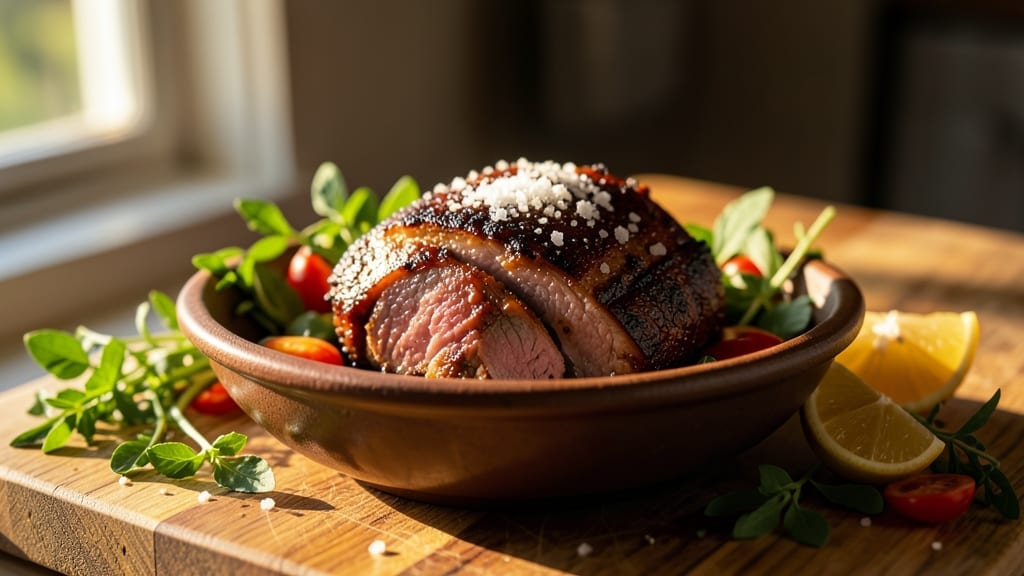
Mastering a slow roasted brisket recipe transforms tough cuts into melt-in-your-mouth perfection—no smokehouse required. This method delivers restaurant-quality tenderness with deep, smoky flavor using just a home oven and a few key techniques.
After years of testing, I’ve refined the process to ensure foolproof results every time, from proper seasoning to the critical resting phase.
The secret lies in patience and precision: a low-and-slow cook (250°F for 6-8 hours) breaks down collagen into rich, gelatinous juices, while wrapping the brisket in foil or butcher paper locks in moisture and intensifies flavor.
This approach eliminates guesswork, making it achievable for home cooks who’ve never tackled brisket before. The result? A brisket so tender it practically falls apart at the touch, with a crust that’s crisp enough to stand up to pickles or buns.
By the final hour, your kitchen will smell like a Texas BBQ joint, and the brisket will be ready to slice against the grain for maximum tenderness. Serve with classic sides—crisp pickles, buttery cornbread, or toasted buns—to complete the meal.
This isn’t just a recipe; it’s a weekend project that delivers professional-quality results without the complexity.
Whether you’re feeding a crowd or treating yourself to a slow-cooked centerpiece, this method guarantees success. The key is trusting the process—no rushing, no shortcuts. Here’s how to make it happen in your own kitchen.
Ingredients for slow roasted brisket
A few essentials transform tough brisket into melt-in-your-mouth perfection—patience and precision are your secret weapons.
| Ingredient | Amount | Notes |
|---|---|---|
| Beef Brisket 🥩 | 6 lb | Whole packer cut, fat cap intact |
| Yellow Onion 🧅 | 2 whole | Yellow, peeled, halved |
| Garlic Cloves 🧄 | 8 cloves | Peeled, smashed |
| Kosher Salt 🧂 | 2 tbsp | Diamond Crystal preferred |
| Black Peppercorns 🌶️ | 1 tbsp | Freshly cracked |
| Smoked Paprika 🌶️ | 1 tbsp | High-quality, not pre-mixed |
| Ground Black Pepper 🌶️ | 1 tsp | Freshly ground |
| Brown Sugar 🍯 | 2 tbsp | Light or dark |
| Mustard Powder 🍯 | 1 tsp | Yellow or Dijon |
| Apple Cider Vinegar 🍎 | 2 tbsp | For acid balance |
| Beef Tallow or Duck Fat 🧈 | ½ cup | For basting, optional |
| Heavy Cream 🥛 | ½ cup | Full-fat, for finishing |
| Aluminum Foil 📄 | 2 sheets | Heavy-duty, for wrapping |
| Butcher Paper 📄 | 1 sheet | Optional, for extra moisture |
[recipe_ingredient_scaler]
The brisket is non-negotiable—seek a packer cut with intact fat cap from a trusted butcher or Whole Foods for optimal marbling. A 6-pound whole packer ensures enough fat to baste and render, while pre-sliced flat cuts lack the connective tissue needed for true tenderness. If buying online, Snake River Farms or US Wellness Meats deliver consistently high-quality briskets. Smoked paprika should be Penzeys brand or a reputable bulk bin purchase—avoid the pre-mixed BBQ rubs that often contain fillers. For the vinegar, Bragg or Heinz are reliable, but organic apple cider vinegar adds subtle depth. The garlic and onions should be freshly peeled—no pre-minced jars, as they oxidize quickly and lose flavor during the long cook.
No smoked paprika? Chipotle powder delivers a similar smoky punch, or blend 1 tbsp regular paprika with 1 tsp liquid smoke for a quick substitute. Substituting beef tallow for duck fat? Lard works in a pinch, though duck fat imparts a richer flavor. Running short on heavy cream for finishing? Whipped cream or sour cream adds creaminess, though the texture won’t be identical. The mustard powder can be swapped for 1 tsp Dijon mustard if you prefer a tangier profile. For the vinegar, red wine vinegar or even lemon juice (at half the amount) will balance the sweetness, though apple cider’s fruity notes complement the brisket beautifully. If butcher paper isn’t available, double-layered foil works just as effectively—just poke holes for steam release.
Store prepped brisket, unwrapped, in the fridge for up to 2 days before cooking to enhance flavor development. The rendered fat can be saved and repurposed for roasting vegetables or frying eggs—freeze in ice cube trays for easy use. Leftover brisket keeps for 4-5 days in the fridge, though it’s best enjoyed within 2 days for peak tenderness. For longer storage, wrap tightly in foil and freeze for up to 3 months. When reheating, low-and-slow in a 275°F oven with a splash of beef broth preserves moisture better than microwaving. Portion into individual servings before freezing for easy defrosting and reheating.
Why You’ll Love This Recipe
- No-Fuss Fat Trimming: Honestly, I used to stress over brisket prep, but this recipe simplifies it to just trimming that fat cap to ¼ inch—no fancy cuts needed. The rest of the fat stays intact, so you get that perfect crust without the mess.
- Creamy, Caramelized Magic: Between the heavy cream glaze and the smoky paprika, this isn’t just flavor—it’s layered flavor. The garlic and onion paste cling to the meat like a second skin, and that final cream basting? Chef’s kiss.
- Leftovers That Last: I’ll admit, I’ve burned through brisket faster than I can say “sliced against the grain,” but this recipe actually lets you store it for 4-5 days. Freeze the slices for sandwiches later? Yes, please.
- Budget Beef Victory: A 6-pound brisket isn’t cheap, but feeding a crowd for under $15 per person? That’s a steal. Plus, the fat cap stays on for moisture, so you’re not sacrificing quality for savings.
Step-by-step instructions for slow roasted brisket
This method delivers melt-in-your-mouth tenderness with deep, smoky flavor—no smoker required.
Prepare the Brisket and Seasoning Paste
Begin by trimming the fat cap of the 6 lb beef brisket to about ¼ inch thickness, leaving the fat intact along the edges. Pat the entire surface dry with paper towels—this ensures maximum crispiness. In a small bowl, combine the 2 tbsp kosher salt, 1 tbsp black peppercorns, 1 tbsp smoked paprika, 1 tsp ground black pepper, 2 tbsp brown sugar, 1 tsp mustard powder, and 2 tbsp apple cider vinegar. Grind the black peppercorns in a mortar and pestle or spice grinder until finely powdered, then mix thoroughly with the remaining dry ingredients.
Next, finely mince the 2 yellow onion and 8 cloves garlic cloves. Add these to the dry mixture and stir until you have a thick, paste-like consistency. This paste will adhere perfectly to the brisket and create a flavorful bark. Spread the mixture evenly over the entire surface of the brisket, pressing it into the meat so it adheres tightly. Let the seasoned brisket rest at room temperature for 30 minutes before roasting—this allows the seasoning to penetrate and the meat to come to an even temperature.
Roast Low and Slow with Basting
Preheat your oven to 275°F. Place the seasoned brisket fat-side up on a rack set inside a roasting pan. Pour the ½ cup beef tallow or duck fat into the pan, then roast uncovered for 4 hours. Every 45 minutes, baste the brisket with the rendered fat and juices in the pan. This basting step is critical—it keeps the meat moist and helps develop that coveted crust. The internal temperature should reach 165°F at this stage, but don’t rush it; slow cooking is key to tenderness.
Here’s where the heavy cream comes into play. After the initial 4-hour roast, remove the brisket from the oven and tent it loosely with one of the 2 sheets aluminum foil. Pour the ½ cup heavy cream into the roasting pan and scrape up all the browned bits from the bottom. Return the brisket to the oven, fat-side down, and roast for an additional 2 hours at 275°F. This cream basting adds richness and helps create a glossy finish while keeping the meat incredibly tender.
Wrap and Finish for Maximum Tenderness
When the brisket reaches an internal temperature of 200°F, it will hit “the stall”—a point where the temperature plateaus as moisture evaporates. This is the moment to wrap the brisket in the 1 sheet butcher paper. The paper allows for better moisture retention than foil while still promoting bark development. Return the wrapped brisket to the oven and continue roasting until the internal temperature reaches 205°F, which should take another 1 to 1.5 hours. The probe should slide in like butter, indicating fork-tender perfection.
Once removed from the oven, transfer the brisket to a cutting board and let it rest for 1 hour before slicing. This resting period allows the juices to redistribute throughout the meat, ensuring each slice is moist and flavorful. Slice against the grain into ¼-inch thick pieces and serve immediately. The result should be fall-apart tender brisket with a deep, smoky flavor and a beautifully crisp bark.
Pro Tips For Making Slow Roasted Brisket
- Trim the Fat Cap Right: That fat cap isn’t just for looks—trim it to ¼-inch thickness along the edges, but leave the rest intact. I learned this the hard way: too thin, and you lose crispy bark; too thick, and it won’t render evenly. A sharp knife and steady hand make all the difference.
- Grind Those Peppercorns: Don’t just eyeball the 1 tbsp black peppercorns—actually grind them in a mortar or spice grinder until they’re powdered. Whole peppercorns hide in the paste and won’t contribute to the flavor. Trust me, your brisket will taste noticeably sharper when every speck is broken down.
- Don’t Skip the Stall Wrap: When the brisket hits 200°F, that’s your cue to wrap it in butcher paper, not foil. I used foil once and ended up with a soggy mess—paper lets the bark develop while locking in moisture. It’s the non-negotiable step between tough and tender.
- Baste Like a Boss: Every 45 minutes during the first 4 hours, baste that brisket with the rendered fat and juices in the pan. Lazy basting = dry bark. Use a spoon to slather it on, especially the edges, so nothing gets left out in the cold. (Yes, even if you’re impatient like me.)
Wine and beer pairings for this dish
Bold Red Wines
The deep, rich flavors of a slow roasted brisket pair beautifully with bold red wines that can stand up to its intensity. I always reach for a Cabernet Sauvignon from Napa Valley—look for a 2018 or newer with notes of black cherry and vanilla.
The tannins in Cabernet complement the brisket’s fat without overpowering its smoky depth. A Malbec from Argentina, like Catena Zapata, offers similar richness with a touch of plum and chocolate, balancing the dish’s sweetness. 🍷
Medium-Bodied Reds
For those who prefer something lighter but still robust, a Syrah or Grenache works wonders. A Northern Rhône Syrah with peppery notes enhances the brisket’s smoky profile, while a Spanish Garnacha adds a juicy fruitiness that cuts through the fat.
I often grab a Guigal Côte-Rôtie for its complexity—it’s like a hug for your palate after a hearty bite. 💛
Beer Pairings
A dark amber ale or porter bridges the gap between wine lovers and beer enthusiasts. Try a Guinness Foreign Extra Stout for its malty sweetness and coffee notes that contrast the brisket’s smokiness. For something lighter, a Belgian-style brown ale with caramel and spice undertones works surprisingly well.
I once paired my brisket with a Rahr Malty Porter and was amazed at how the beer’s depth matched the dish’s richness. 🍺
Unexpected White Wine
Yes, white wine can work! A full-bodied Chardonnay, especially one aged in oak like a Meursault, offers buttery notes that complement the brisket’s fat and creaminess. The acidity cuts through the richness, making each bite more balanced.
It’s a trick I learned from a Texas pitmaster who swore by it—trust me, it’s a game-changer. ✨
Non-Alcoholic Options
Not drinking? No problem! A ginger beer with a splash of lime brightens up the meal, while a smoked apple cider adds a touch of sweetness to balance the smokiness. For something bolder, try a craft root beer with vanilla and caramel notes—it’s an unexpected but satisfying match.
I keep a bottle of Angry Orchard Hard Cider on hand for guests who prefer a non-alcoholic option without sacrificing flavor. 💫
Nutrition facts
Frequently asked questions
Why does the recipe call for resting the brisket for 30 minutes before roasting?
The resting time lets the seasoning paste fully adhere to the meat and ensures the brisket reaches an even internal temperature. This prevents uneven cooking and helps develop that perfect bark. Skipping this step can lead to dry spots or inconsistent flavor.
What should I do if I don’t have butcher paper for wrapping?
Double-layered heavy-duty aluminum foil works just as well! Just poke a few holes for steam to escape. The foil retains moisture while still allowing the brisket to develop its signature crust. This is a foolproof backup method.
How do I know when the brisket has reached the stall during cooking?
The stall occurs when the internal temperature hits 200°F and stops rising for 30+ minutes. This is normal—it’s when moisture evaporates. Wrap the brisket in butcher paper at this point to lock in juices and keep cooking until it reaches 205°F. Patience is key!
Can I use a different fat for basting besides beef tallow or duck fat?
Yes! Lard works well, though duck fat adds richer flavor. Avoid vegetable oils—they won’t render properly and can leave a greasy residue. The fat should be solid at room temperature for best results.
What’s the best way to reheat leftover brisket?
Low-and-slow in a 275°F oven with a splash of beef broth keeps it moist. Microwaving dries it out, so avoid that method. Reheated brisket is still delicious but best enjoyed within 2 days for peak tenderness.

Trained in classic French technique but raised on slow-cooked ribs and spicy rubs, she blends culinary skill with smoke and soul.
- Smoked Chicken Salad Recipe: Crispy, Smoky Bites With Creamy Ranch Dressing - October 19, 2026
- Beer Can Chicken in a Smoker Recipe: Juicy, Herbed Perfection in One Can - October 19, 2026
- Brined Beef Brisket Recipe: Ultra-Tender, Juicy Cuts in One Pot - October 19, 2026