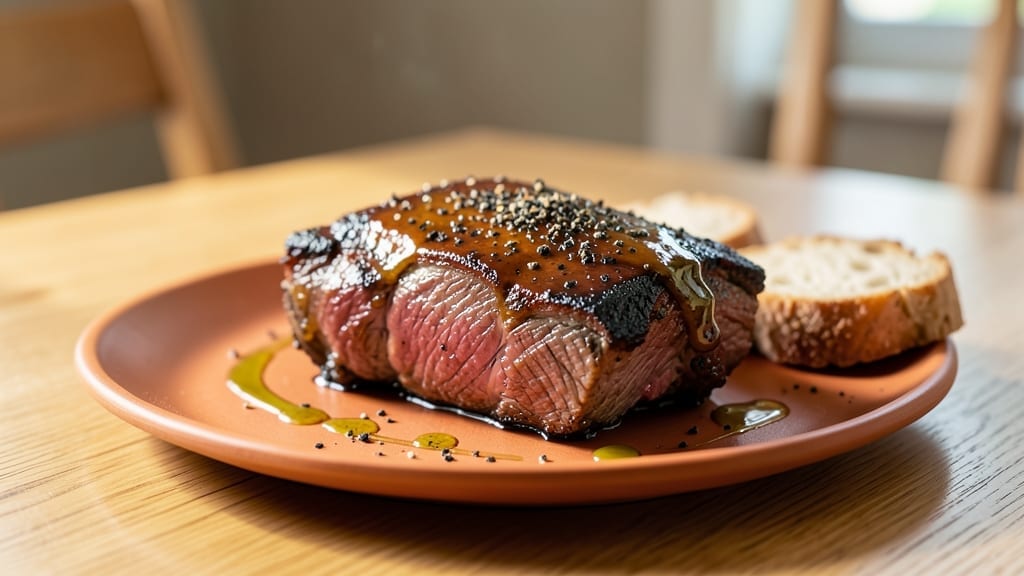
Mastering beef brisket on a Pit Boss smoker delivers that juicy core and perfect reverse-sear crust we all crave—this is the recipe that finally cracked the code. 🔥 The key lies in precise temperature control and a two-stage cooking process that transforms tough cuts into melt-in-your-mouth perfection.
I developed this method after years of experimenting with my Pit Boss, and it never fails to impress, even with the most stubborn briskets.
What sets this recipe apart is the reverse-sear technique, which ensures a crispy exterior without drying out the meat. We start with low-and-slow smoking to tenderize the brisket, then finish with a high-heat sear to lock in those flavors.
The Pit Boss’s consistent temperature zones make this approach foolproof, and the right wood choice—hickory or oak—adds that signature smoky depth without overpowering the beef.
By the time you slice into this brisket, you’ll have a juicy, tender center with a caramelized crust that’s worth the wait. The meat practically falls apart at the touch of a fork, and the aroma alone will have everyone gathering around your smoker.
This is the kind of brisket that turns casual cookouts into legendary meals, and it’s all thanks to a few key techniques and patience.
The best part? This method works for any brisket size, whether you’re feeding a crowd or treating yourself to a special meal. Serve it with classic sides like pickled onions, crusty buns, and a drizzle of your favorite BBQ sauce. Let’s get started on creating that perfect pit-smoked brisket.
Ingredients for beef brisket recipe pit boss smoker
Your Pit Boss smoker’s dream team: a brisket that falls apart with juicy perfection and a crust so crispy it’ll have everyone begging for seconds.
| Ingredient | Amount | Notes |
|---|---|---|
| Beef Brisket 🥩 | 8 lb | Packer cut, whole or flat preferred |
| Coarse Kosher Salt 🧂 | ½ cup | Diamond Crystal preferred |
| Black Peppercorns 🌶️ | 2 tbsp | Freshly cracked for bold flavor |
| Garlic Powder 🧄 | 1 tbsp | Not garlic salt |
| Onion Powder 🧅 | 1 tbsp | For deep flavor base |
| Smoked Paprika 🌶️ | 1 tbsp | Adds smoky depth |
| Hickory Wood Chips 🌳 | 2 lb | Unsoaked for best smoke |
| Oak Wood Chips 🌳 | 1 lb | Balances hickory's intensity |
| Yellow Onion 🧅 | 1 whole | Sliced for rub application |
| Yellow Mustard 🍯 | ½ cup | Dijon works too |
| Beef Tallow 🥓 | ¼ cup | Or substitute bacon fat |
| Beef Broth 💧 | ½ cup | Low-sodium preferred |
| Apple Cider Vinegar 🍎 | 2 tbsp | For tenderizing |
| Brown Sugar 🍚 | 2 tbsp | Enhances bark formation |
| Butter 🧈 | 4 oz | Cold for final sear |
[recipe_ingredient_scaler]
The brisket is non-negotiable here—packer cut from Costco or your local butcher is ideal. Look for good marbling and ask for the whole or flat cut (not point). The wood chips? Traeger or Cookshack brands are consistent, but any unsoaked chips work. Pro tip: soak them for 30 minutes if your smoker runs dry. The mustard and tallow combo creates that legendary bark—don’t skip it. For the rub, I double the spices and keep some in a jar for future briskets (it keeps for 6 months).
No hickory? Oak alone works, but you’ll lose that signature smoky punch. Short on tallow? Bacon fat or lard in a pinch—just render it first. The apple cider vinegar might seem odd, but it tenderizes the meat beautifully (trust me on this). For the final sear, European-style butter gives the best flavor—Plugrá is my go-to. Want more bark? Add an extra tablespoon of brown sugar to the rub. The beef broth? Homemade is best, but store-bought low-sodium works too.
This brisket is a marathon, not a sprint—plan for 12-16 hours total time. Wrap it in butcher paper (not foil) during the stall to retain moisture. The final sear? 10-15 minutes max—watch it like a hawk. Leftovers? 5 days in the fridge, 3 months frozen. I always portion mine into 1-pound containers for easy serving. The bark gets better with reheating, so save some for sandwiches later in the week.
Why You’ll Love This Recipe
- No-Fuss Smoking: I’ll be real—this isn’t one of those recipes where you’re chopping onions for hours. Just mix your ½ cup coarse kosher salt, 2 tbsp cracked peppercorns, and the rest of the dry rub in a bowl (literally 2 minutes). Pat the brisket dry, slap on the rub, and let it chill uncovered for 12-24 hours. Boom. Done. The Pit Boss handles the rest while you nap or watch TV.
- Crispy Outside, Creamy Inside: That 4 oz butter sear at the end? Chef’s kiss. You’re getting a dark mahogany bark from the smoker, but the final oven blast with melted butter turns it into something next-level—crispy enough to bite into, but still tender enough to fall apart. The apple cider vinegar and brown sugar in the basting sauce? They tenderize while adding a sweet-tangy depth that makes every bite sing.
- Feeds a Crowd (or Your Monday): You’re cooking an 8 lb brisket, so let’s be honest—this isn’t just for you. It’s the kind of dish where people show up hungry and leave full, no plates left empty. Leftovers? They keep for 5 days in the fridge or 3 months frozen, so you’ve got lunch for days. My kids even ask for seconds (and yes, they pick out the yellow onion strips for the rub—don’t judge).
- Budget-Friendly Powerhouse: Brisket is cheaper than steak, and this recipe turns a single cut into a meal for a crowd. The beef tallow (or bacon fat) and beef broth are pantry staples, and the hickory/oak wood chips give you that smoky depth without breaking the bank. Plus, that dry brine with garlic powder and onion powder? It’s flavor on a budget—no fancy ingredients, just pure, satisfying taste.
Step-by-step instructions for perfectly smoked brisket
This reverse-sear method guarantees a brisket with a stunning crust and melt-in-your-mouth tenderness.
👨🍳 Step 1: Prepare the Brisket Rub and Dry Brine
In a small bowl, combine the ½ cup coarse kosher salt, 2 tablespoons freshly cracked black peppercorns, 1 tablespoon garlic powder, 1 tablespoon onion powder, and 1 tablespoon smoked paprika. Mix until completely uniform. This dry rub is your flavor foundation.
Pat the 8 lb beef brisket completely dry with paper towels—this is critical for bark formation. Apply the rub generously all over, pressing it into the meat so it adheres well. Place the brisket on a wire rack set over a baking sheet and refrigerate uncovered for 12-24 hours. The dry brine process not only seasons deeply but also helps create that coveted crust.
Here’s the thing—don’t skip the dry brine. I’ve tried skipping it, and the bark just isn’t the same. The salt draws out moisture, which then evaporates during smoking, creating that perfect crust we’re after.
🔥 Step 2: Set Up the Pit Boss Smoker for Reverse Sear
Combine 2 lb hickory wood chips and 1 lb oak wood chips in the smoker tube. Preheat your Pit Boss smoker to 225°F using these wood chips. I’ve found this temperature range gives you that perfect balance of smoke flavor without drying out the meat.
While the smoker heats up, slice 1 yellow onion into thin strips and set aside. In a small bowl, mix ½ cup yellow mustard, ¼ cup beef tallow, ½ cup beef broth, 2 tablespoons apple cider vinegar, and 2 tablespoons brown sugar. This mixture will become our basting sauce later.
Once the smoker reaches 225°F and you see clean, thin blue smoke (not thick white smoke), you’re ready. Place the brisket fat-side up on the smoker grate. The fat will render and baste the meat as it cooks, creating layers of flavor.
🥘 Step 3: Smoke Low and Slow Until Probe-Tender
Smoke the brisket undisturbed for 6-8 hours until the internal temperature reaches 165-170°F. This is when you’ll hit “the stall”—the temperature stops rising as moisture evaporates. Don’t panic; this is completely normal and expected.
Here’s where the magic happens: At 165-170°F, wrap the brisket tightly in butcher paper (not foil—paper breathes better and preserves that bark). This technique, called the “Texas crutch,” powers you through the stall while maintaining the bark. Return it to the smoker and continue cooking.
Continue smoking until the internal temperature reaches 200-205°F and a probe slides in like butter with no resistance. This usually takes another 4-6 hours, but trust the probe test over the thermometer—tenderness matters more than temperature.
🔥 Step 4: Finish with a Hot Butter Sear for Crust
Once probe-tender, remove the brisket from the smoker and let it rest for 10 minutes. While it rests, melt the 4 oz butter in a small saucepan over medium heat until it’s completely liquid but not browned. This butter will create that stunning crust we’re after.
After the 10-minute rest, brush the melted butter generously over the entire surface of the brisket. Place it on a wire rack set over a baking sheet and transfer to a 400°F oven. Roast for 10-15 minutes until the crust is deep golden brown and crispy.
This high-heat finish creates that beautiful bark while keeping the interior juicy. The butter adds richness and helps develop that incredible crust. Real talk: This is the moment that makes all the difference in the final presentation.
⏰ Step 5: Rest and Slice for Maximum Juiciness
Remove the brisket from the oven and let it rest for another 15-20 minutes before slicing. This resting period allows the juices to redistribute throughout the meat, ensuring every slice is moist and flavorful.
Unwrap the brisket and locate the grain direction—you’ll see lines running through the meat. Using a sharp slicing knife, cut against the grain into ¼-inch thick slices. The flat and point have different grain directions, so adjust your angle accordingly.
Serve immediately while still warm. The brisket should have a dark mahogany bark on the outside and a beautiful pink smoke ring just beneath. Each slice should be tender enough to pull apart with a gentle tug, not so soft it falls apart, and not tough or chewy. This is the juicy, flavorful brisket you’ve been craving!
Pro Tips For Making Beef Brisket Recipe Pit Boss Smoker
- Crack Those Peppers Fresh: Skip the pre-ground pepper—whole black peppercorns cracked just before mixing into the rub make a real difference. I used to use store-bought ground pepper, and the flavor was always duller. Takes 30 seconds with a mortar and pestle, but your brisket will taste like it’s been kissed by smoke and sunshine.
- Don’t Rush the Stall: When the brisket hits 165°F and the temp stops climbing, resist the urge to crank the heat. Wrap it in butcher paper at that exact point—this is where the Texas crutch saves the day. I’ve seen people panic and boost the temp, and their brisket ends up dry. Trust the process; the paper keeps the moisture while the smoke keeps working.
- Use Oak to Tame Hickory: That 2 lb hickory + 1 lb oak mix isn’t just arbitrary—oak mellows out hickory’s overpowering bite. I learned this after a batch tasted like a campfire gone wild. The oak gives a cleaner smoke, so your brisket’s flavor stays balanced, not bitter. No need to fuss with ratios; stick to the recipe.
- Butter Must Be Cold: The 4 oz butter for the final sear? Keep it cold until you’re ready to brush it on. Melt it too early, and it’ll turn greasy instead of crisp. I’ve seen people rush this, and the crust ends up soggy. Brush it on hot brisket, then hit it with 400°F—crispy perfection every time.
Dietary considerations for these flavors
Gluten-Free Adaptation
This brisket recipe is already naturally gluten-free, but I still make a few tweaks to ensure maximum flavor and texture. Skip the yellow mustard in the basting sauce—opt for Dijon mustard instead, which is gluten-free and adds a sharper tang.
The ½ cup beef broth and 2 tbsp apple cider vinegar already provide enough depth without gluten-containing ingredients. For extra richness, add 1 tbsp cornstarch to the basting sauce to help thicken it naturally. 💛
Low-Carb Modification
For a lower-carb version, reduce the 2 tbsp brown sugar in the basting sauce to just 1 tbsp, or omit it entirely. The ½ cup beef broth and ¼ cup beef tallow already keep carbs minimal.
If you want to enhance the smoky flavor without sugar, add 1 tsp liquid smoke to the basting sauce. This keeps the brisket tender and flavorful while cutting unnecessary carbs.
Dairy-Free Option
Since the recipe already calls for beef tallow instead of butter, it’s naturally dairy-free! However, if you’re avoiding all animal fats, substitute the ¼ cup beef tallow in the basting sauce with ¼ cup avocado oil.
The 4 oz butter used for the final sear can also be replaced with 4 oz dairy-free butter, like Miyoko’s, for that same rich, golden crust without dairy.
Keto-Friendly Adjustments
To make this brisket keto-friendly, focus on keeping carbs as low as possible. Replace the ½ cup yellow mustard with ¼ cup Dijon mustard and ¼ cup apple cider vinegar in the basting sauce. Skip the 2 tbsp brown sugar entirely—its carbs will throw off your macros.
Instead, add 1 tbsp erythritol or monk fruit sweetener if you want a touch of sweetness without the carbs. The result is a perfectly tender brisket without the sugar crash.
Allergen-Free Considerations
This recipe is already free from common allergens like dairy, gluten, and nuts, but double-check your ingredients for hidden allergens. Use low-sodium beef broth to avoid excess salt if someone in your group has dietary restrictions.
If you’re avoiding mustard entirely, swap the ½ cup yellow mustard in the basting sauce for ½ cup apple cider vinegar mixed with 1 tbsp soy sauce (or tamari for gluten-free) for a tangy kick. Always label your dishes clearly when serving a crowd!
Vegetarian Substitutes
While this recipe is built for beef, if you’re looking for a vegetarian twist, consider using a portobello mushroom or seitan as a substitute. Marinate the mushroom in the same ½ cup beef broth (or mushroom broth), 2 tbsp apple cider vinegar, and 1 tbsp smoked paprika for depth.
Smoke it in the Pit Boss at 225°F for 4-5 hours until tender. The texture won’t be the same, but it’ll still deliver that smoky, savory experience—just without the beefy richness. 🌱
Nutrition facts
Frequently asked questions
Why does the Pit Boss smoker need a reverse sear for brisket?
The reverse sear method on your Pit Boss smoker creates a perfect balance between juicy core and crispy bark. Start with low-and-slow smoking at 225°F to tenderize the meat, then finish with a high-heat sear at 400°F to develop that coveted crust. This two-stage approach prevents drying out the meat while maximizing flavor absorption. The Pit Boss’s consistent temperature zones make this process foolproof!
What’s the best way to handle the “stall” when smoking brisket?
When your brisket hits 165-170°F and the temperature stalls, wrap it tightly in butcher paper (not foil) and return it to the smoker. This “Texas crutch” technique helps maintain moisture while keeping that beautiful bark intact. The Pit Boss’s even heat distribution makes this step especially effective—just avoid opening the lid too often to retain heat.
Can I use only oak wood chips instead of hickory?
Yes, but you’ll lose some of the signature smoky depth hickory provides. Oak is milder and pairs well with beef, but mixing 1 lb oak with 1 lb hickory (as in the recipe) gives you the best balance. If oak is your only option, add a splash of liquid smoke to the basting sauce for extra flavor. The Pit Boss’s even burn rate works great with either wood!
How do I know when the brisket is fully tender?
Use a meat probe to check for tenderness—when it slides in like butter with no resistance at 200-205°F, you’re golden. The Pit Boss’s precise temperature control makes this easier than other smokers. If unsure, let it cook another hour and test again; tenderness matters more than hitting an exact temperature!

Trained in classic French technique but raised on slow-cooked ribs and spicy rubs, she blends culinary skill with smoke and soul.
- Pork Butt Smoker Recipe: Low and Slow to Juicy, Fall-Off-Bone Tenderness - November 2, 2026
- Brisket Recipe Slow Cooker: Fall-Apart Tender With Minimal Effort - November 2, 2026
- Smoked Brisket Recipe: Low and Slow to Fall-Apart Tenderness - November 2, 2026