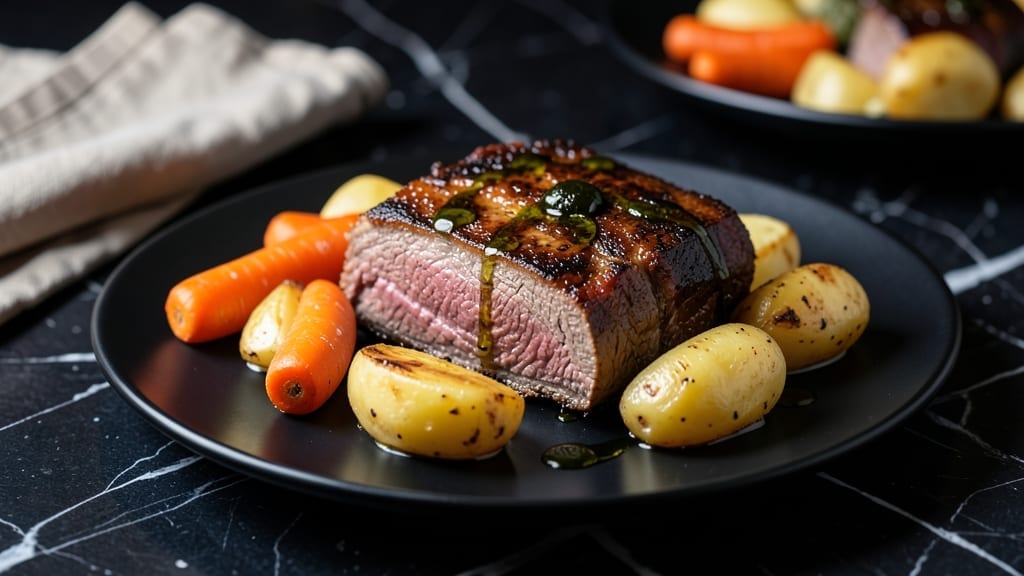
This beef brisket recipe with carrots and potatoes delivers restaurant-quality tenderness and hearty sides that transform a weeknight into a special meal. The key lies in slow-cooking the brisket until it practically melts in your mouth while roasting the vegetables to perfect golden-brown perfection.
After years of perfecting this dish, I’ve developed a method that ensures juicy meat and flavorful roots without requiring a smoker—just a reliable oven and patience.
The brisket’s secret is a low-and-slow approach, where the meat cooks for hours until tender enough to slice with a fork. Meanwhile, the carrots and potatoes roast alongside it, absorbing the rich brisket juices and developing a caramelized crust.
This method creates a one-pan wonder that minimizes cleanup while maximizing flavor, making it ideal for gatherings or family dinners. The result? A dish that feels indulgent yet remains approachable for home cooks.
By the time you’re done, you’ll have fork-tender brisket that falls apart with minimal effort, paired with carrots and potatoes that are crisp on the outside and creamy inside. The aromas alone—smoky, savory, and slightly sweet—will have everyone at the table asking for seconds.
This recipe proves that slow cooking doesn’t require fancy equipment, just time and attention to detail.
Serve the brisket sliced thin over the roasted vegetables, drizzled with pan juices or a simple gravy for extra richness. The combination of tender meat and hearty sides makes this a complete, satisfying meal that’s perfect for holidays or cozy weeknights. Let’s get started on creating this foolproof centerpiece.
Ingredients for beef brisket recipe with carrots and potatoes
A robust selection of ingredients designed to create that signature slow-cooked depth and caramelized sweetness.
| Ingredient | Amount | Notes |
|---|---|---|
| Beef Brisket 🥩 | 4 lb | Whole packer cut, trimmed of excess fat |
| Russet Potatoes 🥔 | 3 lb | Medium size, halved lengthwise |
| Carrots 🥕 | 1 ½ lb | Whole, unpeeled, trimmed |
| Yellow Onion 🧅 | 1 whole | Large, sliced into wedges |
| Garlic Cloves 🧄 | 8 cloves | Peeled, smashed |
| Beef Broth 💧 | 2 cups | Low-sodium preferred |
| Apple Cider Vinegar 🍎 | ¼ cup | For tenderizing brisket |
| Dark Brown Sugar 🍚 | ½ cup | Packed, for caramelization |
| Smoked Paprika 🌶️ | 2 tbsp | For deep smoky flavor |
| Ground Black Pepper 🌶️ | 1 ½ tbsp | Freshly cracked |
| Kosher Salt 🧂 | 2 tbsp | Diamond Crystal preferred |
| Fresh Thyme 🌿 | ¼ cup | Leaves only, chopped |
| Fresh Rosemary 🌿 | ¼ cup | Needles only, chopped |
| Olive Oil 🫒 | ¼ cup | Extra-virgin, for searing |
| Balsamic Vinegar 🍷 | 1 tbsp | For finishing drizzle |
[recipe_ingredient_scaler]
The beef brisket is the cornerstone of this dish, and selecting the right cut is non-negotiable. Look for a packer cut with good marbling—this ensures both tenderness and flavor. Whole Foods or local butcher shops often carry the best quality, but the standard grocery store packer cut works well too (just trim any large fat deposits). The Russet potatoes should be firm and unblemished, while the carrots benefit from vibrant orange color and crisp texture. For the aromatics, garlic cloves should be plump and fresh—no shriveled specimens here. The beef broth makes all the difference: Kirkland Signature or Lowry’s are reliable choices, but homemade is ideal if you have it.
When it comes to substitutions, flexibility is key without compromising quality. No smoked paprika? A blend of regular paprika plus a pinch of liquid smoke works in a pinch. Fresh herbs unavailable? Dried thyme and rosemary at one-third the amount maintain the profile. The apple cider vinegar can be swapped for red wine vinegar, though it’ll alter the subtle sweetness. For the potatoes and carrots, smaller sizes work perfectly—just adjust roasting time accordingly. The balsamic vinegar isn’t just for finishing; it adds depth to the pan juices, so don’t skip it if you’re making gravy. Olive oil matters here too—use something with fruity notes for searing, not the cheap supermarket variety.
Proper storage ensures maximum flavor retention. The brisket can be prepped a day ahead—trimmed, seasoned, and refrigerated in a sealed container. The vegetables should be scrubbed and stored in separate containers to prevent moisture loss. Once cooked, this dish reheats beautifully: 350°F for 20 minutes restores the juices perfectly. For leftovers, store in airtight containers for up to 5 days in the fridge or 3 months frozen. The pan juices freeze well too—simply skim off solidified fat before reheating. Portion the brisket into individual servings before freezing for effortless reheating later.
Why You’ll Love This Recipe
- I’ll be real: brisket isn’t cheap, but using the whole packer cut means no waste. The potatoes and carrots stretch the dish further, and the herbs and spices elevate it without breaking the bank. Plus, it freezes like a dream—just pop it in the freezer for those nights when you want dinner without the effort.
- One-Pot Magic: Honestly, this is the kind of dish where you toss everything in one pot and forget about it—while it does all the work. The brisket gets that perfect sear, then slows in the oven with the potatoes and carrots until they’re caramelized and tender. No scrubbing multiple pans, just one sheet pan and a spatula.
- Crave-Worthy Depth: The smoked paprika and fresh rosemary on that brisket? Game-changer. The apple cider vinegar tenderizes the meat while the dark brown sugar caramelizes the veggies—every bite has that perfect balance of smoky, sweet, and savory. My kids don’t even notice they’re eating their vegetables.
- Feeds a Crowd (or Your Couch): This isn’t just a meal—it’s a feast. Four pounds of brisket, three pounds of potatoes, and a pound and a half of carrots? That’s enough to fill a football stadium or my family’s Sunday dinner table. And if you’re feeding just two people? Double the portions—it reheats beautifully for leftovers.
Step-by-step instructions for slow-cooked beef brisket with root vegetables
A methodical approach ensures tender brisket and perfectly caramelized vegetables every time.
Prepare and Sear the Brisket
Begin by trimming the 4 lb beef brisket to remove any excess fat, leaving about ¼-inch thickness on the fat cap. This ensures proper smoke penetration while maintaining moisture. Pat the brisket dry with paper towels—this step is crucial for achieving a crisp exterior. In a large Dutch oven, heat the ¼ cup olive oil over medium-high heat until shimmering. Place the brisket fat-side down and sear undisturbed for 5 minutes until deeply browned.
Flip the brisket and continue searing for another 3 minutes per side. Remove it from the pot and set aside. The goal is to develop a rich, caramelized crust that locks in flavor. While the brisket rests, combine the 2 tbsp smoked paprika, 1½ tbsp ground black pepper, and 2 tbsp kosher salt in a small bowl. This dry rub will enhance the brisket’s natural depth while adding a subtle smokiness.
Sauté Vegetables and Build the Flavor Base
In the same Dutch oven, add the 1 yellow onion (sliced into wedges) and 1½ lb carrots (trimmed and cut into 2-inch chunks). Cook over medium heat for 5 minutes, stirring occasionally, until the onions soften slightly and the carrots begin to release their natural sweetness. Add the 3 lb russet potatoes (halved lengthwise) and cook for another 3 minutes, tossing to ensure even exposure to the heat.
Press the 8 peeled and smashed garlic cloves into the vegetables, then stir in the ½ cup dark brown sugar and ¼ cup apple cider vinegar. The vinegar tenderizes the brisket while the sugar promotes caramelization. Cook for 2 minutes until the mixture smells rich and aromatic. Pour in the 2 cups beef broth, scraping up any browned bits from the bottom of the pot—this step captures maximum flavor.
Slow-Cook the Brisket and Vegetables
Return the seared brisket to the Dutch oven, fat-side up. Sprinkle the prepared dry rub evenly over the top. Bring the mixture to a gentle simmer over medium heat, then reduce to low. Cover the pot with a tight-fitting lid and transfer it to a preheated 325°F oven. Cook for 3 hours, maintaining a consistent temperature to ensure even cooking and tenderness.
After 3 hours, check the internal temperature of the brisket using an instant-read thermometer. It should register between 195°F and 200°F—this indicates the meat is fork-tender and ready for slicing. If the vegetables aren’t fully tender, continue cooking for another 15-20 minutes, covered, until they yield easily when pierced with a fork. The potatoes should be soft and caramelized, while the carrots should be tender with a slight bite.
Finish with Herbs and Balsamic Glaze
Remove the brisket from the pot and tent loosely with aluminum foil. Let it rest for 15 minutes before slicing—this allows the juices to redistribute, ensuring each slice remains moist and flavorful. While the brisket rests, stir the ¼ cup chopped fresh thyme and ¼ cup chopped fresh rosemary into the vegetable mixture. These herbs add a bright, aromatic finish that complements the deep flavors of the brisket.
Return the pot to medium heat and simmer uncovered for 5 minutes to allow the liquid to reduce slightly. Stir in the 1 tbsp balsamic vinegar and simmer for another 2 minutes until the sauce thickens slightly and glistens. This final step adds a subtle tang that balances the richness of the brisket and sweetness of the vegetables. Taste and adjust seasoning with additional kosher salt or black pepper if needed.
Slice and Serve
Slice the brisket against the grain into ¼-inch thick pieces. This technique ensures each bite is tender and easy to chew. Arrange the sliced brisket on a serving platter, spooning the herbed vegetable mixture and reduced sauce over the top. The combination of tender brisket, caramelized vegetables, and aromatic herbs creates a harmonious dish that delivers on the promise of slow-cooked perfection.
Serve immediately, accompanied by crusty bread or a simple green salad to balance the richness. The vegetables should be fork-tender with a caramelized edge, and the brisket should be so tender it nearly falls apart at the touch. Each bite should offer a symphony of textures and flavors, from the crispy exterior of the brisket to the sweet, tender carrots and potatoes.
Pro Tips For Making Beef Brisket Recipe With Carrots And Potatoes
- Trim That Fat Cap: Leave a ¼-inch fat layer on the brisket—this isn’t about extra grease, it’s about moisture. I used to strip it all off, and my brisket always ended up dry. That thin layer melts into the meat during cooking, keeping it juicy while still letting the smoky flavors sink in.
- Don’t Rush the Sear: Let that olive oil shimmer before adding the brisket—no need to rush. I learned this the hard way after flipping too soon and ending up with a greasy, under-browned mess. 5 minutes undisturbed on the fat side is non-negotiable for that deep, caramelized crust.
- Smash, Don’t Chop, the Garlic: Smashed, not minced—those crushed cloves release their flavor like magic. I tried chopping once, and the dish lacked that punchy, aromatic kick. Press them into the veggies so they dissolve into the sauce instead of sitting as little flavorless pellets.
- Check the Potatoes Last: The brisket takes center stage, but the potatoes should be fork-tender with a caramelized edge—not mushy. If they’re still firm after 3 hours, give them another 15 minutes covered. Overcooking turns them to mush; undercooking leaves you with a sad, crunchy bite.
Essential equipment for great beef brisket recipe with carrots and potatoes
Dutch Oven Essentials
The Le Creuset Dutch oven is my go-to for this recipe—its heavy cast iron retains heat perfectly for slow-cooking the brisket and caramelizing the vegetables. I prefer the 5.5-quart size to accommodate the 4 lb brisket and vegetables without crowding.
If you don’t own one, a Lodge Dutch oven is an excellent budget-friendly alternative that performs just as well. The tight-fitting lid ensures even heat distribution, which is crucial for tenderizing the meat and developing the sauce. 🔥
Instant-Read Thermometer
An instant-read thermometer like the Thermoworks Smoke is non-negotiable for this recipe. You’ll use it to check the brisket’s internal temperature at 195°F–200°F to ensure perfect tenderness. The 10-second probe response lets you avoid overcooking, which can dry out the meat.
I keep mine within arm’s reach during the entire cooking process for peace of mind. 🌡️
Meat Mallet or Knife
For trimming the 4 lb brisket, a meat mallet or sharp chef’s knife is essential. I use a Wüsthof Classic knife for precision, but a good Victorinox Fibrox works too. The goal is to remove excess fat while leaving a ¼-inch fat cap for moisture and flavor.
A mallet helps tenderize the surface before searing. Don’t skip this step—it makes all the difference in texture.
Cutting Board and Slicing Knife
A sturdy cutting board (I use ButcherBlock bamboo) and a 12-inch slicing knife like the Dexter-Russell are a must for slicing the brisket against the grain. This technique ensures each ¼-inch slice is tender and easy to chew.
The board’s stability prevents the knife from slipping, and the knife’s sharpness ensures clean cuts. Trust me, this is where the magic happens! ✨
Aluminum Foil and Towels
After cooking, I wrap the brisket in heavy-duty aluminum foil and tent it with clean kitchen towels to rest for 15 minutes. This step redistributes juices, keeping the meat moist. I keep a roll of Reynolds Wrap foil and a stack of microfiber towels nearby for quick access.
The foil traps heat, while the towels provide a barrier against the pot’s heat. It’s a simple but critical step often overlooked by home cooks.
Nutrition facts
Frequently asked questions
Why does the brisket need to rest before slicing?
Resting the brisket for 15 minutes after cooking is essential to let the juices redistribute throughout the meat. When you cut into hot meat immediately, all those delicious fluids escape, leaving you with dry slices. This step ensures every bite stays moist and flavorful, making the brisket fall-apart tender.
Can I use smaller potatoes or carrots for this recipe?
Smaller potatoes or carrots will cook faster, so you might reduce the total cooking time by 10-15 minutes once the brisket reaches 195°F. Just check their tenderness before removing from the oven—potatoes should be soft, and carrots should yield slightly with a fork. This method works perfectly for smaller cuts too!
What if my vegetables aren’t caramelized enough?
No problem! After the brisket reaches 195°F-200°F, uncover the pot and let the vegetables simmer on medium heat for another 5-10 minutes to develop that golden-brown crust. The residual heat from the brisket will help caramelize them without overcooking the meat. This extra step makes all the difference in flavor!
Is it okay to skip the balsamic vinegar at the end?
While you can omit it, the 1 tbsp balsamic vinegar adds a subtle tang that balances the richness of the brisket and sweetness of the carrots and potatoes. If you skip it, the dish will still be delicious, but the sauce will be slightly less complex. Try it both ways to compare!

Trained in classic French technique but raised on slow-cooked ribs and spicy rubs, she blends culinary skill with smoke and soul.
- Award-Winning Brisket Chili Recipe: Deep-Smoked Flavor That Wins Every Time - October 16, 2026
- Smoked Standing Rib Roast Recipe: Low-and-Slow Perfection for Crowds - October 16, 2026
- Slow Roast Brisket Recipe: Fall-Apart Tenderness with Maillard Crust Magic - October 16, 2026