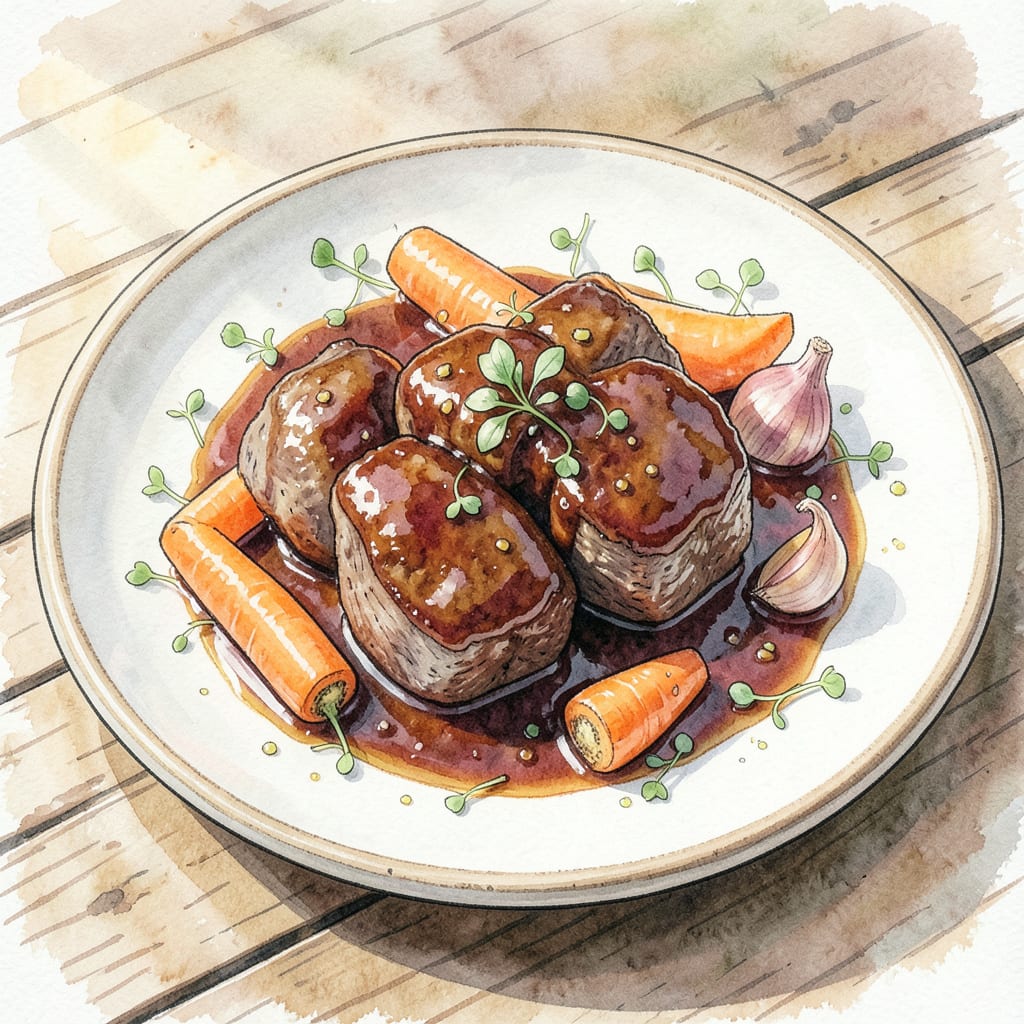
I’ve perfected my braised beef cheek recipe through years of slow-cooking experimentation. The result is fall-off-the-bone tender meat with rich, deep flavors that’ll become a new favorite comfort food.
This tender beef cheek dish is perfect for special occasions or cozy nights in. Serve with creamy mashed potatoes or roasted root vegetables to soak up the rich sauce. Let’s get started!
Ingredients for Beef Cheek
Tender beef cheeks require patience and quality ingredients. Let’s get started with the essentials.
| Ingredient | Amount | Notes |
|---|---|---|
| Beef Cheeks 🥩 | 4 pieces | Trimmed of excess fat |
| All-Purpose Flour 🌾 | 1 cup | For dredging beef cheeks |
| Olive Oil 🫒 | ¼ cup | For browning beef |
| Onion 🧅 | 1 whole | Sliced into wedges |
| Garlic Cloves 🧄 | 4 cloves | Minced |
| Carrots 🥕 | 2 whole | Peeled and sliced |
| Celery Stalks 🥕 | 2 stalks | Sliced |
| Red Wine 🍷 | 2 cups | Dry red wine like Cabernet |
| Beef Broth 🍲 | 2 cups | Low-sodium broth |
| Tomato Paste 🍅 | 2 tbsp | Concentrated paste |
| Bay Leaves 🌿 | 2 whole | Dried or fresh |
| Thyme 🌿 | 1 tsp | Dried thyme |
| Salt 🧂 | 1 tsp | Kosher salt |
| Black Pepper 🌶️ | ½ tsp | Freshly ground |
[recipe_ingredient_scaler]
Beef cheeks are the star here. Look for well-trimmed cheeks at your local butcher or Whole Foods. They might need a quick trim of excess fat before dredging. The quality of the beef makes or breaks this dish—don’t skip on sourcing good meat. I’ve found that Costco often has great deals on beef cheeks too.
Red wine is essential for depth, but if you’re out, beef broth with a splash of balsamic can work in a pinch. Fresh thyme is ideal, but dried thyme at one-third the amount is a good substitute. The key is to let it slow-cook until it’s fall-off-the-bone tender. You can make this with either a Dutch oven on the stovetop or a slow cooker—both work beautifully.
This dish reheats beautifully and actually tastes better the next day. Store leftovers in airtight containers in the fridge for up to 4-5 days. You can also freeze portions for up to 3 months. I like to portion mine into individual containers so I can grab a comforting meal whenever I need it.
Step-by-Step Instructions for Braised Beef Cheeks
Let’s create a rich, fall-off-the-bone tender braised beef cheek dish that’s sure to impress.
Step 1: Prepare and Brown the Beef Cheeks
Start by seasoning the 4 pieces Beef Cheeks with 1 tsp Salt and 0.5 tsp Black Pepper. Then, dredge them in the 1 cup All-Purpose Flour, shaking off any excess. Heat 0.25 cup Olive Oil in a large Dutch oven over medium-high heat. Sear the beef cheeks until they’re brown on all sides, about 5 minutes per side. Remove the browned beef cheeks from the pot and set them aside.
The browning process creates a rich flavor foundation for our dish. Make sure to get a good sear on the beef cheeks, as this will enhance the overall flavor.
Step 2: Sauté the Aromatics
Reduce the heat to medium and add the 1 whole Onion, sliced into wedges, to the same pot. Cook until it’s softened and lightly browned, about 5-7 minutes. Add the 4 cloves Garlic Cloves, minced, and cook for another 1-2 minutes until fragrant. Then, add the 2 whole Carrots, peeled and sliced, and 2 stalks Celery Stalks, sliced, cooking for an additional 2-3 minutes.
The aromatics will add depth to our dish. Be patient and let them cook until they’re softened and fragrant.
Step 3: Braise the Beef Cheeks
Add the 2 cups Red Wine and 2 cups Beef Broth to the pot, scraping up any browned bits from the bottom. Stir in the 2 tbsp Tomato Paste until it’s well combined. Return the browned beef cheeks to the pot and add the 2 whole Bay Leaves and 1 tsp Thyme. Bring the mixture to a simmer, then cover the pot and transfer it to a preheated oven at 300°F.
Braise the beef cheeks for 2 1/2 to 3 hours until they’re tender and falling apart. The slow cooking process will break down the connective tissues, making the beef cheeks incredibly tender.
Step 4: Finish and Serve
Remove the pot from the oven and let it cool slightly. Discard the bay leaves and season the sauce with additional salt and pepper if needed. Serve the braised beef cheeks with the rich, flavorful sauce spooned over the top. This dish pairs perfectly with mashed potatoes, polenta, or crusty bread.
The result is a tender, flavorful dish that’s sure to impress. The beef cheeks will be fall-off-the-bone tender, and the sauce will be rich and velvety.
Storing and Reheating Leftovers
Refrigerator Storage
Let your braised beef cheeks cool completely before storing. Transfer the meat and sauce to airtight containers or glass Pyrex with tight-fitting lids. Store in the refrigerator at 40°F or below for up to 4-5 days. The flavors will actually improve with time, making leftovers even more delicious. ❄️
Freezer Storage
For longer storage, portion the cooled beef cheeks into freezer-safe containers or heavy-duty freezer bags. Remove as much air as possible to prevent freezer burn. Label with the date and contents, then store in the freezer for up to 3 months. When you’re ready to eat, simply thaw overnight in the refrigerator.
Reheating Instructions
Reheat the beef cheeks gently to maintain their tender texture. If refrigerated, simmer the meat and sauce in a covered saucepan over low heat for 15-20 minutes, or until heated through. For frozen portions, thaw overnight in the refrigerator, then reheat as above. You can also reheat in the microwave using 50-60% power in 2-3 minute intervals, stirring between each interval to ensure even heating. 🔥
Serving After Reheating
Once reheated, serve the beef cheeks with freshly prepared sides like mashed potatoes or roasted vegetables to create a complete meal. You can also add a sprinkle of fresh herbs like parsley or thyme for a fresh touch. The rich sauce is perfect for serving over egg noodles or polenta.
Tips for Best Results
To maintain the best texture, avoid overheating the beef cheeks. Gentle reheating preserves the tender texture achieved during the long braising process. If the sauce has thickened too much during storage, you can thin it with a little beef broth or red wine. Always check the internal temperature reaches 165°F before serving.
Nutrition Facts

Trained in classic French technique but raised on slow-cooked ribs and spicy rubs, she blends culinary skill with smoke and soul.
- Recipe for Boneless Pork Chops in Cast Iron Skillet: Sear and Baste to Juicy Perfection - October 3, 2026
- Recipe for Boneless Cross Rib Roast: Slow-Roasted Beef with Herb Crust - October 3, 2026
- Hamburgers in Sauce Recipe Crock Pot: Slow-Cooked Savory Delight - October 3, 2026