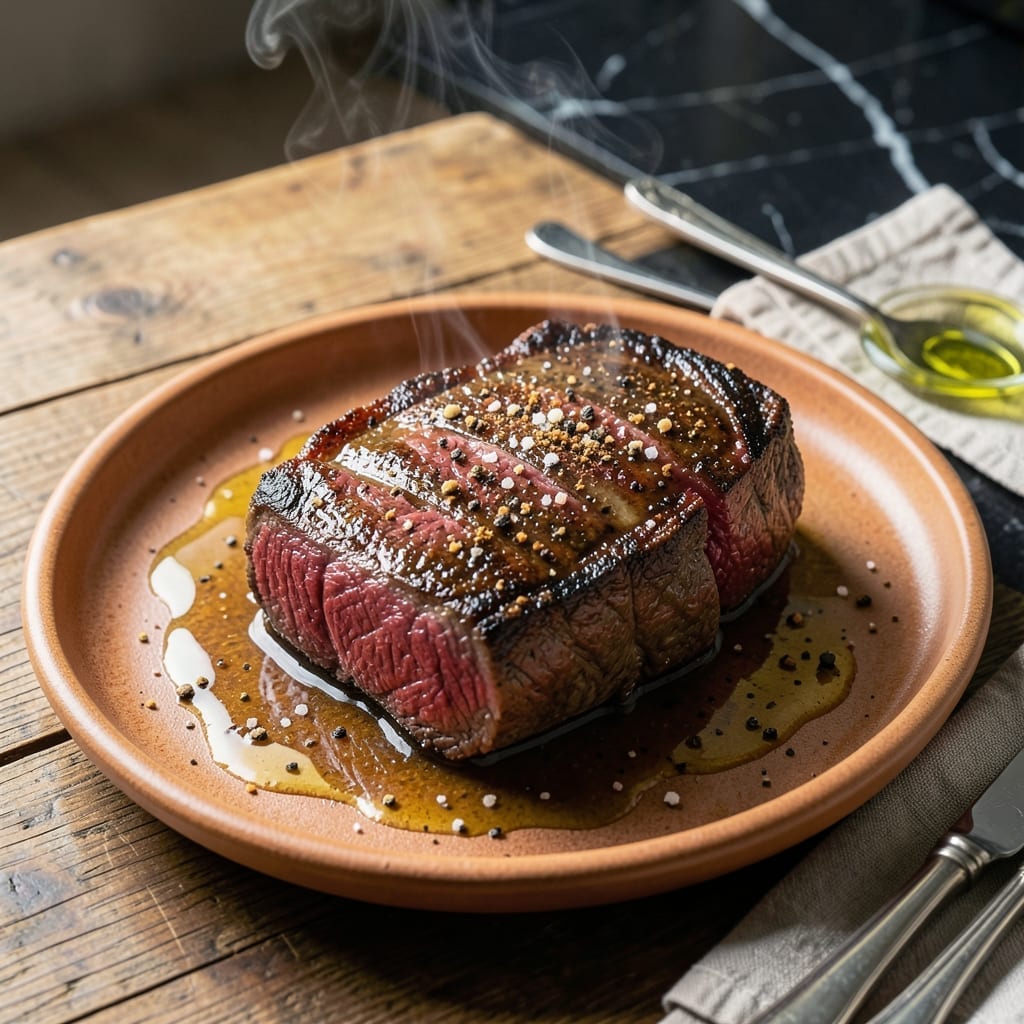
This boneless cross rib steak recipe unlocks the full potential of an underrated cut. The marbling delivers rich flavor while the lean meat stays tender when cooked properly.
I’ve perfected a simple method that works on grill or stovetop. The key is high heat to develop a deep crust while keeping the inside juicy. No fancy techniques—just good timing and attention.
What you get is a restaurant-quality steak with a robust beefy taste that rivals pricier cuts. The cross rib’s natural marbling does most of the work for you.
Serve with roasted potatoes and grilled vegetables for a complete meal. Here’s how to nail it every time.
Ingredients for Beef Cross Rib Steak Boneless
Simple seasonings let the beef shine in this restaurant-quality dish.
| Ingredient | Amount | Notes |
|---|---|---|
| Boneless Cross Rib Steak 🥩 | 2 lb | 1 to 1.5 inches thick |
| Kosher Salt 🧂 | 2 tsp | Diamond Crystal preferred |
| Black Pepper 🌶️ | 1 tsp | Freshly cracked for best flavor |
| Garlic Powder 🧄 | 1 tsp | Not garlic salt |
| Onion Powder 🧅 | 1 tsp | Enhances beef flavor |
| Smoked Paprika 🌶️ | ½ tsp | Adds depth to crust |
| Olive Oil 🫒 | 2 tbsp | High smoke point preferred |
| Unsalted Butter 🧈 | 2 tbsp | For basting steak |
| Fresh Rosemary 🌿 | 2 whole | Sprigs, for aroma |
| Fresh Thyme 🍃 | 2 whole | Sprigs, for aroma |
| Crushed Red Pepper Flakes 🔥 | ¼ tsp | Optional for heat |
[recipe_ingredient_scaler]
The steak is everything here. Boneless cross rib (also called English cut) has marbling that rivals ribeye at half the price. Look for cuts with visible fat streaks—this is what delivers flavor. Whole Foods and Costco consistently stock good quality. Ask the butcher to cut it 1.5 inches thick if you want a more dramatic sear on the outside while keeping the inside juicy.
No rosemary or thyme? Dried herbs at half the amount work fine, but fresh gives that bright, aromatic kick. Out of smoked paprika? Regular paprika plus a pinch of cayenne gets you close. The butter is non-negotiable for basting—it creates that glossy, rich finish. If you only have salted butter, reduce the added salt by half.
Steaks taste best cooked fresh, but you can season them up to 12 hours ahead and refrigerate. Leftovers? Slice thin for sandwiches—keeps 3-4 days in the fridge. For freezing, vacuum-seal and use within 2 months for optimal texture.
Why You’ll Love This Recipe
- I’ll be real: day-two slices taste even better in a quick stir-fry or on salad.
- Five Minute Seasoning: I just rub the steak with salt, pepper, garlic and onion powder—no marinade, no waiting.
- Crispy Edges Every Time: The cross rib’s marbling caramelizes into a crust while the inside stays juicy.
- Feeds a Hungry Group: One big boneless steak means I can slice it thin for sandwiches or chunk it for tacos.
Step-by-Step Instructions for Beef Cross Rib Steak Boneless
Master the technique for perfectly seared steak with a flavorful crust and juicy interior.
Step 1: Season the Steak Aggressively
Pat the 2 lb Boneless Cross Rib Steak completely dry with paper towels—moisture prevents proper browning. I always let it sit at room temperature for 30-45 minutes before cooking to ensure even cooking throughout.
Combine the 2 tsp Kosher Salt, 1 tsp Black Pepper, 1 tsp Garlic Powder, 1 tsp Onion Powder, and 0.5 tsp Smoked Paprika in a small bowl. Rub this mixture evenly over all surfaces of the steak, pressing it in firmly to create a flavorful crust. For extra depth, add the 0.25 tsp Crushed Red Pepper Flakes if you like a subtle heat.
Step 2: Preheat and Prepare the Cooking Surface
Place a heavy skillet (cast iron works best) over medium-high heat until it’s very hot—you’ll see a faint shimmer when you hold your hand above it. Add the 2 tbsp Olive Oil and swirl to coat the pan evenly. The oil should ripple but not smoke.
To infuse extra flavor, add the 2 whole Fresh Rosemary and 2 whole Fresh Thyme sprigs to the pan. Let them sizzle for 10-15 seconds to release their aromatic oils before adding the steak. This step enhances the overall depth of the dish.
Step 3: Sear the Steak to Perfection
Carefully place the steak in the hot pan. Cook undisturbed for 4-5 minutes until a deep, golden-brown crust forms on the first side. Resist the urge to move it—this ensures a proper sear. You’ll hear a steady sizzle; if it stops, your pan isn’t hot enough.
Flip the steak and add the 2 tbsp Unsalted Butter to the pan. Tilt the skillet slightly and use a spoon to baste the steak with the melted butter, rosemary, and thyme for another 4-5 minutes. For medium-rare, aim for an internal temperature of 130-135°F.
Step 4: Rest and Serve
Transfer the steak to a cutting board and tent loosely with foil. Let it rest for 10 minutes—this allows the juices to redistribute, ensuring every slice is tender and flavorful. Skipping this step results in dry, tough meat.
Slice against the grain into ½-inch thick strips. The crust should be deeply browned with a rich, aromatic scent from the herbs. Serve immediately with any pan juices spooned over the top for maximum flavor impact.
Pro Tips For Making Beef Cross Rib Steak Boneless
- Dry the Steak: Pat the boneless cross rib steak thoroughly dry with paper towels before seasoning—it guarantees a better sear instead of steaming in its own juices.
- Season Early: Salt the steak at least 40 minutes before cooking, or right before; anything in between draws out moisture and leaves it bland.
- Rest Before Slicing: Let it rest 5-10 minutes under foil after cooking so the juices redistribute—I learned this the hard way after cutting into a dry, bleeding steak.
- Use High Heat: Crank the pan or grill to screaming hot before adding the steak; a screaming hot surface is the only way to get that crust with garlic and onion powder.
Storing and Reheating This Dish
Refrigerator Storage
Let your steak cool completely, then transfer to an airtight container with any collected juices. It’ll keep in the fridge at 40°F or below for 3-4 days. I find the flavors actually deepen overnight, making leftovers taste even better. ❄️
Freezer Storage
For longer storage, wrap slices tightly in plastic wrap, then place in a freezer bag, squeezing out excess air. Properly stored, it maintains quality for up to 2 months. Label with the date—trust me, you’ll forget otherwise.
Thawing Properly
Always thaw in the refrigerator overnight for best texture. For quick thawing, use the cold water method: seal in a leak-proof bag and submerge in cold water, changing water every 30 minutes. Never thaw at room temperature.
Reheating on Stovetop
My preferred method: warm in a skillet over medium-low heat with a splash of beef broth for 2-3 minutes per side. This revives the crust while keeping the inside juicy. Cover with a lid to trap steam if needed. 🔥
Microwave Reheating
Place slices on a microwave-safe plate with a damp paper towel cover. Heat on 50% power in 30-second intervals until reaching 145°F. This prevents toughness while warming through evenly.
Nutrition Facts
Frequently Asked Questions
What’s the best way to season this steak?
Pat the steak completely dry first, then use a mix of kosher salt, black pepper, and smoked paprika for a robust crust. Press the seasoning in firmly for maximum flavor.
Can I cook this in the oven instead?
Yes! Sear in a hot skillet first, then transfer to a 400°F oven for 8-10 minutes to finish cooking. Use a meat thermometer to reach your desired doneness.
Why does my steak come out tough?
Overcooking or not letting it rest causes toughness. Always use a thermometer and rest for at least 10 minutes before slicing. Slicing too soon lets juices escape.
How thick should the steak be?
Aim for 1 to 1.5 inches thick for even cooking and a good sear. Ask your butcher to cut it to this thickness if needed.

Trained in classic French technique but raised on slow-cooked ribs and spicy rubs, she blends culinary skill with smoke and soul.
- Recipe for Boneless Pork Chops in Cast Iron Skillet: Sear and Baste to Juicy Perfection - October 3, 2026
- Recipe for Boneless Cross Rib Roast: Slow-Roasted Beef with Herb Crust - October 3, 2026
- Hamburgers in Sauce Recipe Crock Pot: Slow-Cooked Savory Delight - October 3, 2026