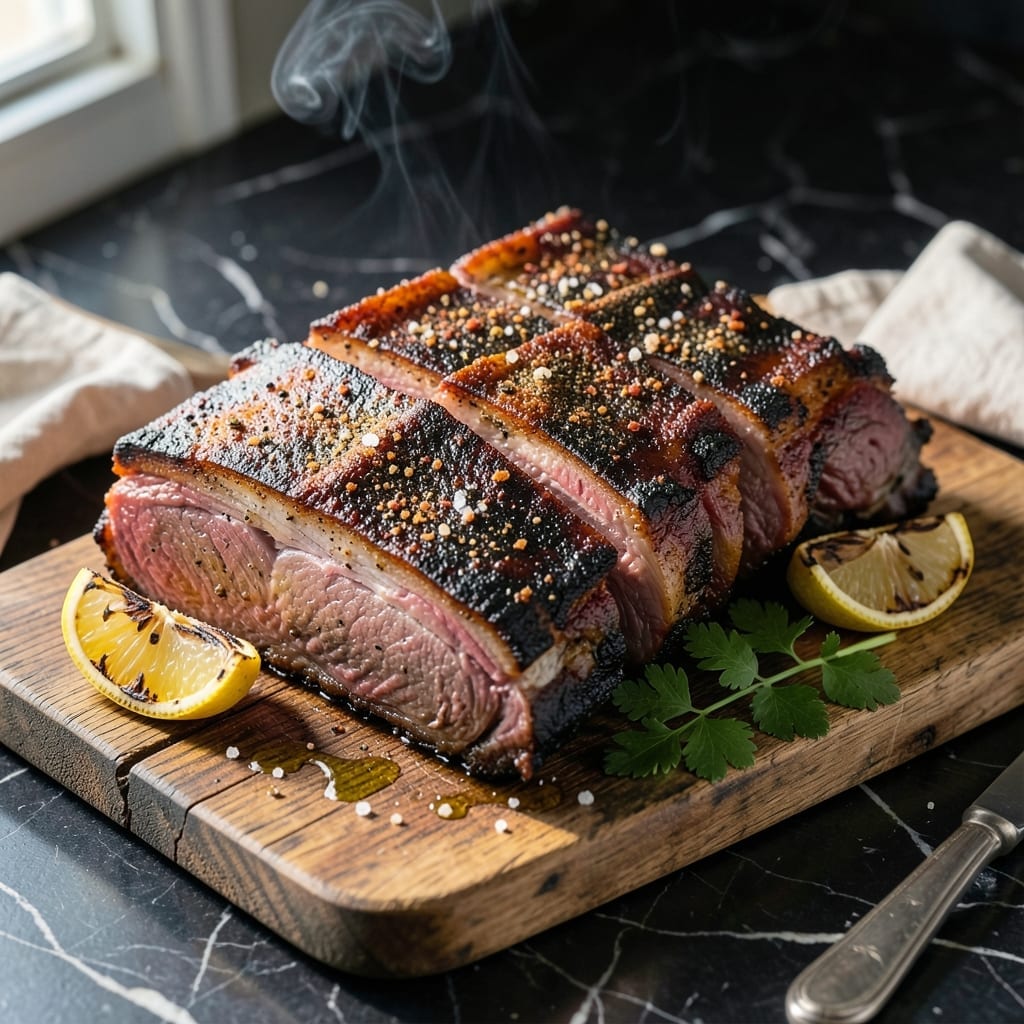
I still remember the first time hickory smoke hit my nose at a family cookout—it changed how I think about beef forever. These ribs take that memory and elevate it with precise technique and bold flavor.
What makes this dish special is the balance between smoke and tenderness. A simple dry rub enhances the meat’s natural richness, while slow cooking at 250°F transforms tough ribs into fall-off-the-bone perfection.
The result is smoky, caramelized meat candy with a deep mahogany bark. Each bite delivers layers of flavor built through hours of patient cooking.
Serve these as the centerpiece of any meal. They’re worth every minute of the wait.
Ingredients for Beef Dino Ribs
Big beefy ribs and a handful of bold spices. That’s all you need here.
| Ingredient | Amount | Notes |
|---|---|---|
| Beef Dino Ribs 🥩 | 4 lb | Bone-in, about 1 rack |
| Coarse Kosher Salt 🧂 | 2 tbsp | Diamond Crystal preferred |
| Black Pepper 🌶️ | 2 tbsp | Freshly ground, coarse |
| Garlic Powder 🧄 | 1 tbsp | Not garlic salt |
| Onion Powder 🧅 | 1 tbsp | Fresh ground preferred |
| Smoked Paprika 🌶️ | 1 tbsp | Sweet or hot variety |
| Brown Sugar 🫙 | ½ cup | Light or dark works |
| Chili Powder 🌶️ | 1 tbsp | Mild or hot blend |
| Mustard Powder 🟡 | 1 tsp | Ground yellow mustard |
| Hickory Wood Chips 🪵 | 2 cups | Soaked in water 1 hour |
| Apple Cider Vinegar 🍏 | ½ cup | For spritzing during cook |
| Olive Oil 🫒 | ¼ cup | For binding rub |
[recipe_ingredient_scaler]
The ribs are the main event—Costco or a good butcher for the best quality. Look for well-marbled meat with a thick cap of fat (that’s where the flavor lives). Dino ribs are massive, so one rack usually feeds 4-6 people. I always ask for the membrane to be removed—saves time and helps the rub penetrate. The salt? Diamond Crystal is my go-to for its clean, flaky texture.
No hickory chips? Pecan or oak work almost as well. Short on spices? Pre-made BBQ rub at half the amount gets you close—just add extra brown sugar for caramelization. The vinegar spritz keeps the meat moist, but apple juice or beer work in a pinch (use what you’ve got). Mustard powder missing? Skip it—the flavor difference is minor compared to the smoke.
Rubbed ribs can sit overnight in the fridge (actually improves the bark). Cooked ribs rest 1 hour before slicing—don’t skip this part. Leftovers? Rare, but they’ll keep 4-5 days wrapped tight. Freeze for 3 months if you must, though they’re best fresh.
Why You’ll Love This Recipe
- I’ll be real: they taste even better sliced into sandwiches the next day.
- Set and Forget: I rub them with salt, pepper, and those powders, then let the smoker do all the work for hours.
- Meat Candy: Honestly, the bark on these ribs with that garlic-onion crust? Ridiculously good.
- Feeds a Crowd: One slab serves six hungry people—my go-to for summer cookouts.
Step-by-Step Instructions for Beef Dino Ribs
This method transforms the ribs into that irresistible meat candy with perfect tenderness.
Step 1: Prepare and Season the Ribs
Pat the 4 lb Beef Dino Ribs completely dry with paper towels. This step is crucial—moisture prevents the rub from adhering properly and can steam the meat instead of allowing it to develop a good bark.
In a bowl, combine the 2 tbsp Coarse Kosher Salt, 2 tbsp Black Pepper, 1 tbsp Garlic Powder, 1 tbsp Onion Powder, 1 tbsp Smoked Paprika, 0.5 cup Brown Sugar, 1 tbsp Chili Powder, and 1 tsp Mustard Powder. Stir until evenly mixed.
Drizzle the 0.25 cup Olive Oil over the ribs and rub it in thoroughly, ensuring every surface is coated. Then apply the spice mixture generously, pressing it into the meat so it sticks. Let the seasoned ribs sit at room temperature for 30-45 minutes while you prepare the smoker.
Step 2: Set Up the Smoker
Soak the 2 cups Hickory Wood Chips in water for at least 1 hour before smoking. This prevents them from burning too quickly and ensures a steady, flavorful smoke.
Preheat your smoker to 225°F. Once it reaches temperature, add the soaked wood chips to the smoker box or directly to the coals. You want thin, blue smoke—not thick white smoke, which can make the ribs bitter.
Step 3: Smoke the Ribs to Perfection
Place the ribs bone-side down on the smoker grates. Close the lid and let them smoke undisturbed for 3 hours. Resist the urge to peek—every time you open the lid, you lose heat and smoke, which can add 15-20 minutes to your cook time.
After 3 hours, check the ribs. They should have developed a deep, dark bark. Spritz them lightly with the 0.5 cup Apple Cider Vinegar to keep the surface moist and enhance the bark. Repeat this spritz every 45-60 minutes for the remainder of the cook.
Step 4: Wrap and Finish the Ribs
Once the ribs reach an internal temperature of 165-170°F (usually after 5-6 hours of smoking), it’s time to wrap. Lay out a large sheet of heavy-duty foil and place the ribs meat-side down. Wrap them tightly, which helps power through the stall—a phase where the temperature plateaus as moisture evaporates.
Return the wrapped ribs to the smoker and continue cooking until they reach an internal temperature of 200-203°F, about 2-3 hours more. This is when the connective tissue breaks down, giving you that fall-off-the-bone tenderness.
Step 5: Rest and Serve
Remove the ribs from the smoker and let them rest, still wrapped, for 1 hour. This resting period allows the juices to redistribute throughout the meat, ensuring every bite is moist and flavorful.
Unwrap the ribs and slice them between the bones. Serve immediately while they’re still warm. The meat should pull away from the bone with minimal effort, and each bite should be packed with smoky, tender perfection.
Pro Tips For Making Beef Dino Ribs
- Dry the Surface: Pat the ribs completely dry with paper towels before seasoning—moisture is the enemy of a good bark.
- Season Generously: Use more coarse kosher salt than you think, especially on the meaty side; I learned this the hard way after my first bland batch.
- Low and Slow: Cook at 225°F until the meat probes like butter (around 203°F internal), or you’ll end up with tough, chewy ribs.
- Rest Before Slicing: Let them rest 15 minutes under foil after cooking, or all those juices will end up on the cutting board instead of in the meat.
Common Mistakes When Making Perfect Results
Uneven Seasoning
I’ve seen many cooks rush the rub application, leading to uneven flavor and patchy bark. Take your time to coat every surface thoroughly—these ribs are big, so use all 2 tbsp Black Pepper and 0.5 cup Brown Sugar from the recipe. Press the rub in firmly to create a solid base for that beautiful mahogany crust. 💪
Temperature Swings
Fluctuating smoker temps ruin the cook. Keep your smoker steady at 225°F—any spikes above 250°F can dry out the meat. I use a digital thermometer to monitor both the smoker and internal rib temp. Thin, blue smoke is your goal; thick white smoke adds bitterness.
Skipping the Spritz
That 0.5 cup Apple Cider Vinegar spritz isn’t optional. Every 45-60 minutes, a light mist keeps the surface moist and builds layers of flavor in the bark. Skip it, and you risk dry ribs with a disappointing crust.
Peeking Too Often
Every time you open the lid, you lose 15-20 minutes of cooking time. Trust the process—these ribs need 3 hours of undisturbed smoke at the start. Resist the urge to check until that initial bark forms.
Rushing the Rest
Cutting into the ribs too soon sends all those precious juices right onto your cutting board. Let them rest wrapped for the full 1 hour. This is when the magic happens—the meat reabsorbs its moisture, becoming that fall-off-the-bone perfection we’re after. 🔥
Wrong Wood Choice
Not all wood works for beef. Stick with Hickory Wood Chips—their bold, smoky flavor complements the richness of the ribs. Pecan or oak are acceptable substitutes, but avoid softwoods like pine that can impart harsh flavors.
Nutrition Facts
Frequently Asked Questions
How long should I rest the ribs after smoking?
Let them rest wrapped for the full 1 hour before slicing. This allows juices to redistribute for maximum tenderness and flavor in every bite.
Can I use a different wood besides hickory?
Pecan or oak work well as substitutes, offering slightly milder smoke. Avoid softwoods like pine, which can create bitter flavors that overpower the meat.
Why does my bark turn out bitter?
Bitterness usually comes from thick white smoke. Maintain thin, blue smoke at 225°F and avoid over-spritzing with apple cider vinegar.
Is it okay to skip the wrapping step?
You can, but it may take 1-2 hours longer to reach tenderness. Wrapping helps power through the stall and keeps the meat moist during the final cook phase.

Trained in classic French technique but raised on slow-cooked ribs and spicy rubs, she blends culinary skill with smoke and soul.
- Recipe for Boneless Pork Chops in Cast Iron Skillet: Sear and Baste to Juicy Perfection - October 3, 2026
- Recipe for Boneless Cross Rib Roast: Slow-Roasted Beef with Herb Crust - October 3, 2026
- Hamburgers in Sauce Recipe Crock Pot: Slow-Cooked Savory Delight - October 3, 2026