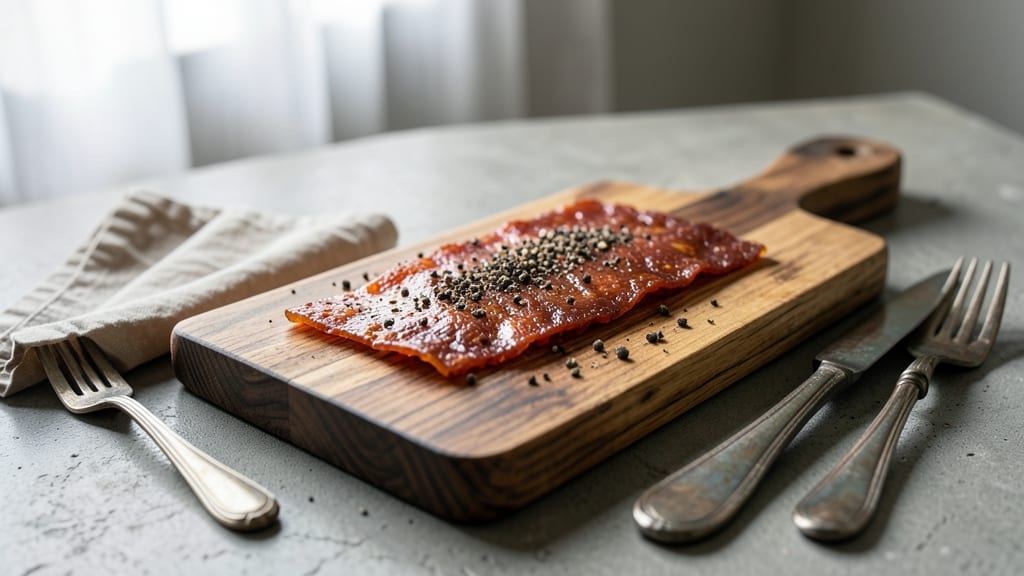
Mastering smoker-made beef jerky transforms tough cuts of beef into tender, flavorful bites that keep for weeks—no dehydrator needed. The key lies in precise temperature control and a marinade that tenderizes while preserving natural beef flavor.
I’ve perfected this method over years of trial and error, ensuring every batch emerges with that perfect smoky-sweet balance. 💫
This recipe delivers restaurant-quality jerky in just 6 hours, using a smoker to control moisture loss while infusing rich, wood-fired flavor. The process begins with proper trimming and marinating, then moves to low-and-slow smoking at 165°F—critical for safety and texture.
No special equipment beyond a smoker and basic kitchen tools required. Every step is designed to maximize tenderness while preventing spoilage.
What you’ll end up with is jerky that’s tender yet firm, with a deep caramelized crust and aromatic smoke notes. The marinade penetrates deeply, ensuring each bite bursts with flavor while maintaining a shelf life of up to 3 months when stored properly.
This method works for any cut—from lean flank steak to flavorful brisket—delivering consistent results every time. Let’s get started!
Whether you’re prepping for camping trips, snacking at home, or gifting to friends, this jerky keeps perfectly and tastes even better the second day. The smoker method ensures even drying without the risk of over-processing, preserving the meat’s natural texture. Ready to create your own protein-packed, shelf-stable jerky? Here’s how.
Ingredients for beef jerky recipe smoker
Tough beef transformed into tender, smoky jerky—just six hours and a smoker.
| Ingredient | Amount | Notes |
|---|---|---|
| Flank Steak 🥩 | 2 ½ lb | Trimmed of fat and silver skin |
| Yellow Mustard 🍯 | ½ cup | For natural tenderness |
| Brown Sugar 🍚 | ½ cup | Granulated for even distribution |
| Worcestershire Sauce 🍶 | 2 tbsp | High-quality, no artificial additives |
| Garlic Powder 🧄 | 2 tsp | Freshly ground preferred |
| Onion Powder 🧅 | 2 tsp | For aromatic depth |
| Ground Black Pepper 🌶️ | 1 tsp | Freshly ground for best flavor |
| Smoked Paprika 🌶️ | 1 tbsp | For authentic smoky flavor |
| Apple Cider Vinegar 🍎 | 2 tbsp | Balances sweetness and tenderizes |
| Hickory Wood Chips 🌳 | 1 oz | Soaked in water for 30 mins |
| Butterfly Pepper 🌶️ | 1 tsp | Optional for heat variation |
| Aluminum Foil 🔥 | 1 sheet | For easy smoking trays |
[recipe_ingredient_scaler]
The flank steak is your canvas—Costco or local butcher carry pre-trimmed cuts for convenience. Opt for 1/4-inch thick slices to ensure even cooking and tenderness. For best results, use USDA Choice grade beef, which balances affordability and quality. Trim all visible fat and silver skin to prevent rancidity during smoking. If using a different cut like brisket, adjust marinating time by 30 minutes to ensure proper tenderness. The hickory wood chips from Traeger or Webers provide the most consistent smoke flavor—soak them in cold water for at least 30 minutes before use to avoid flare-ups.
The marinade components are non-negotiable for flavor balance. Yellow mustard acts as a natural tenderizer, while brown sugar caramelizes beautifully during smoking. Worcestershire sauce adds depth—avoid imitation versions. For a spicier profile, increase the smoked paprika to 2 tbsp or add cayenne. Need to skip vinegar? Lemon juice at equal volume works but may alter texture slightly. The butterfly pepper is optional but recommended for those who enjoy a subtle kick. Always use freshly ground spices—pre-ground loses potency quickly. For a sweet-heat variation, add 1 tbsp of chipotle powder to the marinade.
Marinated beef keeps 24 hours in the refrigerator—this allows flavors to penetrate deeply. After smoking, cool jerky completely on wire racks to prevent condensation, which promotes bacterial growth. Store in an airtight container with food-grade paper towels to absorb excess moisture. For optimal shelf life, vacuum seal portions and freeze for up to 6 months. Room-temperature jerky lasts 2-3 weeks unopened. Always reheat jerky to 165°F before consumption to ensure food safety. The aluminum foil trays make cleanup effortless—line your smoker racks with foil before adding jerky strips to prevent sticking. This method also helps regulate temperature during smoking for consistent results.
Why You’ll Love This Recipe
- No-Fuss Flavor Bomb: The marinade with yellow mustard and brown sugar does all the work—just slice the flank steak, dump it in, and forget about it for a day. No fancy prep, no stress, just pure hands-off magic.
- Smoky Sweet Kick: That smoked paprika and hickory wood chips give it that campfire vibe, while the garlic powder and Worcestershire sauce add depth. Sweet, tangy, and just a little funky—it’s the kind of jerky that makes you lick your fingers.
- Camping Trip Hero: Pack a foil tray of this, and you’ve got protein for hikes, snacks for tailgates, or even a quick lunch without the fridge. My kids love it in their lunchboxes, and my husband swears by it post-workout. No excuses needed.
- Budget-Proof Protein: A 2.5-pound flank steak feeds a crowd for pennies per serving, and the apple cider vinegar and onion powder keep costs low without sacrificing flavor. It’s the kind of meal that stretches your grocery budget while keeping everyone happy.
Step-by-step instructions for smoky, tender beef jerky
Master this smoker technique for jerky that’s both tender and deeply flavorful.
👨🍳 Step 1: Prepare the Marinade and Prep the Meat
In a medium bowl, combine the ½ cup yellow mustard, ½ cup brown sugar, 2 tbsp Worcestershire sauce, 2 tsp garlic powder, 2 tsp onion powder, 1 tsp ground black pepper, 1 tbsp smoked paprika, 2 tbsp apple cider vinegar, and 1 tsp butterfly pepper. Whisk vigorously until the brown sugar dissolves completely and the mixture reaches a smooth, syrupy consistency.
Trim the 2½ lb flank steak of any visible fat and silver skin, then slice it into ¼-inch thick strips against the grain. This thickness ensures even cooking and maximum tenderness. Place the sliced meat in a large resealable plastic bag and pour the marinade over it. Seal the bag and massage the marinade into the meat, coating every strip thoroughly. Refrigerate for at least 12 hours or up to 24 hours—this long marinating time is what guarantees that fork-tender texture.
🔥 Step 2: Set Up the Smoker for Low-Temp Cooking
Soak the 1 oz hickory wood chips in water for 30 minutes to prevent them from burning too quickly. Preheat your smoker to 165°F—this low temperature is critical for rendering fat and developing that perfect jerky texture without drying it out. Once the smoker reaches temperature and you see steady, thin smoke, add the soaked wood chips to the smoker box.
Line a baking sheet with the 1 sheet aluminum foil and arrange a wire rack on top. This setup allows air to circulate freely around the jerky strips, ensuring even smoking and drying. Place the marinated meat strips in a single layer on the rack, leaving space between them for proper airflow. The strips should not touch each other or the foil—this prevents them from steaming instead of drying.
⏰ Step 3: Smoke the Jerky Until Perfectly Dried
Smoke the jerky for 6 hours, maintaining the 165°F temperature throughout. You’ll notice the strips darkening slightly and becoming firm to the touch—this is the fat rendering out and the meat beginning to dry. Check the jerky periodically, especially after 4 hours, to ensure it’s not sticking to the rack. If it does, gently lift and reposition the strips to maintain even exposure to the smoke.
After 6 hours, remove the jerky from the smoker and let it cool completely on a wire rack. The strips should be dry to the touch but still pliable. If they feel slightly sticky or moist, return them to the smoker for an additional 30-60 minutes until fully dried. This step is crucial—jerky that’s not fully dried will spoil quickly. Once cooled, the jerky should snap when bent slightly, indicating it’s properly dehydrated and ready to eat.
Pro Tips For Making Beef Jerky Recipe Smoker
- Whisk Until Syrupy: That brown sugar won’t dissolve on its own—give it a good 30-second whisking with a splash of warm water if needed. I learned this the hard way when my first batch had gritty sugar clumps that ruined the texture. The marinade should coat the back of a spoon like thin honey.
- Trim Like a Pro: Use kitchen shears to snip the silver skin off the flank steak—it’s faster than a knife and less messy. Leave some fat (about 1/8-inch) for flavor, but slice against the grain exactly at ¼-inch thick. Any thicker, and you’ll end up with chewy jerky; any thinner, and it’ll dry too fast.
- Space the Strips: Crowding the jerky on the rack turns it into a steamed mess. Arrange them with at least ½-inch gaps—yes, it means fewer strips per batch, but uneven drying is worse. If they touch after 2 hours, gently nudge them apart. Trust me, your future self will thank you when every piece snaps cleanly.
- Test the Dryness: After 6 hours, don’t just eyeball it—pick up a strip and bend it. If it feels slightly sticky or bends without snapping, toss it back in for another 30 minutes. Over-drying is better than under; jerky that’s not fully dehydrated will turn rancid in days, no matter how well you vacuum seal it.
Make-ahead tips for leftovers
Batch Prep Essentials
Double your marinade recipe to 1 cup yellow mustard, 1 cup brown sugar, and 4 tbsp Worcestershire sauce when prepping two batches. Divide the 2½ lb flank steak into two equal portions and slice each separately.
This ensures even marinating and prevents overcrowding during smoking. I always label my bags with dates to track freshness—trust me, it makes a difference when you’re planning ahead.
Freezer-Friendly Portions
After smoking, portion jerky into 1-2 oz servings and wrap each piece tightly in parchment paper before vacuum sealing. This prevents freezer burn and makes it easy to grab individual portions for snacks.
I store my jerky in a labeled freezer bag with the date written in sharpie—this keeps track of batches effortlessly. Thaw portions overnight in the fridge for best texture.
Marinade Prep Ahead
Make the marinade up to 3 days ahead and store it in an airtight container in the fridge. The flavors deepen over time, so let it sit overnight before using. I always whisk it again before marinating the beef to redistribute the brown sugar and spices evenly.
This saves time when you’re ready to smoke, especially if you’re prepping for a weekend or camping trip.
Smoker Setup Tips
Soak your 1 oz hickory wood chips the night before if you’re prepping early. Store them in a sealed container with water in the fridge overnight—this makes morning setup a breeze. I also prep my wire racks and foil trays the day before so everything is ready to go.
This small step ensures you’re not scrambling to set up your smoker when it’s time to cook.
Storage Organization
Use clear, labeled containers for your jerky to track batches by date. I keep a logbook where I jot down the date, cut of beef, and any variations I used.
This helps me identify which batches are best for different occasions—like the slightly spicier ones for hiking trips or the sweeter batches for gifting. Organization makes all the difference when you’re planning ahead!
Nutrition facts
Frequently asked questions
Why does the recipe specify slicing beef jerky against the grain?
Slicing against the grain breaks up muscle fibers, making each bite tender and easier to chew. This technique works especially well with tougher cuts like flank steak, ensuring you get that perfect balance of chewiness and softness in every piece.
Can I use a different type of wood for smoking?
Yes, but hickory is ideal for this recipe because it provides a classic, slightly sweet smoke flavor that complements the marinade. Other woods like apple or cherry work too, but they’ll give a fruitier taste. Just soak your chosen wood chips for 30 minutes to avoid flare-ups.
What if my jerky isn’t dry enough after 6 hours?
No problem! Return the jerky to the smoker for 30-60 minutes until it snaps when bent. Under-drying is the most common mistake—always check for dryness by touch rather than relying solely on time. A fully dried strip should feel firm and slightly leathery.
How do I store jerky without vacuum sealing?
Use an airtight container with food-grade paper towels to absorb moisture. Store in a cool, dark place for up to 2-3 weeks. For longer storage, freeze portions in labeled bags—this keeps them fresh for months while preserving texture.

Trained in classic French technique but raised on slow-cooked ribs and spicy rubs, she blends culinary skill with smoke and soul.
- Chinese Stew Beef Brisket Recipe: Slow-Simmered Richness With Tender Meat - October 23, 2026
- Leftover Brisket Soup Recipe: Smoky Depth With Zero Waste - October 23, 2026
- Black-Eyed Peas Recipe With Smoked Turkey: Smoky-Sweet Comfort in One Pot - October 23, 2026