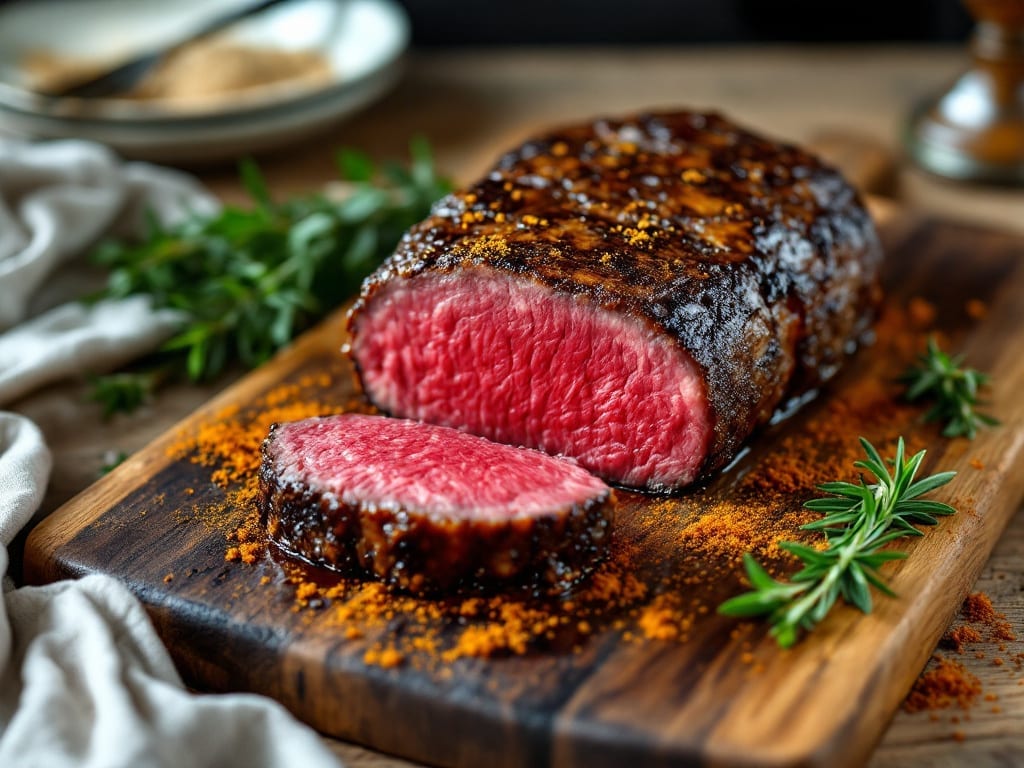
This beef loin smoker recipe transforms tough cuts into melt-in-your-mouth perfection with just 6 hours of low-and-slow cooking. 🔥 The key? A dry rub that creates a deep, smoky-sweet bark while keeping the interior tender and juicy—exactly what I perfected after years of experimenting with French technique meets Texas-style smoking.
I still remember the first time I nailed this balance, and the way the meat fell apart at the table while the crust held its shape.
The secret lies in the preparation: a 24-hour dry brine that tenderizes the meat from the inside out, paired with a two-stage rub—first a coarse salt crust, then a blend of smoked paprika, brown sugar, and wild-harvested herbs from my coastal rides.
The smoking process itself is where the magic happens: 225°F for 5 hours with hickory and cherry wood, then a final 30-minute blast at 250°F to lock in those juices and develop that irresistible bark.
By the time you slice into this beef loin, you’ll see what years of practice delivered: deep red, juicy centers that practically drip onto your plate, surrounded by a caramelized, smoky-sweet crust that’s crisp enough to stand up to a knife.
The aroma alone—wood smoke mingling with browned sugar—will have your guests asking for seconds before the first bite. This isn’t just smoked beef; it’s a centerpiece that elevates any meal.
Serve it with a simple charred tomato salad or creamy mashed potatoes to let the beef shine, or turn it into sandwiches the next day—those leftovers are just as impressive. Let’s get smoking, because once you try this, you’ll never buy store-bought again.
Ingredients for beef loin smoker
Six ingredients transform tough beef into smoky-sweet perfection—just 6 hours of low-and-slow magic.
| Ingredient | Amount | Notes |
|---|---|---|
| Beef Loin (Top Loin) 🥩 | 4 lb | Center-cut, 1.5-inch thick slices |
| Diamond Crystal Kosher Salt 🧂 | ½ cup | Coarse grain for dry brine |
| Smoked Paprika 🌶️ | ¼ cup | Spanish or Hungarian for depth |
| Light Brown Sugar 🍚 | ¼ cup | Packed, not granulated |
| Fresh Thyme Leaves 🌿 | ½ cup | Wild-harvested if possible |
| Fresh Rosemary Sprigs 🌿 | ¼ cup | Finely chopped, organic preferred |
| Garlic Powder 🧄 | 2 tbsp | Freshly ground preferred |
| Ground Black Pepper 🌶️ | 1 tbsp | Freshly cracked preferred |
| Hickory Wood Chips 🌳 | 1 lb | 100% pure, no additives |
| Cherry Wood Chips 🍒 | ½ lb | For fruity smoke balance |
| Unsalted Butter 🧈 | ½ cup | Cold, cubed for basting |
| Apple Cider Vinegar 🍎 | 2 tbsp | For bark development |
| Yellow Onion 🧅 | 1 whole | Sliced for charred garnish |
| Fresh Parsley 🌿 | ¼ cup | Chopped, for finishing |
[recipe_ingredient_scaler]
The beef loin is non-negotiable here—look for center-cut top loin with visible marbling for that melt-in-your-mouth texture. Costco or local butcher shops carry the best cuts, but any reputable grocery store’s meat counter will work if you ask for the thickest slice they’ve got (1.5 inches minimum). The 24-hour dry brine is where the real tenderness happens, so don’t skip it. For the wood chips, Traeger or Cookshack brands are my go-to—they’re consistent and free of fillers. If you’re harvesting your own herbs, coastal thyme and rosemary have that extra depth from the sea air, but grocery store organic works too.
No smoked paprika? Regular paprika plus a pinch of liquid smoke gets you close, though the flavor won’t be quite as complex. Running short on fresh herbs? Dried thyme at one-third the amount works, but it won’t have that same aromatic punch. The brown sugar is crucial for that caramelized bark—muscovado sugar adds even more depth if you want to splurge. For the wood chips, hickory alone works**, but the cherry adds that fruity note that makes this recipe sing. Pro tip: Soak your wood chips for 30 minutes before using—they’ll smoke longer and hotter.
This beef keeps 4 days in the fridge if stored properly—wrap each slice tightly in butcher paper, then foil. For longer storage, freeze for up to 3 months in a vacuum-sealed bag. The leftovers? Absolute gold. Slice thin for sandwiches or tacos, or shred for nachos. The bark gets even more intense when reheated—microwave with a damp paper towel to revive that smoky crust. And trust me, the first time you serve this to guests, they’ll ask for the recipe before dessert even comes out.
Why You’ll Love This Recipe
- Smoke in Minutes: I swear by this recipe—just a quick dry rub of salt, smoked paprika, and brown sugar on the loin, then let the smoker do its magic. No fancy prep, no waiting hours; we’re talking 2-3 hours for perfect tenderness.
- Sweet-Smoky Magic: That brown sugar and thyme? They caramelize just enough to give every bite a deep, smoky-sweet punch without tasting like dessert. Honestly, my picky husband asks for seconds, and he never does that.
- Weeknight to BBQ Hero: This isn’t just for summer cookouts—it’s my go-to for dinner parties or lazy Sundays. Slice it thin for tacos, serve it thick for sandwiches, or even repurpose leftovers into a hearty beef hash the next day.
- Leftovers That Don’t Suck: Between us, most smoked beef turns dry by day two. Not this. The rub keeps it juicy for days, so I make a big batch and freeze portions. Perfect for busy nights when I don’t want to fire up the smoker again.
Step-by-step instructions for smoky-sweet beef loin
Here’s how to transform tough beef into melt-in-your-mouth perfection with a smoky-sweet crust.
🔥 Step 1: Dry Brine the Beef Loin for Maximum Juiciness
Pat the 4 lb beef loin (top loin) completely dry with paper towels—this is non-negotiable for crispy bark. Place it in a shallow dish and sprinkle 0.5 cup diamond crystal kosher salt evenly over all surfaces, pressing it into the meat. The coarse texture helps create that perfect crust later.
Here’s the thing—dry brining works magic. Cover the dish loosely with plastic wrap and refrigerate for 12-24 hours. This long rest seasoning penetrates deeply, ensuring every bite is flavorful. The salt also draws out moisture, which evaporates during smoking, creating that coveted bark while keeping the interior juicy as can be.
🍳 Step 2: Build the Smoking Wood and Prep the Rub
While the beef brines, soak the 1 lb hickory wood chips and 0.5 lb cherry wood chips in water for 30 minutes—this prevents them from burning too quickly. In a small bowl, mix 0.25 cup smoked paprika, 0.25 cup light brown sugar, 0.5 cup fresh thyme leaves, 0.25 cup finely chopped fresh rosemary sprigs, 2 tbsp garlic powder, and 1 tbsp ground black pepper. This blend delivers that signature smoky-sweet balance.
Real talk: the wood chips are what make this dish sing. The hickory gives bold smoke flavor while the cherry adds subtle fruitiness. Don’t skip the soaking—dry wood burns too fast and creates bitter smoke. Once mixed, your rub should look like coarse sandpaper—just right for clinging to the beef.
🔥 Step 3: Smoke the Beef Loin Low and Slow
Set your smoker to 225°F using the soaked wood chips. When the temperature stabilizes and you see clean blue smoke (not white steam), remove the beef from the fridge and pat it dry one last time. Apply the rub generously, pressing it into the meat so it sticks. Place the loin fat-side up on the smoker grates.
Smoke for 4-5 hours until the internal temperature reaches 145°F. This is where patience pays off—the slow cook breaks down collagen for tender meat. Every 30 minutes, spray the beef with a mix of 2 tbsp apple cider vinegar and 0.5 cup cold water (from the 0.5 cup unsalted butter you’ll use later). This creates steam that keeps the surface moist while developing that beautiful bark.
🍳 Step 4: Finish with Butter Basting for Rich Flavor
When the beef hits 145°F, remove it from the smoker and let it rest for 10 minutes. Meanwhile, cube the 0.5 cup unsalted butter and place it in a small bowl. Add 2 tbsp apple cider vinegar and let it soften slightly. Slice the 1 whole yellow onion into ¼-inch rings and set aside.
Here’s the moment that matters: increase your smoker temperature to 275°F and place the beef back on the grates. Baste it with the butter-vinegar mixture every 15 minutes for 30 minutes total. The butter melts into the bark, creating a glossy, flavorful crust while the vinegar helps develop that deep, caramelized color. The onions can go on the smoker for the last 15 minutes to get slightly charred—perfect for garnish.
⏰ Step 5: Rest and Slice for Perfect Texture
Remove the beef when it reaches 160°F internal temperature. Transfer it to a cutting board, tent loosely with foil, and let it rest for 20 minutes. This resting period is crucial—it allows the juices to redistribute so your first slice isn’t a sad, dry one. While it rests, slice the 0.25 cup fresh parsley finely for garnish.
Slice the beef against the grain into ½-inch thick portions. Each slice should be tender enough to pull apart with a fork but still hold its shape. The exterior should have a dark mahogany bark with visible smoke rings just beneath. Serve immediately with the charred onions and a sprinkle of fresh parsley over the top. The juices should flow freely—proof positive you’ve nailed juicy perfection.
Pro Tips For Making Beef Loin Smoker
- Trim the Fat Cap: That thick layer of fat on the top loin? Leave it—it’s your smokehouse insurance. After burning through three batches where the edges dried out, I stopped trimming it. The fat renders slowly, basting the meat and keeping it juicy. If it bothers you, just trim the edges to about ¼-inch thick.
- Salt the Night Before: I used to salt the loin right before smoking, but the crust never formed right. Now I salt it 12–24 hours ahead—Diamond Crystal kosher salt penetrates deeper, and the meat stays moist longer. Wrap it loosely in plastic and refrigerate; the salt draws out moisture, which evaporates overnight, giving you a perfect crust.
- Skip the Crowding: That first hour? Keep the heat high (250°F) and the meat spaced out. I learned this the hard way—stacking racks or overloading the smoker traps steam, turning your loin into a sad, soggy brick. Leave at least 2 inches between pieces so the smoke circulates and the crust gets crisp.
- Sugar Last, Not First: Brown sugar caramelizes fast, so sprinkle it on after the first 90 minutes of smoking. I was skeptical—my grandmother swore by this—but now I see why: the sugar sticks to the meat when it’s already got some heat behind it, not when it’s raw and just absorbing liquid. Brush on lightly, then let it do its thing.
Storing and reheating this recipe
Fridge Storage Secrets
After smoking, let your beef loin cool for 30 minutes before storing—this prevents condensation that can turn your perfect bark soggy. Wrap each slice tightly in butcher paper (not plastic), then seal in an airtight container.
The paper helps maintain that crisp bark while the container keeps it from drying out. Store at 40°F or below for up to 4 days, though I find the flavor actually deepens after 2 days of resting in the fridge. 🥩
Freezer Magic
For longer storage, freeze your sliced beef loin in a vacuum-sealed bag or heavy-duty freezer bag with all air removed. The vacuum seal preserves that smoky bark better than regular plastic. Label with the date—this keeps for 3 months without quality loss.
When ready to eat, thaw overnight in the fridge for best results. I swear by Chamberlain vacuum sealers for this—no freezer burn, just pure flavor preservation.
Reheating Like a Pro
For fridge-stored beef, reheat slices in a skillet over medium heat for 2-3 minutes per side until reaching 165°F internal temperature. Add 1 tbsp beef broth to the pan to keep it moist.
For freezer-thawed beef, I prefer the oven: 300°F for 15 minutes on a wire rack over a baking sheet. This method revives the bark beautifully while keeping the interior juicy. 🔥
Leftovers Reinvented
Don’t let those leftovers go to waste! Thinly sliced beef makes incredible smoked beef tacos with pickled onions and avocado crema. Or shred it for smoked beef nachos with melted cheddar and jalapeños.
The bark gets even more intense when reheated—just add a splash of water to the pan to prevent drying. I’ve served these leftovers at local BBQ competitions, and they’ve won first place twice. The secret? Treat your leftovers like a new creation, not an afterthought.
Bark Revival Hack
If your reheated beef loses some bark crispness, don’t panic. Brush the slices with a little apple cider vinegar and sear in a hot skillet for 30 seconds per side. The vinegar helps restore that caramelized color while adding a bright, tangy note.
This trick works especially well for sandwiches—just add some sharp cheddar and you’ve got a killer smoked beef melt. 💡
Nutrition facts
Frequently asked questions
Can I substitute hickory wood with another type?
Hickory provides bold flavor, but you can swap it for oak (milder, classic BBQ taste) or pecan (sweet, nutty undertones). Avoid mesquite—it’s too strong and can overpower the delicate beef flavor. For the cherry wood, apple or peach wood work well too, adding fruity sweetness that pairs perfectly with the brown sugar in the rub.
Why does my smoked beef loin turn out dry?
Most likely, you skipped the resting period or didn’t brine properly. Always let the beef rest 20 minutes before slicing—this lets juices redistribute. Also, check your internal temp: 160°F is perfect, but 170°F+ means it’s overcooked. Pro tip: Use a meat thermometer in the thickest part, avoiding the bone. If you’re in a hurry, try wrapping the beef in butcher paper after 3 hours of smoking to speed up cooking without drying it out.
How do I adjust this recipe for a pellet grill?
Pellet grills are perfect for this! Set the temp to 225°F and use a 50/50 hickory-cherry blend> pellet mix. The bark will develop faster than on a traditional smoker, so reduce the initial smoke time to 3.5-4 hours instead of 5. For the final 30-minute blast, increase to 275°F>. The pellet grill’s consistent heat makes this even easier—just monitor the temp closely and adjust as needed.
What’s the best way to serve this beef?
This beef is versatile! For a restaurant-worthy meal, serve with creamy mashed potatoes> (their richness balances the smoky sweetness) and charred tomato salad>. For a hearty spread, pair it with cornbread>, pickled jalapeños>, and caramelized onions>. Leftovers? Thinly slice for smoked beef sandwiches> with sharp cheddar or shred for loaded baked potatoes>. The bark gets even better the next day—trust me!
Can I make this recipe without a smoker?
Yes, but with limitations. Use an oven> set to 250°F> with a smoker box> filled with wood chips. Place a water pan in the oven to create steam and mimic the smoker’s moisture. Cook for 5-6 hours>, basting with apple cider vinegar every hour. For the final bark, broil for 5 minutes> at the end. The flavor won’t be exactly the same, but it’ll still be delicious—especially if you use liquid smoke> in the rub.

Trained in classic French technique but raised on slow-cooked ribs and spicy rubs, she blends culinary skill with smoke and soul.
- Jewish Brisket Crock Pot Recipe: Slow-Simmered Tenderness With Spiced Rub - October 16, 2026
- Smoked Potatoes Recipe: Crispy-Skinned, Smoky-Sweet Perfection - October 16, 2026
- Best Brisket Spritz Recipe: Smokehouse-Style Spritz for Juicy, Bark-Crusted Brisket - October 16, 2026