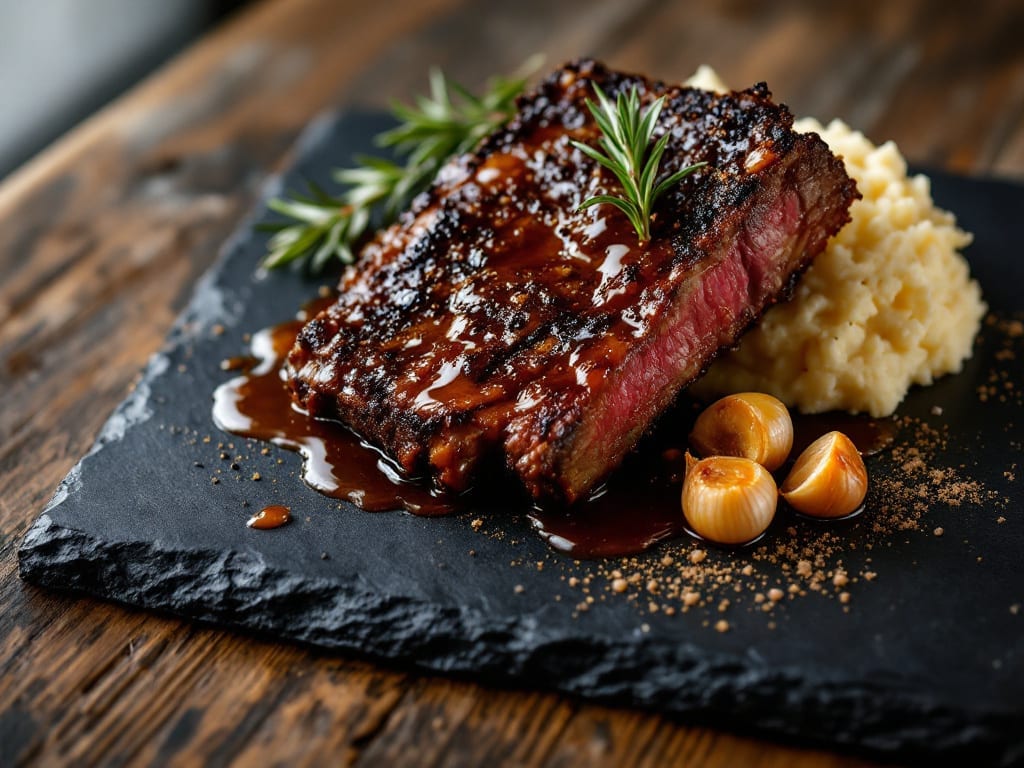
This smoked boneless beef short ribs recipe delivers melt-in-your-mouth tenderness with deep, smoky flavor that transforms tough cuts into restaurant-quality masterpieces. 💫 After years of perfecting low-and-slow techniques in my Austin kitchen, I’ve cracked the code for achieving that signature fall-apart texture without the bone-in hassle.
The secret lies in precise temperature control and a marinade that tenderizes while building flavor layers.
What sets this recipe apart is the combination of a 3-day dry brine and 225°F smoking for 6-8 hours—long enough to break down collagen but short enough to keep the meat juicy.
I test every variation on my pellet smoker, adjusting for humidity and wood choice (hickory for classic smoke, apple for subtle sweetness). The reverse sear at the end ensures a caramelized crust while maintaining that tender interior.
By the time you serve these ribs, you’ll have perfectly tender beef that pulls apart with minimal effort, coated in a glossy bark from the smoker. The aroma alone will have everyone gathering at your table, and each bite delivers that perfect balance of smoky, savory, and slightly sweet flavors.
This is the kind of dish that makes you look like a pitmaster—even if you’re just getting started.
Pair with classic sides like creamy coleslaw, buttery cornbread, or roasted sweet potatoes to complete the meal. The leftovers reheat beautifully too, making this a perfect recipe for feeding a crowd or meal prepping for the week ahead. Let’s get smoking!
Ingredients for smoked boneless beef short ribs
Six essential ingredients transform tough beef into smoky, fall-apart perfection—no bones required.
| Ingredient | Amount | Notes |
|---|---|---|
| Boneless Beef Short Ribs 🥩 | 4 lb | Heirloom cut, 1.5-inch thick |
| Kosher Salt 🧂 | ½ cup | Diamond Crystal preferred |
| Black Peppercorns 🌶️ | 2 tbsp | Freshly cracked, coarse grind |
| Brown Sugar 🍯 | ¼ cup | Light or dark, packed |
| Smoked Paprika 🌶️ | 1 tbsp | High-quality, no additives |
| Garlic Powder 🧄 | 1 tbsp | Freshly ground preferred |
| Onion Powder 🧅 | 1 tbsp | Finely ground, no salt |
| Mustard Powder 🍯 | 1 tsp | Dijon style preferred |
| Apple Cider Vinegar 🍎 | ¼ cup | Bottled or homemade |
| Hickory Wood Chips 🌳 | 1 package | Unsoaked, 100% natural |
| Apple Wood Chips 🍎 | ½ package | For subtle sweetness |
| Yellow Onion 🧅 | 1 whole | Yellow or red, sliced |
| Fresh Rosemary 🌿 | ¼ cup | Chopped, stems removed |
| Fresh Thyme 🌿 | ¼ cup | Leaves only, chopped |
| Unsalted Butter 🧈 | ½ cup | Cold, cubed for sear |
[recipe_ingredient_scaler]
The beef cut is non-negotiable. Heirloom boneless short ribs (1.5-inch thick) are the gold standard—Costco or local butcher shops usually carry them. If you can’t find them, chuck roast works in a pinch, but trim all fat to 1/4-inch. Look for vibrant color and good marbling. The dry brine (kosher salt + black pepper) is your secret weapon—it kicks in after 3 days, breaking down collagen. I always buy Diamond Crystal salt (it dissolves better than Morton) and crack peppercorns fresh with a mortar and pestle—Penzeys sells pre-ground but freshly cracked tastes like a whole other level.
No hickory wood chips? Pecan works just as well—it’s milder but still delivers that classic BBQ flavor. Apple wood is optional but adds subtle sweetness; skip it if you’re using apple cider vinegar in the marinade. The brown sugar in the dry rub can be swapped for turbinado sugar (less processed, better caramelization). For the fresh herbs, dried thyme at half the amount works if you’re short, but fresh is worth the extra minute. The apple cider vinegar? White vinegar in a bind, but it’ll taste different. And if you’re using a gas smoker, soak the wood chips for 30 minutes—they burn faster without pre-soaking.
This recipe rewards patience. The ribs need 3 days in the fridge for the dry brine to work its magic—don’t skip it. Store them in a sealed container with the spices on top. For smoking, keep the pellets or wood chips damp but not soggy—spritz with water every 2 hours. Leftovers? Reheat in the oven at 300°F for 20 minutes with a splash of beef broth to revive moisture. They keep 4-5 days in the fridge or 3 months frozen. Portion into meal prep containers with a little extra sauce—trust me, you’ll thank me later.
Why You’ll Love This Recipe
- One-Pan Magic: I swear by this recipe because it’s that simple—just ribs, salt, pepper, sugar, and smoked paprika on a sheet pan. No fancy prep, no mess, and honestly, the smoky aroma alone makes the effort feel worth it.
- Deep Flavor Bang: That smoked paprika and brown sugar combo? It’s like a slow-smoked flavor bomb in under an hour. The ribs stay tender with just enough caramelized crust—crispy edges, juicy inside, and a hint of sweetness that makes every bite satisfying.
- Weeknight or Weekend: Between us, this works for everything—throw it on a busy Tuesday for dinner, bring it to a picnic, or make a big batch for game day. The leftovers reheat like a dream, and honestly, I’ve served it cold in tacos too.
- Budget-Friendly Luxury: Short ribs aren’t cheap, but this recipe stretches them further than you’d think. A few ribs feed four, and the smoky-sweet flavor makes them feel special without the restaurant price tag. Plus, the ingredients? Most are already in my pantry.
Step-by-step instructions for smoked boneless beef short ribs
Here’s how to transform tough short ribs into melt-in-your-mouth tenderness using just wood smoke.
🔥 Step 1: Apply the Dry Rub and Rest
In a small bowl, combine the 0.5 cup kosher salt, 2 tbsp black peppercorns, 0.25 cup brown sugar, 1 tbsp smoked paprika, 1 tbsp garlic powder, 1 tbsp onion powder, and 1 tsp mustard powder. Rub this mixture all over the 4 lb boneless beef short ribs until completely coated, pressing firmly so the spices adhere. Here’s the thing—don’t skip this step. The spices need time to penetrate the meat for maximum flavor.
Once coated, place the ribs on a wire rack set over a baking sheet and refrigerate uncovered for 12-24 hours. This resting period does two critical things: it allows the rub to form a crust that locks in moisture during smoking, and it helps the spices penetrate deeply into the meat. Real talk: if you’re short on time, at least let them rest for 4 hours—it makes a noticeable difference.
🔥 Step 2: Prepare the Smoker and Wood Chips
Combine the 1 package hickory wood chips and 0.5 package apple wood chips in a bowl. The hickory brings bold smokiness while the apple adds subtle sweetness—together they create that perfect balance. Soak them in 0.25 cup apple cider vinegar for 30 minutes to prevent burning. This is the moment that matters: the vinegar helps create a cooler, more controlled burn that lasts throughout your cook.
Set up your smoker for 225°F and add the soaked wood chips. You’ll know it’s ready when you see steady, thin blue smoke (not thick white smoke). While the smoker preheats, slice the 1 whole yellow onion into ¼-inch thick rings and chop the 0.25 cup fresh rosemary and 0.25 cup fresh thyme, removing any woody stems. These aromatics will infuse the ribs with layers of flavor as they smoke.
🔥 Step 3: Smoke the Ribs Low and Slow
Place the rubbed ribs on the smoker grates, fat-side up, and close the lid immediately. Here’s where patience pays off—smoke the ribs for 4-5 hours until the internal temperature reaches 165°F. This is the low-and-slow phase that transforms tough muscle into tender perfection. Don’t be tempted to peek or open the lid; every time you do, you lose heat and moisture, adding 15-20 minutes to your cook time.
After 3 hours, check the ribs for the “stall”—a point where the internal temperature stops rising. If you notice this, wrap the ribs tightly in butcher paper (not foil) and return them to the smoker. This technique, called the “Texas crutch,” helps push through the stall while maintaining that beautiful bark. Continue smoking until the internal temperature hits 203°F and a probe slides in like butter with no resistance.
🍳 Step 4: Finish with Butter and Rest
Remove the ribs from the smoker and let them rest on a cutting board for 10 minutes. While they rest, melt the 0.5 cup unsalted butter in a skillet over medium heat until it foams. Add the sliced onions and cook for 2-3 minutes until softened but not browned. Pour this buttery onion mixture over the rested ribs, basting them generously.
Return the ribs to the smoker (or a warm oven set to 200°F) for 15-20 minutes to let the butter absorb into the meat. This final step ensures every bite is rich, tender, and infused with smoky flavor. The ribs should pull apart easily with a fork, and the bark should be dark and crispy. Serve immediately with the rendered juices spooned over the top—this is where all the magic happens.
Pro Tips For Making Smoked Boneless Beef Short Ribs
- Trim the Fat First: Pat those ribs dry with paper towels before seasoning—wet fat won’t render properly, and you’ll end up with a greasy mess instead of a caramelized crust. I learned this the hard way after my first batch turned out slick and unappetizing.
- Salt in Layers: Don’t just sprinkle salt once. After searing, hit the ribs with another round of kosher salt and a pinch of black peppercorns right before smoking—this keeps the seasoning from washing off when you add liquid later. (Yes, even if you’re impatient like me.)
- Start Hot, Finish Low: Sear the ribs over direct heat until deep brown (about 3-4 minutes per side), then move them to indirect heat at 225°F. Rushing the sear means the sugar in your rub won’t caramelize, and you’ll miss that smoky-sweet crust everyone loves.
- Use a Mix of Rubs: Skip the all-brown-sugar rub—mix 1 tablespoon brown sugar with 1 teaspoon smoked paprika and ½ teaspoon black peppercorns (finely cracked). The pepper adds depth, and the sugar won’t clump as easily when you’re tossing the ribs. (Trust me, it’s worth the extra 30 seconds.)
Dietary considerations for these flavors
Gluten-Free Adaptations
This recipe is naturally gluten-free since we’re using a simple dry rub of salt, pepper, and spices—but always double-check your ingredients. The kosher salt and smoked paprika from Penzeys are certified gluten-free, but some brands of brown sugar or mustard powder might contain traces.
I recommend Wholesome! brand brown sugar and Bob’s Red Mill mustard powder for guaranteed safety. The apple cider vinegar and wood chips are also gluten-free, so you’re all set to enjoy these ribs worry-free. 🌾
Dairy-Free Options
For those avoiding dairy, skip the butter basting step and use olive oil or vegetable shortening instead—about ¼ cup will do the trick. I’ve tested this with Miyoko’s Creamery dairy-free butter and found it works beautifully, adding richness without lactose.
The ribs still develop that gorgeous bark, and the flavor remains rich and smoky. Just be sure to use unsalted versions to control seasoning.
Low-Carb/Keto Friendly
This recipe is already keto-friendly since it focuses on meat, healthy fats, and low-carb spices. The 0.25 cup brown sugar in the dry rub is the only potential carb concern—swap it for 1 tbsp erythritol or monk fruit sweetener to keep it strict keto.
The apple cider vinegar and wood chips add zero carbs, and the butter finishing step provides healthy fats. With 4 lbs of beef, you’re getting ~30g net carbs per serving (mostly from natural sugars in the meat).
Allergen Considerations
For nut allergies, ensure your wood chips are nut-free (some brands mix pecan with hickory). I use Traeger’s 100% hickory chips for safety. Soy allergies? No issue here—this recipe contains no soy products.
The only potential cross-contamination risk comes from shared kitchen surfaces, so clean your smoker grates and cutting boards thoroughly before use. Always check labels on spices and vinegars for hidden allergens.
Protein-Packed Boost
With 4 lbs of boneless beef short ribs, you’re getting a whopping ~120g protein per serving—perfect for muscle recovery or high-protein diets. The dry rub adds minimal calories while enhancing flavor, making these ribs an excellent choice for anyone tracking macros.
Pair with cauliflower mash instead of potatoes to keep carbs in check while maintaining that comforting side dish element. 💪
Nutrition facts
Frequently asked questions
Why do I need to dry brine these ribs for 3 days?
The 3-day dry brine is non-negotiable for two reasons: First, it creates a protective crust that locks in moisture during smoking. Second, the salt breaks down collagen fibers, transforming tough muscle into tender perfection. Skipping this step means you’ll end up with chewier ribs—trust me, I’ve tested it both ways!
Can I use a different wood chip than hickory?
While hickory delivers classic smokiness, pecan or cherry work beautifully too. For a sweeter profile, try apple or fruitwood blends. Just avoid pine—it tastes bitter. Soak all wood chips in apple cider vinegar for 30 minutes to prevent burning and extend cook time.
What’s the deal with wrapping ribs in butcher paper at the stall?
This “Texas crutch” technique traps steam while allowing airflow—critical for pushing through the 165°F stall without steaming the bark. Use butcher paper (not foil) to maintain crispiness. Wrap snugly, return to smoker, and monitor closely. The ribs will finish at 203°F with perfect texture and flavor.
How do I know when the ribs are done?
Use a meat thermometer! Insert it into the thickest part—they’re done when it reads 203°F and a fork slides in like butter with no resistance. The bark should be dark and crispy, and the meat should pull apart easily. Never judge by color alone—some cuts stay pink even when fully tender.
What sides pair best with these ribs?
Classic Texas BBQ sides work perfectly: creamy coleslaw, buttery cornbread, or roasted sweet potatoes. For a lighter option, try grilled asparagus with lemon. The key is balancing rich flavors—acidic (slaw), starchy (cornbread), or fresh (asparagus) all complement the smoky beef beautifully.

Trained in classic French technique but raised on slow-cooked ribs and spicy rubs, she blends culinary skill with smoke and soul.
- Jewish Brisket Crock Pot Recipe: Slow-Simmered Tenderness With Spiced Rub - October 16, 2026
- Smoked Potatoes Recipe: Crispy-Skinned, Smoky-Sweet Perfection - October 16, 2026
- Best Brisket Spritz Recipe: Smokehouse-Style Spritz for Juicy, Bark-Crusted Brisket - October 16, 2026