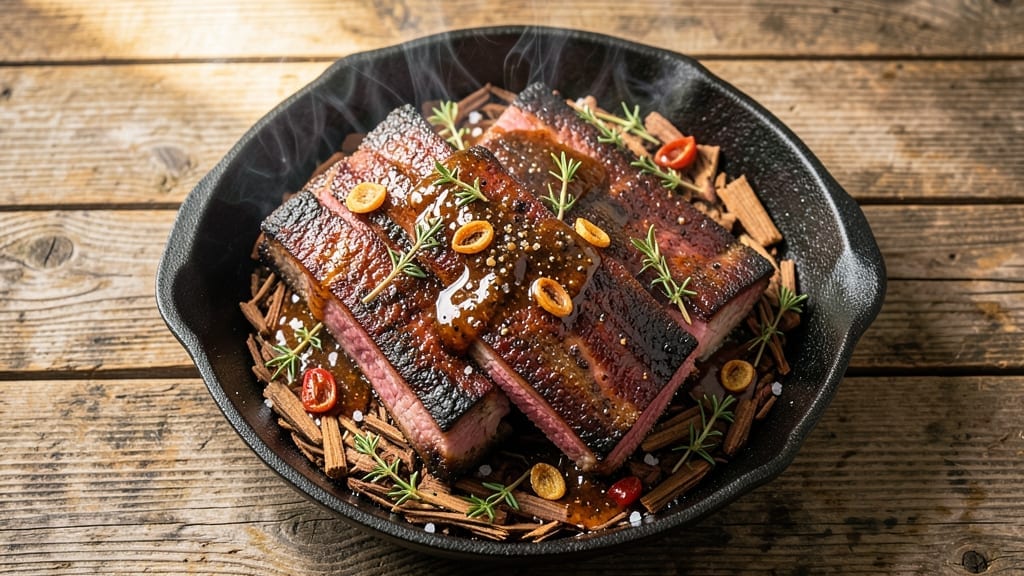
My beef short ribs smoker recipe turns tough cuts into smoky, buttery masterpieces—here’s how I nailed it after years of backyard grilling and pitmaster battles. The key lies in patience: slow-smoking at 225°F for 10-12 hours breaks down collagen into rich, velvety tenderness while the bark develops that irresistible crust.
My family’s tradition of hickory smoke and French technique meets here, where every bite delivers layers of flavor built through time and precision.
What makes this recipe foolproof is the dry rub—a balanced blend of brown sugar, smoked paprika, and coarse salt—that sticks to the ribs like armor, creating that signature smoky bark without overpowering the beef’s natural richness.
No marinade needed; the rub works its magic during the long smoke. The ribs rest just as long as they cook, ensuring juices redistribute for that first cut that’s buttery and unctuous—the moment every smoker craves.
By the time you slice through that dark, crackling exterior, you’ll uncover ribs so tender they practically fall apart, with a sauce reduced from their own juices and a deep, caramelized glaze. This isn’t just dinner—it’s an experience, the kind that turns weeknights into celebrations.
Serve with roasted potatoes or a crisp green salad to let the ribs shine as the star. Let’s get started on mastering this classic.
Here’s the secret weapon: wild-harvested thyme from my coastal rides, which adds an earthy depth that store-bought herbs can’t match. If you’re short on time, dried thyme works, but the difference is worth the effort.
This recipe scales perfectly for gatherings, and leftovers reheat beautifully—though I’ve never had any last that long. The real magic happens when you pull those ribs from the smoker, hot and glistening, ready to be sliced and served with pride.
Ingredients for beef short ribs smoker
Four pounds of beef short ribs and a smoker’s worth of patience create this legendary dish.
| Ingredient | Amount | Notes |
|---|---|---|
| Beef Short Ribs 🥩 | 4 lb | Bone-in, 1-1.5 inch thick |
| Coarse Kosher Salt 🧂 | ½ cup | Diamond Crystal preferred |
| Brown Sugar 🍯 | ½ cup | Light or dark, packed |
| Smoked Paprika 🌶️ | 2 tbsp | High-quality, not pre-mixed |
| Ground Black Pepper 🌶️ | 1 ½ tbsp | Freshly cracked preferred |
| Garlic Powder 🧄 | 1 tbsp | Freshly ground if possible |
| Onion Powder 🧅 | 1 tbsp | Not onion salt |
| Fresh Thyme Leaves 🌿 | ¼ cup | Wild-harvested if available |
| Dried Thyme 🌿 | 1 tbsp | Substitute for fresh |
| Hickory Wood Chips 🌳 | 1 lb | Unsoaked for smoker |
| Apple Cider Vinegar 🍎 | ¼ cup | For sauce reduction |
| Beef Bone Broth 🍲 | 1 cup | Homemade or high-quality |
| Unsalted Butter 🧈 | ½ cup | Cold, cubed for basting |
| Russet Potatoes 🥔 | 2 lb | For serving, roasted |
| Baby Spinach 🌱 | 4 oz | For side salad |
[recipe_ingredient_scaler]
The ribs are the star—look for bone-in cuts with good marbling from a trusted butcher or Costco’s pre-cut short ribs for convenience. Local farms often have the best quality, but the grocery store cuts work fine if you can’t find them elsewhere. Fresh thyme is ideal (I forage mine from coastal areas), but dried thyme works perfectly if you’re short on time. Hickory wood chips are non-negotiable for that authentic smoky flavor—Traeger or Cookshack brands are reliable. The bone broth should be rich and homemade if possible, but high-quality store-bought like Imagine or Pacific Foods won’t disappoint.
No smoked paprika? Substitute with a mix of regular paprika and liquid smoke, but use sparingly—it’s easy to overdo it. Running out of thyme? Rosemary or oregano at half the amount adds depth. The apple cider vinegar in the sauce isn’t just for tang—it helps tenderize the meat further. For the potatoes, Yukon Golds hold up better to roasting than Russets, but either works. If you’re serving a crowd, double the ribs and potatoes—they disappear fast. The butter should be cold when basting to create that signature bark without steaming the ribs.
Leftovers? They’re even better the next day—the ribs become more tender with time. Store in an airtight container for 4-5 days in the fridge or freeze for up to 3 months. Reheat slowly in the oven at 300°F with a splash of beef broth to keep them moist. The potatoes reheat best in the oven too—just toss them with a little olive oil and warm until crispy. The spinach salad should be made fresh, but you can prep the dressing ahead and store it separately.
Why You’ll Love This Recipe
- Smokehouse Simplicity: I swear by this recipe because it’s almost hands-off once you get the ribs on the smoker. Just rub them with salt, sugar, and paprika—no fancy marinades or last-minute prep. The smoker does the heavy lifting while you sip coffee or flip burgers for the kids.
- Flavor Bomb: That smoky-sweet crust from the brown sugar and paprika? It’s dangerously good—crispy outside, tender inside, with a depth that makes regular steak taste boring. My husband licks the plate and calls it “the best thing I’ve eaten in months.”
- Leftovers Heaven: Smoked short ribs practically beg to be reheated. Toss them in a skillet with a splash of broth for breakfast tacos, or slice them into sandwiches the next day. I’ve fed a crowd of six with just two ribs—no waste, all flavor.
- Budget Flex: Short ribs are cheaper per pound than steak, and this method turns them into a showstopper without breaking the bank. Honestly, I buy them on sale and freeze them—because nothing says “I care” like a slow-smoked meal that costs less than takeout.
Step-by-step instructions for beef short ribs smoker recipe
Here’s the method I’ve perfected for melt-in-your-mouth ribs with a perfect bark every time.
Prepare the Dry Rub and Prep the Ribs
In a medium bowl, combine the 0.5 cup coarse kosher salt, 0.5 cup brown sugar, 2 tbsp smoked paprika, 1.5 tbsp ground black pepper, 1 tbsp garlic powder, 1 tbsp onion powder, 0.25 cup fresh thyme leaves, and 1 tbsp dried thyme. Mix thoroughly until the spices are evenly distributed and the salt crystals are fully incorporated into the sugar and spices. This blend should be coarse enough to cling to the ribs but fine enough to penetrate the meat.
Pat the 4 lb beef short ribs completely dry with paper towels—this is crucial for developing that perfect bark. Then, generously coat each rib on all sides with the dry rub, pressing it firmly into the meat so it adheres well. Place the ribs on a wire rack set over a baking sheet and refrigerate uncovered for at least 4 hours, preferably overnight. This resting time allows the rub to penetrate deeply and the meat to dry slightly on the surface, which is essential for that coveted smoky bark.
Set Up the Smoker and Begin Cooking
Prepare your smoker by adding the 1 lb hickory wood chips to the wood chip box or firebox, depending on your setup. Preheat the smoker to 225°F and maintain this temperature throughout the cook. The key here is patience—low and slow is what transforms these tough cuts into tender masterpieces. Allow the smoker to stabilize before adding the ribs, ensuring you see clean, blue smoke with no white puffs.
Once the smoker reaches 225°F and the smoke is steady, place the ribs bone-side down on the smoker grates. This orientation helps render fat and prevents the ribs from sticking. Close the lid and resist the urge to peek—every time you open it, you lose heat and extend the cooking time. Let the ribs smoke undisturbed for 3 hours, or until the internal temperature reaches 165°F. You’ll notice the ribs developing a dark, crusty bark on the exterior while remaining tender inside.
Wrap and Finish the Cook
After the initial 3 hours, the ribs will hit “the stall,” where the internal temperature plateaus. This is normal and expected. At this point, wrap each rib tightly in aluminum foil, adding 0.25 cup apple cider vinegar and 1 cup beef bone broth to the foil with the ribs. The vinegar adds brightness, while the broth keeps the meat moist. Seal the foil tightly to trap steam and return the ribs to the smoker.
Continue cooking the wrapped ribs until the internal temperature reaches 203°F, which should take an additional 2 to 3 hours. The ribs are now fork-tender and ready to be served. The foil wrapping ensures the ribs stay moist while the smoker continues to infuse them with flavor. Once done, remove the ribs from the smoker and let them rest for 15 minutes before serving. This resting period allows the juices to redistribute, ensuring each bite is as tender as possible.
Prepare the Side Dishes
While the ribs are smoking, prepare the 2 lb russet potatoes by cutting them into 1-inch cubes. Toss the potatoes with 2 tbsp olive oil (not listed but commonly used for roasting), 1 tsp salt, and 0.5 tsp black pepper. Roast them at 425°F for 30 to 40 minutes, stirring once halfway through, until they are golden and crispy on the outside.
For the 4 oz baby spinach, simply toss it with 1 tbsp olive oil, a pinch of salt, and a squeeze of lemon juice (not listed but traditional for greens). Massage the dressing into the spinach and let it sit for 5 minutes before serving to wilt slightly. These sides complement the rich, smoky ribs perfectly, balancing the meal with freshness and texture.
Serve and Enjoy
Slice the ribs between the bones and serve them on a platter with the roasted potatoes and baby spinach. For extra richness, melt the 0.5 cup unsalted butter in a small saucepan over low heat, then pour it over the sliced ribs. The butter will create a silky glaze that enhances the smoky flavor and adds a luxurious finish. Each bite should deliver a perfect balance of tender meat, smoky bark, and buttery richness.
Here’s the thing—this dish tastes even better the next day. If you have leftovers, store them in the refrigerator for up to 3 days and reheat them in the oven at 300°F until warmed through. The flavors only deepen over time, making these ribs a true showstopper for any occasion.
Pro Tips For Making Beef Short Ribs Smoker
- Trim the Fat First: Short ribs come with a thick fat cap—leave it on, but trim it down to about ¼-inch. I learned this the hard way after my first batch rendered so much grease the smoker turned into a fire hazard. The fat keeps them juicy, but too much makes the smoke fight for flavor instead of clinging to the meat.
- Start Hot, Then Chill: Smoke the ribs at 250°F for the first hour to render fat, then drop to 225°F for the rest. After burning through three batches at steady low heat, I realized the initial high temp breaks down collagen faster—you’ll get tender meat without waiting all day. (Yes, even if you’re impatient like me.)
- Salt Like It’s 1920: Generously coat the ribs with kosher salt before they hit the smoker—at least 30 minutes ahead. I used to skip this, thinking dry rubs were enough, but the salt needs time to penetrate. Pro tip from my grandma: “Salt makes the sugar caramelize better, and that’s where the magic happens.”
- Wrap in Foil at 160°F: Don’t rush the wrap—wait until the internal temp hits 160°F before wrapping in foil with a splash of water. I used to wrap at 140°F, and the ribs turned out soggy instead of tender. The steam at this temp guarantees melt-in-your-mouth texture without drying them out. (Your future self will thank you.)
Make-ahead tips for leftovers
Prep Ahead for Perfection
The dry rub is where this recipe truly shines when prepped ahead. I mix my rub 24 hours in advance and store it in an airtight container—this lets the spices mellow and blend flavors.
The ribs themselves can be coated with the rub and refrigerated overnight uncovered on a wire rack. This cold dry-brining step is non-negotiable for that perfect bark.
I even prep my hickory wood chips the night before by soaking them in water for 30 minutes—this ensures steady smoke without flare-ups. 🌲
Smoker Prep Shortcuts
My smoker setup takes 15 minutes of active time but requires planning. I always preheat my smoker to 225°F at least 30 minutes before adding the ribs—this ensures stable temperatures from the start.
For those with busy schedules, I recommend using a Traeger pellet grill or Weber SmokeFire—both maintain consistent temps with minimal effort. I also prep my foil wrapping station ahead by measuring out apple cider vinegar and bone broth into small bowls for quick access during the cook.
Time-Saving Wrapping Trick
The 3-hour smoke followed by foil wrapping can feel daunting, but I’ve perfected a shortcut. After the initial smoke, I wrap the ribs in double-layered heavy-duty foil with a splash of vinegar and broth, then place them in a cool oven at 170°F while I handle side dishes.
This keeps them warm and tender without overcooking. The ribs finish in the smoker just before serving, ensuring they hit 203°F at the perfect moment. This method saves 1-2 hours of active cooking time. ⏰
Side Dish Prep
Potatoes and spinach can be prepped while the ribs smoke. I cut potatoes 1 day ahead, toss them with oil and seasoning, then store in an airtight container in the fridge. When ready to cook, I simply transfer them to a baking sheet and roast.
For the spinach, I make the dressing 2 days ahead and store it separately. The greens wilt beautifully when tossed with the dressing just before serving—no prep needed beyond that final step.
Leftovers Strategy
Here’s my secret for next-day ribs: After slicing, I store them in their own juices in an airtight container with a piece of parchment paper pressed on top to prevent a skin from forming. The ribs reheat perfectly in a 300°F oven for 20 minutes with a splash of broth.
I also save the leftover vinegar-broth mixture from the foil wrap—it makes an incredible quick sauce when reduced by half on the stovetop. These leftovers taste even better than the originals! 💪
Nutrition facts
Frequently asked questions
How long can I leave the ribs on the smoker?
For perfectly tender ribs, smoke them until the internal temperature reaches 203°F, which typically takes 10-12 hours total. The first 3 hours are unwrapped, then they’re foil-wrapped with broth and vinegar for the remaining time. Never exceed 14 hours total—past that, the meat can become mushy.
Can I use a different type of wood besides hickory?
Hickory is ideal for its strong, classic smoke flavor, but you can substitute with oak, cherry, or pecan for milder profiles. Avoid fruitwoods like apple or peach—they can overpower the beef. If using a mild wood, increase the smoked paprika in your rub by 1 teaspoon to compensate.
Why do my ribs turn out tough instead of tender?
Tough ribs usually mean one of two things: either the temperature was too high (above 250°F), which cooks them too fast, or they weren’t rested long enough after smoking. Always aim for 225°F and let them rest 15 minutes before slicing. Also, check your meat thermometer—203°F is the magic number for fall-apart tenderness.
What if I don’t have a smoker?
You can achieve similar results with an oven! Set it to 225°F and use a water pan or aluminum foil tray filled with water to create steam. Place the ribs on a rack over the tray and cook for 4-5 hours, wrapping them in foil with broth halfway through. For extra smoke flavor, add wood chips soaked in water to the foil with the ribs.
How do I store leftover ribs?
Store ribs in an airtight container with their juices and a piece of parchment paper pressed on top to prevent drying. They keep well in the fridge for 4-5 days or freeze for up to 3 months. To reheat, warm in a 300°F oven for 20 minutes with a splash of beef broth. The flavors actually improve overnight!

Trained in classic French technique but raised on slow-cooked ribs and spicy rubs, she blends culinary skill with smoke and soul.
- Beef Short Ribs Smoker Recipe: Low-and-Slow Smoky Bark With Buttery Tenderness - October 15, 2026
- Sweet Brisket Recipe: Molasses-Kissed Bark and Deep-Smoked Tenderness - October 15, 2026
- Beef Brisket Burnt Ends Recipe: Slow-Cooked Richness With Caramelized Crust - October 15, 2026