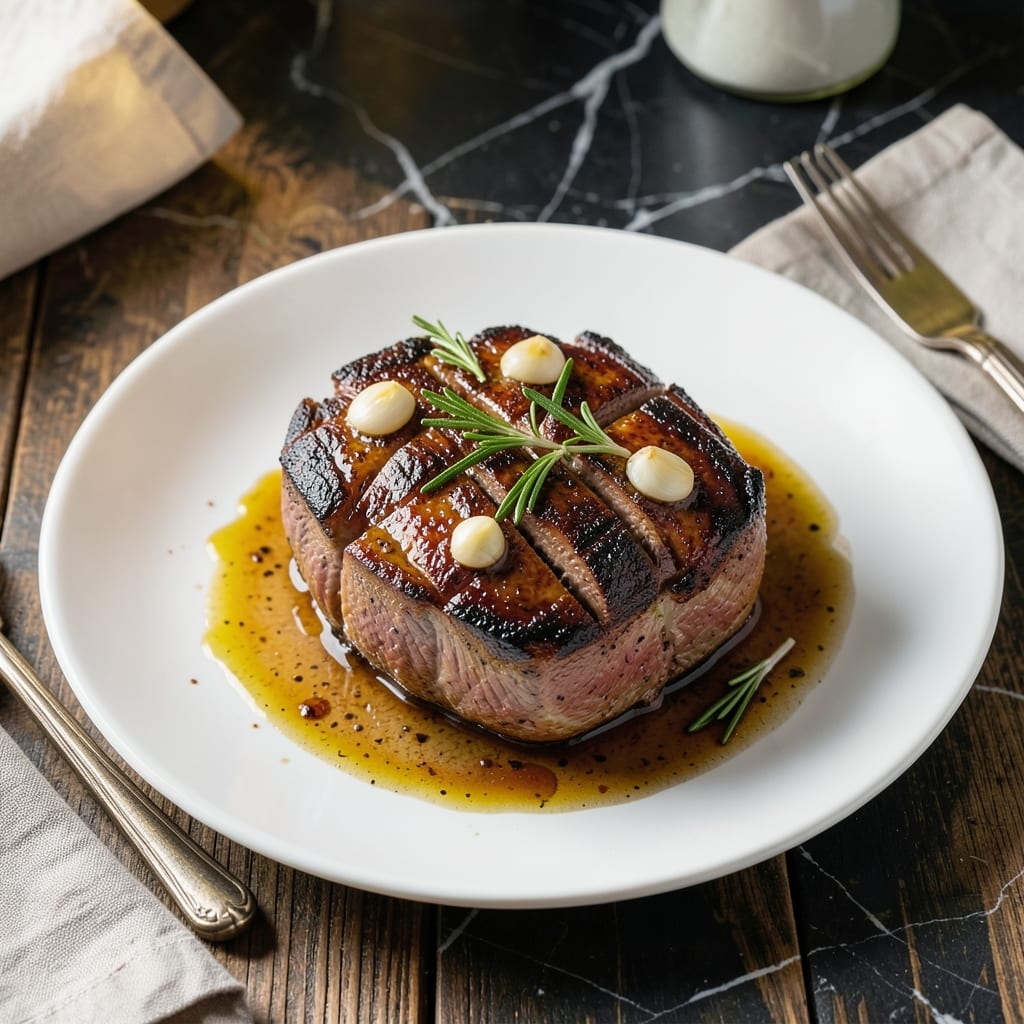
There’s a reason this roast has been my Sunday dinner centerpiece for years—it delivers restaurant-quality results with minimal effort.
Slow-roasting at 325°F transforms tough sirloin tip into fork-tender perfection, while garlic and rosemary infuse every bite with deep, aromatic flavor.
I learned this method in Nana Mae’s diner, where we served hundreds of these roasts without a single complaint. The key is patience—low and slow wins the race.
Serve it with roasted potatoes and green beans for a meal that feels special but comes together with ease.
Ingredients for Beef Sirloin Tip Roast
A few quality ingredients and time transform this into Sunday dinner perfection.
| Ingredient | Amount | Notes |
|---|---|---|
| Beef Sirloin Tip Roast 🥩 | 3 lb | Well-marbled, trimmed of excess fat |
| Garlic Cloves 🧄 | 8 cloves | Peeled and smashed |
| Fresh Rosemary Sprigs 🌿 | 4 pieces | About 6 inches long each |
| Olive Oil 🫒 | 2 tbsp | Extra-virgin preferred |
| Kosher Salt 🧂 | 1 ½ tsp | Diamond Crystal brand recommended |
| Freshly Ground Black Pepper 🌶️ | 1 tsp | Coarse grind for texture |
| Red Wine 🍷 | 1 cup | Dry variety like Cabernet Sauvignon |
| Beef Broth 🥣 | 1 cup | Low-sodium preferred |
| Yellow Onion 🧅 | 1 whole | Large, quartered |
| Carrots 🥕 | 3 whole | Peeled, cut into chunks |
| Celery Stalks 🥬 | 2 pieces | Cut into large pieces |
| All-Purpose Flour 🌾 | 1 tbsp | For thickening pan juices |
| Unsalted Butter 🧈 | 1 tbsp | For finishing sauce |
[recipe_ingredient_scaler]
The beef is everything here. Sirloin tip roast is lean but flavorful—look for good marbling at Whole Foods or your butcher. I’ve had best luck with USDA Choice grade; Prime is overkill. The rosemary and garlic? Fresh only (dried won’t infuse the same way). Grab rosemary with vibrant green needles—brown or wilted means it’s past its prime.
Out of red wine? Beef broth with a tbsp of balsamic vinegar mimics the depth. No fresh rosemary? Use one-third dried, but fresh is worth the effort. The onion, carrots, and celery are for aroma and sauce base—don’t skip them. For a richer finish, swap the butter for ghee if you’re feeling fancy.
This roast tastes even better the next day. Store leftovers in the fridge for up to 4 days or freeze for 3 months. Reheat gently in a covered dish with a splash of broth to keep it moist. Perfect for sandwiches too.
Why You’ll Love This Recipe
- Set It and Forget: I just rub the roast with olive oil, garlic, rosemary, and salt, then let the oven do all the work.
- Herb-Crusted Perfection: The garlic and rosemary form this incredible crust that makes every bite ridiculously flavorful.
- Feeds My Crew Twice: One roast gives us dinner tonight and sandwiches for lunch tomorrow—no extra cooking.
- Weeknight Hero: Honestly, it’s my go-to when I need something impressive without the fuss.
Step-by-Step Instructions for Garlic and Rosemary Beef Sirloin Tip Roast
Here’s the method I use to create a wonderfully aromatic and tender roast every time.
Step 1: Prep and Season the Beef Sirloin Tip Roast
Pat the 3 lb Beef Sirloin Tip Roast dry with paper towels—this is crucial for achieving a proper sear. Place it on a cutting board and make small incisions with a sharp knife, then insert the 8 cloves Garlic Cloves and 4 pieces Fresh Rosemary Sprigs into these slits. This infuses the meat with flavor as it cooks.
Rub the roast with 2 tbsp Olive Oil, then season generously with 1.5 tsp Kosher Salt and 1 tsp Freshly Ground Black Pepper. I like to press the seasoning into the meat to ensure it adheres well. Let it sit at room temperature for 30 minutes before roasting—this ensures even cooking.
Step 2: Sear the Roast for Depth of Flavor
Preheat your oven to 450°F. While it heats, place a large Dutch oven or oven-safe skillet over medium-high heat. Once hot, add the seasoned roast and sear for 3-4 minutes per side until deeply browned. You’re looking for a rich, caramelized crust—this adds incredible depth to the final dish.
Remove the roast and set it aside. In the same pot, add the 1 whole Yellow Onion (quartered), 3 whole Carrots (cut into chunks), and 2 pieces Celery Stalks (cut into large pieces). Sear them for 2-3 minutes until they begin to brown—this builds a flavorful base for the sauce.
Step 3: Roast Low and Slow with Aromatics
Return the roast to the pot, placing it on top of the vegetables. Pour in 1 cup Red Wine and 1 cup Beef Broth, ensuring the liquid comes about halfway up the roast. This creates a moist environment for slow cooking and prevents the meat from drying out.
Cover the pot and transfer it to the preheated oven. Reduce the heat to 325°F and roast for 2 to 2.5 hours, or until the internal temperature reaches 135°F for medium-rare. Baste the roast with the pan juices every 45 minutes to keep it moist and flavorful.
Step 4: Finish with a Rich Pan Sauce
Once the roast reaches the desired temperature, carefully remove it from the pot and transfer it to a cutting board. Tent it loosely with foil and let it rest for 15 minutes—this allows the juices to redistribute, ensuring every slice is juicy.
Place the pot with the vegetables and cooking liquid on the stovetop over medium heat. Stir in 1 tbsp All-Purpose Flour and cook for 1-2 minutes to thicken slightly. Finish by swirling in 1 tbsp Unsalted Butter for a glossy, rich sauce. Strain the sauce if you prefer a smoother texture, or leave the vegetables in for a rustic finish.
Step 5: Slice and Serve
After resting, slice the roast against the grain into ½-inch thick slices. Arrange the slices on a serving platter and spoon the warm pan sauce over the top. The meat should be tender and pink in the center, with a beautiful, flavorful crust on the outside.
Serve immediately with your favorite sides, such as mashed potatoes or roasted vegetables. The sauce pairs perfectly with the roast, so be sure to drizzle plenty over each serving.
Pro Tips For Making Beef Sirloin Tip Roast
- Sear It Hard: I learned this the hard way—get your pan screaming hot before adding the roast, and don’t touch it for at least 2-3 minutes per side to develop that deep, caramelized crust.
- Slice Garlic Thin: Sounds tedious, but slicing the garlic cloves paper-thin instead of mincing ensures they melt into the meat rather than burn, giving you even flavor in every bite.
- Rest Before Carving: Give it a solid 10-15 minutes under foil after roasting—skip this and all those juices you worked for will end up on the cutting board, not in the meat.
- Use Room-Temp Beef: Pull the roast out of the fridge 1-2 hours before cooking; cold meat seizes up in the pan and cooks unevenly, no matter how hot your oven is.
Pro Cooking Tips for Perfect Results
Temperature Perfection
I swear by my ThermoWorks Smoke for accurate readings—this roast needs 325°F for ideal tenderness. A meat thermometer is non-negotiable; aim for 135°F internal for perfect medium-rare. Biscuit always perks up when I pull out the thermometer—she knows dinner’s coming. 🌡️
Searing Secrets
Get your Dutch oven ripping hot before searing. Use medium-high heat and don’t move the roast for 3-4 minutes per side—this builds that coveted crust. I learned this in Nana Mae’s diner, where we seared hundreds of roasts to golden perfection.
Basting Benefits
Every 45 minutes, spoon those pan juices over the roast. This keeps it moist and layers on flavor. I use a silicon basting brush for even coverage without disturbing the crust.
Resting Ritual
Let it rest for at least 15 minutes under foil. This lets juices redistribute—cutting too soon leaves them on the board, not on your plate. I set a timer so I’m not tempted to peek. 💡
Sauce Success
Deglaze with 1 cup red wine and 1 cup beef broth for depth. Thicken with 1 tbsp flour, then finish with 1 tbsp butter for silkiness. Strain for elegance or leave rustic—I prefer the latter.
Slicing Smart
Slice against the grain into ½-inch pieces. This shortens muscle fibers for tenderness. My Wüsthof 8-inch chef’s knife makes quick work of it—always sharp, always reliable.
Nutrition Facts
Frequently Asked Questions
What’s the best way to store leftovers?
Store in an airtight container with some pan juices for up to 4 days in the fridge. Freeze for up to 3 months without sauce to prevent sogginess.
Can I use a slow cooker instead?
Yes! Sear first, then cook on low for 8 hours with the same liquids. Skip the oven entirely for hands-off tenderness.
Why did my roast turn out tough?
Likely it needed more time at 325°F. Sirloin tip requires slow cooking to break down fibers. Always use a meat thermometer.
What sides pair best?
Try creamy mashed potatoes or roasted root vegetables to soak up the rich pan sauce. Simple greens balance the meal perfectly.

Trained in classic French technique but raised on slow-cooked ribs and spicy rubs, she blends culinary skill with smoke and soul.
- Recipe for Boneless Pork Chops in Cast Iron Skillet: Sear and Baste to Juicy Perfection - October 3, 2026
- Recipe for Boneless Cross Rib Roast: Slow-Roasted Beef with Herb Crust - October 3, 2026
- Hamburgers in Sauce Recipe Crock Pot: Slow-Cooked Savory Delight - October 3, 2026