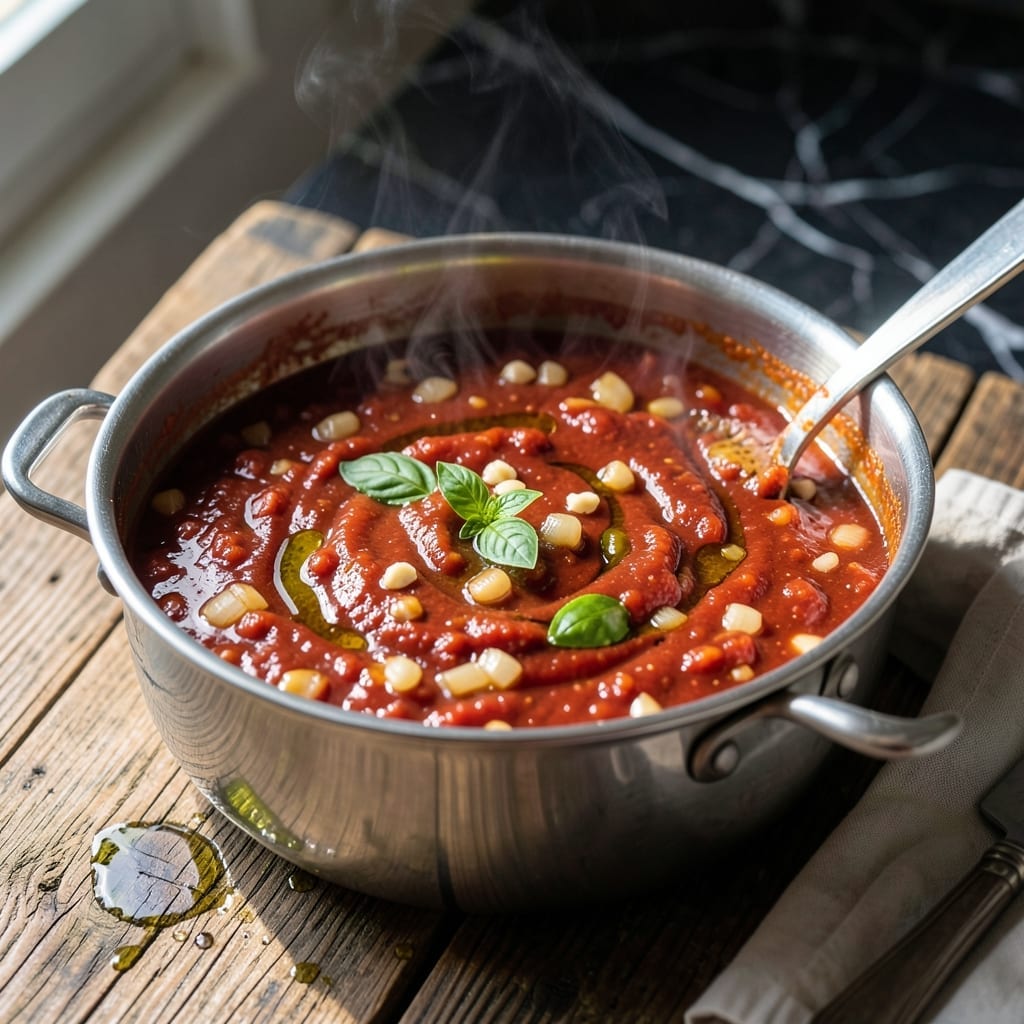
This sauce carries the warmth of family tradition in every spoonful, a rich tomato blend that transforms simple pasta into something special. I’ve tested it repeatedly in my tiny Boston kitchen to ensure it delivers restaurant-quality results at home.
What sets this apart is the slow simmer—onions, garlic, and herbs meld with tomatoes to create a deep, savory base. No shortcuts here, just time-honored technique that builds layers of flavor without complication.
The result is a versatile sauce that clings to pasta, enhances meatballs, or elevates homemade pizza. It freezes beautifully too, so you can always have a taste of tradition on hand.
Perfect for Sunday suppers or quick weeknight meals. Here’s how to make it.
Ingredients for Jims Spaghetti Sauce
Twelve ingredients. One pot. Restaurant-quality sauce with family warmth in every bite.
| Ingredient | Amount | Notes |
|---|---|---|
| San Marzano Whole Peeled Tomatoes 🍅 | 28 oz | Canned, with juice reserved |
| Yellow Onion 🧅 | 1 whole | Finely diced for even cooking |
| Garlic Cloves 🧄 | 6 cloves | Minced for maximum flavor infusion |
| Extra-Virgin Olive Oil 🫒 | ¼ cup | High-quality for sautéing aromatics |
| Dry Red Wine 🍷 | ½ cup | Bold variety like Chianti or Cabernet |
| Tomato Paste 🍅 | 2 tbsp | Double-concentrated for depth |
| Dried Oregano 🌿 | 1 tsp | Rubbed between palms to release oils |
| Dried Basil 🍃 | 1 tsp | Crushed to enhance aroma |
| Red Pepper Flakes 🌶️ | ½ tsp | Adjust to heat preference |
| Granulated Sugar 🧂 | 1 tsp | Balances acidity in tomatoes |
| Kosher Salt 🧂 | 1 ½ tsp | Diamond Crystal preferred for texture |
| Freshly Ground Black Pepper 🌶️ | ½ tsp | Coarse grind for robust flavor |
[recipe_ingredient_scaler]
The tomatoes are non-negotiable—San Marzano cans from an Italian market or Whole Foods give that authentic sweetness and low acidity. Look for the DOP label if you want the real deal (worth the extra buck). The wine should be something you’d drink—Chianti or Sangiovese works beautifully. Don’t waste good wine here, but don’t use cooking wine either (that stuff’s salty).
No red wine? Substitute with beef or vegetable broth plus a splash of balsamic vinegar for depth. Short on fresh herbs? Dried are fine at one-third the amount, but add them earlier in the simmer. If you’re missing tomato paste, reduce 2 tbsp of ketchup in a small pan until thick—works in a pinch. The sugar balances acidity, but a pinch of baking soda does the same if you’re out.
Sauce actually improves overnight—3-4 days in the fridge, 6 months frozen. Portion into quart-sized freezer bags laid flat for easy storage. Thaw in the fridge overnight, then reheat gently. Always taste and adjust salt after reheating (flavors concentrate when stored).
Why You’ll Love This Recipe
- One Pot Wonder: I love that I can simmer the San Marzano tomatoes, onion, and garlic in a single pot while the pasta boils.
- Rich and Deep: The dry red wine adds this incredible depth that makes the sauce taste like it cooked all day.
- Freezer Friendly: Honestly, I always double the batch—it freezes beautifully for those no-time nights.
- Weeknight Hero: Between us, this tastes better than most restaurant sauces and takes half the effort.
Step-by-Step Instructions for Spaghetti Sauce
Here’s my proven method that builds deep flavor and rich texture in every batch.
Step 1: Sauté Aromatics in Olive Oil
Heat 0.25 cup Extra-Virgin Olive Oil in a heavy pot over medium-low heat. Add the finely diced Yellow Onion and cook for 6-8 minutes until translucent and soft—don’t let it brown, as burnt onion adds bitterness.
Stir in the 6 cloves minced Garlic Cloves and cook for 30-45 seconds until fragrant but not colored. I rub the Dried Oregano and Dried Basil between my palms before adding to release their essential oils, then sprinkle them in along with the Red Pepper Flakes.
This base builds the foundation for the entire sauce. The onion should melt into the oil, creating a sweet, aromatic start that supports all the other flavors.
Step 2: Build Depth with Tomato Paste and Wine
Add 2 tbsp Tomato Paste and stir constantly for 2-3 minutes until it darkens slightly and sticks to the bottom of the pot. This step is crucial—it caramelizes the paste, deepening its flavor and eliminating any raw taste.
Deglaze with 0.5 cup Dry Red Wine, scraping up all the browned bits from the bottom. Let it simmer for 3-4 minutes until the liquid reduces by half. The wine should lose its sharp alcohol bite but retain its rich, fruity notes.
Season with 1.5 tsp Kosher Salt, 0.5 tsp Freshly Ground Black Pepper, and 1 tsp Granulated Sugar. The sugar balances the acidity of the tomatoes, while the salt enhances all the other flavors.
Step 3: Simmer Tomatoes to Perfection
Add the 28 oz San Marzano Whole Peeled Tomatoes, crushing them with your hands or a wooden spoon as they go into the pot. Include all the juice—it’s packed with flavor and helps create the perfect consistency.
Bring the mixture to a gentle simmer, then reduce heat to low. Partially cover the pot and let it cook for 45-60 minutes, stirring occasionally. You want a slow, steady bubble that thickens the sauce while allowing the flavors to meld together.
The sauce is ready when it’s thickened slightly but still has a loose, pourable consistency. The tomatoes should break down completely, and the oil should start to separate slightly at the edges—a sign that the flavors are fully developed.
Step 4: Adjust Seasoning and Finish
Taste and adjust the seasoning. If it needs more acidity, a pinch of sugar can help balance it. If it’s too thick, thin it with a splash of water or reserved tomato juice. The Red Pepper Flakes should provide a subtle warmth, not overwhelming heat.
For the best texture, I like to let the sauce sit off the heat for 10-15 minutes before serving. This allows the flavors to settle and harmonize. The sauce should coat the back of a spoon but still have a slight looseness that clings beautifully to pasta.
This is the moment that matters: the sauce should taste rich, balanced, and deeply savory, with each ingredient contributing to the whole without standing out too sharply.
Pro Tips For Making Jims Spaghetti Sauce
- Crush the Tomatoes: Hand-crush the San Marzano tomatoes before adding them—sounds weird, but it works: it breaks them down just enough without turning the sauce to mush like a blender would.
- Bloom the Garlic: Cook the minced garlic in the olive oil on medium-low until it’s just golden, about 1-2 minutes. I learned this the hard way—burnt garlic turns the whole sauce bitter.
- Deglaze with Wine: After sautéing the onions and garlic, pour in the dry red wine and scrape up those browned bits. That’s where the deep flavor hides.
- Simmer Uncovered: Let the sauce reduce uncovered for at least 30 minutes. Skipping this leaves it watery—I used to rush it and wondered why the flavor was so thin.
Storing and Reheating jims spaghetti sauce
Fridge Storage
Let this sauce cool completely, then transfer to airtight containers. I use glass jars with tight lids from my local Italian deli. It keeps beautifully in the fridge for 3-4 days, and honestly, the flavors deepen overnight. ❄️
Freezer Storage
For longer storage, portion into quart-sized freezer bags laid flat to save space. Squeeze out excess air to prevent freezer burn. This sauce freezes perfectly for up to 6 months without losing its rich, savory character.
Pro tip: Label bags with the date—I learned this the hard way after losing track in my tiny freezer.
Stovetop Reheating
Gently reheat in a saucepan over medium-low heat for 10-15 minutes, stirring occasionally. Add a splash of water if it thickens too much. The flavors will taste just as vibrant as the day you made it. 🔥
Microwave Method
For quick meals, microwave individual portions in 30-second intervals, stirring between each. Cover with a damp paper towel to prevent splatters. This works great for single servings when I’m short on time.
Nutrition Facts
Frequently Asked Questions
Can I use canned tomato sauce instead of whole tomatoes?
Not recommended. Whole San Marzano tomatoes break down naturally during simmering, creating a fresher taste. Canned sauce is pre-cooked and may have added seasonings that alter the flavor.
Why do I need to cook the tomato paste first?
Cooking the paste for 2-3 minutes caramelizes its natural sugars, deepening the flavor and removing any raw taste. It builds the sauce’s rich base.
Can I skip the wine?
Yes. Substitute with 0.5 cup beef broth plus 1 tbsp balsamic vinegar for similar depth. The acidity balances the sweetness of the tomatoes.
How do I fix sauce that’s too acidic?
Add a pinch of sugar or a pinch of baking soda to neutralize the acidity. Taste as you go to avoid over-sweetening.

Trained in classic French technique but raised on slow-cooked ribs and spicy rubs, she blends culinary skill with smoke and soul.
- Recipe for Boneless Pork Chops in Cast Iron Skillet: Sear and Baste to Juicy Perfection - October 3, 2026
- Recipe for Boneless Cross Rib Roast: Slow-Roasted Beef with Herb Crust - October 3, 2026
- Hamburgers in Sauce Recipe Crock Pot: Slow-Cooked Savory Delight - October 3, 2026