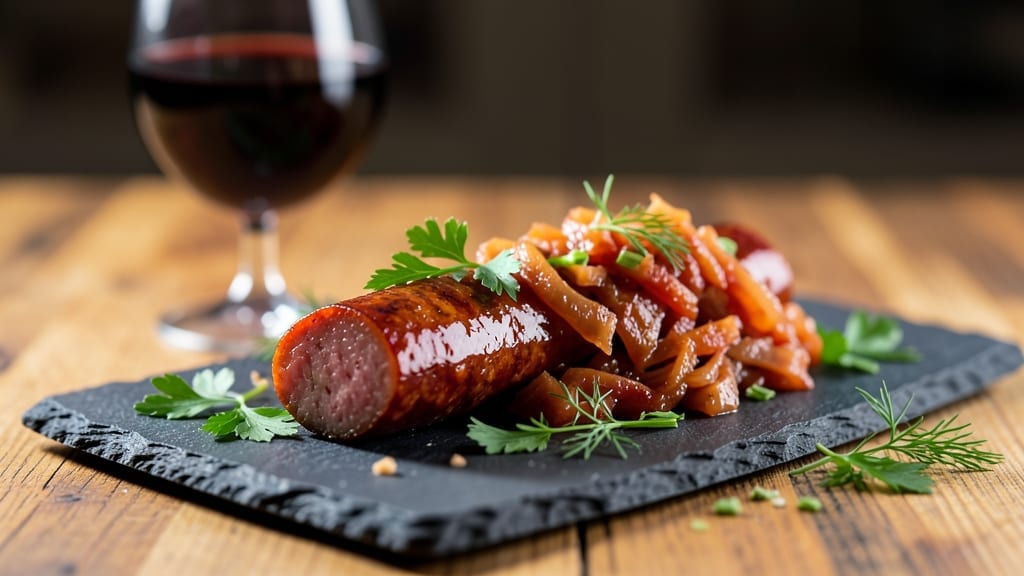
This beef smoked sausage and sauerkraut recipe delivers a hearty one-pan dinner that combines smoky, tender sausage with tangy, fermented cabbage for a meal that feels like a hug on a chilly evening.
The secret lies in balancing rich, caramelized flavors from the sausage with the bright acidity of sauerkraut—each bite is a perfect harmony of textures and tastes.
I developed this recipe during a particularly cold winter when I needed something substantial yet simple to prepare, and it quickly became a staple in my rotation.
What makes this dish special is its foolproof simplicity—no fancy techniques required, just a smoker (or oven) and a single pan. The beef sausage gets smoked until deeply flavorful, while the sauerkraut warms through with just enough time to soften its edges without losing its signature tang.
The result is a meal that’s restaurant-quality but built for home cooks, with minimal cleanup and maximum satisfaction. The combination of smoky, savory sausage and fermented cabbage creates a flavor profile that’s both comforting and complex.
By the time you’re done, you’ll have a tender, juicy sausage with crispy edges and a sauerkraut that’s warmed just enough to release its flavors—no soggy bits in sight. The dish is hearty enough to stand alone but pairs beautifully with crusty bread or a simple green salad.
This is the kind of meal that feels like a celebration, even on a weeknight, and it’s guaranteed to become a family favorite.
Serve this dish with a dollop of Dijon mustard or a sprinkle of fresh dill for added brightness, and don’t forget a cold beer to cut through the richness.
The leftovers reheat just as well, making it perfect for meal prep or feeding a crowd. Let’s get cooking—this recipe is about to change your weeknight dinners forever.
Ingredients for beef smoked sausage and sauerkraut
Pantry staples and a few fresh touches. This one-pan wonder comes together in minutes.
| Ingredient | Amount | Notes |
|---|---|---|
| Beef Smoked Sausage 🥩 | 1 ½ lb | Kielbasa or similar variety |
| Sauerkraut 🥬 | 2 cups | Unopened jar preferred |
| Yellow Onion 🧅 | 1 whole | Thinly sliced |
| Garlic Cloves 🧄 | 4 cloves | Minced for depth |
| Carrots 🥕 | 2 medium | Sliced into rounds |
| Apple Cider Vinegar 🍏 | 2 tbsp | For tangy brightness |
| Dijon Mustard 🍯 | 1 tbsp | For serving |
| Fresh Dill 🌿 | ¼ cup | Chopped for garnish |
| Wooden Beef Chips 🔥 | 1 package | For smoker (optional) |
| Olive Oil 🫒 | 1 tbsp | For pan coating |
| Salt 🧂 | 1 tsp | Kosher or sea salt |
| Black Pepper 🌶️ | ½ tsp | Freshly ground |
| Crusty Bread 🍞 | 1 loaf | For serving (optional) |
[recipe_ingredient_scaler]
The sausage is the star here—Kielbasa or similar smoked beef sausage gives the best flavor. Costco or local butcher shops usually carry it pre-sliced, but if you’re buying whole, ask for good marbling. The sauerkraut? Look for unopened jars—the liquid should be tangy, not murky. I grab mine from the refrigerated section at Whole Foods or Trader Joe’s because they keep it fresher. Fresh dill is a must for that bright finish, but if you’re using dried, cut the amount to one-third since it’s more concentrated.
No smoked sausage? Substitute with smoked brisket or pork shoulder—just increase cooking time. Short on dill? Fresh parsley or chives work in a pinch (though they won’t taste exactly the same). The apple cider vinegar adds that perfect tang—substitute with lemon juice if that’s what you’ve got. For the carrots, baby carrots or pre-sliced rounds save time, but whole carrots sliced yourself give better texture. The wooden chips? Fruitwood or hickory if you’re smoking; skip if using the oven.
This dish reheats beautifully—tastes even better the next day as flavors meld. Store leftovers in the fridge for 4-5 days or freeze for 3 months. I like to portion it into containers so I can grab a quick lunch. The sauerkraut keeps its tang when reheated, but if it gets too soft, just add a splash of water or broth. For serving, that crusty bread soaks up all the smoky juices—sourdough or a good baguette works best.
Why You’ll Love This Recipe
- I’ll be real: the tangy kick from the sauerkraut paired with that smoky sausage is chef’s kiss. The apple cider vinegar brightens it up, and the caramelized onions? Sweetness explodes in there. My husband always says it’s like a cross between a sausage panini and a German-inspired hug—rich, tangy, and just a little bit addictive.
- One-Pan Magic: Honestly, this is the kind of dish where you’re not cleaning three pans—just one. Sear the sausage, toss in the onions and carrots, then let the sauerkraut do the heavy lifting. The residual fat from the sausage becomes the flavor base, so you’re not starting from scratch. I’ve got my kids helping chop carrots while I sear, and before you know it, dinner’s ready.
- Sauerkraut Surprise: I’ll be real: the tangy kick from the sauerkraut paired with that smoky sausage is chef’s kiss. The apple cider vinegar brightens it up, and the caramelized onions? Sweetness explodes in there. My husband always says it’s like a cross between a sausage panini and a German-inspired hug—rich, tangy, and just a little bit addictive.
- Leftovers? Yes, Please: This isn’t one of those dishes that gets boring after day two. I’ve had it cold the next morning on toast, reheated for lunch, or even mixed into scrambled eggs. The sauerkraut keeps it tangy, and the sausage stays hearty—no sad, soggy leftovers here. Plus, it freezes like a dream for those nights when you’re too tired to cook.
Step-by-step instructions for beef smoked sausage and sauerkraut
This hearty one-pan dinner comes together with minimal effort but maximum flavor.
Sear the Beef Smoked Sausage
Heat a large oven-safe skillet over medium-high heat. Add the 1 tablespoon olive oil and swirl to coat the pan evenly. Place the 1½ pound beef smoked sausage in the skillet and sear for 4-5 minutes per side until golden brown and slightly crispy. The sausage will release easily when ready—don’t press down with a spatula or it’ll break apart.
Remove the sausage from the skillet and set it aside on a plate. The residual fat in the pan will become the flavor base for your dish. If the pan isn’t coated with golden-brown bits, don’t worry—we’ll build flavor as we go. Keep the heat at medium for the next step.
Sauté Vegetables for Depth of Flavor
Add the 1 thinly sliced yellow onion and 2 medium sliced carrots to the skillet. Cook for 5-6 minutes, stirring occasionally, until the onions soften and the carrots begin to caramelize at the edges. You’ll notice the onions turn translucent and the carrots release their natural sweetness—this is your signal they’re ready.
Push the vegetables to one side of the skillet and add the 4 minced garlic cloves. Stir for 30 seconds until fragrant—garlic burns quickly, so keep an eye on it. Then add the 2 cups sauerkraut, breaking up any large clumps with a wooden spoon. Cook for another 3-4 minutes until the sauerkraut softens slightly and begins to release its tangy juice.
Combine and Simmer the One-Pan Dinner
Return the seared sausage to the skillet and pour in the 2 tablespoons apple cider vinegar. Stir everything together and let it simmer uncovered over medium heat for 8-10 minutes. The vinegar will mellow out as it cooks, balancing the richness of the sausage with bright acidity. You’ll see the mixture reduce slightly and the flavors meld together beautifully.
Season with 1 teaspoon salt and ½ teaspoon black pepper, then sprinkle the ¼ cup chopped fresh dill over the top. Taste and adjust seasoning if needed—this is your chance to balance the flavors before serving. The dish should have a harmonious mix of smoky, tangy, and slightly sweet notes.
Optional Wooden Beef Chips Enhancement
If you’re using the 1 package wooden beef chips for extra smoky flavor, place them on top of the sausage mixture during the final 5 minutes of simmering. The chips will infuse the dish with subtle wood-fired notes without overpowering the natural flavors. Remove them before serving if you prefer a cleaner presentation.
For a crispy finish, transfer the skillet to a 400°F preheated oven and bake for 5-7 minutes until the edges are bubbly and slightly caramelized. This step adds a restaurant-quality touch that elevates the simple one-pan meal.
Serve with Crusty Bread
Ladle the beef smoked sausage and sauerkraut mixture into serving bowls. Drizzle with 1 tablespoon Dijon mustard and garnish with additional fresh dill if desired. The mustard adds a creamy contrast to the smoky, tangy flavors.
Serve immediately with slices of 1 loaf crusty bread on the side for soaking up the delicious juices. This hearty dish is perfect for chilly evenings—warm, comforting, and packed with bold flavors that come together in just one pan.
Pro Tips For Making Beef Smoked Sausage And Sauerkraut
- Prep Carrots Like This: Slice the carrots into ¼-inch rounds—thicker slices take forever to soften, and you’ll end up with mushy edges while the onions still look raw. I learned this the hard way after serving a batch where half the carrots were undercooked and the other half fell apart.
- Don’t Rush the Garlic: Those 30 seconds of minced garlic matter more than you think. Burnt garlic turns bitter fast, and you’ll taste it in every bite. Keep the heat at medium-low, stir constantly, and if you smell it cooking too fast, pull the pan off heat for a second—yes, even if you’re impatient like me.
- Simmer Uncovered Always: The 8-10 minutes of uncovered simmering isn’t just about reducing the vinegar—it’s how the sauerkraut’s tang and the sausage’s smokiness marry properly. Covering it now will steam the dill and make the dish taste flat. Trust the process, even if it looks like nothing’s happening.
- Bake for Crispy Edges: Skipping the 400°F oven finish means missing out on the best part—the caramelized crust on the sauerkraut and the slightly crispy sausage skin. If you’re short on time, at least pop it under the broiler for 2-3 minutes to get that restaurant-worthy texture. Your future self will notice.
Pro cooking tips for perfect results
Pan Selection Matters
For this recipe, I always reach for a cast-iron skillet—specifically my Lodge 12-inch—because it distributes heat evenly and develops that perfect caramelized crust on the sausage. If you don’t have one, a heavy stainless steel pan works just as well.
The skillet’s residual heat helps finish the dish beautifully in the oven, so avoid non-stick coatings that don’t retain heat properly. 🔥
Timing the Sear Perfectly
The key to tender sausage is not overcrowding the pan. Cook in batches if needed, but never press down on the sausage—this squeezes out juices and makes it dry.
I sear for exactly 4-5 minutes per side until golden brown, then let it rest on a plate while I prep the vegetables. This resting time is crucial because it allows the sausage to redistribute its juices before combining with the sauerkraut.
Sauerkraut Texture Control
To avoid soggy sauerkraut, add it to the pan after the onions and carrots have softened but before the garlic burns. The residual moisture from the vegetables creates steam that cooks the sauerkraut gently.
If your sauerkraut is particularly juicy, drain it briefly in a colander before adding to the pan. I always break up any large clumps with a wooden spoon to ensure even cooking and prevent clumps in your final dish.
Wooden Chips Trick
If you’re using wooden beef chips for extra smokiness, place them on top of the mixture during the final 5 minutes of simmering, but remove them before serving. The chips will infuse the dish with subtle smoky notes without overpowering the natural flavors.
For best results, use fruitwood or hickory chips—they add a gentle, aromatic depth that complements the sausage beautifully.
Oven Finish for Crispiness
Transferring the skillet to a 400°F preheated oven for 5-7 minutes is what takes this dish from homemade to restaurant-quality. This final step caramelizes the edges of the sauerkraut and onions, adding depth of flavor and texture contrast.
I like to keep an eye on it—once the edges are bubbly and slightly golden, it’s done. This step is especially important if you’re serving it to guests who expect that extra polish.
Mustard Balance Tip
Drizzling Dijon mustard at the table lets your guests control the tanginess to their preference. I serve it in a small bowl with a spoon so everyone can adjust their flavor profile.
If you prefer a creamier texture, mix the mustard with a little sour cream or Greek yogurt before serving. This adds a cool, rich contrast to the smoky, savory sausage and sauerkraut. 💫
Nutrition facts
Frequently asked questions
Can I use a different type of sausage instead of beef smoked sausage?
While Kielbasa or smoked beef sausage works best, you can substitute with smoked brisket or pork shoulder. Just note that cooking time may increase slightly to ensure tenderness. The key is choosing a flavorful, pre-smoked option to maintain that rich, smoky depth in your dish.
Why does the recipe call for unopened sauerkraut?
The unopened jar ensures the sauerkraut is at its freshest and most flavorful. Once opened, sauerkraut can absorb odors from the fridge and lose some of its tangy brightness. If you must use opened sauerkraut, drain and rinse it gently to remove excess liquid before adding to the pan.
What if I don’t have wooden beef chips?
No problem! Skip the chips entirely—the dish still tastes amazing without them. If you want extra smoky flavor, try adding a wooden chopstick or a few applewood slices to the skillet during the final simmering stage. The aroma will infuse the dish beautifully, even without chips.
How do I prevent the sauerkraut from getting soggy?
Add the sauerkraut to the pan after the onions and carrots have softened but before the garlic burns. The residual moisture from the vegetables creates gentle steam that cooks the sauerkraut evenly. If your sauerkraut is extra juicy, drain it briefly in a colander first to avoid a watery texture.
Can I make this dish ahead of time?
Yes! This recipe reheats beautifully and tastes even better the next day. Store leftovers in the fridge for 4-5 days or freeze for up to 3 months. When reheating, warm gently on the stove or in the oven to avoid drying out the sauerkraut or sausage. Add a splash of water or broth if needed to restore moisture.

Trained in classic French technique but raised on slow-cooked ribs and spicy rubs, she blends culinary skill with smoke and soul.
- Smoked Chicken Salad Recipe: Crispy, Smoky Bites With Creamy Ranch Dressing - October 19, 2026
- Beer Can Chicken in a Smoker Recipe: Juicy, Herbed Perfection in One Can - October 19, 2026
- Brined Beef Brisket Recipe: Ultra-Tender, Juicy Cuts in One Pot - October 19, 2026