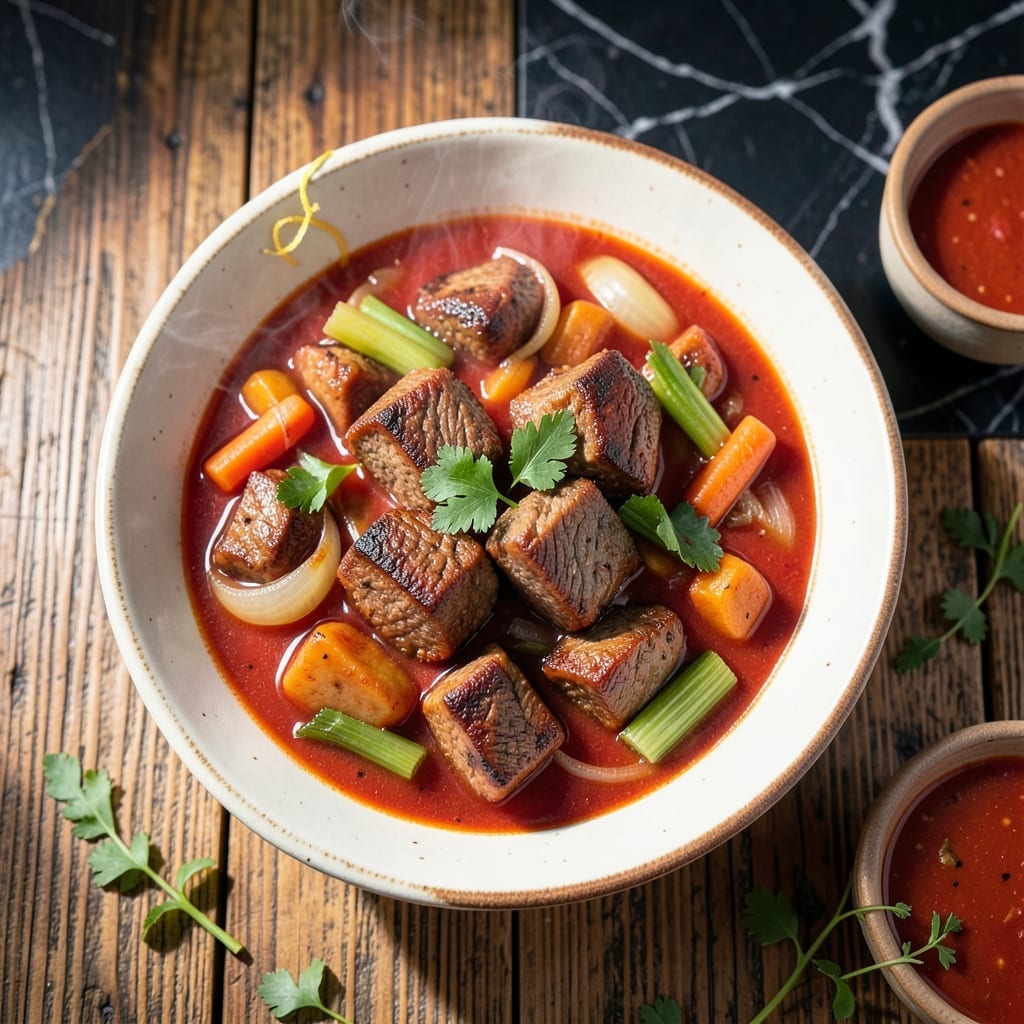
There’s something deeply comforting about a pot of beef stew simmering on the stove, filling the kitchen with its rich aroma.
This rustic dish transforms humble ingredients into a meal with tender beef, savory tomato sauce, and hearty vegetables that taste like home.
Ingredients for Beef Stew Recipe with Tomato Sauce
This rustic dish brings together beef, tomato sauce, and hearty vegetables for a comforting meal.
| Ingredient | Amount | Notes |
|---|---|---|
| Beef Chuck Roast 🥩 | 2 lb | Cut into 1-inch cubes, well-marbled |
| Tomato Sauce 🍅 | 2 cups | Plain, no added seasonings |
| Yellow Onion 🧅 | 1 whole | Large, diced uniformly |
| Carrots 🥕 | 3 whole | Peeled, cut into 1-inch pieces |
| Celery Stalks 🌿 | 3 whole | Sliced into 1-inch pieces |
| Garlic Cloves 🧄 | 4 cloves | Minced finely for depth |
| Beef Broth 💧 | 3 cups | Low-sodium preferred for control |
| Red Wine 🍷 | ¾ cup | Dry variety like Cabernet Sauvignon |
| All-Purpose Flour 🌾 | ¼ cup | For thickening the stew |
| Tomato Paste 🍅 | 2 tbsp | Concentrated for rich tomato flavor |
| Bay Leaves 🍃 | 2 whole | Dried, for aromatic depth |
| Fresh Thyme Sprigs 🌿 | 3 whole | Stems removed or tied with twine |
| Dried Rosemary 🍃 | 1 tsp | Crushed to release oils |
| Kosher Salt 🧂 | 1 ½ tsp | Diamond Crystal preferred for even seasoning |
| Freshly Ground Black Pepper 🌶️ | 1 tsp | Coarse grind for texture |
[recipe_ingredient_scaler]
The beef is paramount here. Chuck roast is ideal for its connective tissue that breaks down into tender, flavorful morsels during the slow simmer. Whole Foods or a trusted butcher will have well-marbled cuts. Look for pieces with visible fat streaks—this ensures moisture and richness. For the tomato sauce, San Marzano brands offer the best balance of acidity and sweetness.
No red wine? Additional beef broth with a tablespoon of balsamic vinegar will suffice. Fresh thyme can be replaced with one-third the amount of dried. If tomato sauce isn’t available, crushed tomatoes blended smooth works in a pinch. The flour for thickening can be substituted with cornstarch (use half the quantity), though the flavor profile will differ slightly.
This stew tastes even better the next day once the flavors meld. It keeps well in the fridge for 4-5 days or can be frozen for 3 months. Cool completely before storing to preserve texture and prevent ice crystals (worth the extra minute).
Why You’ll Love This Recipe
- One Pot Wonder: I toss the beef, onion, carrots and celery in with the tomato sauce and let the oven do the rest.
- Rich Depth: The tomato sauce and chuck roast melt together into this ridiculously good, savory gravy.
- Feeds a Crowd: Honestly, it’s my go-to for Sunday dinner because it stretches to six hungry people without stress.
- Better Tomorrow: Leftovers taste even more spot-on the next day, so I always make extra.
Step-by-Step Instructions for Beef Stew With Tomato Sauce
Master the technique for building deep, layered flavor in this classic comforting dish.
Step 1: Sear and Coat the Beef Chuck Roast
Pat the 2 lb Beef Chuck Roast cubes thoroughly dry with paper towels—this ensures a proper sear. Heat a Dutch oven over medium-high heat until a drop of water sizzles and evaporates immediately. Add the beef in a single layer, working in batches if necessary to avoid crowding.
Sear the beef undisturbed for 3-4 minutes per side until deeply browned on all surfaces. You’re looking for a rich, caramelized crust that signals the Maillard reaction has occurred. Transfer the seared beef to a plate and sprinkle with the 0.25 cup All-Purpose Flour, tossing to coat evenly. This light dusting will thicken the stew as it cooks.
Step 2: Build the Aromatic Base
In the same Dutch oven, add the diced 1 whole Yellow Onion, 3 whole Carrots, and 3 whole Celery Stalks. Cook over medium heat for 5-7 minutes, stirring occasionally, until the vegetables soften and begin to caramelize at the edges.
Add the minced 4 cloves Garlic Cloves and cook for 1 minute until fragrant—just until the raw aroma mellows. Stir in the 2 tbsp Tomato Paste and cook for another 2 minutes, allowing it to deepen in color. This step develops the tomato paste’s natural sweetness and removes any metallic edge, creating a robust foundation for the stew.
Step 3: Deglaze and Simmer
Pour in the 0.75 cup Red Wine to deglaze the pot, scraping up all the browned bits from the bottom with a wooden spoon. These fond bits are packed with flavor and will dissolve into the liquid. Let the wine simmer for 3-4 minutes until reduced by half, which will cook off the alcohol and mellow its sharpness.
Return the beef and any accumulated juices to the pot. Add the 2 cups Tomato Sauce, 3 cups Beef Broth, 2 whole Bay Leaves, 3 whole Fresh Thyme Sprigs, 1 tsp Dried Rosemary, 1.5 tsp Kosher Salt, and 1 tsp Freshly Ground Black Pepper. Stir well to combine.
Step 4: Slow Cook to Perfection
Bring the mixture to a gentle boil, then reduce the heat to low to maintain a slow, steady simmer. Cover the pot and let it cook for 2 to 2.5 hours, stirring occasionally. The stew is ready when the beef is fork-tender and the sauce has thickened enough to coat the back of a spoon.
If the stew becomes too thick before the beef is tender, add a splash of water or broth to loosen it. Taste and adjust the seasoning with additional salt or pepper if needed, but remember the flavors will concentrate as it simmers.
Pro Tips For Making Beef Stew Recipe With Tomato Sauce
- Sear the Beef First: Brown the chuck roast in batches over medium-high heat until deeply caramelized—this builds a rich foundation that tomato sauce can’t replicate on its own. I learned this the hard way after my first few stews tasted flat.
- Cut Vegetables Evenly: Dice the onion, carrots, and celery into uniform, 1-inch pieces so they cook at the same rate and every bite has balanced texture. Sounds fussy, but it actually changes the outcome.
- Skip the Pre-Salt: Resist the urge to salt the beef before searing—it can draw out moisture and prevent a good crust. Season after browning, then adjust to taste once the stew simmers.
- Add Tomato Sauce Late: Stir in the tomato sauce after deglazing the pot, not before, to avoid scorching the sugars. After burning one batch, I finally figured out this timing matters most.
Common Mistakes When Making beef stew recipe with tomato sauce
🥘 Overcrowding the Pan
Adding too much beef at once lowers the pan’s temperature, causing meat to steam instead of sear. This results in a dull, gray color and less flavor development, as the Maillard reaction (responsible for rich, caramelized flavors) can’t occur properly.
Fix: Sear beef in batches, giving each piece enough space to brown. Use a heavy pot like Dutch oven and avoid stirring too often.
🍳 Skipping the Deglazing Step
After searing, browned bits (fond) stick to the pan. Skipping deglazing means losing these flavor-packed bits, which are essential for a deep, savory base. Your stew may taste flat or one-dimensional without them.
Fix: After removing the beef, pour in a splash of broth, wine, or water. Scrape the bottom with a wooden spoon to lift the fond, then proceed with the recipe.
⏰ Rushing the Simmering Process
Beef stew needs time for collagen in tough cuts to break down into gelatin, creating a rich, tender texture. Cutting the simmering time short leaves meat chewy and the sauce thin, as flavors won’t have time to meld.
Fix: Simmer on low heat for at least 1.5–2 hours, partially covered. Check tenderness with a fork—it should slide in easily.
🌡️ Using Cold Tomato Sauce
Adding cold tomato sauce directly to the hot pot can cause the stew’s temperature to drop sharply, interrupting the cooking process. This can lead to uneven cooking and a longer time to return to a simmer.
Fix: Warm the tomato sauce slightly before adding it, or temper it by mixing a ladle of hot stew liquid into the sauce first, then stir it back into the pot.
Nutrition Facts

Trained in classic French technique but raised on slow-cooked ribs and spicy rubs, she blends culinary skill with smoke and soul.
- Recipe for Boneless Pork Chops in Cast Iron Skillet: Sear and Baste to Juicy Perfection - October 3, 2026
- Recipe for Boneless Cross Rib Roast: Slow-Roasted Beef with Herb Crust - October 3, 2026
- Hamburgers in Sauce Recipe Crock Pot: Slow-Cooked Savory Delight - October 3, 2026