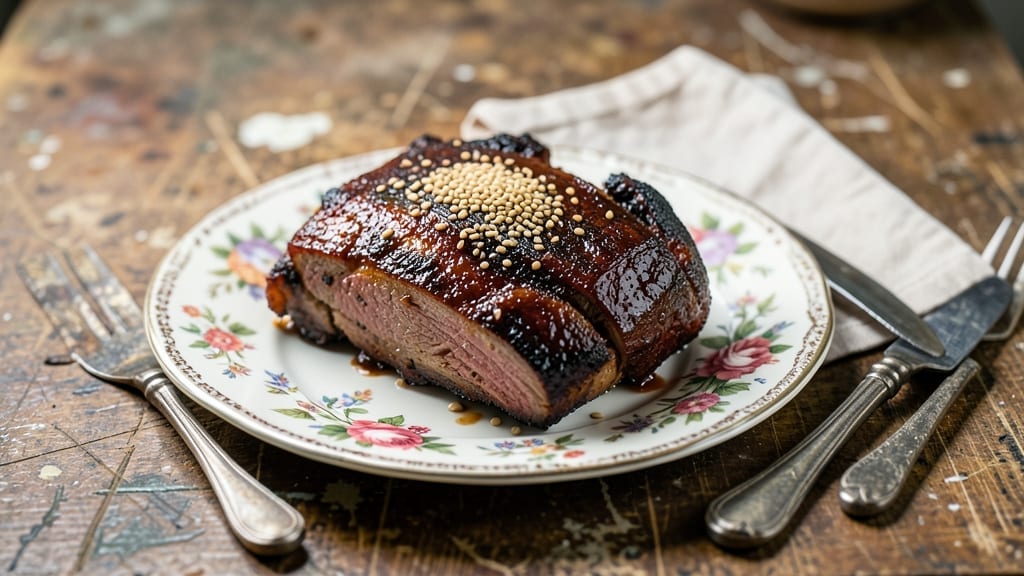
The best brisket recipe for pellet smoker transforms tough beef into melt-in-your-mouth perfection through precise low-and-slow technique.
I still remember the first time I nailed this method—my family backyard cookout where hickory smoke filled the air, and every bite of that tender brisket became a lesson in patience and fire mastery.
This isn’t just about time; it’s about temperature control, wood selection, and knowing exactly when to wrap.
What sets this pellet-smoked brisket apart is the foolproof approach that delivers restaurant-quality results at home. We’ll use a dry brine to enhance flavor penetration, a balanced rub for bark development, and hickory pellets for that classic smoke profile.
The key? Maintaining 225°F consistently for 12+ hours, then wrapping the brisket in butcher paper at the perfect moment to lock in moisture and tenderness.
By the time you slice against the grain, you’ll have brisket so tender it practically falls apart—juicy, smoky, and packed with deep flavor in every bite. The bark will be dark and crispy, while the interior remains velvety and rich.
This is the kind of brisket that makes your pellet smoker worth every inch of your backyard space.
Pair it with classic sides like creamy baked beans or tangy coleslaw for the full experience. Let’s get started—your smoker is about to earn its keep.
Ingredients for best brisket recipe pellet smoker
Game-changing brisket ingredients that turn tough beef into smoky perfection on your pellet smoker.
| Ingredient | Amount | Notes |
|---|---|---|
| Beef Brisket 🥩 | 4 lb | Flat cut, 1.5-inch thick |
| Kosher Salt 🧂 | ½ cup | For dry brine, coarse grain |
| Hickory Pellets 🌳 | 2 lb | For smoker, 100% hickory |
| Yellow Mustard 🍯 | 2 tbsp | For brisket application |
| Brown Sugar 🍚 | ¼ cup | Light or dark variety |
| Smoked Paprika 🌶️ | 2 tbsp | For rub, not sweet paprika |
| Ground Black Pepper 🌶️ | 1 tbsp | Freshly ground preferred |
| Garlic Powder 🧄 | 1 tbsp | Not garlic salt |
| Onion Powder 🧅 | 1 tbsp | For balanced rub |
| Butcher Paper 📄 | 1 sheet | For wrapping brisket |
| Apple Cider Vinegar 🍏 | 2 tbsp | For spritzing during cook |
| Beef Tallow 🧈 | 2 tbsp | For extra moisture wrap |
| Fresh Rosemary 🌿 | ¼ cup | Chopped, for garnish |
| Fresh Thyme 🌿 | ¼ cup | Chopped, for garnish |
[recipe_ingredient_scaler]
The brisket is everything here. Look for a 4-pound flat cut—thicker than 1.5 inches and it won’t cook through evenly. Costco or local butchers usually have the best quality, but don’t skip the grocery store if that’s all you’ve got. The fat cap should be thick enough to render down for flavor, but not so thick it takes forever to cook. Pro tip: if your brisket has a thick fat cap, trim it down to about 1/4-inch—this helps the smoke penetrate better and keeps the cook time consistent. For the pellets, Traeger’s hickory blend is my go-to, but any 100% hickory will work.
No butcher paper? Heavy-duty aluminum foil works in a pinch, but it won’t crisp up like butcher paper does. Running out of beef tallow? Olive oil or bacon fat will work for the wrap, though tallow gives that authentic brisket flavor. The rub is flexible—if you can’t find smoked paprika, regular paprika plus a pinch of liquid smoke gets you close. For the dry brine, I like to mix the salt with a little brown sugar (about 1 tbsp per pound of brisket) to help caramelize the bark. And if you’re short on time, you can skip the 24-hour brine and just salt the brisket 4 hours ahead—it won’t be quite as tender, but still delicious.
This brisket tastes even better the next day. Wrap it tightly in butcher paper and store in the fridge for up to 5 days. For leftovers, reheat wrapped in the paper at 300°F for 1.5 hours—this keeps it moist. I always make extra because it disappears fast. Freeze portions for up to 3 months by wrapping tightly in butcher paper, then in foil. Thaw overnight in the fridge before reheating.
Why You’ll Love This Recipe
- No-Fuss Flavor Bomb: Honestly, this recipe is that kind of magic—you dry-brine it overnight, slap on the rub, and let the pellet smoker do the heavy lifting. The 12-hour salt soak? Game-changer. It’s not a last-minute dinner; it’s a weekend project that pays off with zero stress.
- Sweet & Smoky Perfection: That mix of hickory smoke, brown sugar caramelization, and a kick of apple cider vinegar? Chef’s kiss. The butcher paper wrap keeps the bark intact while locking in moisture, so every bite has that crispy edge with the creamy center. My kids don’t even notice the herbs—they just go back for seconds.
- Leftovers That Shine: Five days in the fridge? No problem. Slice it thick for sandwiches, shred it into tacos, or reheat it in the oven with a splash of beef broth. The flavors deepen over time, so even day-old brisket feels like a fresh win. (Yes, even on a Tuesday night.)
- Budget-Friendly Feast: Four pounds of brisket feeds a crowd without breaking the bank—especially when you’re using pantry staples like kosher salt and hickory pellets. And because it’s so versatile, you can stretch leftovers into multiple meals. Worth every penny for the reaction when people take their first bite.
Step-by-step instructions for smoked brisket
Here’s the method that delivers melt-in-your-mouth brisket with a perfect bark every time.
Prepare the Brisket for Maximum Flavor
Remove the 4 lb beef brisket from the packaging and place it on a clean cutting board. Trim any excess fat from the fat cap, leaving about ¼ inch thickness to protect the meat during smoking. Pat the entire surface dry with paper towels—this helps the rub adhere and creates a better bark later.
In a small bowl, combine the ½ cup kosher salt, 2 tbsp smoked paprika, 1 tbsp ground black pepper, 1 tbsp garlic powder, and 1 tbsp onion powder. Mix thoroughly to create the dry rub. Generously coat the brisket with this mixture, pressing it into the meat so it sticks. This step ensures deep flavor penetration and that perfect crust.
Place the brined brisket on a wire rack set over a baking sheet and refrigerate uncovered for 12 hours. This dry-brine process works wonders for tenderness and seasoning. I know it seems like a long wait, but trust me—this is where the magic begins.
Smoke the Brisket Low and Slow
Fill your pellet smoker with 2 lb hickory pellets and preheat to 225°F. Once the temperature stabilizes and you see clean, blue smoke (not thick white), place the brisket fat-side up on the smoker grates. The fat will render and baste the meat as it cooks, creating incredible texture.
Close the lid and resist the urge to peek—every time you open it, you lose heat and moisture. Smoke the brisket for about 6 hours, or until the internal temperature reaches 165°F. This is where the low-and-slow method pays off, breaking down the connective tissue for that fork-tender result you’re after.
Here’s the thing about brisket—it often hits “the stall” around 165°F, where the temperature stops rising. Don’t panic. This is completely normal and happens because moisture is evaporating. Just keep smoking patiently.
Wrap and Finish with Moisture and Flavor
When the brisket hits 165°F, it’s time to wrap. In a small bowl, mix together the 2 tbsp yellow mustard, ¼ cup brown sugar, 2 tbsp apple cider vinegar, and 2 tbsp beef tallow. This mixture will add moisture and sweetness during the final cook.
Wrap the brisket tightly in 1 sheet butcher paper, then place it back in the smoker. The butcher paper allows some moisture to escape while keeping the bark intact. Smoke for another 3-4 hours until the internal temperature reaches 203°F. At this point, the brisket should be fork-tender with a beautiful mahogany bark.
This is where the apple cider vinegar and beef tallow really shine—they keep the meat moist while adding depth of flavor. The brown sugar caramelizes slightly, contributing to that perfect balance of sweet and smoky.
Rest and Garnish for Serving
Remove the brisket from the smoker and let it rest on a cutting board for at least 1 hour, still wrapped in the butcher paper. This resting period allows the juices to redistribute throughout the meat, ensuring every slice is moist and flavorful. I know it’s hard to wait, but this step is crucial—don’t skip it!
While it rests, finely chop the ¼ cup fresh rosemary and ¼ cup fresh thyme. These herbs will add a beautiful aroma and fresh contrast to the rich, smoky brisket. Once rested, carefully unwrap the brisket and sprinkle the chopped herbs evenly over the top.
Slice the brisket against the grain into ½-inch thick pieces. Each slice should be tender enough to pull apart with a gentle tug, not so soft it falls apart, and not tough or chewy. Serve immediately with your favorite sides—this brisket is at its best when enjoyed fresh from the smoker.
Pro Tips For Making Best Brisket Recipe Pellet Smoker
- Trim That Fat Cap: Leave just a ¼-inch layer of fat on the fat cap—any thicker and you’ll end up with uneven cooking and a greasy mess. I learned this the hard way when my first brisket turned into a soggy, greasy disappointment because I left too much fat. That thin layer protects the meat while letting smoke work its magic.
- Don’t Rush the Dry Brine: The 12-hour dry brine isn’t optional—it’s what turns tough brisket into melt-in-your-mouth perfection. I know, I know, it’s tempting to skip ahead, but rushing this step means your rub won’t penetrate deep enough, and your bark will be weak. Trust the process, even if you’re impatient like me.
- Watch the Smoke Color: Clean, blue smoke is your goal—thick white smoke means your pellets aren’t burning properly and could leave a bitter taste. I used to ignore this and ended up with brisket that tasted more like a campfire than a smoker. Keep an eye on it, and don’t be afraid to adjust the pellet feed if the smoke turns gray or white.
- Prep the Wrap Mix Ahead: Mix the yellow mustard, brown sugar, apple cider vinegar, and beef tallow in a small bowl before you even start smoking. That way, when you hit the stall at 165°F, you’re not scrambling to throw everything together while the brisket waits. I used to burn this step, and it always added unnecessary stress to an already long cook.
Troubleshooting this recipe
Temperature Troubleshooting
Your pellet smoker’s temperature is the most critical factor—fluctuations of even 10°F can ruin your bark or leave brisket dry. I once had a cook where the smoker kept spiking to 250°F during the stall phase, turning my beautiful mahogany bark into a crispy mess.
Always use a dual-probe thermometer like the Thermoworks Smoke to monitor both smoker temp and internal meat temp simultaneously. 🌡️
The Stall Phase Struggle
Hitting the stall around 165°F is inevitable, but some smokers handle it better than others. If your brisket’s temp plateaus for 3+ hours, it’s time to wrap early—even if it’s not quite at 165°F.
Mix your 2 tbsp yellow mustard, ¼ cup brown sugar, and 2 tbsp beef tallow ahead of time so you’re ready to wrap without delay. This keeps moisture locked in while you power through the stall.
Pellet Flow Issues
If your pellets aren’t feeding consistently, your smoker temp will jump all over the place. Check that your 2 lb hickory pellet hopper is full and the auger isn’t clogged. I keep a small brush handy to clear any buildup—just a few pellets stuck can throw off your entire cook.
Also, avoid opening the lid too often during the first 6 hours of smoking, as this disrupts pellet flow. 🔥
Bark Problems
A dry, powdery bark is usually a sign of too much heat or insufficient smoke. If your brisket develops a thin, ashy crust instead of a deep mahogany bark, reduce your smoker temp to 220°F for the first 6 hours and ensure you’re using 100% hickory pellets—no blends.
The fat cap should render down to create that perfect basting effect. If you’re still struggling, try spritzing the brisket with 2 tbsp apple cider vinegar every 2 hours during the initial smoke phase.
Internal Temp Lag
Some pellet smokers just move slower than others, making it hard to hit 203°F in the expected 12-14 hours. If your brisket is still undercooked after 16 hours, crank the temp up to 250°F for the final 2 hours while wrapped.
Just be careful not to overcook—use a meat probe to check the thickest part of the flat section. I’ve learned to trust my instincts here; sometimes you just need to give it a little extra time. ⏰
Nutrition facts
Frequently asked questions
Why does the brisket need to rest after smoking?
The 1-hour rest lets juices redistribute evenly throughout the meat. Skipping this step means you’ll lose moisture when slicing—your brisket will be dry instead of juicy. Think of it like letting bread cool after baking; it’s all about texture and flavor balance.
Can I substitute butcher paper with foil for wrapping?
Butcher paper is ideal because it allows moisture to escape while keeping the bark intact. Foil works in a pinch, but it can make the bark soggy. If you must use foil, wrap tightly and check every 1 hour to prevent steam buildup. The bark won’t be as crispy, though!
What if my pellet smoker’s temperature fluctuates too much?
Fluctuations can ruin your bark or dry out the meat. Use a dual-probe thermometer to monitor both smoker and meat temps. Keep the smoker at 225°F for the first 6 hours, then maintain consistency. If pellets feed unevenly, clear the auger and avoid opening the lid. Patience is key!
How do I know if my brisket is done?
Check the internal temp with a meat probe—aim for 203°F in the thickest part of the flat section. The bark should be mahogany-colored, and the meat should pull apart easily when prodded. If it’s still tough at 203°F, wrap it and cook another 1-2 hours at 250°F. Trust the temp, not the clock!
Can I make this recipe without fresh herbs for garnish?
Skip the rosemary and thyme if you’re short on time or herbs. The brisket’s flavor will still shine. For extra depth, use dried herbs (½ tsp each) sprinkled right before serving. Fresh is best, but dried works in a pinch—just don’t expect the same aroma!

Trained in classic French technique but raised on slow-cooked ribs and spicy rubs, she blends culinary skill with smoke and soul.
- Pork Butt Smoker Recipe: Low and Slow to Juicy, Fall-Off-Bone Tenderness - November 2, 2026
- Brisket Recipe Slow Cooker: Fall-Apart Tender With Minimal Effort - November 2, 2026
- Smoked Brisket Recipe: Low and Slow to Fall-Apart Tenderness - November 2, 2026