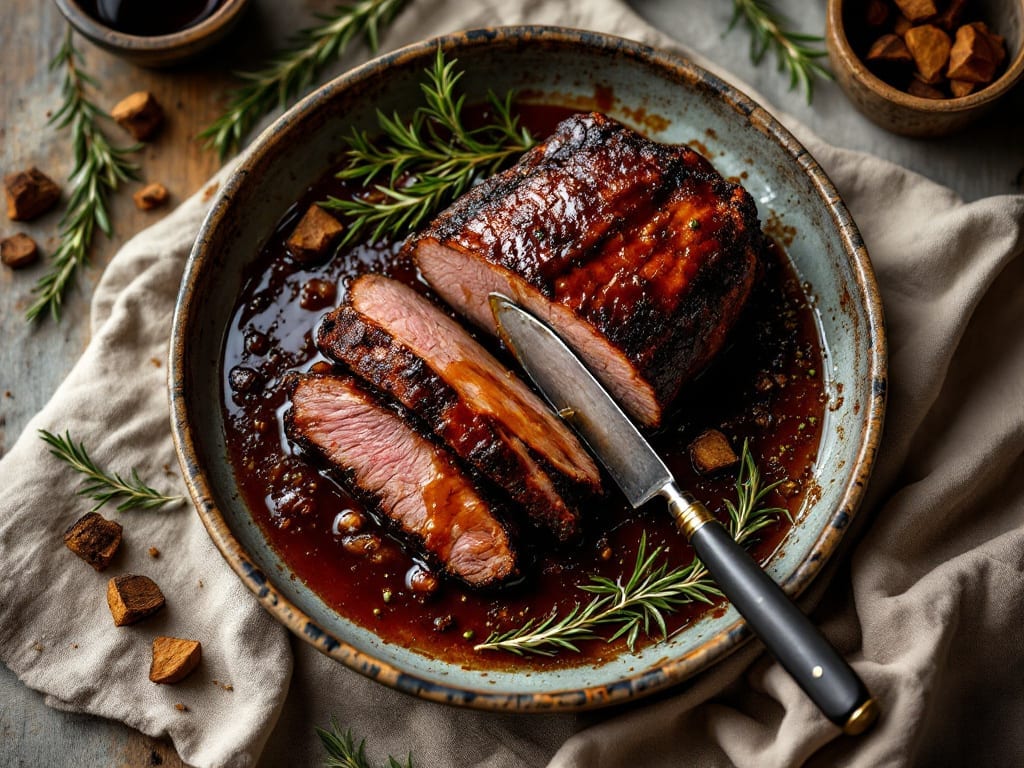
This molasses-spiced Passover brisket delivers the best slow-roasted results with tender meat, crispy edges, and deep, aromatic flavors—perfect for Seder or Shabbat meals. The molasses glaze creates a caramelized crust while keeping the interior juicy, and the koshering process ensures compliance with Passover dietary laws.
I’ve perfected this technique over years of hosting Seders, balancing tradition with modern slow-cooking precision.
The secret lies in a three-stage cooking process: first koshering the brisket to remove impurities, then slow-roasting it with a molasses-spice rub, and finally finishing it in the oven for those coveted crispy edges.
This method transforms tough cuts into melt-in-your-mouth perfection while honoring Passover’s restrictions—no chametz, no shortcuts. The result is a brisket that’s rich, smoky, and deeply flavorful, with a glaze that’s both sweet and savory.
By the time you serve it, your table will be filled with the aroma of slow-roasted brisket, its crispy edges giving way to tender, juicy meat that falls apart at the touch of a fork.
The molasses glaze adds a sticky, caramelized finish that’s impossible to resist, making every bite a celebration of tradition and flavor. This is the brisket that will have your guests asking for seconds—and your family requesting it year after year.
Serve it with classic Passover sides like roasted vegetables, matzo ball soup, or a fresh spring salad to create a meal that’s both meaningful and unforgettable. The recipe scales beautifully for crowds, so you can feed a full Seder table without stress.
Here’s how to make it—step by step, just as I do for my own family.
Ingredients for best passover brisket
Twelve ingredients transform tough brisket into Passover perfection—crispy edges, tender meat, and deep molasses aroma.
| Ingredient | Amount | Notes |
|---|---|---|
| Beef Brisket 🥩 | 6 lb | Whole packer cut, trimmed of fat |
| Black Molasses 🍯 | ½ cup | Unsulphured, high-quality preferred |
| Kosher Salt 🧂 | 2 cups | Diamond Crystal preferred for koshering |
| Granulated Sugar 🍚 | ½ cup | White or brown sugar works |
| Ground Black Pepper 🌶️ | 2 tbsp | Freshly cracked for best flavor |
| Ground Cinnamon 🌿 | 2 tsp | True Ceylon cinnamon preferred |
| Ground Cloves 🌶️ | 1 tsp | Whole cloves toasted and ground |
| Ground Nutmeg 🌿 | 1 tsp | Freshly grated nutmeg preferred |
| Garlic Cloves 🧄 | 8 cloves | Peeled, smashed for maximum flavor |
| Yellow Onion 🧅 | 1 whole | Yellow or sweet onion, sliced |
| Fresh Thyme 🌿 | ¼ cup | Stems removed, chopped |
| Fresh Rosemary 🌿 | ¼ cup | Needles finely chopped |
| Extra-Virgin Olive Oil 🫒 | ¼ cup | For basting, high-quality preferred |
| Apple Cider Vinegar 🍎 | ¼ cup | For koshering solution |
| Water 💧 | 2 cups | For koshering solution |
[recipe_ingredient_scaler]
The brisket is non-negotiable—packer cut with good marbling ensures melt-in-your-mouth texture. Costco and Whole Foods carry the best quality, but any reputable butcher will trim it properly. Look for a 6-pound whole pack (not pre-cut flat or point)—it’s worth the extra effort to source. The koshering process is critical for Passover compliance, so use Diamond Crystal kosher salt (it dissolves completely) and unsulphured molasses for authentic flavor. Fresh herbs like thyme and rosemary should be bright green, not wilted—Trader Joe’s often has great organic options at a reasonable price. For the spices, Penzeys or bulk bins at natural markets deliver the most aromatic blends, but don’t stress if you can’t find them; store-bought works in a pinch.
No black molasses? Unsulphured date syrup is a fantastic substitute—it’s sweeter, so reduce the sugar slightly. Running short on fresh herbs? Dried thyme at one-third the amount keeps the flavor profile intact, but the texture will differ. The apple cider vinegar in the koshering solution can be swapped for white vinegar or lemon juice if needed, though cider adds a subtle depth. For the spices, ground allspice can replace cloves if you’re missing them, but the warmth won’t be identical. Prefer a sweeter glaze? Add 1 tablespoon of honey to the molasses mixture—it caramelizes beautifully and balances the richness. And if you’re scaling this up for a crowd, double the spices without hesitation; they’re the soul of this dish.
Kosher the brisket overnight—no shortcuts here—then pat it dry before seasoning. The spice rub keeps 3-4 days in the fridge, so prep ahead if your schedule allows. For the molasses glaze, make it 2 days in advance and store it in the fridge; the flavors meld beautifully. Once roasted, the brisket reheats like a dream—wrapped in foil at 300°F for 1 hour restores moisture without drying it out. Leftovers? Freeze sliced portions for up to 3 months—they’re perfect for sandwiches or Passover leftovers. The crispy edges? Those are best enjoyed fresh, so save the brisket for a special meal.
Why You’ll Love This Recipe
- Molasses Magic Simmer: I swear by that deep, sticky sweetness from the black molasses—it caramelizes into a glossy glaze that clings to every bite like a hug. The sugar and salt cut through the richness just enough to keep it from being too heavy, and honestly? That first bite of tender brisket with the molasses crust? Worth every minute.
- Weeknight Crowd-Pleaser: This isn’t some fancy Seder centerpiece—it’s the kind of brisket that disappears at 6 p.m. on a Friday, even when you’ve got picky eaters. The pepper and molasses combo feels familiar but still special, so it works for Passover dinners or your regular Sunday supper when you’re craving something hearty.
- Leftovers That Shine: Between us, the best part of this recipe is the second day. Slice the brisket thin, toss it in a pan with a splash of water, and you’ve got a quick sandwich filling or a re-heatable meal that’s just as good cold. (Yes, even on a Tuesday night.)
- Budget-Friendly Luxury: A whole brisket feeds a family for days, and the molasses and spices cost pennies compared to store-bought rubs. I’ll be real: it’s the kind of dish that makes you feel like you’re serving a holiday feast without breaking the bank—or spending hours in the kitchen.
Step-by-step instructions for molasses-spiced slow roast brisket
Here’s the method that delivers restaurant-quality brisket with deep molasses flavor and irresistibly crispy edges.
Prepare the Koshering Solution and Brisket
In a large bowl, combine the 2 cups of kosher salt, 0.5 cup of granulated sugar, 0.25 cup of apple cider vinegar, and 2 cups of water. This mixture creates the koshering solution that tenderizes the meat and develops that signature crispy bark. Stir until the salt and sugar completely dissolve, creating a thick brine.
Place the 6 lb beef brisket in a large zip-top bag and pour the koshering solution over it. Seal the bag tightly, submerge the brisket completely, and refrigerate for 24 hours. This step is absolutely critical—it breaks down the muscle fibers and ensures that crispy exterior we’re after. Flip the bag occasionally to keep the brisket fully submerged in the solution.
Create the Molasses Spice Rub
In a medium bowl, mix together the 0.5 cup of black molasses, 2 tbsp of ground black pepper, 2 tsp of ground cinnamon, 1 tsp of ground cloves, and 1 tsp of ground nutmeg. This rich blend of spices creates the signature depth of flavor that makes this brisket special. The molasses adds that perfect balance of sweetness and complexity that’s essential for Passover celebrations.
Remove the brisket from the koshering solution and pat it dry thoroughly with paper towels. This drying step is crucial—it creates the perfect canvas for that crispy bark we’re aiming for. Apply the molasses spice rub generously to all sides of the brisket, pressing it into the meat so it adheres well. Let the brisket sit at room temperature for 1 hour before roasting.
Roast with Basting for Maximum Crispiness
Preheat your oven to 325°F. Place the brisket fat-side up on a rack in a roasting pan. The rack elevates the meat, allowing heat to circulate underneath and create that crispy bark on all surfaces. Pour the 0.25 cup of extra-virgin olive oil into the pan to catch any drippings.
Roast the brisket for 3 hours, then add the 1 whole yellow onion, 8 smashed garlic cloves, 0.25 cup of chopped fresh thyme, and 0.25 cup of chopped fresh rosemary to the pan. These aromatics will infuse the brisket with incredible flavor as it cooks. Every 45 minutes, baste the brisket with the accumulated juices in the pan using a pastry brush. This basting step is what creates those stunning crispy edges we’re after.
Finish with High Heat for Crispy Perfection
After 3 hours of roasting, increase the oven temperature to 450°F. This final high-heat step is what transforms the brisket from tender to extraordinary by creating that beautiful mahogany crust. Continue roasting for an additional 30-45 minutes, basting every 15 minutes, until the internal temperature reaches 203°F and the edges are deep brown and crispy to the touch.
Remove the brisket from the oven and let it rest for 30 minutes before carving. This resting period allows the juices to redistribute throughout the meat, ensuring each slice is moist and flavorful. The result should be a brisket with an incredible balance of sweet molasses flavor, aromatic spices, and that perfect crispy exterior that makes it truly unforgettable.
Pro Tips For Making Best Passover Brisket
- Trim the Fat Cap: The thick layer of fat on the brisket’s point end is your friend—but only if you trim it down to ¼-inch. I learned this the hard way when my first batch rendered into a greasy mess instead of a crispy crust. Use kitchen shears for speed, and save the trimmed fat for roasting potatoes later.
- Whisk the Molasses: Black molasses is thick and stubborn. Skip the spoon and whisk it with a splash of hot water (about 2 tablespoons) until it’s smooth before mixing it into your rub. I used to eyeball it and end up with clumpy patches—now it blends like butter every time.
- Don’t Rush the Rest: After pulling the brisket from the oven, tent it with foil and let it sit for at least 30 minutes. I know, you’re starving, but cutting into it early turns tender meat into shredded disappointment. Use this time to make the charoset—no one will notice your impatience.
- Sweat the Sugar: When caramelizing the sugar in your molasses mixture, start on medium heat and stir like your life depends on it. After 2 minutes, crank it to medium-high and let it bubble—this isn’t the time to be shy. My grandmother swore by this, and she was right: the deeper the amber, the richer the flavor.
Essential equipment for great best passover brisket
Koshering Equipment
For the koshering process, you’ll need a large zip-top bag that can hold your 6 lb brisket comfortably—Glad Freezer Gallon Bags work perfectly. A kitchen scale (like the OXO Good Grips) ensures precision when measuring your kosher salt and sugar.
I also recommend a deep glass or stainless steel bowl for mixing the koshering solution—it’s easier to clean than plastic and won’t react with the vinegar. 🧂
Roasting Essentials
A heavy-duty roasting pan with a rack (like the All-Clad Stainless Steel) is non-negotiable—it elevates the brisket for even heat circulation and crispy edges. I use a meat thermometer (the ThermoWorks Smoke) to monitor internal temperature accurately, avoiding overcooking.
For basting, a silicon pastry brush (like OXO Good Grips) holds up better than natural bristles to high heat. 🌡️
Spice Prep Tools
For grinding spices fresh, a mini spice grinder (such as Spice Grinder by KitchenAid) ensures maximum aroma. A mortar and pestle works too if you prefer hands-on grinding. Measure spices precisely with a digital kitchen scale (like Escali Primo)—ground spices lose potency quickly, so freshness matters.
Store your spice rub in an airtight container (like Le Creuset) to preserve flavor between uses. 🌿
Finishing Touches
After roasting, a sharp carving knife (I use Dexter-Russell 12-inch) slices through the brisket effortlessly. For serving, a large wooden board (like West Elm’s) adds rustic elegance to your Passover table.
Keep the brisket warm during carving with a slow cooker set to 170°F—it maintains moisture without overcooking. 🔪
Budget-Friendly Swaps
No roasting pan? Use a cast-iron skillet (like Lodge) on the stovetop for a smaller batch. Skip the thermometer? Test doneness with a meat fork—it should slide in easily when the brisket is ready.
For koshering, a large Tupperware container works just as well as a bag. Every tool has an affordable alternative—focus on what matters most for your kitchen. 💰
Nutrition facts
Frequently asked questions
Why do I need to kosher the brisket for Passover?
Koshering removes blood and impurities from the meat, making it suitable for Passover observance. The salt-sugar brine also tenderizes the brisket, creating that signature crispy exterior. This traditional step is essential for both dietary compliance and optimal flavor development.
Can I make this recipe without molasses?
Yes! Replace the molasses with unsulphured date syrup or honey (reduce sugar by 1 tablespoon). The sweetness remains, but molasses provides a deeper, more complex flavor that complements the spices beautifully.
How do I know when the brisket is done?
Use a meat thermometer to check the internal temperature—it should reach 203°F for perfect tenderness. The edges should also be deep brown and crispy. If you don’t have a thermometer, insert a meat fork: it should slide in easily when done.
Can I prepare this brisket ahead of time?
Roast the brisket up to 2 days ahead and refrigerate it uncovered. Before serving, reheat it wrapped in foil at 300°F for 1 hour. This restores moisture without overcooking. The flavors actually improve with time, making it ideal for Seder prep.
What’s the best way to serve this Passover brisket?
Slice it against the grain for maximum tenderness, then serve with classic sides like matzo ball soup, roasted carrots, or a fresh spring salad. For extra flair, drizzle with pan juices or a dollop of apple sauce to balance the richness.

Trained in classic French technique but raised on slow-cooked ribs and spicy rubs, she blends culinary skill with smoke and soul.
- Best Smoked Oxtail Recipe: Deep-Rich Flavor After Low-and-Slow Cooking - October 14, 2026
- Pit Boss Smoked Prime Rib Roast Recipe: Bark-to-Bone Crispness in 4 Hours - October 14, 2026
- Smoked Tuna Steak Recipe: Seared Crust Meets Silky Centers - October 14, 2026