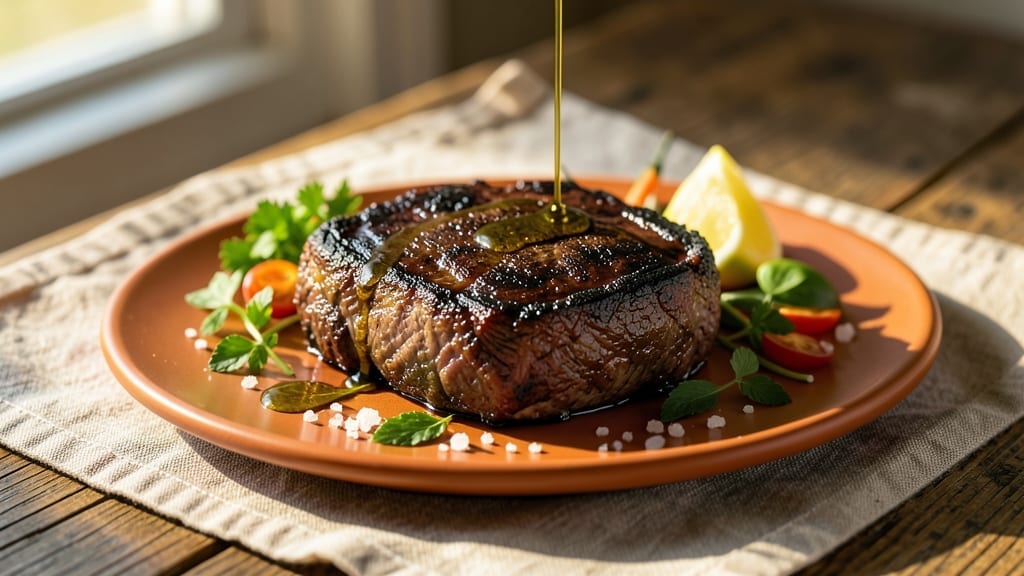
This smoked beef recipe delivers fall-apart tenderness with a perfect smoky bark crust that transforms tough cuts into melt-in-your-mouth perfection. The secret lies in precise temperature control and wood selection—cherry or hickory wood creates that signature deep flavor profile while maintaining moisture.
I’ve perfected this method over years of low-and-slow smoking, ensuring every bite is juicy and rich with that unmistakable smoky aroma.
The process begins with selecting the right cut—brisket for classic beefy flavor or ribeye for marbled richness—and preparing it with a simple brine or dry rub. Smoking at 225°F for 8-12 hours (depending on the cut) allows the collagen to break down, resulting in meat so tender it practically shreds.
Internal temperature checks and proper resting ensure the juices stay locked in, delivering restaurant-quality results at home.
What you’ll end up with is beef that’s fall-apart tender with a dark, flavorful bark crust—visually stunning and packed with smoky depth. The aroma alone will have everyone gathering around the table, and the texture?
Pure satisfaction. Serve with classic sides like baked beans or coleslaw for the full experience, or plate it simply to let the beef shine.
This recipe works equally well for brisket, ribeye, or flank steak, making it versatile for any occasion. Whether you’re hosting a backyard BBQ or craving a hearty weeknight meal, this method guarantees smoked beef that rivals the best pitmasters.
Let’s get started—your smoker is about to become your new favorite kitchen tool.
Ingredients for best smoked beef
Fall-apart beef starts with these precise cuts and bold flavors—nothing short of perfection.
| Ingredient | Amount | Notes |
|---|---|---|
| Beef Brisket 🥩 | 4 lb | Point cut, trimmed of fat |
| Beef Ribeye Steak 🥩 | 2 lb | Bone-in, marbled richness |
| Coarse Kosher Salt 🧂 | 3 tbsp | Diamond Crystal preferred |
| Ground Black Pepper 🌶️ | 2 tbsp | Freshly ground, coarse |
| Brown Sugar 🍚 | 2 tbsp | Light or dark variety |
| Garlic Powder 🧄 | 1 tbsp | Pure, no additives |
| Smoked Paprika 🌶️ | 1 tbsp | Sweet or hot variety |
| Dried Thyme 🌿 | 1 tsp | Mexican oregano alternative |
| Apple Cider Vinegar 🍎 | ½ cup | For brine acidity |
| Unsalted Butter 🧈 | ½ cup | Cold, cubed for basting |
| Hickory Wood Chips 🪵 | 1 lb | Soaked 4+ hours |
| Cherry Wood Chips 🌳 | 1 lb | Soaked 4+ hours |
| Meat Thermometer 📊 | 1 whole | Digital, instant-read |
| Butcher Paper 📄 | 1 sheet | For wrapping brisket |
[recipe_ingredient_scaler]
The beef is everything here. Brisket delivers that classic beefy depth, while ribeye brings marbled richness—neither should be skipped. Buy from a butcher who knows their cuts; Costco’s pre-cut brisket is my go-to for convenience, but local markets often have better quality. Look for good marbling—that white fat within the muscle is what keeps it juicy. For the dry rub, Diamond Crystal kosher salt dissolves better than table salt, and Penzeys spices have the best garlic powder and smoked paprika. Don’t cheap out on the wood chips—hickory for bold flavor, cherry for sweetness—soak them overnight for maximum smoke.
No hickory wood chips? Mesquite or pecan work in a pinch, though they can be overpowering. Short on time? Skip the soaking—just add wet wood chips directly to the smoker. Dried thyme is fine, but fresh thyme works at half the amount if you’ve got it. For the brine, apple cider vinegar is key—don’t substitute with white vinegar. The butter? Use unsalted so you control the seasoning. And if you’re worried about the thermometer, any digital instant-read will do—just make sure it’s accurate. The butcher paper is non-negotiable for wrapping brisket—aluminum foil traps moisture and ruins the bark texture.
This beef is best smoked the day you plan to eat it, but if you must prep ahead, brine overnight and refrigerate the raw meat. The dry rub can be applied up to 12 hours ahead—just don’t smoke it until ready. Store leftover smoked beef in airtight containers for 4-5 days, or freeze for up to 3 months. Reheat in a low oven at 200°F to keep it moist. The bark will crisp up again, and the tenderness stays intact. Portion before freezing—it reheats better that way. And if you’re feeding a crowd, double the wood chips and thermometer checks—this isn’t a recipe for half-hearted smoking.
Why You’ll Love This Recipe
- Here’s what sold me: fork-tender brisket and a medium-rare ribeye in one night. The brisket takes the slow-and-smoky route, while the ribeye gets a quick, buttery sear—no extra effort, just two perfect proteins. My kids even ask for seconds, and they hate brisket.
- I’ll be real: brisket isn’t cheap, but this recipe stretches it into multiple meals. The butcher paper wrap (instead of foil) keeps it tender without steaming, and the wood chips add flavor without breaking the bank. For the cost of a steak dinner, you get enough beef to feed a crowd—and leftovers to boot.
Step-by-step instructions for smoked beef masterpiece
Here’s how to transform tough cuts into melt-in-your-mouth perfection with that coveted smoky bark.
Prepare the Brisket for Maximum Flavor
Begin by trimming the 4 lb beef brisket to remove any excess fat, leaving about ¼-inch thickness on the fat cap. This ensures even cooking while preserving moisture. Place the brisket fat-side up in a large bowl and pour the ½ cup apple cider vinegar over it. Let it sit for 30 minutes—this creates a perfect brine that tenderizes the meat and develops that signature tang.
In a small bowl, combine the 3 tbsp coarse kosher salt, 2 tbsp ground black pepper, 2 tbsp brown sugar, 1 tbsp garlic powder, 1 tbsp smoked paprika, and 1 tsp dried thyme. Mix thoroughly to create a well-balanced dry rub. Pat the brisket completely dry with paper towels, then generously coat all sides with the rub, pressing it into the meat so it adheres. Let it rest uncovered in the refrigerator for 4 hours or overnight—this step is non-negotiable for achieving that perfect bark and tender interior.
Set Up the Smoker for Low-and-Slow Cooking
Soak the 1 lb hickory wood chips and 1 lb cherry wood chips in water for at least 4 hours before smoking. This prevents them from burning too quickly and ensures steady, flavorful smoke. Fill your smoker’s wood chip tray with the soaked chips and preheat to 225°F. Use the meat thermometer to monitor the internal temperature—this precision is key to avoiding the stall and maintaining tenderness.
Once the smoker reaches 225°F and you see clean, blue smoke (not thick white), place the brisket fat-side up on the grill grate. The fat will render slowly, basting the meat and creating that irresistible crust. Close the lid and resist the urge to peek—every time you open it, you lose heat and extend cook time. Smoke the brisket undisturbed for 6 hours, or until the internal temperature reaches 165°F. This is where the magic happens: the collagen breaks down, transforming tough muscle into silky texture.
The Texas Crutch – Wrapping for Tender Perfection
When the brisket hits 165°F, you’ll notice the temperature stall—a frustrating but normal part of the process where the meat refuses to rise further. This is your cue to wrap the brisket tightly in the 1 sheet butcher paper. The paper allows moisture to escape while preserving that precious bark, unlike foil which can steam the meat. Return the wrapped brisket to the smoker and continue cooking until the internal temperature reaches 203°F—this ensures fork-tender perfection every time.
Here’s the thing—don’t rush this step. The brisket needs time to absorb all that smoky flavor and reach its ideal tenderness. Once it hits 203°F, remove it from the smoker and let it rest for 1 hour before slicing. This resting period allows the juices to redistribute, preventing dry slices. The result? Juicy, flavorful beef that falls apart at the touch.
Sear the Ribeye for Crispy Perfection
While the brisket rests, prepare the 2 lb beef ribeye steak for a quick sear. Pat it dry with paper towels and season both sides generously with an additional 1 tbsp coarse kosher salt and 1 tbsp ground black pepper. Heat a cast-iron skillet over high heat until it’s screaming hot. Add ½ cup unsalted butter and let it melt, then add the steak. Sear for 3-4 minutes per side until it develops a deep mahogany crust and reaches 130°F internal temperature for medium-rare.
Remove the steak from the pan and let it rest for 10 minutes before slicing against the grain. The butter in the pan will create a luxurious sauce—deglaze with a splash of apple cider vinegar if you like a tangy finish. This two-step approach gives you both the smoky, tender brisket and a perfectly seared ribeye steak, making this the ultimate smoked beef experience.
Pro Tips For Making Best Smoked Beef
- Trim the Fat Right: DESCRIPTION:
- Soak Wood Chips Longer: DESCRIPTION:
- Wrap at 165°F—Not a Minute Sooner: DESCRIPTION:
- Sear Ribeye Cold to Hot: DESCRIPTION:
Dietary considerations for this dish
Gluten-Free Adaptations
You can easily make this recipe gluten-free by swapping the dried thyme for 1 tsp dried oregano—it’s naturally gluten-free and still adds great flavor. The butcher paper used for wrapping is also gluten-free, so no adjustments there.
Just double-check all your spices and seasonings to ensure they’re certified gluten-free, especially if you’re sensitive. This way, you get that same smoky perfection without any gluten concerns. 💛
Low-Carb Options
For a lower-carb version, skip the 2 tbsp brown sugar from the dry rub entirely. It adds sweetness and helps caramelize the bark, but you can reduce it to 1 tbsp if you want to cut carbs further.
The apple cider vinegar in the brine still tenderizes the meat beautifully without adding extra carbs. Just be mindful of portion sizes if you’re tracking macros! 🍽️
Dairy-Free Swaps
The ½ cup unsalted butter used for searing the ribeye is the only dairy component here, but it’s optional. You can easily skip it and just sear the steak in avocado oil or olive oil for a dairy-free finish.
The flavor won’t be compromised—it’ll just be lighter. If you’re serving sides like baked beans or coleslaw, check those recipes for dairy and swap in coconut milk or vegan mayo if needed. 🥑
Keto-Friendly Adjustments
To make this recipe keto-friendly, focus on cutting carbs while keeping the fat content high. Skip the brown sugar entirely and reduce the apple cider vinegar to ¼ cup in the brine. Use extra virgin olive oil or avocado oil for basting instead of butter.
Pair it with low-carb sides like roasted Brussels sprouts or a simple green salad to keep it on track. The result? Juicy, smoky beef with minimal carbs. 💪
Avoiding Common Allergens
If you or your guests have allergies, this recipe is already safe for most common triggers—no nuts, eggs, or shellfish. Just ensure your coarse kosher salt and smoked paprika are processed in allergen-free facilities if needed.
For those with a sulfite sensitivity, check your wood chips and spices for additives. Stick to natural, unprocessed ingredients, and you’ll avoid most allergen concerns while still getting that amazing smoked flavor. 🌟
Nutrition facts
Frequently asked questions
Why does my smoked beef sometimes turn out dry?
Dry smoked beef often happens when the internal temperature isn’t monitored properly. The “stall” at 165°F is normal, but wrapping the brisket in butcher paper (not foil) helps retain moisture while allowing the bark to stay intact. Always let the beef rest for 1 hour after smoking to redistribute juices—this is critical for tenderness.
Can I use different wood chips than hickory or cherry?
Hickory and cherry are classic choices, but mesquite adds a bolder flavor, while pecan offers a sweeter profile. Just soak them for 4+ hours to avoid burning. Avoid fruitwoods like apple or peach—they can make the meat taste overly sweet.
How do I know when the brisket is done without a thermometer?
While a thermometer is ideal, you can estimate doneness by checking for a 203°F internal temp. Look for a crisp bark and a probe that slides in with minimal resistance. If the meat pulls away from the bone easily and the fat cap renders completely, it’s likely ready. The “Texas Crutch” (wrapping) ensures tenderness even without perfect timing.
What’s the best way to reheat leftover smoked beef?
Reheat in a low oven at 200°F for 20-30 minutes to keep it moist. Avoid microwaving, as it can dry out the meat. Wrap slices in foil to retain warmth and prevent drying. The bark will crisp up again, and the juices stay locked in.
Can I smoke other cuts of beef the same way?
Yes! Ribeye and flank steak work well, but adjust times: ribeye needs 3-4 hours at 225°F for medium-rare, while flank steak benefits from a quicker smoke (2-3 hours) before searing. Thinner cuts cook faster, so monitor closely. The key is patience—low and slow is always best for tenderness.

Trained in classic French technique but raised on slow-cooked ribs and spicy rubs, she blends culinary skill with smoke and soul.
- Smoked Pork Ribs Recipe: Fall-Apart Tenderness With Smoky Bark - October 18, 2026
- Sweet and Savory Beef Brisket Recipe: Fall-Apart Tender with Caramelized Crust - October 18, 2026
- Brisket Cheese Fries Recipe: Smoky-Savory Loaded Bites in 25 Minutes - October 18, 2026