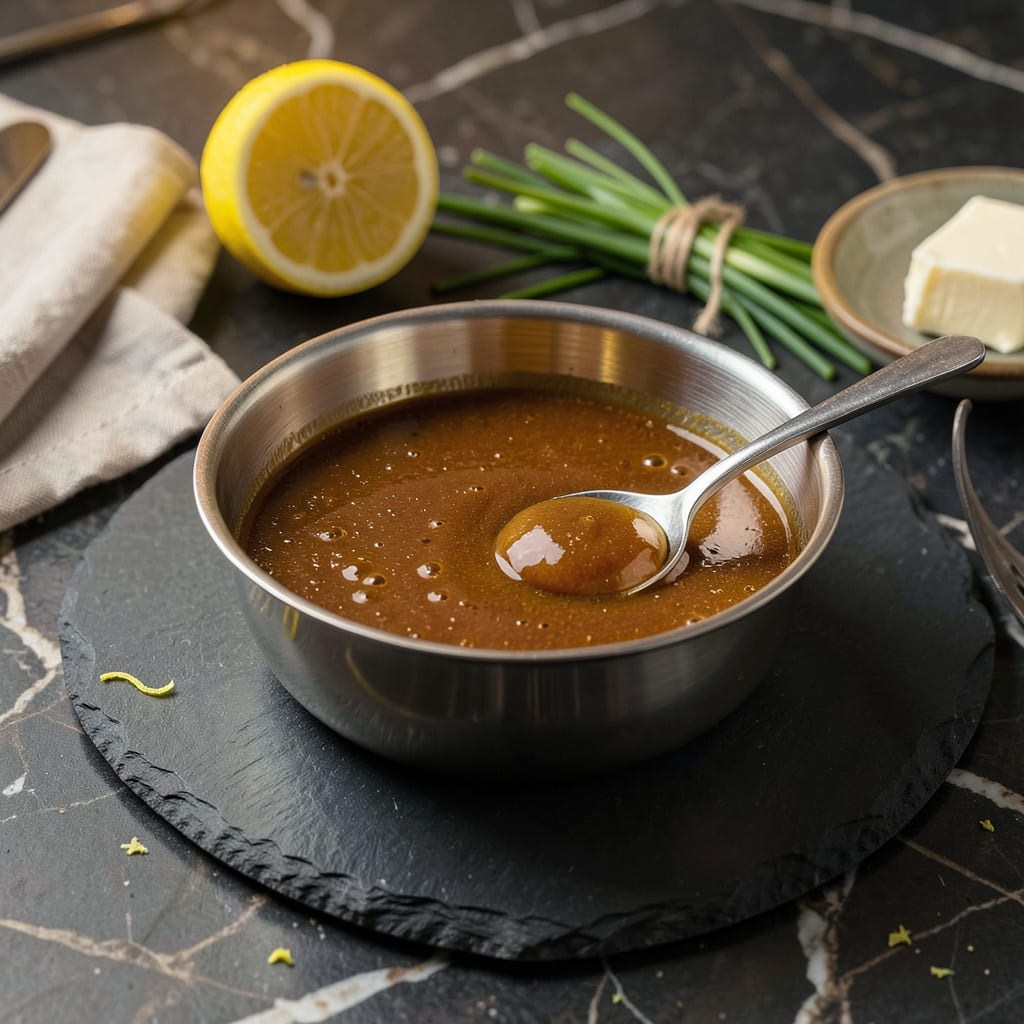
I’ll be real with you: making beurre blanc without wine used to intimidate me. That classic French sauce relies on acidity to balance its richness, and I wasn’t sure how to replicate that tang without alcohol. But after burning through a few batches (and nearly giving up), I discovered the perfect tangy substitutes that actually make this version more versatile.
This sauce starts with a simple reduction—think shallots simmered in vinegar or citrus juice until the liquid concentrates into something bold and bright. The real magic happens when you whisk in cold butter, one cube at a time, creating that signature velvety texture. I’ve found that white wine vinegar or fresh lemon juice work best, giving you that essential acidity without any alcohol.
What you end up with is a rich, creamy sauce that clings beautifully to fish, drizzles over vegetables, or elevates simple grilled chicken. The key is keeping the heat low and whisking constantly—this prevents the sauce from breaking and ensures that silky-smooth finish. It’s the kind of technique that looks impressive but is actually foolproof once you get the rhythm.
Best part? This version keeps for up to 3 days in the fridge, so you can make it ahead. Just gently reheat it with a splash of water, whisking constantly to bring it back to life. Here’s exactly how to nail this sauce every time.
📚 In This Guide
- What You’ll Need
- Instructions
- Tips and Common Mistakes
What Youll Need
- ● Ingredients: ½ cup (1 stick / 113g) unsalted butter, cold and cubed 🧈
- ● ¼ cup (60ml) white wine vinegar or apple cider vinegar (substitute for wine)
- ● 2 tbsp (30ml) fresh lemon juice (about 1 lemon)
- ● 2 tbsp (30g) shallots, finely minced
- ○ ¼ cup (60ml) heavy cream (optional, for extra richness)
- ● ½ tsp salt (adjust to taste)
- ○ Pinch of white pepper (optional, for subtle heat)
- ● Tools: Small saucepan (light-colored for better temperature control)
- ● Whisk (preferably stainless steel)
- ○ Fine-mesh strainer (optional, for ultra-smooth texture)
- ● Heatproof spatula (for scraping fond)
- ○ Candy thermometer (optional, for precision)
- ● Prerequisites: Basic knife skills (for mincing shallots)
- ● Low-medium heat control (critical for emulsification)
- ● Patience—beurre blanc demands slow, steady stirring! ⏳
Step-by-Step Instructions for Beurre Blanc Without Wine
This foolproof method delivers that classic silky texture and tangy richness—no wine required!
Create the Flavorful Reduction Base
In a medium saucepan, combine 1 cup of apple cider vinegar and 2 tablespoons of lemon juice over medium-high heat. Bring this mixture to a rapid boil and let it reduce by about ¾ of its original volume. You’ll know it’s ready when the liquid becomes syrupy and coats the back of a spoon.
This reduction is your flavor foundation. The vinegar’s acidity mimics wine’s tang while the lemon brightens everything up. Watch closely during reduction—it goes from perfect to burnt in seconds. I always pull it off heat just before it reaches the ideal consistency since it continues reducing off the burner.
Temper the Butter for Perfect Emulsion
Cut 1 cup of cold unsalted butter into 1-inch cubes and set aside. Reduce your burner to low heat and let the reduction cool slightly for about 1 minute. This cooling step is crucial—adding butter to boiling liquid will cause it to separate.
Begin whisking in the butter 1 cube at a time, waiting until each piece is fully incorporated before adding the next. The sauce should look creamy and homogenous after each addition. If it starts looking greasy, remove the pan from heat immediately and whisk vigorously—this usually brings it back together.
Achieve the Ideal Consistency
Once all butter is incorporated, continue whisking over low heat for another 2-3 minutes. You’re looking for a sauce that’s thick enough to coat the back of a spoon but still pourable. It should have a beautiful glossy sheen and the consistency of heavy cream.
Taste and adjust seasoning with salt and white pepper—remember that butter needs salt to shine. If the sauce feels too thick, whisk in 1-2 teaspoons of warm water to loosen it. For extra richness, I sometimes finish with a splash of heavy cream at this stage.
Strain and Serve Immediately
Pour the sauce through a fine-mesh strainer into a warm bowl to remove any potential solids. This ensures that velvety smooth texture beurre blanc is famous for. The sauce is now ready to use, but remember it waits for no one!
Serve immediately over poached fish, steamed vegetables, or grilled chicken. If you need to hold it briefly, keep it in a warm (not hot) spot and whisk in a teaspoon of warm water every few minutes to maintain the emulsion. The sauce should glisten and cling beautifully to whatever it touches.
Tips and Common Mistakes for Perfect Beurre Blanc Without Wine
This elegant sauce demands precision, but these key insights will help you master its velvety texture every time.
The Reduction Secret: In Step 1, when reducing the apple cider vinegar and lemon juice over medium-high heat, watch for the moment it transforms from liquid to syrupy. The instructions specify reducing by ¾ volume, but here’s what nobody tells you—pull it off heat just before reaching that point! The residual heat will carry it to perfection while preventing that bitter burnt edge I learned to avoid the hard way.
Butter Tempering Technique: That 1-minute cooling period in Step 2 isn’t just a suggestion—it’s your emulsion insurance. I’ve ruined batches by rushing this step. The butter cubes should melt gradually over low heat, creating that signature creamy consistency. If your sauce looks greasy, immediately remove from heat and whisk like your dinner depends on it (because it does!).
Consistency Check: During those critical 2-3 minutes in Step 3, test your sauce by dipping a spoon and running your finger through it. The perfect beurre blanc will leave a clean trail that slowly fills back in. This visual cue is more reliable than any timer—trust your eyes over the clock for that restaurant-quality finish.
Serving Strategy: Step 4 mentions serving immediately, and I can’t stress this enough! Keep your serving bowl warm by nesting it in hot water while you work. The moment you strain the sauce, pour it directly over your dish—this sauce waits for no one, and its glorious texture is fleeting. For brief holding, a warm (not hot) water bath with occasional whisking works wonders.
Pro Tips for Beurre Blanc Without Wine
- This elegant sauce demands precision, but these key insights will help you master its velvety texture every time.
- The Reduction Secret: In Step 1, when reducing the apple cider vinegar and lemon juice over medium-high heat, watch f…
- Butter Tempering Technique: That 1-minute cooling period in Step 2 isn’t just a suggestion—it’s your emulsion insuran…
Frequently Asked Questions
Can I make beurre blanc without wine and still get the classic flavor?
While wine adds acidity, you can mimic the tang with substitutes like lemon juice, vinegar (white wine, apple cider, or rice), or even a splash of citrus zest. Start with 1-2 tbsp of your chosen acid and adjust to taste—balance is key!
What’s the best non-alcoholic substitute for white wine in beurre blanc?
For brightness, lemon juice (fresh is best!) or white wine vinegar work wonderfully. For depth, try apple cider vinegar or a mix of vinegar + a pinch of sugar. Avoid balsamic—it’s too strong! Pro ratio: 1 tbsp acid + 1 tbsp water per ¼ cup wine.
Why did my beurre blanc break (separate) without wine?
No wine means less emulsifying help, but don’t panic! If your sauce splits, whisk in 1 tsp of hot water or heavy cream off-heat. Keep butter warm (not boiling) and add it slowly. Cold butter or high heat are common culprits.
How long does beurre blanc without wine last in the fridge?
Store it in an airtight container for up to 2 days. Reheat gently in a double boiler (or microwave at 50% power), whisking constantly. If it thickens too much, thin with a splash of warm water or cream.
Can I use this sauce for dishes other than fish?
Yes! This versatile sauce pairs beautifully with chicken, asparagus, scallops, or even poached eggs. For heartier dishes (like steak), add a dash of Dijon mustard or shallots for extra depth.
Who says you need wine to nail a velvety beurre blanc? With a few clever swaps—like citrus, vinegar, or even broth—you’ve got a luscious, restaurant-worthy sauce that’s just as rich and tangy. 🎉 Whether you’re avoiding alcohol or just out of white wine, these substitutes prove flexibility is the secret ingredient in the kitchen.
Now that you’ve mastered the basics, why not drizzle it over seared scallops or pair it with roasted veggies? The possibilities are endless—grab a whisk and get saucy! 🍽️

Trained in classic French technique but raised on slow-cooked ribs and spicy rubs, she blends culinary skill with smoke and soul.
- Recipe for Boneless Pork Chops in Cast Iron Skillet: Sear and Baste to Juicy Perfection - October 3, 2026
- Recipe for Boneless Cross Rib Roast: Slow-Roasted Beef with Herb Crust - October 3, 2026
- Hamburgers in Sauce Recipe Crock Pot: Slow-Cooked Savory Delight - October 3, 2026