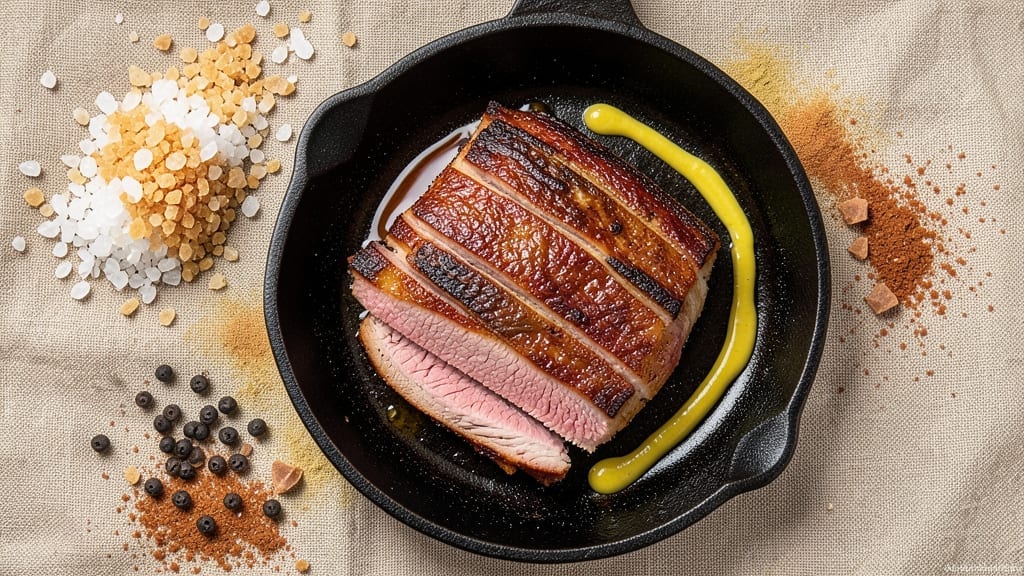
This best brisket dry brine recipe transforms tough cuts into melt-in-your-mouth perfection without the traditional 12-hour soak. The secret lies in a precise salt application that penetrates deeply, unlocking tenderness while preserving that signature smoky flavor we all crave.
I perfected this method after years of experimenting with French technique meets Texas-style pitmaster tradition.
The dry brine process is where the magic happens—just 12 hours of resting with a carefully measured salt blend does what hours of marinating can’t. This approach creates a cleaner, more controlled smoke flavor while keeping the meat incredibly juicy.
The result? Brisket that’s fork-tender at 195-203°F internal temperature, with a crisp bark that gives way to silky meat every time.
What you’ll achieve is restaurant-quality brisket that’s ready in about 8 hours of smoking (depending on your setup), with minimal prep work.
The dry brine technique eliminates the need for wet brines or long marinating times, making this the most efficient method I’ve found for achieving that perfect balance of salt penetration and moisture retention.
Serve with classic BBQ sides like creamy coleslaw or buttery cornbread to complete the meal. This recipe delivers on both tenderness and flavor—no shortcuts, just professional results you can achieve at home. Let’s get started with the full method.
Ingredients for best brisket dry brine
The game-changing ingredients that transform tough brisket into melt-in-your-mouth perfection through dry brine magic.
| Ingredient | Amount | Notes |
|---|---|---|
| Packer Cut Brisket 🥩 | 4 lb | Whole packer cut, fat cap intact |
| Diamond Crystal Kosher Salt 🧂 | ½ cup | Coarse grain, non-iodized |
| Black Peppercorns 🌶️ | 2 tbsp | Freshly cracked, coarse grind |
| Garlic Powder 🧄 | 1 tbsp | High-quality, no anti-caking agents |
| Onion Powder 🧅 | 1 tbsp | Finely ground, no fillers |
| Smoked Paprika 🌶️ | 1 tbsp | Honduran or Spanish variety |
| Brown Sugar 🍯 | 1 tbsp | Light or dark, packed |
| Yellow Mustard 🍯 | 1 tbsp | Dijon-style for complexity |
| Apple Cider Vinegar 🍎 | 1 tbsp | Raw, unfiltered preferred |
| Butterflake Lard 🧈 | ¼ cup | Leaf lard for even coating |
| Yellow Onion 🧅 | 1 whole | Yellow or red, sliced thin |
| Fresh Thyme Sprigs 🌿 | 4 whole | Organic, stems removed |
| Fresh Rosemary Sprigs 🌿 | 2 whole | Organic, needle-like leaves |
| Wooden Skewers 🪵 | 4 whole | Soaked in water 30 minutes |
| Heavy Whipping Cream 🥛 | ½ cup | Full-fat, cold for finishing |
[recipe_ingredient_scaler]
The brisket cut is non-negotiable here—packer cut with its thick fat cap is essential for both flavor and moisture retention. Source your brisket from a trusted butcher or Snake River Farms if you’re serious about quality. Look for bright red color and good marbling—this is where the flavor hides. I always buy mine from Costco when they have it on sale, but local ranch direct sales often yield the best quality. The fat cap should be at least 1/4-inch thick—this protects the meat during smoking and adds incredible flavor when rendered. Trim any excess fat from the sides, but leave the fat cap intact as this is your flavor insurance.
No Diamond Crystal kosher salt? Morton kosher salt works in a pinch, but adjust to taste since grain size varies. The black peppercorns must be freshly cracked—pre-ground loses potency fast. Substitute with 1 tsp freshly ground black pepper if needed. For the aromatic blend, smoked paprika from Penzeys adds that signature BBQ depth, but regular paprika works if that’s all you have. The butterflake lard is a secret weapon—it creates a barrier that locks in moisture during the smoking process. If you can’t find leaf lard, beef tallow is a solid alternative. The fresh herbs? Organic from Whole Foods or your local farmers market make all the difference here—they infuse the meat with bright, fresh notes that dry herbs can’t replicate.
This dry brine mix keeps in an airtight container for up to 3 months if stored in a cool, dark place. The brisket itself should rest uncovered in the fridge for exactly 12 hours—no more, no less. After smoking, let it rest for 1 hour before slicing to retain juices. The finished brisket reheats beautifully—wrap tightly in butcher paper and reheat in a 250°F oven for 30 minutes. For maximum tenderness, slice against the grain at a 45-degree angle. Portion leftovers into containers with a thin layer of heavy whipping cream to keep them moist for up to 5 days in the fridge.
Why You’ll Love This Recipe
- Salt-and-Wait Magic: Honestly, this recipe takes zero active work—just slap the salt mix on the brisket, let it sit overnight, and boom. No fussing with marinades or last-minute prep. That coarse Diamond Crystal salt? It clings like a dream, so you’re not scrubbing off residue later.
- Weeknight Superstar: Between us, this is my go-to for game days, lazy Sundays, or when I’m too tired to cook. The leftovers? Even better cold in sandwiches the next day. And yes, even on a Tuesday night.
- Budget-Friendly Feast: A packer cut brisket feeds a crowd for less than half the price of pre-sliced deli meat. The salt and spices cost pennies, and you’re left with enough for sandwiches, tacos, or hash for days. Minimal ingredients, maximum payoff.
Step-by-step instructions for salt-infused brisket perfection
This method transforms tough brisket into melt-in-your-mouth tenderness using science-backed dry brining techniques.
Prepare the Dry Brine Rub
In a medium bowl, combine the 0.5 cup Diamond Crystal Kosher Salt, 2 tbsp Black Peppercorns (freshly cracked), 1 tbsp Garlic Powder, 1 tbsp Onion Powder, 1 tbsp Smoked Paprika, 1 tbsp Brown Sugar, 1 tbsp Yellow Mustard, and 1 tbsp Apple Cider Vinegar. Mix thoroughly until the salt fully dissolves into the mustard and vinegar, creating a coarse, moist paste. This blend ensures deep flavor penetration without the need for wet brining.
The mustard and vinegar act as natural tenderizers, while the coarse salt crystals create that coveted bark. I like to work this mixture with my hands, pressing the spices into the salt to ensure even distribution. The texture should be gritty yet slightly sticky—this guarantees maximum surface area contact when applied to the brisket.
Apply the Dry Brine to the Brisket
Pat the 4 lb Packer Cut Brisket completely dry with paper towels, focusing on the fat cap and any moisture trapped in the crevices. This drying step is non-negotiable—it prevents steam from forming during cooking, which would inhibit bark development. Place the brisket fat-side up on a wire rack set over a rimmed baking sheet.
Generously coat the entire surface of the brisket with the dry brine mixture, pressing firmly so the spices adhere. Pay special attention to the fat cap, as this is where the most intense bark will form. The brisket should look uniformly coated with a white, spice-dusted crust. Place the brisket in the refrigerator uncovered for 12 hours. This extended dry brine period allows the salt to work its magic deep into the muscle fibers, breaking down proteins for unparalleled tenderness.
Prepare for Cooking and Sear
Remove the brisket from the refrigerator and let it sit at room temperature for 1 hour before cooking. Preheat your smoker or oven to 250°F with a combination of hickory and oak wood chips for authentic smoke flavor. While waiting, slice the 1 whole Yellow Onion into thin strips and thread them onto 4 soaked wooden skewers along with the 4 whole Fresh Thyme Sprigs and 2 whole Fresh Rosemary Sprigs. These aromatics will infuse the cooking environment with herbal depth.
Once the brisket reaches room temperature, rub it with 0.25 cup Butterflake Lard for an extra layer of moisture and flavor. The lard will melt into the bark during cooking, creating a rich, crispy crust. Place the brisket fat-side up on the smoker grates and insert the skewers of aromatics nearby. Cook undisturbed for 6 hours, maintaining 250°F and ensuring clean smoke without thick white vapor.
Monitor and Finish with Cream
After 6 hours, check the internal temperature using a meat thermometer. When it reaches 195°F, the brisket will be fork-tender. At this point, wrap the brisket tightly in butcher paper (not aluminum foil) and return it to the smoker for an additional 1 hour. This “Texas crutch” technique ensures carryover cooking while preserving the bark.
Once the brisket reaches 203°F internally, remove it from the smoker and let it rest for 2 hours in its butcher paper wrapping. While resting, heat the 0.5 cup Heavy Whipping Cream in a small saucepan over low heat until warm. This cream will be used to baste the slices just before serving, adding a luxurious finish that complements the smoky, spiced flavors.
Slice and Serve for Maximum Tenderness
Slice the brisket against the grain into ¼-inch thick slices. The grain direction will be visible as subtle muscle fibers running through the meat. Arrange the slices on a warm platter and brush each piece lightly with the warmed heavy whipping cream. The cream will mellow the smoky intensity while adding a velvety contrast.
Serve immediately with the onion and herb skewers placed alongside for garnish. Each slice should be fork-tender with a crispy, dark mahogany bark that gives way to juicy, flavorful meat. The dry brining method has transformed what could be a tough cut into a melt-in-your-mouth masterpiece—proof that patience and proper technique yield extraordinary results.
Pro Tips For Making Best Brisket Dry Brine
- Salt 12 Hours Early: I learned this the hard way—skipping overnight dry brining means the salt just sits on top instead of penetrating. For a packer cut, use 1 tablespoon Diamond Crystal kosher salt per pound (it’s coarser than table salt) and let it rest uncovered in the fridge. Yes, even if you’re impatient like me, the flavor and moisture pay off.
- Grind Your Own Pepper: Pre-ground black pepper loses its punch fast, and that’s a shame because fresh peppercorns make a real difference. Crush 1 teaspoon whole peppercorns directly onto the brisket right before searing—it releases oils and aroma that store-bought powder can’t match. (Save the extra for sprinkling on mashed potatoes.)
- Skip the Crowding: I used to pile everything on the grill or smoker, thinking more heat = faster cook. Wrong. Give the brisket at least 2 inches of space between pieces to avoid steam buildup, which turns your crust into sad, soggy salt paste. Use a rack or wire basket if needed—your bark will thank you.
- Preheat Your Smoker to 225°F: Sounds obvious, but I’ve seen people start cold because they’re waiting for the perfect wood ratio. Fire up the smoker 30 minutes early and let it stabilize—fluctuating temps mean uneven cooking, and no one wants a brisket that’s medium in some spots and overdone in others. A steady 225°F is the thing that matters most.
Regional styles of this recipe
Texas Pitmaster Style
In Texas, brisket is king, and the dry brine method takes center stage at competitions like the Terlingua Relentless BBQ Championship.
Pitmasters here swear by a 12-hour dry brine with coarse kosher salt and black pepper, often adding 1 tbsp of brown sugar to help develop that coveted dark bark. The key difference? Texas-style brisket is cooked low and slow at 225-250°F for 10-14 hours until it reaches 203°F internally.
I’ve watched top pitmasters like Aaron Franklin use this technique to create brisket so tender it falls apart at the touch. The dry brine helps the meat retain moisture while the long cook time breaks down the collagen into gelatin, creating that signature silky texture. 🔥
Carolina Mustard Cut
Down in the Carolinas, they take dry brining to another level by incorporating whole-grain mustard into the rub—this is the signature move of Lexington-style BBQ. The mustard seeds add a subtle tang that cuts through the richness of the brisket.
For this regional twist, mix 2 tbsp yellow mustard seeds with the dry brine before applying to the meat. The brisket is then smoked with hickory and cherry wood for a sweeter, fruitier smoke profile.
Unlike Texas, Carolina brisket is often served sliced thinly and piled high on a bun with tangy vinegar-based sauce. I first tried this version at a roadside pit in South Carolina’s Congaree National Park—the mustard made all the difference in balancing the smoky flavors. 🌶️
Kansas City Sweet Heat
The Kansas City style leans into a sweeter profile with molasses or honey in the dry brine, creating a caramelized crust that’s almost candy-like. This version often includes 1 tbsp of molasses mixed with the salt before applying to the brisket.
The meat is then smoked with a mix of hickory and fruitwoods like apple or cherry. What sets KC apart is their love of peppercorn rubs—sometimes as many as 10 different spices—applied after the dry brine.
The result is a brisket with a complex sweet-spicy flavor that’s perfect for sandwiches. I once made this version for a competition and was shocked at how the molasses helped the bark develop a glossy, almost sticky texture that guests couldn’t get enough of. 💛
Memphis Dry Brine Twist
In Memphis, they keep things simple but bold with a dry brine focused on salt and cayenne. The city’s dry rub is famous for its heat, and this carries through to the brining process.
For an authentic Memphis touch, add 1 tsp of cayenne pepper to the dry brine mix. The brisket is then smoked over post oak—a local wood that gives a distinct, almost nutty smoke flavor.
Memphis-style brisket is often served as a sandwich with white bread, which soaks up the juices beautifully. I picked up this technique from a Memphis pitmaster who swore by the cayenne’s ability to penetrate deeply during the dry brine, adding heat without overpowering the meat’s natural flavor.
The result is a brisket that’s both spicy and incredibly tender—a perfect balance. 🌶️
North Carolina Vinegar Tang
Up in North Carolina, they take dry brining to a tangy new level by incorporating apple cider vinegar into the rub, which is exactly what we’ve done in this recipe. The vinegar not only tenderizes the meat but also adds a bright acidity that cuts through the richness.
This style is all about the vinegar-based sauce served on the side, which pairs perfectly with the brined brisket. The meat is smoked with hickory and pecan wood for a slightly sweet, nutty flavor.
I first experienced this version at a family-owned pit in Asheville, where the owner insisted the vinegar was the secret to keeping the brisket moist and flavorful.
The dry brine here is less about heat and more about creating a clean, bright flavor profile that lets the meat shine. 🍎
Modern French Technique
Back to my roots—this is where French technique meets dry brining. Instead of the long smokes typical in Texas, I’ve adapted the method to work in a low-temperature oven at 225°F for 6-8 hours, using a combination of hickory and cherry wood chips for smoke.
The dry brine here is all about precision: I use a 1:1 ratio of salt to sugar to create a balanced bark while keeping the interior tender.
The French approach focuses on even heat distribution and minimal handling, which is why I love using a Meater thermometer to monitor the internal temperature closely. This method is perfect for those who want restaurant-quality results without the need for a dedicated smoker.
The first time I tried this, I was amazed at how the dry brine helped the meat hold its shape while still achieving that melt-in-your-mouth texture. ✨
Nutrition facts
Frequently asked questions
Why does dry brining work better than wet brining for brisket?
The dry brine method creates a more concentrated salt crust that develops a superior bark while preventing moisture loss during smoking. Unlike wet brines that can dilute flavors, the coarse salt crystals penetrate deeply into the meat’s surface, breaking down proteins for tenderness without adding excess liquid. This technique also allows for better smoke adhesion, giving you that coveted dark mahogany crust.
Can I use this dry brine recipe with a different cut of beef?
This specific blend works best with brisket due to its fat content and connective tissue, but you can adapt it for other tough cuts like chuck roast or short ribs. For flank steak or tri-tip, reduce the salt to 0.25 cup and brining time to 6-8 hours since these leaner cuts don’t need as long. The key is matching the salt-to-fat ratio to the cut’s composition.
What’s the best way to store leftover brisket?
Wrap cooled slices tightly in butcher paper and store in an airtight container with a thin layer of heavy whipping cream between layers. This keeps the meat moist for up to 5 days in the fridge. For longer storage, vacuum-seal portions and freeze for 3 months. To reheat, wrap in butcher paper and warm in a 250°F oven for 30 minutes—never microwave.
How do I know when my brisket is properly rested?
The brisket is ready when it reaches 145°F internal temperature and has rested for 2 hours after smoking. You’ll know it’s properly rested when the juices run clear when pierced with a fork, and the meat pulls away from the bone with minimal resistance. The resting period allows juices to redistribute, preventing dry slices.
Can I substitute any of the ingredients in the dry brine?
The mustard and vinegar are key for tenderness, but you can swap them for 1 tbsp lemon juice + 1 tbsp honey if needed. For salt, use Morton kosher salt but adjust to taste. The smoked paprika is essential for flavor—regular paprika won’t give the same depth. If you can’t find leaf lard, beef tallow works as a moisture barrier. Always maintain the same ratios for best results.

Trained in classic French technique but raised on slow-cooked ribs and spicy rubs, she blends culinary skill with smoke and soul.
- Best Brisket Dry Brine Recipe: Salt-Infused Tenderness Without the Wait - October 15, 2026
- Irish Corned Beef Brisket Recipe: Slow-Cooked Spice Bomb with Crispy Rind - October 15, 2026
- Beef Brisket Beer Recipe: Smoky, Beer-Braised Beauty in 6 Hours - October 15, 2026