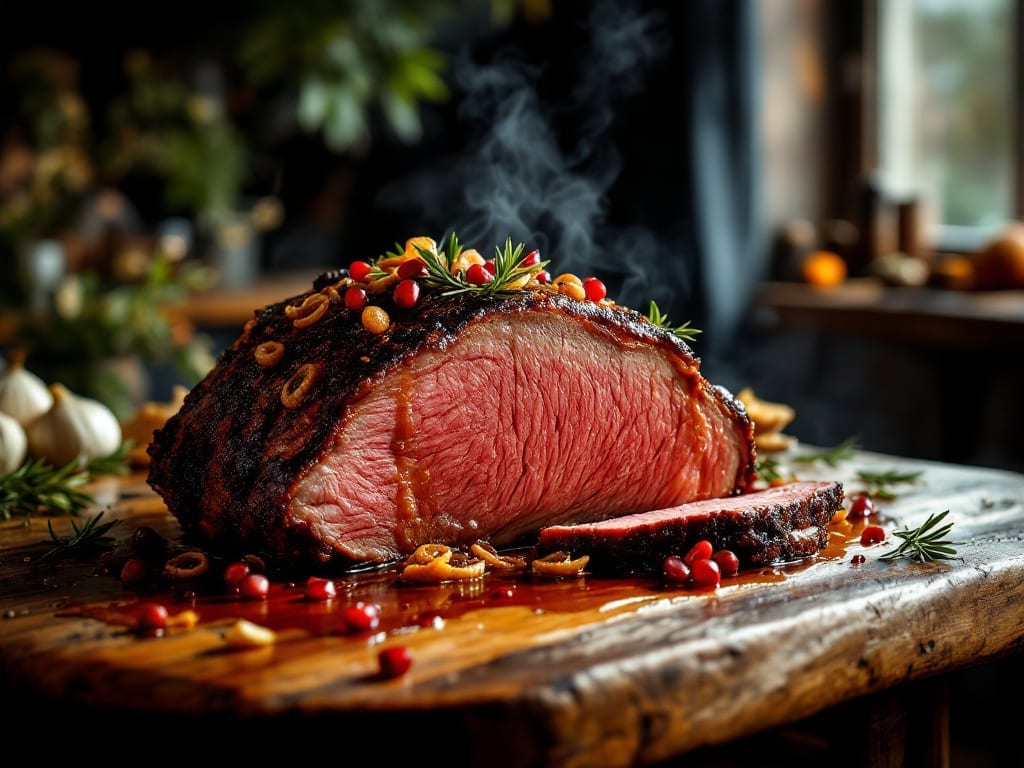
This honey-date glazed brisket recipe transforms Rosh Hashanah into a celebration of sweetness and tradition—just like my grandmother used to make. The key lies in balancing slow-cooked tenderness with a caramelized honey-date glaze that rivals any deli, creating that perfect sweet-tangy depth that defines the holiday.
I’ve spent years perfecting this method, ensuring every slice delivers both texture and meaning.
The secret to success begins with a proper soak and rub, allowing the brisket to absorb flavors while remaining tender after hours in the oven.
A slow cook at 300°F ensures the meat falls apart easily, while the honey-date glaze—simmered until thick and glossy—adds that signature sweetness without overpowering the rich beef. This isn’t just a brisket; it’s a centerpiece that brings the table together.
By the time you serve it, you’ll have a brisket with a deep mahogany crust, tender enough to slice with a fork, and a glaze that’s sticky-sweet with just the right amount of tang.
The aroma alone will fill your home with warmth, making this more than just a meal—it’s a tradition. Serve with classic sides like matzo ball soup or roasted carrots for the full experience.
This recipe scales beautifully for gatherings, and the leftovers reheat just as well the next day. Whether you’re cooking for family or friends, this brisket will be the star of your Rosh Hashanah feast—just as it has been in my kitchen for years.
Let’s get started on creating a dish that honors both flavor and tradition.
Ingredients for best rosh hashanah brisket
Twelve ingredients. One unforgettable centerpiece. The secret to Rosh Hashanah brisket perfection.
| Ingredient | Amount | Notes |
|---|---|---|
| Beef Brisket 🥩 | 6 lb | Flat cut, 1-1.5 inch thick |
| Kosher Salt 🧂 | 1 ½ cups | Diamond Crystal preferred |
| Black Peppercorns 🌶️ | 2 tbsp | Freshly cracked |
| Garlic Cloves 🧄 | 12 cloves | Peeled, smashed |
| Fresh Ginger 🌿 | ½ cup | Finely grated |
| Dried Thyme 🍃 | 2 tbsp | Or 0.5 cup fresh |
| Dried Rosemary 🌿 | 1 tbsp | Or 0.25 cup fresh |
| Honey 🍯 | 1 cup | Wildflower preferred |
| Pitted Dates 🍈 | 1 cup | Medjool, chopped |
| Orange Juice 🍊 | ½ cup | Freshly squeezed |
| Apple Cider Vinegar 🍶 | ¼ cup | For tangy balance |
| Beef Broth 💧 | 2 cups | Low-sodium preferred |
| Olive Oil 🫒 | ½ cup | Extra-virgin for richness |
| Brown Sugar 🍚 | ½ cup | Packed tightly |
| Ground Cinnamon 🌶️ | 1 tsp | For warm depth |
[recipe_ingredient_scaler]
The brisket is non-negotiable—flat cut, 1-1.5 inches thick from Costco or your local butcher (ask for the pointy end if you want extra tenderness). I always buy mine a day ahead and let it sit uncovered in the fridge—the crust forms better that way. For the spices, Penzeys or bulk bins at Whole Foods are worth it, but the grocery store stuff works if it’s fresh. Those Medjool dates? Trader Joe’s sells them pre-pitted, which saves time. The honey should be wildflower or clover—avoid the processed kind that tastes like syrup.
No kosher salt? Diamond Crystal is key—it dissolves better, but Morton kosher salt works in a pinch (use 1.25 cups instead). Fresh thyme and rosemary make a difference, but dried at half the amount gets you close. Short on dates? Chopped dried apricots work, though they won’t caramelize as nicely. The orange juice can be bottled, but freshly squeezed adds that bright pop. For the broth, low-sodium is critical—you don’t want to overpower the natural beef flavor. And if you’re making this ahead, prep the glaze ingredients the night before—it’s half the battle.
This brisket reheats like a dream—wrapped in foil at 300°F for 15 minutes—so it’s perfect for leftovers. Store the cooked brisket in its juices for up to 5 days in the fridge, or freeze for 3 months. The glaze keeps separately for 2 weeks in the fridge, so you can make it ahead. I always double the glaze—half for the brisket, half for dipping. Trust me, you’ll want it. And if you’re serving a crowd, scale up the glaze by 50%—it disappears fast.
Why You’ll Love This Recipe
- Foolproof Prep: Honestly, the brisket just needs a good rub—kosher salt, cracked pepper, and those garlic cloves minced right into the fat. No fancy techniques, just 15 minutes of hands-on time before it goes in the oven. (Yes, even on a Tuesday night.)
- Ginger-Garlic Magic: Between us, that fresh ginger and garlic combo is what makes this brisket ridiculously good. The ginger’s zing cuts through the richness, while the garlic caramelizes into something sweet and sticky—like a little flavor bomb in every bite.
- Leftovers That Shine: This brisket actually gets better the next day. I swear, the meat falls apart easier, and the flavors meld into this deep, smoky-sweet perfection. Pack it for lunches or slice it thin for sandwiches—it’s my secret weapon for busy weeks.
- Budget-Friendly Feast: A whole brisket feeds a crowd for less than $20. That’s right—one big, flavorful centerpiece for Rosh Hashanah (or any gathering) without breaking the bank. Plus, the leftovers stretch into meals for days. Solid move.
Step-by-step instructions for honey-date brisket
Here’s the method that delivers restaurant-quality brisket with a sweet-tangy glaze perfect for Rosh Hashanah.
Prepare the Brisket with Dry Rub
Start by trimming any excess fat from the 6 lb beef brisket, leaving about ¼ inch thickness. This ensures even cooking while maintaining moisture. Pat the meat completely dry with paper towels—this step is crucial for that perfect bark.
In a small bowl, combine the 1.5 cups kosher salt, 2 tbsp black peppercorns, 12 cloves garlic (peeled and smashed), 0.5 cup fresh ginger (finely grated), 2 tbsp dried thyme, and 1 tbsp dried rosemary. Rub this mixture generously over all sides of the brisket, pressing firmly so the spices adhere. Let it sit uncovered in the refrigerator for 24 hours to allow the salt to penetrate deeply and the flavors to meld.
Create the Honey-Date Glaze
In a medium saucepan, combine the 1 cup honey, 1 cup pitted dates (chopped), 0.5 cup orange juice, 0.25 cup apple cider vinegar, 2 cups beef broth, 0.5 cup brown sugar (packed tightly), and 1 tsp ground cinnamon. Bring to a gentle simmer over medium heat, stirring occasionally to prevent sticking.
Simmer for 15-20 minutes until the mixture thickens slightly and the dates soften. You’ll notice the aroma become rich and sweet with a hint of tang. Remove from heat and let it cool slightly—this glaze will be the star of your brisket, adding depth and moisture.
Slow Cook the Brisket
Preheat your oven to 300°F. Place the brisket fat-side up in a roasting pan and pour the cooled honey-date glaze evenly over the top. Cover tightly with aluminum foil and bake for 3 hours. This slow cooking method ensures tender meat without drying it out.
After 3 hours, remove the foil and increase the oven temperature to 375°F. Continue baking for another 30-45 minutes until the internal temperature reaches 195°F. You’ll see the glaze caramelize beautifully, creating a glossy finish that signals perfect doneness.
Rest and Slice
Transfer the brisket to a cutting board and tent loosely with foil. Let it rest for at least 30 minutes—this crucial step allows the juices to redistribute throughout the meat, ensuring each slice is moist and flavorful.
Slice the brisket against the grain into ¼-inch thick pieces. Serve immediately with the remaining glaze spooned over the top. The result is a brisket with a perfect balance of sweet, tangy, and savory flavors that will impress your guests and make your Rosh Hashanah celebration unforgettable.
Pro Tips For Making Best Rosh Hashanah Brisket
- CRANK THE HEAT FIRST: Start your brisket over high heat—400°F or higher—until the salt crust forms a deep amber crust (about 10-15 minutes). I used to play it safe with medium heat, and my brisket always tasted bland underneath that pale crust. High heat sears the meat fast and locks in flavor before you lower the temp for slow cooking.
- GRATE THAT GINGER FINE: Skip the rough chop—grate the fresh ginger with a microplane until it’s almost paste-like. This ensures it dissolves into the pan juices instead of sitting as chunks. (Yes, it’s a pain, but your brisket will actually taste like ginger, not just “something spicy.”)
- DON’T RUSH THE REST: Let the brisket sit under foil for a full 30 minutes after pulling it from the oven—no peeking, no rushing. I learned this the hard way when I sliced into it too soon and watched the juices pool instead of staying in the meat. Patience here makes the difference between tender and chewy.
- USE A THERMOMETER (YES, REALLY): Pull the brisket when it hits 195°F—no guessing, no stabbing with a knife. I wasted years overcooking or undercooking until I invested in a cheap probe thermometer. At that temp, the connective tissue breaks down, and the meat falls apart like it’s supposed to. No more dry, tough brisket.
Essential equipment for this recipe
Oven Essentials
Your oven is the heart of this brisket, so invest in a high-quality meat thermometer—I swear by the ThermoWorks Smoke—to monitor internal temperature precisely. A heavy-duty roasting pan (like All-Clad) prevents warping and ensures even heat distribution.
For the final caramelization, I bump the temp to 375°F, so make sure your oven can handle that heat without hot spots. 🌡️
Slow-Cooking Tools
Aluminum foil is non-negotiable for the first 3 hours—it traps steam and keeps the brisket moist. I use Reynolds Heavy Duty Foil because it’s thick enough to handle the weight.
For resting, a large cutting board (like John Boos 24×36-inch) gives you space to work, and a meat rest tent (or even a clean kitchen towel) keeps the brisket warm while it rests.
Glaze Prep Gear
A medium saucepan with high sides (like All-Clad Stainless Steel) prevents spills while simmering the honey-date glaze. A wooden spoon keeps the mixture from sticking to the bottom, and a fine-mesh strainer helps remove any date pits if you’re not using pre-pitted Medjools.
I also keep a small whisk handy to stir in the brown sugar smoothly—it dissolves faster that way.
Butchering Basics
If you’re trimming the brisket yourself, a sharp boning knife (like Victorinox 8-inch) makes the job easier. For slicing after cooking, a long, thin slicing knife (such as Dexter-Russell 12-inch) cuts cleanly against the grain.
If you’re not comfortable with knives, ask your butcher to trim it for you—they’ll often do it for free if you buy the whole cut.
Optional Upgrades
For extra precision, a digital instant-read thermometer (like Thermoworks Thermapen) lets you check the internal temp without opening the oven. A smoker box (if you’re using a stovetop smoker) adds depth, but it’s not required for this oven method.
And if you’re making this ahead, vacuum-seal bags keep the brisket juicy for days in the freezer.
Cleanup Made Easy
Line your roasting pan with parchment paper (like Reynolds Non-Stick) for effortless cleanup—no scrubbing required. A large spoon (like OXO Good Grips) helps transfer the brisket in and out of the oven safely.
And keep a damp towel nearby to wipe down any glaze spills—honey is sticky, but it comes off easily with a little elbow grease. 💪
Nutrition facts
Frequently asked questions
Why is the 24-hour salt soak so important for brisket?
The 24-hour salt soak works magic by breaking down proteins in the meat, creating a tender texture while allowing the rub to penetrate deeply. This step also forms a perfect crust for caramelization later. Skipping it can leave your brisket tough—trust the process!
Can I substitute honey in the glaze for something else?
While honey is traditional, you can use maple syrup or agave nectar for a similar sweetness. For extra depth, add 1 tbsp molasses to the glaze. Just remember—honey’s floral notes are key to that authentic Rosh Hashanah flavor.
What’s the best way to reheat leftover brisket?
Wrap slices in foil with a splash of beef broth, then reheat at 300°F for 15 minutes. This keeps them moist and reheated evenly. For cold sandwiches, slice thin and serve on challah—the contrast is divine!
How do I adjust this recipe for a smaller crowd?
Scale down to 3-4 lbs brisket and reduce all other ingredients proportionally. Keep the same cooking time per pound, and use a smaller roasting pan. The glaze can be made in half batches—just keep the ratios identical.
What’s the significance of the honey-date glaze for Rosh Hashanah?
The honey symbolizes a sweet new year, while dates represent abundance. Together, they create a glaze that’s both delicious and meaningful—a perfect centerpiece for this joyous holiday. The sweetness also balances the rich, savory meat beautifully.

Trained in classic French technique but raised on slow-cooked ribs and spicy rubs, she blends culinary skill with smoke and soul.
- Best Rosh Hashanah Brisket Recipe: Honey-Date Glaze That Rivals Delis - October 15, 2026
- Best Brisket Dry Brine Recipe: Salt-Infused Tenderness Without the Wait - October 15, 2026
- Irish Corned Beef Brisket Recipe: Slow-Cooked Spice Bomb with Crispy Rind - October 15, 2026