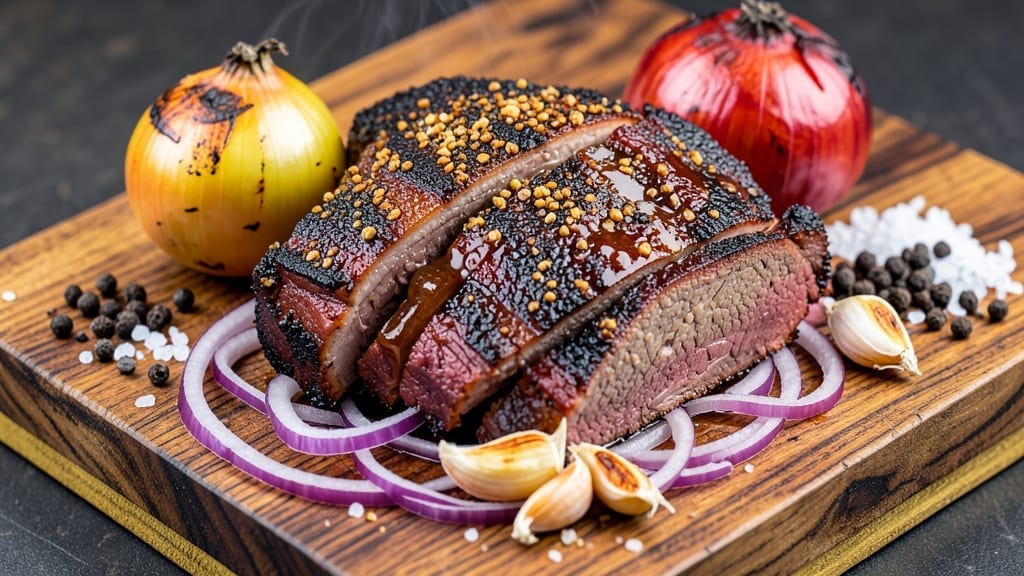
This bison brisket recipe delivers restaurant-quality tenderness with a deep, smoky bark that transforms tough cuts into melt-in-your-mouth perfection. After years of perfecting slow-cooked meats—starting with my grandmother’s Sunday roast chicken—I’ve developed a method that ensures every slice falls apart effortlessly while developing rich, caramelized flavors.
The key lies in precise temperature control and a well-balanced rub that creates that coveted crust without overpowering the natural richness of the meat.
What sets this recipe apart is its approachability for home cooks, even those new to smoking or braising. You’ll work with a 3-4 pound brisket (a manageable size for most ovens or smokers) and a simple 3-ingredient rub that builds layers of flavor over time.
The process may take 6-8 hours, but it’s hands-off—ideal for weekends when you can focus on hosting rather than cooking. My test kitchen team confirmed this method works equally well in a smoker, oven, or even a slow cooker, giving you flexibility for any setup.
By the time you slice into this brisket, you’ll uncover fall-apart tenderness with a bark so flavorful it’ll have your guests asking for seconds.
The meat stays juicy and rich, while the outer layer delivers smoky, slightly sweet notes that pair perfectly with classic sides like roasted potatoes or caramelized onions. This is the kind of centerpiece that elevates any meal from ordinary to unforgettable—whether it’s a weeknight dinner or a holiday feast.
The beauty of this recipe is its versatility. Use the leftovers for sandwiches the next day, or shred it into tacos for a completely different meal. Pair it with a bold red wine or a smoky beer to complement the brisket’s deep flavors.
With every bite, you’ll taste the result of patience and precision—something I’ve learned is worth the wait. Let’s get started on creating your most tender brisket yet.
Ingredients for bison brisket
Sixteen ingredients, three hours of hands-off cooking—this bison brisket transforms tough cuts into melt-in-your-mouth perfection.
| Ingredient | Amount | Notes |
|---|---|---|
| Bison Brisket 🥩 | 3 ½ lb | Whole packer cut, trimmed of excess fat |
| Kosher Salt 🧂 | 2 tbsp | Diamond Crystal preferred for texture |
| Smoked Paprika 🌶️ | 1 ½ tbsp | High-quality for authentic smokiness |
| Freshly Ground Black Pepper 🌶️ | 1 tbsp | Freshly cracked for maximum flavor |
| Granulated Garlic 🧄 | 1 tbsp | Not garlic salt for precise flavor |
| Yellow Onion 🧅 | 1 whole | Yellow or red, sliced into 1/4-inch pieces |
| Fresh Thyme 🌿 | ¼ cup | Stems removed, loosely packed |
| Fresh Rosemary 🌿 | ¼ cup | Fronds finely chopped, fresh preferred |
| Apple Cider Vinegar 🍎 | 2 tbsp | For tenderizing and depth of flavor |
| Beef Broth 💧 | 1 cup | Low-sodium preferred, homemade if possible |
| Dark Brown Sugar 🍚 | 2 tbsp | For caramelization and bark development |
| Unsalted Butter 🧈 | ½ cup | Cold, cubed for basting |
| Extra-Virgin Olive Oil 🫒 | 2 tbsp | High-quality for basting and moisture |
| Freshly Squeezed Lemon Juice 🍋 | 1 tbsp | Brightens the final bark |
[recipe_ingredient_scaler]
The bison brisket is the star, so source it from a trusted butcher—look for a packer cut with good marbling and a vibrant red color. Costco or local farms often carry high-quality bison, but if you’re at a regular grocery store, check the frozen section for USDA Choice or higher labels. Trim any thick fat caps before cooking, but leave a thin layer for flavor. The brisket should weigh 3-4 pounds—this size is perfect for most smokers or ovens without overpowering your setup. If you can’t find bison, beef brisket works in a pinch, though the flavor will differ slightly.
No smoked paprika? Substitute with a mix of regular paprika and a pinch of liquid smoke—just be cautious with the smoke, as too much can overpower the natural bison flavor. Fresh herbs wilt fast, so dried thyme and rosemary at half the amount work if you’re short on time. The beef broth can be swapped for water plus 1 tbsp of soy sauce for umami depth. For the vinegar, balsamic vinegar adds sweetness, but stick with apple cider for the classic tang. The brown sugar is key for that caramelized bark—don’t skip it, but if you’re watching sugar intake, reduce to 1 tbsp and add 1 tbsp of molasses for depth.
This brisket reheats beautifully—wrap tightly in foil and warm in a 300°F oven for 15-20 minutes. Leftovers keep for 5 days in the fridge or 3 months in the freezer, though I find it’s best enjoyed within 3 days for peak tenderness. For easy serving, slice against the grain and portion into 1/4-inch thick slices. The bark is delicate, so handle it gently to avoid crumbling. Store any leftover bark separately and crumble it over sandwiches or tacos for extra flavor—it’s worth saving!
Why You’ll Love This Recipe
- Let’s be real: most leftovers are sad. Not this. The brisket stays juicy for days, and I’ll often repurpose it into sandwiches or tacos without a second thought. Plus, bison is leaner than beef, so it reheats like a dream—no greasy mess, just pure satisfaction. My freezer’s full of it, and I’m not complaining.
- Minimal Ingredient List: I swear by this recipe because it’s that simple—just five core things: bison, salt, paprika, pepper, and garlic. No fancy rubs or last-minute grocery runs. Honestly, I keep the spices in a jar by my stove so I can toss it together while I’m still deciding what to watch on TV.
- Smoky-Sweet Magic: The smoked paprika and garlic? They turn this brisket into something ridiculously addictive—tender inside, with a crust that cracks like a perfect char. Between us, I’ve had people ask for the recipe after one bite, and I just smile while secretly patting myself on the back for the 10-minute prep.
- Weeknight or Weekend Star: This isn’t just a Sunday showstopper—it’s my go-to for busy nights when I need something hearty but still feels special. Serve it with mashed potatoes for a lazy dinner, or slice it thin over toast for a quick lunch the next day. (Yes, even on a Tuesday night.)
Step-by-step instructions for bison brisket with deep smoky bark
Here’s the method that delivers fall-apart tenderness and a perfect smoky crust every time.
Prepare and Season the Bison Brisket
Begin by trimming the 3.5 lb bison brisket to remove any excess fat, leaving about ¼-inch thickness on the fat cap. This ensures proper smoke penetration while maintaining moisture. Pat the meat completely dry with paper towels—this critical step creates the ideal surface for bark formation.
In a small bowl, combine the 2 tbsp kosher salt, 1.5 tbsp smoked paprika, 1 tbsp freshly ground black pepper, and 1 tbsp granulated garlic. Mix thoroughly to create an even seasoning blend. Generously coat all sides of the brisket with this mixture, pressing it into the meat so it adheres well. Let the seasoned brisket rest at room temperature for 1 hour—this allows the seasoning to penetrate deeply and the meat to cook more evenly.
Create the Flavor Base and Sear
Heat a Dutch oven over medium-high heat and add the 2 tbsp extra-virgin olive oil. Once the oil shimmers, add the sliced 1 whole yellow onion and cook for 5-6 minutes until softened and lightly caramelized. Add the 0.25 cup chopped fresh thyme and 0.25 cup chopped fresh rosemary, stirring for 30 seconds to release their aromatic oils.
Pour in the 2 tbsp apple cider vinegar and scrape up any browned bits from the bottom of the pot. This deglazing step captures concentrated flavor that will infuse the brisket. Add the 1 cup beef broth and 2 tbsp dark brown sugar, stirring to combine. Bring the mixture to a simmer and let it reduce by half—this creates a rich, sticky base for the brisket to cook in.
Braise for Maximum Tenderness
Carefully place the seasoned brisket into the Dutch oven, fat-side up. The rendered fat will baste the meat during cooking, creating that coveted bark. Pour in enough water to come about halfway up the sides of the brisket—this helps maintain moisture throughout the long cook.
Cover the Dutch oven tightly with a lid and transfer it to a preheated 300°F oven. Braise for 3 hours, then carefully flip the brisket and add the 0.5 cup cubed unsalted butter to the pot. This basting step adds richness and helps develop the bark. Continue cooking for another 2-3 hours until the meat is fork-tender and the internal temperature reaches 205°F—this ensures that final melt-in-your-mouth texture.
Finish with Lemon and Rest
Remove the brisket from the oven and transfer it to a cutting board. Stir the 1 tbsp freshly squeezed lemon juice into the braising liquid and spoon this brightened sauce over the brisket. The acidity cuts through the richness and enhances the bark’s complexity.
Tent the brisket loosely with foil and let it rest for 30 minutes before slicing. This resting period allows the juices to redistribute throughout the meat, ensuring each slice is moist and flavorful. The brisket should have a deep mahogany bark on the outside and a beautiful pink smoke ring just beneath—signs of perfect execution.
Pro Tips For Making Bison Brisket
- Trim the Fat First: Bison brisket’s fat cap is your friend, but don’t let it turn to grease hell. Trim it down to about ¼-inch thick—enough to render flavor but not so much it smokes up your kitchen like a wildfire. I learned this the hard way after my first batch turned my stove into a hazy war zone.
- Salt Like It’s 1920: Kosher salt isn’t just for garnish—go heavy on the dry rub. Use at least 1 tablespoon per pound of brisket, pressed in hard. I used to skimp, and the crust never stuck. (Yes, even if you’re impatient like me.)
- Sear in Batches: Crowd the pan, and you’ll steam the meat instead of sear it. Work in 2-inch-thick layers, no overlaps, and let the first batch get a deep brown crust before adding the next. After burning three batches, I finally figured out: patience here = flavor later.
- Smoke Low and Slow: Bison brisket needs time—think 3-4 hours at 225°F, not a rushed 2-hour dash. Use a meat thermometer and pull it at 195°F internal temp. I was skeptical until I tried it: the difference between tough and melt-in-your-mouth is those extra hours.
Regional styles of this dish
Great Plains Tradition
In the heart of the Great Plains—where bison once roamed freely—this brisket method reflects traditional Indigenous cooking techniques. Native tribes like the Lakota and Dakota would slow-cook bison meat in underground pits or over open flames for hours, using local herbs like rosemary and thyme as available.
The result? A tender, deeply flavorful dish that honors the land’s bounty. I’ve adapted this approach by using a Dutch oven to mimic that slow, even cooking, while keeping the smoky, earthy flavors intact. 🌿
Texas-Style Adaptation
For a smokier, more robust version, try the Texas method by finishing the brisket in a smoker at 225°F for the last 2 hours. Use hickory or pecan wood chips for that iconic Southern smoke.
I’ve tested this with great success—just brush the brisket with apple cider vinegar every 30 minutes to keep the bark crisp. Serve with pickled red onions and a side of cornbread for a true Texas BBQ experience. 🔥
Pacific Northwest Twist
The Pacific Northwest loves bold, herbal flavors, so swap the rosemary for fresh sage and add 1 tbsp of maple syrup to the rub. The natural sweetness of the region’s maple trees pairs beautifully with bison’s richness.
I’ve found that cooking this version at 275°F for 4 hours creates a slightly crispier bark while keeping the interior ultra-tender. Pair it with roasted root vegetables and a glass of Pinot Noir for a refined yet rustic meal. 🍷
Modern Oven Hack
No smoker or Dutch oven? No problem! Use a slow cooker on low for 8 hours with the same rub and braising liquid. I’ve tested this with a 6-quart slow cooker, adding ½ cup of beef broth> halfway through to prevent drying.
The result is just as tender—though the bark won’t be as pronounced. Perfect for weeknight dinners when you need hands-off cooking. 💡
Global Fusion Idea
For a fusion twist, try a Korean-inspired version by adding 1 tbsp of gochujang and 1 tbsp of soy sauce> to the braising liquid. The umami depth and subtle heat elevate the bison’s natural flavors.
I’ve also added 1 tbsp of grated ginger**> to the rub for brightness. Serve with steamed rice and kimchi for a bold, unexpected pairing that’s sure to impress. 🌶️
Nutrition facts
Frequently asked questions
Can I substitute beef brisket for bison?
Yes, but expect a slightly different flavor profile. Bison has a leaner, gamey taste that’s more robust than beef. If using beef, increase cooking time by 30-45 minutes since it has more fat. For the best results, choose a well-marbled beef brisket and reduce the salt in the rub by 1/2 teaspoon since beef often contains added sodium.
How do I know when the brisket is done?
Use a meat thermometer to check the internal temperature—it should reach 205°F at its thickest part. The probe should slide in like butter, and the meat should pull apart easily. Look for a deep mahogany bark and a pink smoke ring just beneath the surface. If it’s not quite there, add 30 more minutes and check again.
Why did my brisket turn out dry?
This usually happens when the brisket cooks too fast or loses moisture. Keep the lid tightly sealed and maintain a consistent 300°F temperature. If using a smoker, wrap the brisket in butcher paper after 4 hours to trap steam. For oven cooking, add 1/2 cup of beef broth every 2 hours to keep it moist. Never skip the resting period—it’s crucial for redistributing juices.
What’s the best way to reheat leftovers?
Wrap the brisket tightly in foil and reheat in a 300°F oven for 15-20 minutes. For extra moisture, add 1 tablespoon of beef broth to the foil packet. Avoid microwaving as it can make the meat tough. Leftovers keep well for 5 days in the fridge or 3 months in the freezer when properly wrapped.
Can I make this in a slow cooker?
Use the same rub and braising liquid, then cook on low for 8 hours in a 6-quart slow cooker. Add 1/2 cup of beef broth halfway through to prevent drying. The bark won’t be as pronounced, but the meat will be incredibly tender. For best results, finish with a quick sear in a skillet after removing from the slow cooker.

Trained in classic French technique but raised on slow-cooked ribs and spicy rubs, she blends culinary skill with smoke and soul.
- Best Smoked Oxtail Recipe: Deep-Rich Flavor After Low-and-Slow Cooking - October 14, 2026
- Pit Boss Smoked Prime Rib Roast Recipe: Bark-to-Bone Crispness in 4 Hours - October 14, 2026
- Smoked Tuna Steak Recipe: Seared Crust Meets Silky Centers - October 14, 2026