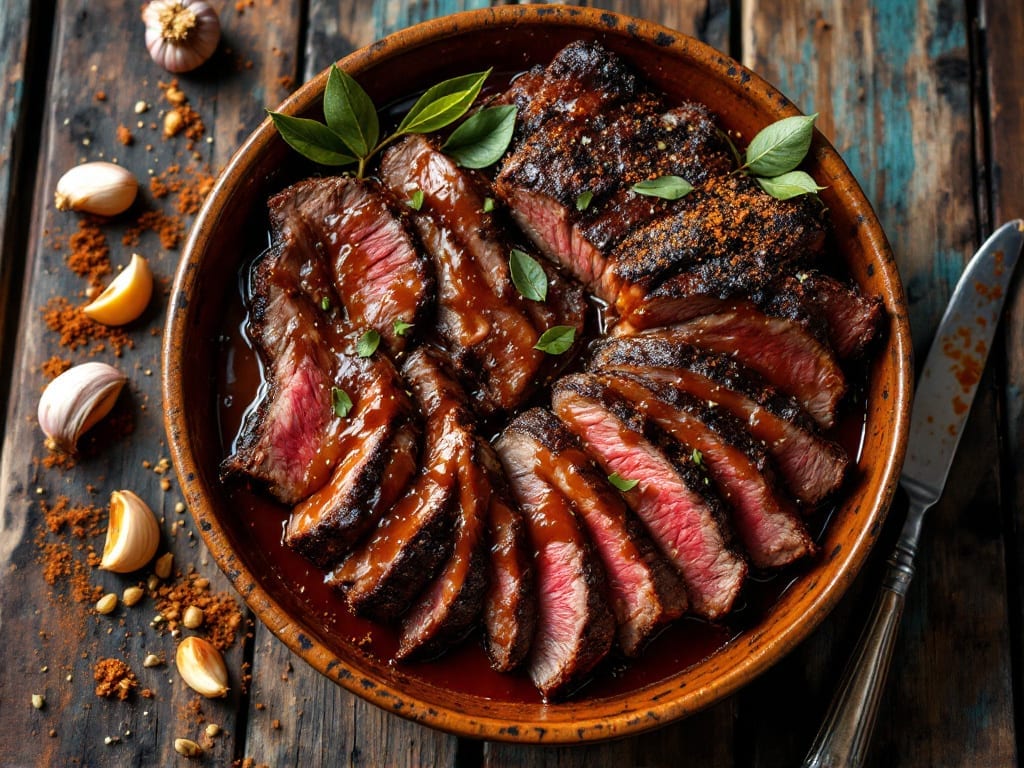
This Brazilian beef brisket recipe transforms tough cuts into melt-in-your-mouth tenderness using a smoky cachaça marinade that’s become my signature dish. The key lies in balancing traditional Brazilian flavors—garlic, vinegar, and bold spices—with precise cooking techniques that ensure every bite delivers that perfect combination of texture and depth.
After years of perfecting this method, I can confidently say this is the only brisket recipe you’ll ever need for gatherings or special occasions.
The marinade itself is where the magic begins, with cachaça (Brazilian sugarcane liquor) as the star ingredient that infuses the meat with authentic flavor while tenderizing it over time.
What makes this recipe truly special is the slow-cooking process—whether you choose a smoker, oven, or grill—that breaks down the connective tissue without drying out the meat. The result is brisket that’s so tender it nearly falls apart, with a crust that’s impossibly crispy and aromatic.
By the time you’re done, you’ll have a centerpiece dish that’s rich, smoky, and packed with layers of flavor that will have everyone at the table asking for seconds.
The brisket pairs beautifully with classic Brazilian sides like farofa, black beans, and grilled vegetables, creating a meal that feels both celebratory and comforting. This isn’t just another brisket recipe—it’s a taste of Brazil that you can bring to your own kitchen.
Whether you’re hosting a large gathering or simply craving a restaurant-quality meal at home, this recipe delivers professional results with simple, foolproof techniques. The secret lies in patience and attention to detail, but the reward is a dish that’s worth every minute of effort.
Let’s get started on creating your perfect Brazilian beef brisket.
Ingredients for brazilian beef brisket
The secret to this Brazilian brisket lies in these 14 ingredients—where cachaça and garlic transform tough meat into melt-in-your-mouth perfection.
| Ingredient | Amount | Notes |
|---|---|---|
| Beef Brisket (Whole Packer Cut) 🥩 | 4 lb | Flat cut preferred, 1-inch thick |
| Cachaça (Brazilian Sugarcane Liquor) 🍹 | 1 cup | 54% ABV minimum, authentic flavor |
| White Vinegar 🍶 | ½ cup | Distilled for acidity balance |
| Garlic Cloves 🧄 | 10 whole | Crushed for marinade infusion |
| Fresh Bay Leaves 🌿 | 4 whole | Dried as substitute at 1:1 ratio |
| Ground Black Peppercorns 🌶️ | 2 tbsp | Freshly cracked preferred |
| Diamond Crystal Kosher Salt 🧂 | 1 tbsp | Coarse grain for seasoning |
| Ground Cumin 🌿 | 1 tbsp | Toasted for deeper aroma |
| Smoked Paprika 🌶️ | 1 tbsp | Spanish paprika for authentic smoke |
| Olive Oil (Extra-Virgin) 🫒 | ¼ cup | For crust development |
| Yellow Onion 🧅 | 1 whole | Quartered for marinade base |
| Fresh Oregano 🍃 | ¼ cup | Chopped, Brazilian variety preferred |
| Brown Sugar 🍯 | 2 tbsp | Light or dark for caramelization |
| Wood Chips (Hickory or Mesquite) 🌳 | 2 cups | Soaked for smoking flavor |
[recipe_ingredient_scaler]
Cachaça is non-negotiable here—Brazilian brands like Leblon or Ypióca are the gold standard, but any 54% ABV sugarcane liquor works. Skip the vodka or rum substitutes (trust me). The brisket? Packer cut from a trusted butcher—look for good marbling and a thick fat cap. I always ask for it to be trimmed of excess silver skin, which makes the marinade penetrate better. If you can’t find cachaça, white rum plus 1 tbsp brown sugar is a decent backup, but it won’t taste quite the same. The bay leaves and fresh oregano? Buy them at Latin markets—they carry Brazilian herbs that have more depth than your average grocery store.
No cachaça? Double the white vinegar and add 1 tbsp molasses for depth, though it won’t replicate the authentic flavor. The smoked paprika is where the Brazilian soul lives—Spanish paprika from Penzeys is my go-to, but any good smoked variety works. Short on time? Pre-crush the garlic and mix it with the vinegar first to soften it. The brown sugar might seem odd, but it caramelizes beautifully during cooking, adding a subtle sweetness that balances the smokiness. For the wood chips, hickory is classic, but mesquite gives a more earthy note that pairs perfectly with the cachaça’s fruitiness. If you can’t find either, fruitwood blends work surprisingly well.
This marinade keeps for 5 days in the fridge, but the brisket itself? 3-4 days max before cooking—past that, the meat starts breaking down. The wood chips can be pre-soaked in water for 1 hour before smoking to prevent flare-ups. Leftovers? Reheat slowly at 300°F with a splash of beef broth to restore moisture. The brisket freezes beautifully for up to 3 months—wrap it tightly in butcher paper and foil to lock in flavor. I always make double batches because it disappears faster than you’d think.
Why You’ll Love This Recipe
- One-Pan Magic: I swear by this recipe when I’m too tired to scrub pots—just the brisket, cachaça, vinegar, and garlic in a deep skillet, and the oven does the rest. No chopping, no fuss, just hands-off cooking while I sip my coffee.
- Cachaça Crunch: That first sip of cachaça in the pan? It’s like a secret weapon. The alcohol burns off, leaving behind a caramelized depth that makes the brisket taste like it’s been slow-cooked for hours. (Yes, even on a Tuesday night.)
- Leftovers Heaven: This brisket practically begs to be made in bulk—it’s so tender it falls apart, and the flavor only gets better the next day. I freeze portions for quick weeknight dinners or pack it in sandwiches for lunch. Zero waste, all win.
- Budget Feast: A whole packer cut feeds my family for days, and the ingredients? Cachaça’s the splurge, but it’s worth it—vinegar, garlic, and bay leaves are all pantry staples. For the price of takeout, I get restaurant-quality meat that tastes like a Brazilian feast.
Step-by-step instructions for smoky cachaça-marinated beef brisket
Here’s how to transform tough brisket into melt-in-your-mouth tenderness using Brazilian flavors.
Create the Cachaça Marinade
In a large bowl, combine the 1 cup cachaça, 0.5 cup white vinegar, 2 tbsp ground black peppercorns, 1 tbsp diamond crystal kosher salt, 1 tbsp ground cumin, 1 tbsp smoked paprika, 2 tbsp brown sugar, and 0.25 cup chopped fresh oregano. Whisk until the sugar fully dissolves—this ensures even flavor distribution throughout the marinade.
Add the 10 whole garlic cloves (lightly crushed) and 4 whole fresh bay leaves to the mixture. Then, carefully place the 4 lb beef brisket in the bowl, ensuring it’s fully submerged in the marinade. Cover and refrigerate for at least 12 hours, or up to 24 hours for maximum tenderness. The acidity in the cachaça and vinegar breaks down tough muscle fibers, while the spices penetrate deeply.
Prepare the Smoker and Preheat
Soak the 2 cups wood chips (hickory or mesquite) in water for 30 minutes to prevent flare-ups. Set up your smoker and preheat to 225°F, using the soaked wood chips for a consistent, smoky flavor. I like to use a two-zone fire method—hot coals on one side and fresh wood on the other—to maintain steady temperature without fluctuations.
Once the smoker reaches 225°F and you see steady, thin smoke (not thick white vapor), place the brisket fat-side up on the grill grates. The fat cap should render slowly, basting the meat and creating a flavorful crust. Avoid opening the smoker for the first 2 hours—temperature swings can delay the cooking process and disrupt the bark formation.
Smoke Low and Slow for Maximum Tenderness
Smoke the brisket undisturbed for 6-8 hours, until the internal temperature reaches 165-170°F. This is the “stall” phase, where moisture evaporates and the meat temporarily stops rising in temperature. Don’t panic—this is normal and essential for achieving fork-tender results. The brisket should have a dark mahogany bark forming on the exterior, indicating proper smoke penetration.
Here’s the thing—if you’re using a digital thermometer, insert the probe into the thickest part of the brisket (avoiding the fat). The meat is ready when it reaches 165-170°F and the bark is deep and crispy. At this point, remove the brisket from the smoker and wrap it tightly in butcher paper (not foil). Return it to the smoker and continue cooking until the internal temperature hits 203°F—this ensures the connective tissue fully breaks down for melt-in-your-mouth texture.
Rest and Slice for Perfect Texture
Once the brisket reaches 203°F, remove it from the smoker and let it rest for 1-2 hours before slicing. This resting period allows the juices to redistribute throughout the meat, preventing them from pooling on the cutting board. Tent the brisket loosely with foil to keep it warm but allow some airflow for a better bark.
Slice the brisket against the grain into ¼-inch thick pieces. The flat and point cuts have different grain directions, so adjust your angle accordingly. Serve immediately with extra marinade reduced into a glossy sauce, if desired. Each slice should be tender enough to pull apart with a fork, with a perfect balance of smoky, spicy, and slightly sweet flavors from the cachaça marinade.
Pro Tips For Making Brazilian Beef Brisket
- Trim the Fat First: A whole packer cut has layers of fat that’ll render unevenly if left intact. Use a sharp knife to score the thick fat cap in a crosshatch pattern—about ¼-inch deep—and trim any excess hanging off the edges. This keeps the meat juicy and lets the cachaça penetrate better during cooking.
- Brown Before Braising: I used to skip this step, thinking the slow cook would handle it. Wrong. Sear the brisket hard in a hot Dutch oven—fat-side down first—until the edges are deep brown. The crust locks in flavor and prevents the meat from turning mushy when it soaks up the cachaça-vinegar marinade.
- Simmer the Cachaça: Pouring straight cachaça over raw meat? That’s a waste of good liquor. Heat it in a small saucepan with the vinegar, garlic, and bay leaves until it just starts to bubble—about 2 minutes. This mellows the alcohol’s harshness and lets the garlic infuse properly. (Yes, even if you’re impatient like me.)
- Don’t Rush the Rest: After cooking, tent the brisket with foil and let it sit for a solid 15 minutes. I learned this the hard way—slicing too soon turns tender meat into a sad, stringy mess. The rest also lets the juices redistribute, so every bite stays moist, especially when you slice against the grain.
Storing and reheating your brazilian beef brisket
Refrigerator Storage
Store leftover Brazilian brisket in an airtight container with a splash of beef broth to retain moisture. Keep it refrigerated at 40°F or below for up to 4 days—the flavors deepen over time as the spices meld. I always slice it thinly before storing to ensure even reheating. 💫
Freezer Prep
For long-term storage, wrap the brisket tightly in butcher paper, then aluminum foil to lock in moisture. Place it in a freezer-safe bag and label with the date—this keeps it fresh for up to 3 months.
Thaw overnight in the fridge before reheating for best results. Never refreeze once thawed.
Slow Stovetop Reheat
My preferred method is reheating in a heavy-bottomed pot on low heat with 2 tbsp beef broth to prevent drying. Cover and simmer for 15-20 minutes, stirring occasionally, until reaching 165°F internal temperature. This preserves the tender texture and smoky crust. 🔥
Oven Refresh
Preheat your oven to 300°F and place sliced brisket on a wire rack over a baking sheet. Cover loosely with foil and bake for 10-12 minutes, basting with extra marinade halfway through. This method keeps the slices juicy while reactivating the bark’s crispness.
Microwave Shortcut
For quick meals, arrange slices in a microwave-safe dish, cover with a damp paper towel, and heat on 50% power for 2-3 minutes. Stir halfway to redistribute moisture.
Add a splash of cachaça or beef broth if the slices seem dry. This isn’t ideal for texture, but it’s a lifesaver for busy days.
Sauce Revival
Save any leftover marinade or pan juices in a sealed container. Reduce them on the stovetop with 1 tbsp brown sugar until syrupy, then drizzle over reheated brisket. This adds back the glossy, flavorful sauce that makes every bite special. 💛
Nutrition facts
Frequently asked questions
Can I substitute cachaça in this Brazilian beef brisket?
The cachaça is essential for authentic flavor, but you can use white rum plus 1 tbsp brown sugar as a backup. For a non-alcoholic version, double the vinegar and add 1 tbsp molasses to mimic the sweetness. Just know the flavor won’t be identical—cachaça’s unique sugarcane profile is hard to replicate.
What’s the best way to slice brisket for maximum tenderness?
Always slice against the grain (perpendicular to the muscle fibers) into ¼-inch thick pieces. The flat cut and point cut have different grain directions, so adjust your angle accordingly. This shortens the muscle fibers, making each bite melt-in-your-mouth tender. Never slice with the grain—it’ll feel tough and chewy.
Why does my brisket turn out dry when using this method?
Overcooking or opening the smoker too often are the most common causes. Maintain a steady 225°F and avoid peeking for the first 2 hours. The brisket should reach 203°F internal temp—not higher. If it’s still dry, you likely cooked it past the stall phase. Always rest for 1-2 hours before slicing to redistribute juices.
How do I serve this brisket with authentic Brazilian sides?
Pair it with farofa (toasted cassava flour), feijoada-style black beans, and grilled plantains for a complete Brazilian feast. The smoky brisket contrasts beautifully with the earthy farofa and creamy beans. For a lighter option, serve with orange slices and Brazilian rice (cooked with bacon and cilantro).
Can I make this brisket in an oven instead of a smoker?
Yes! Use a 300°F oven with a water pan for moisture. Place the brisket on a rack over the pan, cover with foil, and cook for 4-5 hours until 203°F internal temp. For smokiness, add wood chips to a foil packet with the brisket. The texture won’t be identical, but it’ll still be tender and flavorful.

Trained in classic French technique but raised on slow-cooked ribs and spicy rubs, she blends culinary skill with smoke and soul.
- Best Smoked Oxtail Recipe: Deep-Rich Flavor After Low-and-Slow Cooking - October 14, 2026
- Pit Boss Smoked Prime Rib Roast Recipe: Bark-to-Bone Crispness in 4 Hours - October 14, 2026
- Smoked Tuna Steak Recipe: Seared Crust Meets Silky Centers - October 14, 2026