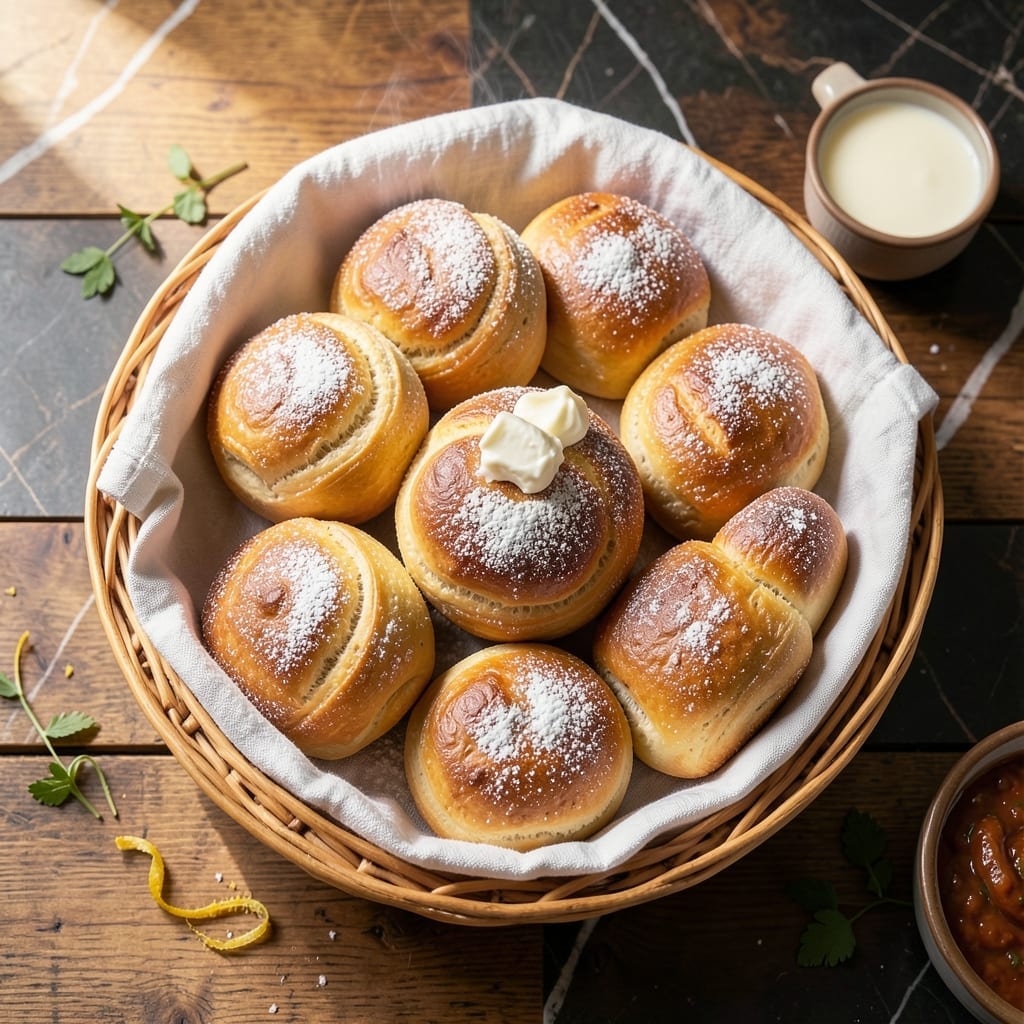
There’s nothing like warm, fluffy rolls straight from the oven to elevate any meal. This method recreates that signature restaurant texture at home with simple ingredients and proven technique.
The secret lies in the dough’s slow rise, which develops maximum flavor and airy texture. I’ve refined this process through years of testing, ensuring consistent results every time you bake.
You’ll achieve rolls so soft they melt in your mouth, with golden tops that beg to be torn apart. The aroma alone will have everyone gathering around the table before dinner’s even ready.
Perfect alongside holiday meals or as a comforting addition to weeknight dinners. Here’s everything you need to recreate this classic.
Ingredients for Bob Evans Rolls
Simple pantry staples transform into pillowy, golden rolls everyone will love.
| Ingredient | Amount | Notes |
|---|---|---|
| All-Purpose Flour 🌾 | 4 ½ cups | Plus extra for dusting |
| Granulated Sugar 🍚 | ¼ cup | For dough and activation |
| Active Dry Yeast 🍞 | 1 package | 2 1/4 tsp per packet |
| Whole Milk 🥛 | 1 cup | Warmed to 110°F |
| Unsalted Butter 🧈 | ½ cup | Melted and cooled |
| Large Egg 🥚 | 1 whole | Room temperature |
| Salt 🧂 | 1 ½ tsp | Fine sea salt preferred |
| Honey 🍯 | 2 tbsp | For softness and color |
| Bread Flour 🌾 | 1 cup | For extra softness |
| Vanilla Extract 🌿 | 1 tsp | Pure extract preferred |
| Vegetable Shortening 🧈 | 2 tbsp | For flaky layers |
| Water 💧 | ¼ cup | Lukewarm for yeast |
[recipe_ingredient_scaler]
The flour blend is key here. King Arthur all-purpose and bread flour give that perfect tender-chewy balance Bob Evans is known for. I grab mine in bulk at Costco—saves money and the quality is consistent. Yeast freshness matters (old yeast = flat rolls), so check the expiration date. For the milk, whole milk adds richness that 2% just can’t match (trust me on this one).
No honey? Maple syrup or corn syrup works in a pinch but may alter color slightly. Short on bread flour? Just use all all-purpose—texture will be slightly less soft. The egg adds richness, but you can skip it if needed (add 2 tbsp extra milk). Land O’Lakes butter is my go-to for consistent flavor. For a lighter roll, use all milk instead of water in the yeast activation.
Dough rises best in a warm spot—turn your oven light on for 30 minutes before starting. Baked rolls stay fresh 2-3 days in an airtight container. Freeze extras for up to 1 month (reheat wrapped in foil at 350°F for 10-15 minutes).
Why You’ll Love This Recipe
- Minimal Effort: I love that these rolls come together with just flour, sugar, yeast, milk, and butter—no fancy ingredients or techniques.
- Buttery Heaven: The melted butter brushed on top gives them that rich, golden finish that’s impossible to resist.
- Holiday Ready: They’re my go-to for Thanksgiving, Christmas, or even a cozy Sunday dinner with leftovers.
- Budget Friendly: Honestly, a batch of these costs pennies compared to store-bought, and they taste way better.
Step-by-Step Instructions for Fluffy Homemade Rolls
Here’s the method I use to recreate that signature softness and golden top you love.
Step 1: Activate the Yeast and Warm the Liquids
In a small bowl, combine the 1 package Active Dry Yeast, 0.25 cup Granulated Sugar, and 0.25 cup Water warmed to 110°F. Let it sit for 5-10 minutes until foamy—this confirms your yeast is alive and ready to work its magic.
In a separate microwave-safe bowl, warm the 1 cup Whole Milk to 110°F. I use a thermometer for precision, but you can also test it with your finger—it should feel warm but not hot. Add the 2 tbsp Honey and stir to dissolve completely.
Step 2: Combine Wet and Dry Ingredients
In a large mixing bowl, whisk together the 4.5 cups All-Purpose Flour, 1 cup Bread Flour, and 1.5 tsp Salt. Make a well in the center and pour in the yeast mixture, warm milk with honey, 1 whole Large Egg, 0.5 cup Unsalted Butter (melted and cooled), 1 tsp Vanilla Extract, and 2 tbsp Vegetable Shortening.
Using a dough hook attachment on low speed, mix until the dough comes together. You’ll notice it starts to pull away from the sides of the bowl—this usually takes about 2-3 minutes. The dough will be slightly sticky but should not cling to your fingers when touched lightly.
Step 3: Knead to Develop Gluten
Increase the mixer speed to medium and knead the dough for an additional 5-7 minutes. You’re looking for a smooth, elastic texture that springs back slowly when pressed with a finger. This gluten development is what gives your rolls that perfect chewy texture.
If the dough feels too sticky, add a tablespoon or two of extra All-Purpose Flour, but be conservative. Too much flour will make your rolls dense instead of light and fluffy. The dough should be soft and slightly tacky, but not wet.
Step 4: First Rise Until Doubled
Lightly grease a large bowl, place the dough inside, and turn to coat all sides. Cover with a clean kitchen towel and let it rise in a warm, draft-free place for 1-2 hours or until doubled in size. I like to preheat my oven to the lowest setting, turn it off, and place the bowl inside with the door slightly ajar.
You’ll know it’s ready when it looks puffy and a finger pressed gently into the dough leaves a slight indentation. This first rise is crucial for developing flavor and achieving that airy texture Bob Evans is famous for.
Step 5: Shape, Second Rise, and Bake
Punch down the dough to release air, then turn it out onto a lightly floured surface. Divide into 12 equal portions and shape each into a smooth ball. Place them in a greased 9×13-inch baking pan, spacing them slightly apart.
Cover and let rise again for 30-45 minutes until puffy. Preheat oven to 375°F during the last 15 minutes of rising. Bake for 15-20 minutes until golden brown on top and the internal temperature reaches 190°F. Brush with additional melted butter while still warm for extra richness.
Pro Tips For Making Bob Evans Rolls
- Warm the Milk: Heat the whole milk to 110°F—any hotter and you’ll kill the yeast, any cooler and it won’t activate properly. I learned this the hard way after a few batches that never rose.
- Use Room-Temp Butter: Take the unsalted butter out at least an hour before mixing; cold butter won’t incorporate smoothly into the dough, leaving you with uneven texture.
- Don’t Over-Flour: Resist the urge to dump extra all-purpose flour on the counter when kneading—just enough to prevent sticking, or the rolls will turn out dense and dry.
- Double the Rise: Let the dough rise until it’s truly doubled in size, not just “puffed a little.” Sounds obvious, but I used to rush it and ended up with heavy rolls instead of light, fluffy ones.
Health Benefits of These Flavors
Rich in B Vitamins
These rolls provide a solid dose of B vitamins, particularly thiamine and niacin from the enriched flour. These nutrients help convert food into energy and support nervous system function. That warm, fresh-baked energy is real! 💪
Good Source of Iron
The combination of whole milk and enriched flour offers about 10% of your daily iron needs per roll. Iron is essential for oxygen transport in your blood and helps prevent fatigue. I notice I feel more energized when I include these in my meals.
Protein for Sustained Energy
Each roll contains about 3-4 grams of protein from the egg, milk, and flour. This helps keep you feeling full and satisfied longer after eating. The protein also supports muscle maintenance and repair.
Calcium for Bone Health
The whole milk and butter in this recipe contribute 6-8% of your daily calcium per serving. Calcium is crucial for maintaining strong bones and teeth, and also plays a role in muscle function and nerve signaling.
Moderate Fiber Content
While not a high-fiber food, each roll provides about 1 gram of fiber from the flour. This aids in digestion and helps maintain healthy blood sugar levels. Pair with a fiber-rich salad to boost the meal’s nutritional profile.
Energy-Boosting Carbs
The flour and sugar provide complex and simple carbohydrates that serve as your body’s primary energy source. These carbs fuel both your brain and muscles, making these rolls a great addition to active days. 🌟
Nutrition Facts
Frequently Asked Questions
Can I use instant yeast instead of active dry?
Yes, swap it 1:1 with no changes needed. Skip the water activation step and mix it directly with dry ingredients. Instant yeast works faster, so watch your rise times.
Why did my rolls turn out dense?
This usually means the dough didn’t rise enough. Check your yeast freshness and ensure your liquids were at 110°F. Also, avoid adding too much extra flour during kneading.
How do I store leftover rolls?
Keep in an airtight container at room temperature for 2-3 days. For longer storage, freeze for up to 1 month and reheat wrapped in foil at 350°F for 10-15 minutes.

Trained in classic French technique but raised on slow-cooked ribs and spicy rubs, she blends culinary skill with smoke and soul.
- Recipe for Boneless Pork Chops in Cast Iron Skillet: Sear and Baste to Juicy Perfection - October 3, 2026
- Recipe for Boneless Cross Rib Roast: Slow-Roasted Beef with Herb Crust - October 3, 2026
- Hamburgers in Sauce Recipe Crock Pot: Slow-Cooked Savory Delight - October 3, 2026