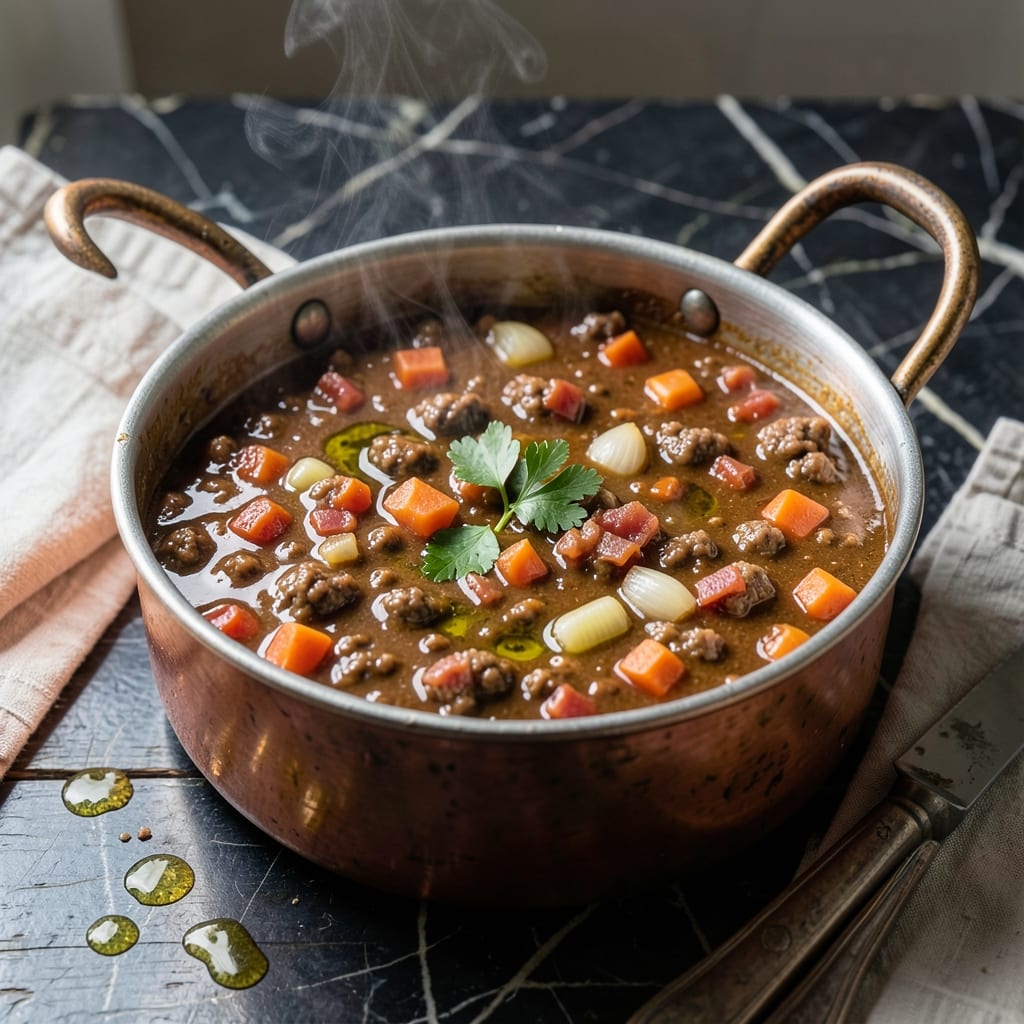
There’s a reason Mario Batali’s Bolognese stands apart—it’s built on patience and precision. This sauce transforms humble ground meats and tomatoes into something deeply rich and layered through a slow simmer. The technique ensures every spoonful delivers complex flavor.
What makes this version special is the balance of beef, pork, and pancetta, all cooked low and slow with aromatic vegetables and white wine. The process deepens the sauce’s character, creating a restaurant-quality base for pasta, lasagna, or even meatballs.
By the end, you’ll have a thick, velvety sauce with a depth that only time can achieve. The aroma alone signals its richness, while the texture clings perfectly to any dish it graces.
Store it for later or use it immediately—this sauce only gets better with time.
Ingredients for Bolognese Sauce Recipe Batali
Thirteen ingredients transform through patience into restaurant-quality depth and richness.
| Ingredient | Amount | Notes |
|---|---|---|
| Ground Beef Chuck 🥩 | ½ lb | 80/20 fat ratio preferred |
| Ground Pork 🥩 | ½ lb | Not lean, for fat content |
| Pancetta 🥓 | ¼ lb | Diced fine, or sub bacon |
| Yellow Onion 🧅 | 1 whole | Finely diced for soffritto |
| Carrots 🥕 | 2 whole | Peeled and finely diced |
| Celery Stalks 🌿 | 2 whole | Finely diced, leafy tops removed |
| Garlic Cloves 🧄 | 4 cloves | Minced to fine paste |
| Tomato Paste 🍅 | 2 tbsp | Double-concentrated preferred |
| Dry White Wine 🍷 | 1 cup | Drinkable quality, not cooking wine |
| Whole Milk 🥛 | 1 cup | Full-fat for richness |
| San Marzano Whole Peeled Tomatoes 🍅 | 1 can | 28 oz can, hand-crushed |
| Chicken Stock 🍲 | ½ cup | Low-sodium preferred |
| Extra-Virgin Olive Oil 🫒 | ¼ cup | For sautéing vegetables |
| Salt 🧂 | 1 tsp | Diamond Crystal kosher preferred |
| Black Pepper 🌶️ | ½ tsp | Freshly ground preferred |
[recipe_ingredient_scaler]
Optimal quality requires ground beef chuck with 80/20 fat ratio and ground pork with visible marbling. Source pancetta from an Italian deli or specialty grocer—Whole Foods carries a reliable version. For tomatoes, San Marzano DOP from a can is non-negotiable; their balanced acidity and sweetness define authentic Bolognese. The white wine should be a dry, drinkable Pinot Grigio or Sauvignon Blanc—never cooking wine.
Substituting pancetta? Thick-cut bacon works at a 1:1 ratio, though it imparts a smokier note. No white wine? Dry vermouth offers similar acidity. For the stock, vegetable broth can replace chicken in a pinch. Whole milk is essential for tenderness—do not substitute water or low-fat milk. Fresh tomatoes are unsuitable; only canned San Marzano provide the necessary concentration.
The sauce develops depth over 3-4 hours and improves with age. Store in airtight containers for up to 5 days refrigerated or 3 months frozen. Reheat gently to preserve texture. The flavor intensifies after 24 hours, making it ideal for advance preparation.
Why You’ll Love This Recipe
- One Pot Wonder: I toss everything in a single Dutch oven and let it simmer—no juggling multiple pans.
- Meat Lover’s Dream: The combo of beef chuck, pork, and pancetta creates a rich, layered depth that’s honestly hard to beat.
- Freezer Friendly: I double the batch and freeze half for those nights I just can’t with cooking.
- Weeknight Hero: Between us, it tastes like it took hours but I can have it ready before the pasta boils.
Step-by-Step Instructions for Bolognese Sauce
Master the technique behind this slow-simmered sauce for depth of flavor in every bite.
Step 1: Build the Soffritto Base
Heat the 0.25 cup Extra-Virgin Olive Oil in a heavy-bottomed pot over medium-low heat. Add the diced 1 whole Yellow Onion, 2 whole Carrots, and 2 whole Celery Stalks—this aromatic trio forms the classic soffritto. Cook for 8-10 minutes until the vegetables soften and turn translucent, stirring occasionally.
The soffritto should never brown; maintain a gentle heat to sweat the vegetables without color development. Add the minced 4 cloves Garlic Cloves and cook for 1 additional minute until fragrant. This foundation provides the sweet, earthy backbone that defines authentic Bolognese.
Step 2: Brown the Meats for Depth
Increase heat to medium-high and add the diced 0.25 lb Pancetta. Cook for 3-4 minutes until its fat renders and the pieces turn golden brown. Next, add the 0.5 lb Ground Beef Chuck and 0.5 lb Ground Pork, breaking them up with a wooden spoon.
Brown the meats thoroughly for 8-10 minutes, allowing a fond to develop on the pot’s bottom. This caramelized layer adds immense umami complexity. Season with the 1 tsp Salt and 0.5 tsp Black Pepper as the meats cook, ensuring even distribution.
Step 3: Deglaze and Develop Flavor
Stir in the 2 tbsp Tomato Paste and cook for 2-3 minutes until it darkens slightly—this step intensifies its sweetness and removes any raw flavor. Pour in the 1 cup Dry White Wine and scrape up all browned bits from the pot’s bottom with a wooden spoon.
Simmer the wine for 5-6 minutes until it reduces by half and the alcohol smell dissipates. This deglazing process dissolves the fond into the sauce, creating a rich, concentrated base. The mixture should look glossy and slightly thickened before proceeding.
Step 4: Simmer to Perfection
Add the hand-crushed 1 can San Marzano Whole Peeled Tomatoes and 0.5 cup Chicken Stock. Stir well to combine, then reduce heat to low. Pour in the 1 cup Whole Milk—this is Mario Batali’s signature touch, adding subtle sweetness and tenderizing the meat.
Partially cover the pot and simmer for 2.5-3 hours, stirring occasionally. The sauce should reduce by about a third, becoming thick enough to coat the back of a spoon. Taste and adjust seasoning as it cooks, adding more salt if needed.
Finish with a final stir, ensuring all components meld into a cohesive, rich sauce with visible meat and vegetable texture.
Pro Tips For Making Bolognese Sauce Recipe Batali
- Brown the Pancetta First: Render the pancetta slowly over medium-low heat until crisp—this builds the fat base that carries all the flavor in Batali’s version. I learned this the hard way after skipping it and ending up with a flat-tasting sauce.
- Grate the Carrots: Sounds weird, but it works: finely grating the carrots instead of dicing them helps them melt into the sauce, giving you sweetness without noticeable chunks. My grandmother swore by this, and she was right.
- Don’t Rush the Soffritto: Cook the onion, carrot, and celery mixture until it’s almost paste-like, about 15-20 minutes. After burning three batches, I finally figured out that patience here is what builds depth.
- Use Whole Milk: Skip the cream or half-and-half—Batali’s recipe calls for whole milk to tenderize the meat and balance the acidity. I was skeptical until I tried it, and now I’d never substitute.
Storing and Reheating This Recipe
Refrigerator Storage
Let the sauce cool for no more than 2 hours before transferring to airtight containers. I use glass mason jars for easy portioning. Store at 40°F or below for up to 5 days. The flavors actually improve as they meld together. ❄️
Freezer Storage
For longer storage, freeze in quart-sized freezer bags for up to 3 months without quality loss. Lay bags flat to save space and thaw faster. Leave 1 inch of headspace for expansion and squeeze out excess air to prevent freezer burn.
Stovetop Reheating
This is my preferred method for maintaining texture. Pour sauce into a heavy-bottomed pot, add ¼ cup water or chicken stock to prevent sticking, and heat over medium-low heat for 10-15 minutes. Stir occasionally and taste for seasoning. 🔥
Microwave Reheating
For quick meals, microwave individual portions covered with a damp paper towel. Heat on 70% power for 2-3 minutes, stir, then continue in 1-minute intervals until reaching 165°F. Add a splash of water if it looks dry.
Thawing Frozen Sauce
Transfer the frozen sauce to the refrigerator and allow it to thaw overnight, which takes about 8-12 hours. For faster thawing, place the sealed bag in a bowl of cold water, changing the water every 30 minutes until thawed completely.
Nutrition Facts
Frequently Asked Questions
Why does this recipe include milk?
Mario Batali’s milk addition tenderizes the meat and balances acidity from the tomatoes. It creates a velvety texture without curdling during the long simmer.
Can I substitute the pancetta?
Yes! Use thick-cut bacon at a 1:1 ratio, though it adds a smokier flavor. For a leaner option, skip it entirely, but expect less depth in the sauce.
How do I know when it’s done?
The sauce is ready after 2.5-3 hours when it coats the back of a spoon and has thickened by a third. The meats should be fully broken down into the rich base.
Can I make this ahead of time?
The flavors deepen after 24 hours. Store in airtight containers for up to 5 days refrigerated or 3 months frozen.

Trained in classic French technique but raised on slow-cooked ribs and spicy rubs, she blends culinary skill with smoke and soul.
- Recipe for Boneless Pork Chops in Cast Iron Skillet: Sear and Baste to Juicy Perfection - October 3, 2026
- Recipe for Boneless Cross Rib Roast: Slow-Roasted Beef with Herb Crust - October 3, 2026
- Hamburgers in Sauce Recipe Crock Pot: Slow-Cooked Savory Delight - October 3, 2026