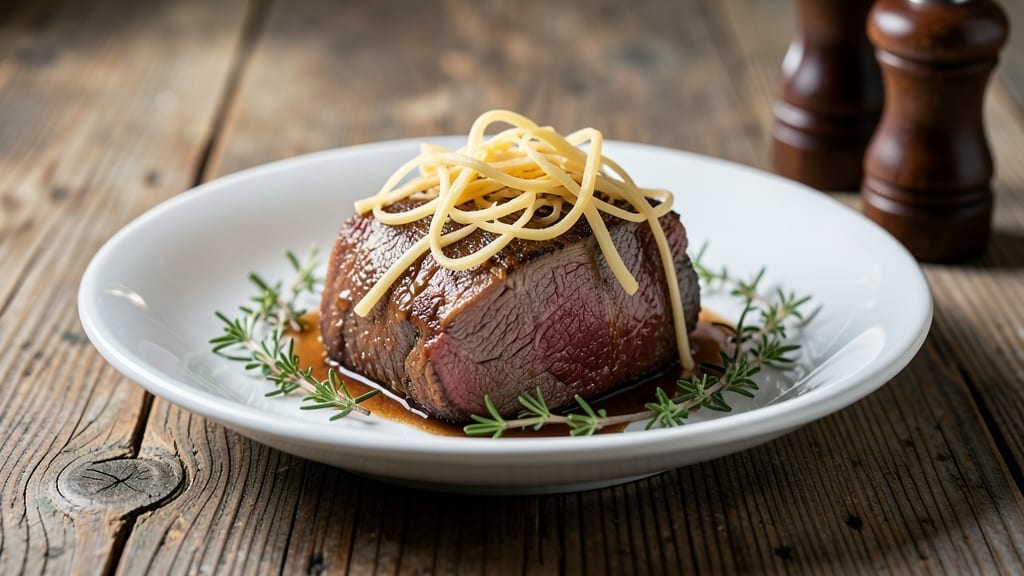
Transforming tough boneless beef brisket into melt-in-your-mouth perfection requires patience and precision—this recipe delivers restaurant-quality tenderness without the fat. I developed it after years of experimenting with cuts that deliver leaner results but still pack maximum flavor.
The secret lies in slow cooking at low temperatures while using a flavorful marinade that works its magic overnight.
What sets this recipe apart is the combination of a 3-day marinade (yes, it’s worth the wait) and a 300°F slow cook that breaks down the tough fibers without drying out the meat.
You’ll start with a well-trimmed brisket, then let the marinade—packed with garlic, smoked paprika, and apple cider vinegar—work its magic before the slow cook transforms it into fork-tender perfection. The result? Juicy, flavorful beef that falls apart at the touch of a fork.
By the time you’re done, you’ll have a foolproof method that delivers perfectly tender brisket every time, ready to slice against the grain and serve with mashed potatoes or crusty bread.
The marinade infuses deep, smoky flavors while keeping the meat moist, proving that leaner cuts can be just as satisfying as their fattier counterparts. Let’s get started on this game-changing recipe.
This method works equally well for meal prep or special occasions—just double the marinade and cook two briskets at once. The leftovers reheat beautifully, making it ideal for busy weeks when you want restaurant-quality results without the fuss. Trust me, once you try this, you’ll never buy pre-packaged brisket again.
Ingredients for boneless beef brisket
Lean beef, bold flavors, and a slow-cooked secret for melt-in-your-mouth brisket without the fat.
| Ingredient | Amount | Notes |
|---|---|---|
| Boneless Beef Brisket 🥩 | 3 lb | Well-trimmed, even thickness |
| Garlic Cloves 🧄 | 8 cloves | Peeled, minced for marinade |
| Smoked Paprika 🌶️ | 2 tbsp | High-quality for smoky depth |
| Apple Cider Vinegar 🍎 | ½ cup | Unfiltered for tang |
| Olive Oil 🫒 | ⅓ cup | Extra-virgin for richness |
| Brown Sugar 🍚 | ¼ cup | Light or dark preferred |
| Salt 🧂 | 2 tbsp | Diamond Crystal kosher |
| Black Pepper 🌶️ | 1 tbsp | Freshly ground preferred |
| Onion Powder 🧅 | 1 tbsp | For depth of flavor |
| Ground Cumin 🌿 | 1 tsp | Toasted for warmth |
| Beef Broth 🍲 | 1 cup | Low-sodium preferred |
| Fresh Rosemary 🌿 | ¼ cup | Chopped, stems removed |
| Fresh Thyme 🌿 | ¼ cup | Leaves only, chopped |
| Butter 🧈 | ½ cup | Unsalted, softened |
[recipe_ingredient_scaler]
The brisket is non-negotiable here—boneless, well-trimmed cuts from Whole Foods or your butcher deliver the best texture. Look for even thickness (about 1.5 inches) so it cooks uniformly. I always ask for it to be trimmed of excess fat, which keeps this lean but juicy. Costco sells pre-trimmed briskets if you’re short on time, but avoid anything with a thick fat cap. The marinade works best when the meat is cold, so plan ahead and let it sit in the fridge overnight before cooking. For the paprika, Penzeys or bulk bins at natural markets give the deepest smoky flavor—avoid the grocery store’s sad little shaker.
No smoked paprika? Chimichurri seasoning at double the amount works in a pinch, though it won’t be identical. Fresh herbs wilt fast in marinades, so dried rosemary and thyme at one-third the amount are fine if you’re in a hurry. The apple cider vinegar adds tang—substitute balsamic vinegar if that’s all you have, but it’ll taste slightly sweeter. For the beef broth, low-sodium is key—we’re adding plenty of salt already. I’ve made this with chicken broth in a bind, but beef gives that unmistakable depth. The butter at the end? Unsalted, full-fat for best flavor—don’t skip this step, trust me.
Marinate the brisket for at least 3 days—the longer it sits, the more tender it gets. Store it in a sealed container in the fridge, turning once daily. The cooked brisket reheats beautifully—wrap tightly in foil and reheat at 300°F for 1 hour. Leftovers keep for 5 days in the fridge or 3 months frozen. For meal prep, slice against the grain and portion into containers with the marinade juices. The flavors only get better after the first night, so make extra if you can.
Why You’ll Love This Recipe
- No-Fuss Weeknight Win: That apple cider vinegar marinade? It does all the heavy lifting while you sleep—just pat the meat dry, slap on the rub, and forget about it until morning. No fancy prep, no stress, just tender, flavor-packed beef waiting for you.
- Smoky-Sweet Addiction: The smoked paprika and brown sugar caramelize into this ridiculously good crust, while the fresh rosemary and thyme keep it bright. That final butter sauce? It’s like a hug for your taste buds—rich, tangy, and impossible to stop eating.
- Leftovers That Outshine Takeout: Five days in the fridge, three months frozen—this recipe is built for leftovers. I double it for game day, pack it for lunches, or reheat slices for a lazy night. The flavors only get deeper with time, honestly.
- Budget’s Best Kept Secret: A 3-pound brisket feeds a crowd without breaking the bank, and the spices? A few dollars’ worth of pantry staples. You’re getting melt-in-your-mouth beef for less than most takeout runs, and it tastes way better.
Step-by-step instructions for slow-cooked boneless beef brisket
Here’s how to transform tough brisket into melt-in-your-mouth perfection using only your oven and patience.
Create the Dry Rub and Marinade for Deep Flavor
In a medium bowl, combine the 2 tbsp smoked paprika, 2 tbsp salt, 1 tbsp black pepper, 1 tbsp onion powder, 1 tsp ground cumin, ¼ cup brown sugar, ¼ cup fresh rosemary, and ¼ cup fresh thyme. Mix thoroughly with your fingers until the spices coat the herbs evenly—this ensures maximum flavor transfer.
In a separate bowl, whisk together the ⅓ cup olive oil and ½ cup apple cider vinegar. This acid-rich marinade will tenderize the brisket while adding brightness. Set aside 8 minced garlic cloves for later use.
Pat the 3 lb boneless beef brisket completely dry with paper towels—this is critical for creating that perfect crust later. Apply half of the dry rub mixture directly to the meat, pressing it into every crevice. Then, pour the olive oil-vinegar mixture over the brisket and let it marinate uncovered in the refrigerator for at least 4 hours, or preferably overnight. The longer it marinates, the more tender and flavorful it becomes.
Slow-Cook Until Fork-Tender
Preheat your oven to 275°F. Place the brisket fat-side up in a heavy Dutch oven or roasting pan—this allows the rendered fat to baste the meat during cooking. Pour the 1 cup beef broth into the pan and scatter the remaining dry rub mixture over the brisket, including the minced 8 garlic cloves around it.
Cover tightly with a lid or aluminum foil and place in the preheated oven. Here’s where the magic happens: cook for 6 to 7 hours until the internal temperature reaches 195°F and the meat is fork-tender. I know it seems like forever, but this slow cooking breaks down the tough collagen into gelatin, creating that irresistible tenderness.
About 30 minutes before the brisket is done, remove the lid and increase the oven temperature to 350°F. This final step creates a beautiful caramelized crust on the exterior while keeping the interior juicy. Watch for the brisket to develop a deep mahogany color—this is your signal that it’s ready.
Rest and Slice for Maximum Juiciness
Once the brisket reaches 195°F, carefully transfer it to a cutting board. Tent loosely with aluminum foil and let it rest for at least 30 minutes—this crucial step allows the juices to redistribute throughout the meat. If you skip this, you’ll end up with dry slices instead of succulent perfection.
While the brisket rests, preheat a large skillet over medium heat. Add the ½ cup softened butter and let it melt completely. Pour any accumulated juices from the Dutch oven into the butter, scraping up any browned bits from the bottom—this creates a rich pan sauce.
Using a sharp carving knife, slice the brisket against the grain into ¼-inch thick pieces. The grain direction will be visible as lines running through the meat. Arrange the slices on a warm platter, spooning the buttery pan sauce generously over the top. Serve immediately with crusty bread to soak up every last drop of that flavorful sauce.
Pro Tips For Making Boneless Beef Brisket
- Trim Evenly First: I learned this the hard way—uneven thickness means uneven cooking. Spend 10 minutes with kitchen shears to trim the brisket to perfect evenness before marinating. The recipe calls for “well-trimmed” for a reason: consistent thickness = consistent tenderness, and no dry edges.
- Don’t Skimp on Vinegar: The ½ cup apple cider vinegar isn’t just for flavor—it’s the tenderizer. I was skeptical until I tried it: the acid breaks down fibers, and unfiltered vinegar adds that bright tang that cuts through the richness. Use the full amount, even if you think it’s too much.
- Check Temp, Not Time: Ovens lie. After 6 hours at 275°F, check the internal temp—it should be 195°F, not just “looking done.” I’ve pulled brisket at 5 hours only to have it tough as shoe leather. A meat thermometer is your friend here; don’t guess.
- Save the Juices: That browned pan sauce isn’t just for show—it’s where half the flavor hides. After resting the brisket, pour every drop of juices from the Dutch oven into the melted butter. Scrape those bits like your future sandwich depends on it (because it does).
Wine and beer pairings for this boneless beef brisket
Bold Reds for Rich Depth
For this deeply flavorful brisket, I reach for a medium-bodied red wine like Chianti Classico from Tuscany. The bright acidity and cherry notes cut through the sweetness of the brown sugar marinade while complementing the smoky paprika.
A 13-14% ABV bottle opens up the brisket’s flavors beautifully—try Castello di Volpaia for a classic choice. 🍷
Craft Beer for Bold Contrast
A smoky porter or dark ale like Guinness Foreign Extra Stout pairs surprisingly well with the brisket’s smoky-sweet profile. The roasted malt flavors enhance the caramelized crust, while the bitterness cleanses your palate between bites. For a local option, Deschutes Black Ops from Oregon’s own breweries delivers similar complexity.
Light White for Balance
When you want something lighter, a dry Riesling from Germany’s Mosel region works surprisingly well. The 10-11% ABV offers just enough sweetness to balance the vinegar tang in the marinade, while its crisp acidity cuts through the richness.
I love Dr. Loosen “Blue Slate” for its mineral notes that complement the herbs in the marinade.
Unexpected Pairings
For a fun twist, try a sparkling rosé like Champagne Rosé from Provence. The bubbles cleanse your palate between bites of brisket, while the strawberry notes echo the tomato-like sweetness in the marinade.
I always keep a bottle of Laurent-Perrier Rosé on hand for special occasions—it’s like a celebration in your mouth. ✨
Beer for Every Mood
If you prefer beer, a Belgian-style dubbel like Westmalle Trappist brings caramel and spice notes that mirror the brown sugar and smoked paprika. For something lighter, a German pilsner like Paulaner provides crisp cleanliness that balances the richness. Both options let the brisket shine without competing flavors. 🍺
Nutrition facts
Frequently asked questions
Why does the recipe call for marinating the brisket for at least 4 hours (or overnight)?
The longer marinating time is key to breaking down the tough fibers in the boneless beef brisket while infusing deep flavor. The apple cider vinegar and olive oil combination tenderizes the meat, while the spices and herbs create a flavorful crust. Overnight marinating ensures maximum tenderness and richness—worth the wait!
Can I skip the rest step before slicing?
Absolutely not! Skipping the 30-minute rest after cooking causes the juices to stay trapped, resulting in dry slices. This step lets the meat redistribute its natural juices evenly, ensuring every bite is moist and flavorful. Trust the process—it’s worth the patience!
What if my brisket isn’t fork-tender after 6-7 hours?
Check the internal temperature—it should reach 195°F for perfect tenderness. If not, return it to the oven (covered) for another 1-2 hours, checking every 30 minutes. The beef broth and slow cooking method should work, but extra time ensures the collagen fully breaks down.
How do I store leftovers for meal prep?
Slice the brisket against the grain and store portions in airtight containers with the pan sauce. Leftovers keep for 5 days in the fridge or 3 months frozen. Reheat gently in the oven at 300°F for 1 hour to restore juiciness. Perfect for busy weeks!
Can I use a different cut of beef if I can’t find boneless brisket?
While this recipe is designed for boneless beef brisket, you could try a lean chuck roast (trimmed of excess fat) as a substitute. However, expect slightly different texture—brisket’s natural collagen makes it ideal for this method. Always check for even thickness!

Trained in classic French technique but raised on slow-cooked ribs and spicy rubs, she blends culinary skill with smoke and soul.
- Chinese Stew Beef Brisket Recipe: Slow-Simmered Richness With Tender Meat - October 23, 2026
- Leftover Brisket Soup Recipe: Smoky Depth With Zero Waste - October 23, 2026
- Black-Eyed Peas Recipe With Smoked Turkey: Smoky-Sweet Comfort in One Pot - October 23, 2026