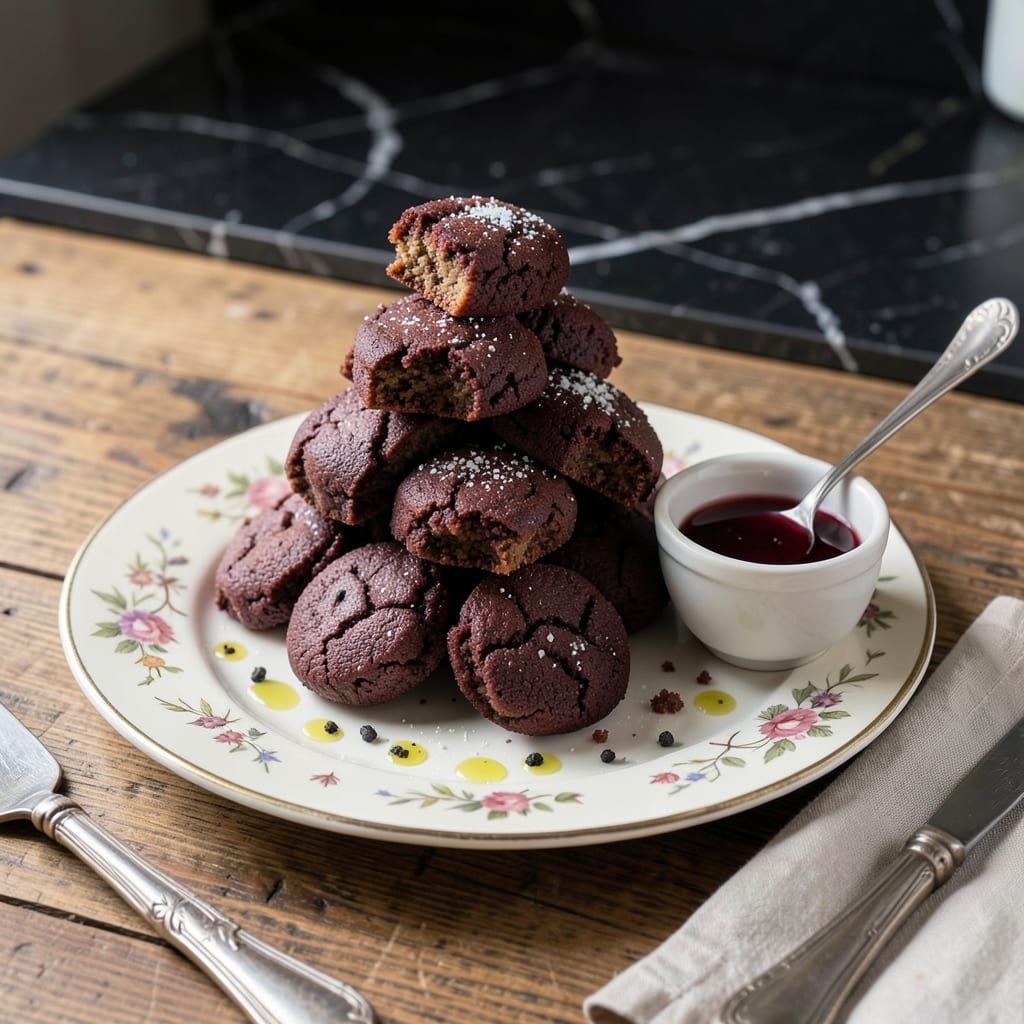
This French-inspired cookie brings a touch of Bordeaux sophistication to your dessert table with a subtle wine note. I developed this recipe after returning from a trip to France, determined to recreate that elegant balance of flavors.
The secret is reducing red wine into a syrup that concentrates its rich, fruity essence without overpowering the buttery cookie base. This technique transforms a simple dough into something truly special and memorable.
What emerges from the oven is a tender cookie with a delicate crumb, lightly scented with wine and featuring a golden-brown edge. The wine reduction adds depth without being identifiable as alcohol.
Perfect for pairing with coffee or dessert wine, these cookies offer a refined twist on a classic treat. The process is straightforward, with impressive results every time.
Ingredients for Bordeaux Cookie
A refined blend of pantry staples and one special ingredient creates these elegant wine-infused cookies.
| Ingredient | Amount | Notes |
|---|---|---|
| Red Wine 🍷 | 1 cup | Dry Bordeaux or Cabernet Sauvignon |
| Granulated Sugar 🍚 | ¾ cup | Fine white sugar preferred |
| Unsalted Butter 🧈 | 1 cup | Room temperature, high-quality |
| All-Purpose Flour 🌾 | 2 ½ cups | Sifted for light texture |
| Large Egg 🥚 | 1 whole | Room temperature preferred |
| Vanilla Extract 🌿 | 1 tsp | Pure extract for best flavor |
| Baking Powder 🧂 | ½ tsp | Fresh for optimal rise |
| Salt 🧂 | ¼ tsp | Fine sea salt recommended |
| Powdered Sugar 🍚 | ½ cup | For dusting finished cookies |
| Cornstarch 🌾 | 1 tbsp | For tender cookie texture |
[recipe_ingredient_scaler]
The wine is the soul of this recipe. Use a dry Bordeaux or Cabernet Sauvignon—something you’d actually drink. Cheap cooking wine lacks the depth needed. Total Wine or BevMo have good options, but even a decent grocery store Bordeaux works. Reduce it down to a syrup (about 2-3 tbsp) to concentrate the flavor without alcohol overpowering the cookies.
No red wine? Concord grape juice reduced with a splash of balsamic vinegar gets surprisingly close. For a non-alcoholic but authentic touch, alcohol-free Cabernet (like Freixenet) works well. The butter must be high-quality European-style—Plugrá or Kerrygold give that rich, creamy base these cookies need. Substituting margarine will change the texture entirely.
The dough keeps 3 days refrigerated or 1 month frozen. Baked cookies stay fresh 5 days in an airtight container. Dust with powdered sugar just before serving (it dissolves into the cookies if added too early).
Why You’ll Love This Recipe
- One Bowl Wonder: I just dump everything in, mix, and bake—no fancy steps, just a straightforward dough with red wine doing all the heavy lifting.
- Wine-Infused Magic: The Bordeaux gives these cookies a deep, fruity richness that pairs perfectly with the buttery crunch.
- Dinner Party Star: Honestly, these look fancy enough for guests but are simple enough for a solo treat with tea.
- Budget-Friendly Batch: A bottle of wine stretches across multiple batches, and the rest are pantry staples I always have on hand.
Step-by-Step Instructions for Bordeaux Cookies
Master the technique for these sophisticated wine-infused cookies with professional precision.
Step 1: Reduce the Red Wine
In a small saucepan, bring the 1 cup Red Wine to a gentle simmer over medium heat. Reduce the liquid by half, which should take approximately 8-10 minutes. This concentration intensifies the wine flavor and removes the alcohol content, leaving behind a rich, syrupy reduction.
Watch carefully as it nears completion—the reduction will thicken slightly and coat the back of a spoon. Remove from heat immediately once reduced by half to prevent over-concentration. Set aside to cool completely before using in the dough.
Step 2: Cream Butter and Sugars
In a stand mixer fitted with the paddle attachment, beat the 1 cup Unsalted Butter and 0.75 cup Granulated Sugar on medium speed for 3-4 minutes until light and fluffy. The mixture should turn pale yellow and nearly double in volume, indicating proper aeration.
This creaming process incorporates air, which contributes to the cookies’ tender texture. Scrape down the bowl periodically to ensure even mixing. The butter should be at room temperature—about 65-68°F—to cream properly without melting.
Step 3: Incorporate Dry and Wet Ingredients
In a separate bowl, whisk together the 2.5 cups All-Purpose Flour, 0.5 tsp Baking Powder, 0.25 tsp Salt, and 1 tbsp Cornstarch. The cornstarch creates a more delicate crumb, while the baking powder provides subtle lift.
Add the cooled wine reduction, 1 whole Large Egg, and 1 tsp Vanilla Extract to the butter mixture, combining on low speed until just incorporated. Gradually add the dry ingredients, mixing until the dough just comes together. Avoid overmixing, which develops gluten and toughens the cookies.
Step 4: Chill and Shape the Dough
Divide the dough into two portions, flatten into discs, and wrap in plastic. Refrigerate for at least 2 hours or up to 24 hours. Chilling firms the dough, making it easier to handle and preventing excessive spreading during baking.
When ready to bake, preheat the oven to 350°F and line baking sheets with parchment paper. Roll the dough to ¼-inch thickness on a lightly floured surface and cut into desired shapes. The dough should be firm but pliable—if too sticky, chill for an additional 30 minutes.
Step 5: Bake and Finish
Bake for 10-12 minutes until the edges are just beginning to turn light golden brown. The centers may still appear soft but will set as they cool. Rotate the pans halfway through baking for even browning.
Cool the cookies on the baking sheet for 5 minutes before transferring to a wire rack. Once completely cooled, dust lightly with 0.5 cup Powdered Sugar for an elegant finish. The cookies will keep in an airtight container for up to 5 days.
Pro Tips For Making Bordeaux Cookie
- Reduce the Wine: Simmer the red wine first until it thickens to a syrup—about 10-12 minutes on medium heat. I learned this the hard way after my first batch turned out soggy instead of rich and chewy.
- Soften the Butter: Take the butter out 30 minutes before starting, or microwave in 5-second bursts until just soft enough to press a finger into. Cold butter makes dense cookies, and melted butter flattens them.
- Skip the Substitutes: Use a bold, dry red like Cabernet or Merlot—sweet or cheap wine leaves the cookies bland. After ruining a batch with cooking wine, I finally accepted that quality matters here.
- Chill the Dough: Pop the dough in the fridge for at least 30 minutes before baking. My grandmother swore by this, and she was right: it stops the cookies from spreading too thin and losing that buttery texture.
Storing and Reheating This bordeaux cookie
Room Temperature Storage
Let these cookies cool completely before storing. Place in an airtight container with parchment between layers to prevent sticking. They’ll stay fresh for up to 5 days at room temperature. I’ve found they taste even better the next day as the flavors meld. 💛
Refrigerator Storage
For longer storage, refrigerate in an airtight container for up to 1 week. The cold actually enhances the wine notes, making them more pronounced. Just bring to room temperature before serving to restore their tender texture.
Freezing the Dough
Wrap dough discs tightly in plastic wrap and place in a freezer bag. They’ll keep for up to 1 month. Thaw overnight in the fridge before rolling and baking. This is perfect for when I want fresh cookies on demand.
Freezing Baked Cookies
Baked cookies freeze beautifully for up to 2 months. Layer between parchment in a freezer-safe container. To serve, thaw at room temperature for 1-2 hours or warm briefly in a 300°F oven for 5 minutes. ❄️
Reheating for Freshness
To revive day-old cookies, place on a baking sheet in a 300°F oven for 3-5 minutes. This restores their just-baked texture. For a quick fix, microwave for 10-15 seconds—just don’t overdo it or they’ll get chewy.
Dusting Before Serving
Always dust with powdered sugar just before serving. If added too early, it dissolves into the cookies. I use a fine-mesh sieve for an even, professional-looking finish. This little touch makes them look as good as they taste.
Nutrition Facts
Frequently Asked Questions
Can I use a different type of wine?
Yes, but stick with dry reds like Cabernet Sauvignon. Avoid sweet wines as they’ll make the cookies too sugary. The wine reduces by half, so 1 cup yields about 2-3 tablespoons of concentrated syrup.
Why do I need to chill the dough?
Chilling for at least 2 hours prevents excessive spreading. It also lets the wine flavor meld with the butter and sugar. Don’t skip this step, or your cookies may lose their shape.
How do I know when they’re done baking?
Bake at 350°F for 10-12 minutes until edges are light golden brown. The centers may look soft but will set as they cool on the pan.
Can I make these without alcohol?
Yes! Substitute Concord grape juice reduced with a splash of balsamic vinegar. It mimics the wine’s depth without alcohol. Reduce it the same way for best results.

Trained in classic French technique but raised on slow-cooked ribs and spicy rubs, she blends culinary skill with smoke and soul.
- Recipe for Boneless Pork Chops in Cast Iron Skillet: Sear and Baste to Juicy Perfection - October 3, 2026
- Recipe for Boneless Cross Rib Roast: Slow-Roasted Beef with Herb Crust - October 3, 2026
- Hamburgers in Sauce Recipe Crock Pot: Slow-Cooked Savory Delight - October 3, 2026