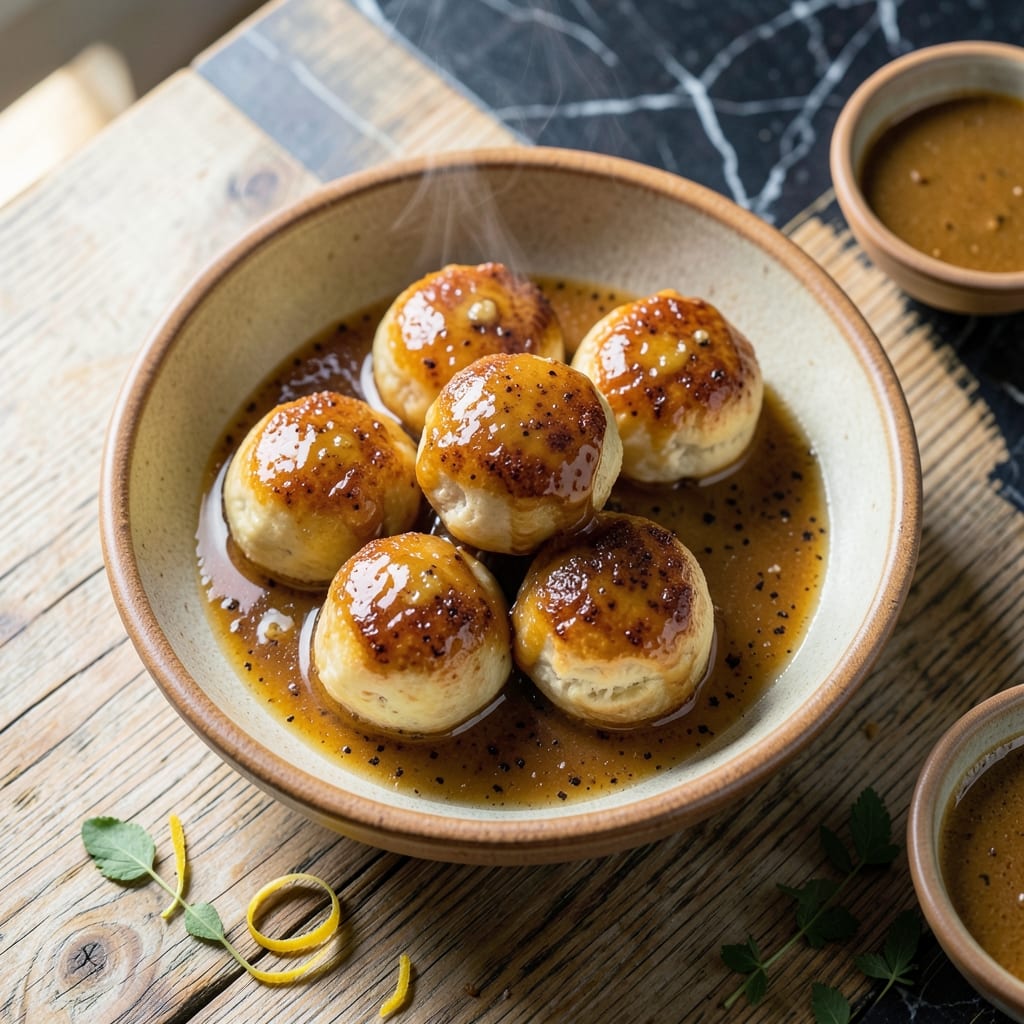
This pani popo transforms store-bought Hawaiian rolls into a decadent, coconut-soaked delight that’s impossible to resist.
The secret lies in a warm coconut milk bath that infuses each roll with sweet, tropical flavor before baking. A simple syrup glaze adds the finishing touch, creating a sticky, glossy exterior that’s as beautiful as it is delicious.
What emerges from the oven is a pull-apart bread so tender and rich, it melts in your mouth. The rolls stay soft for days, making this perfect for gatherings or weekend treats.
Ready in under an hour with minimal effort, this recipe delivers restaurant-quality results at home. The aroma alone will have everyone gathered around the table.
Ingredients for Pani Popo Recipe with Hawaiian Rolls
Transform store-bought rolls into a tropical treat with these simple, rich ingredients.
| Ingredient | Amount | Notes |
|---|---|---|
| Hawaiian Rolls 🍞 | 12 pieces | Store-bought, unsliced preferred |
| Coconut Milk 🥥 | 1 cup | Full-fat, canned for richness |
| Granulated Sugar 🍚 | ½ cup | For sweetening coconut bath |
| Unsalted Butter 🧈 | ½ cup | Melted, for coconut mixture |
| Brown Sugar 🟤 | ¼ cup | Packed, for caramelization |
| Vanilla Extract 🌿 | 1 tsp | Pure extract preferred |
| Salt 🧂 | ¼ tsp | Balances sweetness |
| Water 💧 | 2 tbsp | For syrup consistency |
| All-Purpose Flour 🌾 | 1 tbsp | Thickens glaze slightly |
| Heavy Cream 🥛 | 2 tbsp | Optional, for richer glaze |
[recipe_ingredient_scaler]
The Hawaiian rolls are the foundation—King’s Hawaiian is the classic choice, but any sweet dinner roll works. The coconut milk must be full-fat (look for Thai Kitchen or Native Forest brands) for that ultra-creamy texture. Don’t substitute light coconut milk here; it’ll taste watery. Brown sugar adds depth, but dark brown gives more molasses notes than light if you want to go deeper.
No coconut milk? Heavy cream with coconut extract can mimic the flavor (use 1 tsp extract per cup). Out of brown sugar? White sugar plus 1 tbsp molasses works. Vanilla is flexible—almond extract at half the amount adds a nice twist. For a dairy-free version, swap butter for coconut oil, which actually enhances the tropical vibe.
The rolls are best day-of but stay soft for 2-3 days in an airtight container. Reheat in the microwave with a damp paper towel to revive. The coconut mixture can be prepped ahead and stored in the fridge for up to 2 days—just warm it before using.
Why You’ll Love This Recipe
- 5-Minute Assembly: I just toss the Hawaiian rolls into a pan, pour over the coconut milk and sugar mixture, and let the oven do the rest.
- Coconut-Caramel Bliss: That warm, gooey coconut caramel soaks right into the soft rolls—sweet with a hint of buttery richness.
- Crowd-Pleasing Treat: I’ve served this at potlucks and weekend brunches, and it’s always the first thing to disappear.
- Leftovers? Still Amazing: Honestly, they taste even better the next day—just reheat and that caramel gets stickier.
Step-by-Step Instructions for Pani Popo with Hawaiian Rolls
This method makes the process simple while delivering maximum coconut flavor in every bite.
Step 1: Prepare the Coconut Mixture
In a medium saucepan, melt the 0.5 cup Unsalted Butter over medium heat. Once melted, add the 1 cup Coconut Milk, 0.5 cup Granulated Sugar, and 0.25 cup Brown Sugar. Stir until the sugars dissolve completely—this takes about 2-3 minutes.
Here’s the thing—you want the mixture to be smooth and fully integrated before moving on. I always use full-fat canned coconut milk for that rich, creamy texture that makes this dish so special. Don’t let it boil; just heat it until everything melts together beautifully.
Step 2: Thicken and Flavor the Syrup
In a small bowl, whisk together the 1 tbsp All-Purpose Flour and 2 tbsp Water until smooth. Slowly pour this slurry into the coconut mixture while stirring constantly. This prevents lumps and ensures a silky consistency.
Add the 1 tsp Vanilla Extract and 0.25 tsp Salt, then stir for another 1-2 minutes until the mixture thickens slightly. It should coat the back of a spoon but still be pourable. If you’re using it, stir in the 2 tbsp Heavy Cream now for extra richness.
Step 3: Assemble and Soak the Rolls
Arrange the 12 pieces Hawaiian Rolls in a single layer in a 9×13-inch baking dish. I prefer unsliced rolls because they hold their shape better during soaking. Pour the warm coconut mixture evenly over the rolls, making sure to cover each one completely.
Let them soak for at least 15 minutes at room temperature. You’ll see the rolls start to absorb the liquid—they should plump up slightly but not fall apart. For even better flavor, you can cover and refrigerate them overnight, but I usually can’t wait that long.
Step 4: Bake to Golden Perfection
Preheat your oven to 350°F. Once the rolls have soaked, bake them uncovered for 20-25 minutes. You’re looking for the tops to turn a beautiful golden brown and the sauce to bubble slightly around the edges.
Real talk: don’t walk away during the last 5 minutes. The sugars in the coconut mixture can go from perfectly caramelized to burnt quickly. If the tops start browning too fast, tent the dish with foil for the remaining time.
Pro Tips For Making Pani Popo Recipe With Hawaiian Rolls
- Warm the Coconut Milk: Gently heat the coconut milk for 20-30 seconds in the microwave before mixing—cold milk slows down sugar dissolving and makes the syrup grainy.
- Cut Rolls Deep: Slice the Hawaiian rolls almost all the way through, leaving just ½ inch intact at the bottom so they pull apart easily after baking without falling apart.
- Skip the Boil: I learned this the hard way—don’t boil the sugar mixture or it’ll crystallize; just heat until the butter melts and sugars dissolve, about 180°F.
- Use Day-Old Rolls: Sounds weird, but it works: slightly stale Hawaiian rolls soak up the coconut syrup better than fresh ones, giving you that perfect gooey texture.
Storing and Reheating This pani popo recipe with hawaiian rolls
Room Temperature Storage
Let your pani popo cool completely at room temperature, then transfer to an airtight container. They’ll stay soft and moist for 2-3 days at room temp. I like using a glass container with a snap-tight lid to keep them fresh. 💡
Refrigerator Storage
For longer storage, refrigerate in an airtight container for up to 5 days. The coconut flavor deepens over time, making them even more delicious. Just be sure to bring them to room temperature before reheating.
Freezing for Later
To freeze, wrap individual rolls in plastic wrap, then place in a freezer-safe bag for up to 3 months. This prevents freezer burn and keeps them tasting fresh. Thaw overnight in the fridge before reheating.
Oven Reheating
Preheat your oven to 300°F, wrap the rolls in aluminum foil, and warm for 10-15 minutes. This method restores their softness and revives the coconut glaze beautifully. ❄️
Microwave Reheating
Place a roll on a microwave-safe plate, cover with a damp paper towel, and heat on medium power for 20-30 seconds. The steam keeps them moist. Avoid high power to prevent drying out.
Reviving the Glaze
If the glaze thickens too much after storage, warm 2 tbsp coconut milk and drizzle it over the rolls before reheating. This brings back that sticky, glossy finish we all love.
Nutrition Facts
Frequently Asked Questions
Can I use homemade dinner rolls instead?
Yes, but Hawaiian rolls add the perfect sweetness. Homemade rolls may need extra sugar in the coconut mixture to match the flavor.
Why did my rolls turn out dry?
Overbaking or insufficient soaking time are common culprits. Ensure rolls soak for at least 15 minutes and bake only until golden brown.
Can I make this ahead of time?
Assemble and soak the rolls overnight in the fridge. Bake in the morning for fresh, warm pani popo.
What if I don’t have coconut milk?
Heavy cream with 1 tsp coconut extract per cup works as a substitute. The flavor won’t be as rich but still delicious.

Trained in classic French technique but raised on slow-cooked ribs and spicy rubs, she blends culinary skill with smoke and soul.
- Recipe for Boneless Pork Chops in Cast Iron Skillet: Sear and Baste to Juicy Perfection - October 3, 2026
- Recipe for Boneless Cross Rib Roast: Slow-Roasted Beef with Herb Crust - October 3, 2026
- Hamburgers in Sauce Recipe Crock Pot: Slow-Cooked Savory Delight - October 3, 2026