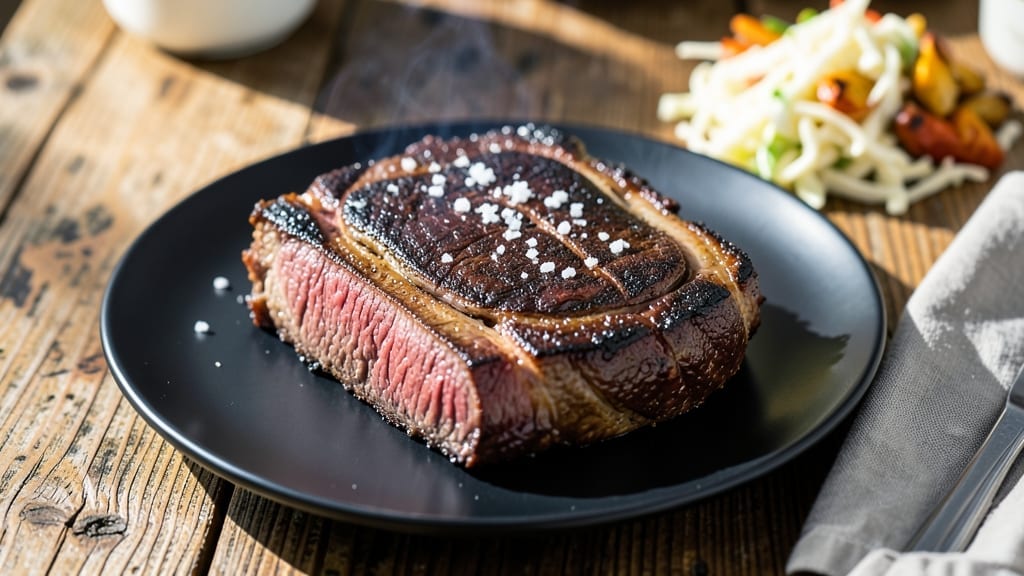
This Bradley smoker beef brisket recipe transforms tough cuts into melt-in-your-mouth perfection with just wood smoke and time. The secret? A slow cook that breaks down collagen while building that iconic bark.
I’ve been perfecting this for years, and it never fails to impress—even picky eaters ask for seconds. That first pull of the bark? Worth every minute.
We’re talking fall-apart tenderness with a crust so crispy it shatters like glass. The Bradley’s consistent heat (225°F) does all the work while you handle prep—seasoning with just salt and pepper, then letting the smoker’s magic turn it into a masterpiece.
No fancy rubs, no stress—just pure, smoky beef that tastes like it came from a pitmaster’s dream.
The best part? You’ll know it’s ready when the internal temp hits 203°F and the probe slides in like butter. Rest it for an hour, slice against the grain, and serve with pickles, buns, and extra sauce. This brisket is the centerpiece that makes every meal feel like a celebration.
Fair warning: leftovers are legendary. Double the recipe—you’ll want it. Let’s get smoking.
Ingredients for bradley smoker beef brisket
Big brisket, big smoke, big flavor—just salt, pepper, and patience.
| Ingredient | Amount | Notes |
|---|---|---|
| Beef Brisket (whole packer cut) 🥩 | 8 lb | Fat cap left intact for flavor |
| Kosher Salt 🧂 | 2 tbsp | Diamond Crystal preferred |
| Black Pepper (freshly ground) 🌶️ | 1 ½ tbsp | Coarse grind preferred |
| Wood Chunks (hickory or oak) 🪵 | 2 lb | Green wood preferred |
| Apple Cider Vinegar 🍎 | ½ cup | For spritzing bark |
| Butcher Paper 📄 | 1 sheet | For wrapping brisket |
| Meat Thermometer 📊 | 1 whole | Instant-read preferred |
| Pickles (sliced) 🥒 | 1 cup | For serving |
| Hamburger Buns 🥖 | 12 whole | Toasted for serving |
| Beef Brisket Rub (homemade or store-bought) 🌿 | ¼ cup | Optional for extra flavor |
[recipe_ingredient_scaler]
The brisket is the star here—8 pounds of whole packer cut with fat cap intact is your best bet. Look for USDA Choice or Prime at Costco or ButcherBox—the fat marbling makes all the difference. If you can’t find whole packer, ask your butcher to trim the fat to about 1/4 inch. Freshly ground pepper is non-negotiable; pre-ground loses its punch within months. The wood chunks? Hickory or oak is classic, but fruitwoods like cherry add sweetness if you’re feeling adventurous. I always buy green wood—it smokes better than dried-out stuff.
No apple cider vinegar? Lemon juice or even a splash of white wine vinegar works in a pinch. Want to skip the optional rub? Just double your salt and pepper—it’ll still turn out amazing. Your butcher paper should be parchment-style (not waxed) for the wrap. The meat thermometer is a must—cheap ones give false readings. For pickles, dill or bread-and-butter work best—avoid the sweet varieties. If you’re short on buns, toasted baguette slices are a great substitute.
This brisket needs space—don’t crowd the smoker. Keep it at 225°F with a smoke ring of 1-2 inches for best results. The butcher paper wrap happens around 5 hours in—don’t rush it. Once pulled, tent loosely with foil and let rest 1 hour before slicing. Store leftovers in airtight containers—they’ll keep for 5 days in the fridge or 3 months frozen. I always portion mine into 4-ounce servings for easy lunches. The bark? Crispy for days—save scraps for sandwiches.
Why You’ll Love This Recipe
- No-Fuss Smoking: Honestly, this brisket takes the guesswork out of smoking—just season with that simple mix of kosher salt and freshly ground black pepper, fire up the Bradley with hickory or oak wood chunks, and let it do the work. The butcher paper wrap is the real secret, keeping things low-effort but high-reward.
- Smoky Perfection: That crispy bark from the brisket rub paired with the creamy, smoky center? Chef’s kiss. The apple cider vinegar spritz at the end gives it just enough tang to balance the richness—every bite is addictive.
- Feeds a Crowd (and Leftovers): Twelve buns? That’s enough for a small army—or at least three hearty meals for me. The leftovers? Five days in the fridge or three months frozen—because this brisket is that good, you’ll want seconds.
- Budget-Friendly Luxury: An 8-pound brisket might seem pricey, but it stretches across sandwiches, tacos, or even pulled-pork bowls for days. No fancy ingredients, just smart technique—your wallet and taste buds will thank you.
Step-by-step instructions for Bradley smoker beef brisket
Here’s how to transform that tough brisket into melt-in-your-mouth perfection using your Bradley smoker.
Prep the Brisket for Maximum Flavor and Texture
Start by removing the brisket from the refrigerator and letting it sit at room temperature for about 1 hour. This ensures even cooking throughout. While it warms, trim any excess fat from the fat cap, leaving about ¼-inch thickness. The fat cap helps protect the meat during smoking, but too much can prevent proper smoke penetration.
Generously apply the ¼ cup beef brisket rub to all sides of the brisket, pressing it into the meat so it adheres well. This rub will create a flavorful bark while keeping the interior tender. If you’re using the 2 tbsp kosher salt and 1½ tbsp black pepper (freshly ground) separately, combine them now to make your own rub—just mix them in a small bowl before applying.
Set Up the Bradley Smoker for Low and Slow Cooking
Fill the Bradley smoker’s firebox with the 2 lb wood chunks (hickory or oak). Light the wood and let it burn until you see clean, thin blue smoke—this is your signal that the smoker is ready. Set the temperature to 225°F and let it stabilize. This low-and-slow approach is key to achieving that fall-apart tenderness without drying out the meat.
Once the smoker reaches 225°F, place the brisket fat-side up on the grill grate. The fat will render slowly, basting the meat and contributing to that rich, smoky flavor. Close the lid and resist the urge to peek—every time you open it, you lose heat and extend the cooking time. Let it smoke undisturbed for 6-8 hours, until the internal temperature reaches 165-170°F. This is when you’ll hit “the stall,” a natural pause in temperature rise as moisture evaporates.
Wrap and Finish for Ultimate Tenderness
When the brisket hits 165-170°F, it’s time to wrap it in the 1 sheet butcher paper. This technique, known as the “Texas crutch,” helps push through the stall while preserving that beautiful bark. Fold the butcher paper into a square large enough to wrap the brisket tightly, then fold the edges to seal it completely. Return the wrapped brisket to the smoker and continue cooking until the internal temperature reaches 203°F, using the 1 meat thermometer to check. This should take another 3-5 hours.
The brisket is done when it’s probe-tender—meaning a meat thermometer slides in like butter with no resistance. At this point, remove the brisket from the smoker and let it rest, still wrapped in the butcher paper, for at least 1 hour. This resting period allows the juices to redistribute, ensuring every slice is moist and flavorful. If you’re short on time, you can rest it for 30 minutes, but 1 hour is ideal.
Slice and Serve with Classic Sides
Unwrap the brisket and locate the grain direction—you’ll see lines running through the meat. Using a sharp knife, slice the brisket against the grain into ¼-inch thick slices. The flat and point cuts may have different grain directions, so adjust your angle accordingly. Serve the brisket immediately on the 12 hamburger buns, topped with 1 cup pickles (sliced) for a tangy contrast. The pickles cut through the richness of the brisket, balancing the flavors perfectly.
For extra moisture, sprinkle the brisket with a little ½ cup apple cider vinegar while it rests. This not only adds a subtle tang but also helps keep the meat juicy. The brisket should have a dark, smoky bark on the outside and a beautiful pink smoke ring just beneath. Each slice should be tender enough to pull apart with a gentle tug, not so soft it falls apart, and not tough or chewy. Enjoy your backyard masterpiece with all the fixings!
Pro Tips For Making Bradley Smoker Beef Brisket
- Trim That Fat Cap: Leave just a ¼-inch layer of fat on the brisket’s fat cap—any thicker, and you’ll block smoke penetration. I learned this the hard way after a brisket that tasted more like rendered grease than smoked beef.
- Spritz the Stall: When the brisket hits 165°F, don’t just wrap it—spritz the bark with a little apple cider vinegar first. The acid helps break surface tension, so the butcher paper seals better and the bark stays crispy, not soggy.
- Don’t Rush the Rest: That 1-hour rest isn’t optional—it’s when the juices redistribute. I’ve sliced brisket too soon, and every bite was dry. Wrap it tight in butcher paper and let it sit; your patience will pay off in every forkful.
- Check the Grain Twice: The flat and point cuts have different grain directions—pause to feel the muscle fibers before slicing. Cutting against the grain both times guarantees tenderness, but I’ve wasted good brisket by slicing with the grain on one side.
Essential equipment for this recipe
Your Bradley Smoker
The Bradley Smoker is your workhorse for this recipe—its 225°F consistency and even heat distribution are non-negotiable. I’ve been using mine for years, and it’s the only smoker I trust for brisket. The digital temperature probe is a game-changer; it eliminates guesswork when you’re waiting for that 203°F internal temp.
If you’re upgrading, the Bradley Smoker XL gives you more space and better airflow—worth it if you’re cooking for crowds.
Instant-Read Thermometer
You can’t skip this—Thermoworks Smoke or Meater Plus are my go-to brands. A cheap thermometer will lie to you, and you’ll end up with dry meat or overcooked bark.
I keep mine within arm’s reach of the smoker so I can check temps without opening the lid. Pro tip: Calibrate it every few months—even high-quality probes drift over time.
Butcher Paper Wrap
The Texas crutch relies on parchment-style butcher paper (not foil) to trap steam while letting smoke penetrate. I use Reynolds Wrap because it’s sturdy and holds up to the heat.
Wrapping too early? You’ll lose that beautiful bark. Too late? You’ll waste time. Hit that 165-170°F mark before wrapping for perfect results.
Wood Chunks (Hickory or Oak)
Green hickory or oak wood chunks (about 2 lbs) are your best bet for classic brisket flavor. I buy mine from Traeger or Local Smokehouse suppliers—they’re fresher than dried-out store-bought chunks.
Avoid pre-smoked wood; it’ll add a bitter taste. Light the wood until you see clean blue smoke before adding the brisket—this ensures you’re not burning the wood.
Sharp Knife for Slicing
Slicing against the grain requires a 12-inch chef’s knife like Dexter-Russell or Wüsthof. A dull knife will crush the meat instead of cutting cleanly. I keep mine honed and wrapped in a knife roll to protect the edge.
Practice slicing a few times before your big cook—you want ¼-inch thick slices, not paper-thin or thick chunks.
Optional Extras
For the beef brisket rub, I mix ½ cup brown sugar, ¼ cup smoked paprika, 2 tbsp garlic powder, and 1 tbsp cayenne—but even just 2 tbsp salt + 1½ tbsp pepper works.
The apple cider vinegar spritz adds tang and moisture, but skip it if you prefer no vinegar flavor. A wooden rest board keeps the brisket elevated while resting—helps juices redistribute better.
Nutrition facts
Frequently asked questions
Why does my brisket need to rest after smoking?
Resting for 1 hour is critical—it lets juices redistribute from the center to the edges. Without resting, your slices will be dry on the outside and undercooked inside. Wrap it in the butcher paper while resting to keep it warm and moist. This step makes all the difference in tenderness!
How do I know when to wrap my brisket in butcher paper?
Wrap when the internal temperature hits 165-170°F. This is when “the stall” occurs—temperature plateaus as moisture evaporates. The butcher paper helps push through this phase while preserving your delicious bark. Too early? You lose the crust. Too late? You waste time. Hit that temp first!
Can I use foil instead of butcher paper for wrapping?
Stick with butcher paper for the Texas crutch—it allows steam to escape while keeping moisture trapped. Foil traps too much steam, turning your bark soggy. Butcher paper lets smoke penetrate while maintaining that perfect crust. It’s the gold standard for brisket!
What if I don’t have a meat thermometer?
Use the probe-tender test: Insert a thin knife or skewer into the thickest part. If it slides in with no resistance, it’s done. Without a thermometer, you risk overcooking or undercooking. For accuracy, invest in a Thermoworks Smoke—it’s a game-changer!

Trained in classic French technique but raised on slow-cooked ribs and spicy rubs, she blends culinary skill with smoke and soul.
- Chinese Braised Beef Brisket with Daikon Recipe: Silky Tender Meat and Crunchy Roots - October 18, 2026
- Oklahoma Joe’s Smoked Beans Recipe: Slow-Smoked Flavor That Rivals the Original - October 18, 2026
- Beef Brisket Chili Recipe: Slow-Simmered Richness with Deep Flavor Layers - October 18, 2026