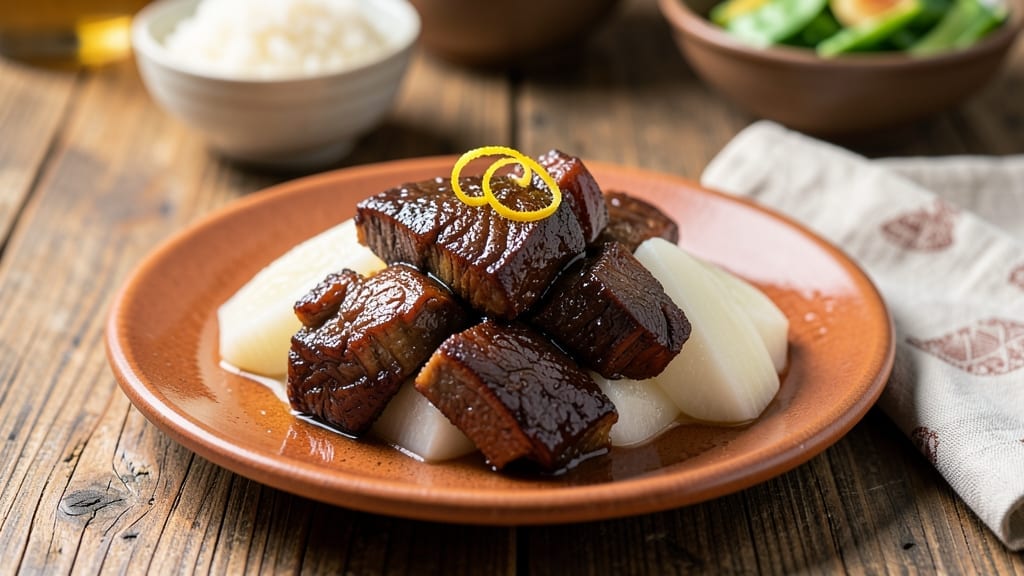
This Chinese braised beef brisket with daikon delivers silky tender meat that practically melts in your mouth alongside crisp-tender daikon roots. The secret lies in a slow braise that transforms tough brisket into fork-tender perfection while preserving the daikon’s natural crunch.
After years of testing different methods, I’ve perfected a foolproof technique that balances rich soy-wine flavors with aromatic spices like star anise and ginger.
The process begins with properly slicing the brisket against the grain to ensure maximum tenderness, then braising it in a flavorful liquid until the meat becomes so tender it falls apart.
Meanwhile, the daikon is prepared in a way that maintains its satisfying crunch while absorbing just enough of the braising liquid to complement the beef. This dish requires patience—about 3 hours of simmering—but the results are worth every minute.
What you’ll end up with is a restaurant-quality meal where each bite offers a perfect balance of textures and flavors: tender beef that dissolves on your tongue, crisp-tender daikon that adds refreshing contrast, and a rich, aromatic sauce that ties everything together.
The aroma alone will have everyone gathering around the table, and the leftovers reheat beautifully for days of satisfying meals.
This recipe works equally well for family dinners or special occasions, and the technique can be adapted for other cuts of beef if needed. Let’s get started on creating this comforting, flavorful dish that brings a taste of China to your kitchen.
Ingredients for chinese braised beef brisket daikon
Silky beef and crisp daikon meet aromatic spices for restaurant-quality Chinese braising.
| Ingredient | Amount | Notes |
|---|---|---|
| Beef Brisket 🥩 | 2 lb | Trimmed of excess fat |
| Daikon Radish 🥬 | 2 whole | Peeled, cut into thick slices |
| Soy Sauce 🍜 | ½ cup | Low-sodium preferred |
| Dark Soy Sauce 🍜 | 1 tbsp | For color depth |
| Shaoxing Wine 🍷 | ¼ cup | Dry variety recommended |
| Brown Sugar 🍚 | 2 tbsp | Packed, for caramelization |
| Fresh Ginger 🌿 | 2 tbsp | Grate finely, no skin |
| Garlic Cloves 🧄 | 4 cloves | Mince finely, aromatic |
| Star Anise Pods 🌿 | 2 whole | Whole for infusion |
| Dried Red Chili Peppers 🌶️ | 1 whole | For heat balance |
| Vegetable Oil 🫒 | ¼ cup | High smoke point |
| Cornstarch 🌾 | 1 tbsp | Slurry for thickening |
| Salt 🧂 | 1 tsp | Kosher preferred |
| Black Pepper 🌶️ | ½ tsp | Freshly ground |
[recipe_ingredient_scaler]
The brisket is the star—preferably from a trusted butcher like Whole Foods or local meat markets for optimal marbling. Look for well-trimmed, evenly-sized cuts with visible fat distribution. Slicing against the grain is non-negotiable for tenderness, and pre-slicing at home ensures even cooking. For the daikon, Japanese daikon (the long, white variety) is ideal, but regular daikon works in a pinch—just peel thoroughly to avoid bitterness. The ginger should be fresh, firm, and pale yellow—never green-tinged or dried. Shaoxing wine is essential for authentic flavor; Moutai or local Chinese grocery stores carry reliable options.
No soy sauce? Coconut aminos at a 1:1 ratio works, though flavor differs. Dark soy sauce can be replaced with 1 tsp molasses + 1 tbsp regular soy sauce, but it won’t develop the same rich color. Star anise is non-negotiable for aroma, but 1 tsp ground anise seed is a distant substitute. For chili heat, 1 tsp chili powder or cayenne can replace dried peppers. If cornstarch is unavailable, arrowroot powder or 2 tbsp flour will thicken the sauce, though texture differs. Always taste as you go—adjust sugar or salt gradually to balance flavors.
Store sliced brisket in airtight containers with beef broth for up to 3 days or freeze for 3 months. Daikon keeps 1 week in the fridge when wrapped in damp paper towels. The braising liquid can be made 1 day ahead and refrigerated, then reheated before adding the meat. Leftovers reheat beautifully—stovetop on low heat or slow oven at 300°F to maintain tenderness. For meal prep, portion into oven-safe containers and reheat with a splash of water to restore moisture.
Why You’ll Love This Recipe
- No-Fuss Weeknight Win: That 30-minute marinade is the only prep work you’ll do—then it’s just sear, simmer, and forget for two hours. I’ll be real, this is the kind of dish where you can prep the daikon while watching TV, and by the time dinner’s ready, the kitchen’s basically cleaned itself.
- Chef’s Kiss Texture: The star anise and dried chili pepper infuse the beef with depth, but the real magic? That crispy daikon holding its shape against the melt-in-your-mouth brisket. Trust me, the contrast is chef’s kiss—like a tender hug from your grandma’s kitchen.
- Leftovers That Last: This braise tastes even better the next day, and the brisket keeps like a dream for three days in beef broth. I’ve been known to freeze portions for those “I don’t feel like cooking” Mondays—just reheat and serve. Daikon stays fresh for a whole week if you wrap it right.
- Budget’s Best Kept Secret: Brisket’s cheaper than you think when you buy it on sale, and the daikon’s basically free at the grocery store. The real savings? You’re using ingredients that cost pennies to create a dish that feels like a restaurant special—without the bill. Win-win.
Step-by-step instructions for Chinese braised beef brisket with daikon
A meticulous braising process transforms tough brisket into silky, fork-tender meat while preserving daikon’s satisfying crunch.
Prepare the Brisket and Aromatics
Trim the 2 lb beef brisket of excess fat, leaving a thin layer for flavor. Cut into two even pieces along the natural grain. In a small bowl, combine ½ cup soy sauce, 1 tbsp dark soy sauce, ¼ cup shaoxing wine, 2 tbsp brown sugar, 2 tbsp finely grated fresh ginger, 4 minced garlic cloves, 2 whole star anise pods, and 1 dried red chili pepper. This aromatic blend will infuse the meat during braising.
Place the brisket pieces in a large, heavy pot and pour the marinade over them. Let sit at room temperature for 30 minutes while you prepare the daikon. Peel the 2 daikon radishes and cut into 1-inch thick slices, leaving the skin intact on one side for presentation. This preparation ensures even cooking and maintains texture contrast.
Sear and Braise the Brisket
Heat ¼ cup vegetable oil in the same pot over medium-high heat until shimmering. Working in batches if needed, sear the brisket pieces on all sides until deeply browned and caramelized, about 5 minutes per side. Remove the brisket and set aside. The seared crust locks in moisture and develops rich flavor.
Return the pot to medium heat and add the daikon slices, skin-side down. Sear lightly for 2 minutes until just golden. Pour in 2 cups water and return the brisket to the pot. Bring to a gentle simmer, then reduce heat to maintain a steady bubble at the edges. Cover tightly and braise for 2 hours, stirring occasionally to prevent sticking.
Thicken the Sauce and Finish
After 2 hours, the brisket should be fork-tender. In a small bowl, whisk together 1 tbsp cornstarch with 1 tbsp of the braising liquid to create a slurry. Stir this into the pot and simmer uncovered for 5-7 minutes until the sauce thickens to a glossy consistency. The cornstarch transforms the cooking liquid into a velvety coating that clings to every bite.
Season with 1 tsp salt and ½ tsp freshly ground black pepper. Taste and adjust the balance of sweetness and saltiness—you may need to add a splash of shaoxing wine or a pinch more brown sugar. The sauce should coat the back of a spoon with a slight sheen, indicating proper thickening.
Rest and Serve
Transfer the brisket and daikon to a serving platter. Tent loosely with aluminum foil and let rest for 15 minutes. This resting period allows the juices to redistribute, ensuring each slice remains moist and flavorful. The daikon’s texture will firm up slightly, providing that satisfying crunch against the tender meat.
Ladle the thickened braising sauce over the brisket and arrange the daikon slices artfully around the plate. Serve immediately with steamed jasmine rice to soak up the rich, aromatic sauce. The contrast of textures and temperatures—silky hot brisket, cool crunchy daikon, and warm rice—creates a harmonious dining experience.
Pro Tips For Making Chinese Braised Beef Brisket Daikon
- Sear Until It Stops Sputtering: Don’t rush the sear—wait until the oil is actually shimmering and the brisket releases that first golden crust before flipping. I used to cut corners here, and the meat never got that deep, caramelized flavor. Five minutes per side isn’t just about time; it’s about color. If you’re not seeing dark brown patches, you’re not done.
- Peel Daikon Like a Pro: Use a vegetable peeler to shave off the skin in long, continuous strips instead of hacking at it with a knife. The skin on one side of the slices adds visual appeal, but only if it’s intact—no jagged edges. And for heaven’s sake, don’t skip the 1-inch thickness; thinner slices turn mushy, and you lose that satisfying bite.
- Stir the Pot (Yes, Really): I know, I know—you’re braising, not stir-frying. But every 20 minutes, give the brisket a gentle nudge with a wooden spoon. This prevents the meat from sticking to the bottom and turning into a gluey mess. Trust me, your future self will curse you if you forget this step and end up scraping burnt bits off the pot later.
- Taste Before Thickening: Before you dump in that cornstarch slurry, taste the sauce raw. You’re looking for a balance of salt, sweetness, and umami—like a well-made soy glaze. If it’s flat, add a splash of shaoxing wine or a pinch of brown sugar. The slurry will thicken the sauce, but it won’t magically fix a flavorless base. Adjust first, thicken second.
Dietary considerations for this dish
Gluten-Free Adaptation
You can easily make this dish gluten-free by replacing the soy sauce with tamari, a gluten-free alternative that has a similar umami flavor. Use ½ cup tamari instead of soy sauce in your marinade and braising liquid.
I also recommend checking labels on dark soy sauce and shaoxing wine to ensure they’re gluten-free—some brands may contain hidden gluten. This swap keeps the dish’s depth of flavor without compromising texture. 🌟
Lower-Sodium Options
If you’re watching your sodium intake, reduce the low-sodium soy sauce to ¼ cup and balance it with extra shaoxing wine and vegetable broth (about 1 cup) during braising. The wine adds complexity while keeping the dish flavorful.
I also skip the dark soy sauce entirely—its color isn’t essential for taste. Taste as you go and adjust with ½ tsp salt increments at the end. 💧
Vegetarian Substitute
For a vegetarian version, swap the brisket for extra-firm tofu or mushrooms (like portobello or shiitake). Press tofu for 30 minutes to remove excess water, then slice into 1-inch thick pieces and marinate in the same soy-wine blend.
Braise for 1 hour instead of 2 hours—tofu cooks faster. The daikon remains the same, adding crunch and balance to the dish. 🌱
Dairy-Free Confirmation
This recipe is already dairy-free—no cheese, milk, or butter is used. The richness comes from the soy sauce, shaoxing wine, and brown sugar, so no adjustments are needed.
If you’re avoiding cross-contamination, use separate utensils and cookware to ensure no dairy residue transfers. The dish stays hearty and flavorful without any dairy components. 🥛
Low-Carb Modification
To reduce carbs, skip the daikon entirely or replace it with shredded napa cabbage or bok choy, which absorb the braising liquid beautifully. For the brisket, ensure it’s well-trimmed of fat and connective tissue to minimize carbs.
The sauce remains rich, and the cabbage adds a refreshing crunch. Pair with cauliflower rice for a low-carb meal. 🥬
Nutrition facts
Frequently asked questions
Why does the daikon need to be cut into thick slices?
Cutting the daikon into 1-inch thick slices ensures it cooks evenly while maintaining its satisfying crunch. Thin slices would turn mushy, while thicker pieces absorb the braising liquid beautifully without losing texture. The skin-on presentation also adds visual appeal to your dish.
Can I use regular radish instead of daikon?
You can, but daikon is the traditional choice for this dish. Regular radish may become bitter or lose its crispness during braising. Daikon’s mild sweetness and firm texture complement the tender beef perfectly, balancing the rich sauce. If substituting, opt for a Japanese daikon for the best results.
What if my brisket isn’t fork-tender after 2 hours?
If the meat isn’t tender enough, continue braising for another 30-60 minutes covered on low heat. The key is gentle simmering—avoid boiling, which can toughen the meat. For extra tenderness, you can also add ½ cup beef broth during the last hour of cooking. Patience is worth it for silky results!
How do I prevent the daikon from getting soggy?
Sear the daikon slices for just 2 minutes before adding water to the pot, which creates a light crust that resists overcooking. Also, arrange them skin-side down in the pot to protect their texture. If they still soften too much, remove them after 1 hour of braising and finish them separately.
Can I make this dish ahead of time?
The braised beef and daikon reheat beautifully. Store the sliced brisket in airtight containers with beef broth for up to 3 days or freeze for 3 months. For the daikon, wrap it in damp paper towels to keep it fresh for 1 week. Reheat gently on the stovetop or in the oven to maintain tenderness.

Trained in classic French technique but raised on slow-cooked ribs and spicy rubs, she blends culinary skill with smoke and soul.
- Chinese Braised Beef Brisket with Daikon Recipe: Silky Tender Meat and Crunchy Roots - October 18, 2026
- Oklahoma Joe’s Smoked Beans Recipe: Slow-Smoked Flavor That Rivals the Original - October 18, 2026
- Beef Brisket Chili Recipe: Slow-Simmered Richness with Deep Flavor Layers - October 18, 2026