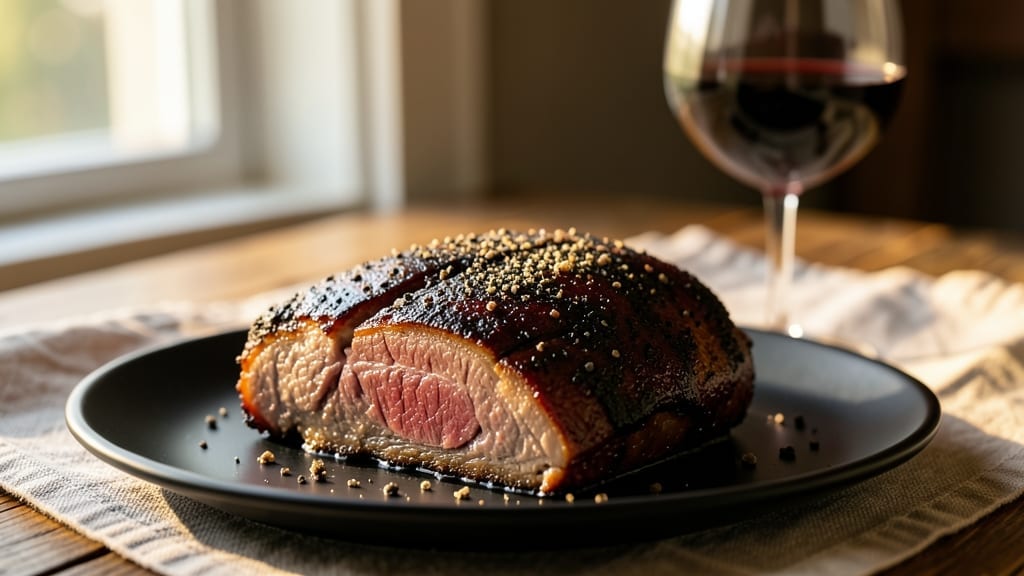
Brisket internal temp in Celsius should reach 93°C (200°F) for pull-apart tenderness, with a stall phase around 82–93°C (180–200°F) where collagen breaks down. Probe the thickest part—avoid the bone—and let it rest for 1–2 hours before slicing for juiciness.
This temperature range isn’t just about hitting a number—it’s where the magic happens for that signature brisket texture. At 93°C (200°F), the collagen in the meat transforms into gelatin, creating that melt-in-your-mouth experience we all crave.
The 82–93°C (180–200°F) stall phase might seem frustrating because the temperature plateaus, but that’s when the fat cap renders and baste the meat naturally, locking in moisture and flavor. 🔥
What’s fascinating is how this process differs from faster cooking methods. When you rush brisket through higher heat, you skip this crucial collagen conversion, leaving the meat tough and dry.
That’s why pitmasters and home cooks alike swear by slow and steady—it’s not just about time, but about giving the meat the perfect conditions to transform itself into something extraordinary.
My Nonna always said patience in cooking is like patience in life: the best things take time to develop their depth.
💡 In This Article
- Science Behind Brisket Collagen Breakdown at 93°C
- Pro Tips for Hitting Brisket’s Ideal Internal Temp
Science behind brisket collagen breakdown at 93°C
Here’s what’s actually happening at 93°C (200°F): the collagen fibers in brisket begin their transformation into gelatin through a process called hydrolysis. Collagen, which makes up about 20-30% of brisket’s connective tissue, is made of tightly wound protein strands.
When heated slowly to this temperature range, the hydrogen bonds holding these strands together weaken and break apart, allowing the molecules to unwind into a gel-like substance. This is why your brisket goes from tough to tender—those once-resistant fibers become silky and moist. 🔥
The 82–93°C (180–200°F) stall phase you’ll encounter is where the real alchemy occurs. During this time, the fat cap (that layer of fat on top) begins rendering at a rate of about 0.5mm per hour, creating a natural basting sauce that keeps the meat incredibly moist.
The key factor is that this rendered fat has a smoke point of 190°C (375°F), so it doesn’t burn—it actually helps develop deep, smoky flavors while protecting the meat from drying out.
What most people don’t realize is that this fat also helps conduct heat more evenly throughout the brisket, ensuring consistent doneness.
This slow conversion process creates a dramatic difference in texture compared to fast-cooked brisket. When you cook brisket quickly at high temperatures, the collagen doesn’t have time to properly break down—it simply shrinks and tightens, creating a dense, chewy texture.
The muscle fibers remain separate and dry, lacking that luxurious mouthfeel. In contrast, properly slow-cooked brisket at 93°C (200°F) develops a velvety, almost buttery texture where the collagen has fully transformed into gelatin, creating that signature “pull-apart” quality that makes brisket so beloved. ✨
Consider this comparison: a fast-cooked brisket might reach 71°C (160°F) in just 2 hours but will feel dense and fibrous, almost like eating leather. The same brisket cooked slowly to 93°C (200°F) over 12-16 hours will have that melt-in-your-mouth quality where each bite practically dissolves.
The difference isn’t just in the cooking time—it’s in how the meat’s own structure is fundamentally transformed at these precise temperatures.
The fat cap plays another crucial role beyond basting. As it renders, it creates a protective barrier that helps maintain moisture during the final stages of cooking.
This is why you’ll often see pitmasters recommend leaving a 1/4-inch fat cap on the brisket—it’s not just for flavor, but for this moisture-locking function. The rendered fat also helps develop those rich, caramelized crusts on the exterior that we all love, adding both texture and complexity to each bite.
What’s particularly interesting is how this process mirrors traditional Italian slow-cooked meats like my Nonna’s stracotto beef. Just as brisket benefits from the collagen breakdown at 93°C (200°F), those Italian cuts achieve their signature tenderness through similar temperature ranges over extended cooking times.
The science is universal—patience and precise temperature control are what transform tough cuts into something extraordinary. 💫

Trained in classic French technique but raised on slow-cooked ribs and spicy rubs, she blends culinary skill with smoke and soul.
- Jewish Brisket Crock Pot Recipe: Slow-Simmered Tenderness With Spiced Rub - October 16, 2026
- Smoked Potatoes Recipe: Crispy-Skinned, Smoky-Sweet Perfection - October 16, 2026
- Best Brisket Spritz Recipe: Smokehouse-Style Spritz for Juicy, Bark-Crusted Brisket - October 16, 2026