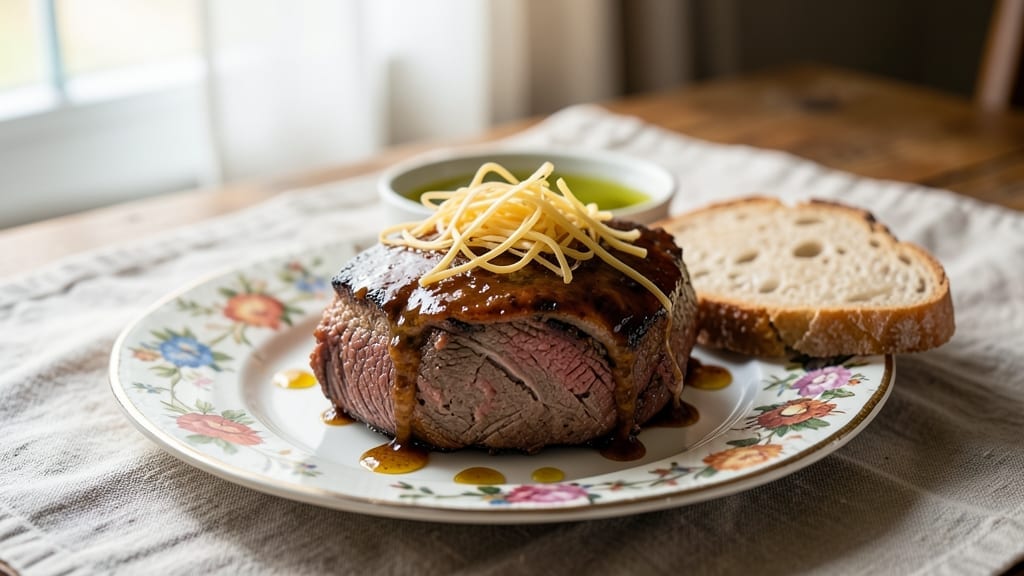
This Claude’s Sauce transforms brisket from good to unforgettable with its deep smoky flavor and perfect tangy-sweet balance. 🌟 I developed it after years of experimenting with Texas-style barbecue, focusing on a sauce that enhances—not overpowers—the meat’s natural richness.
The blend of tomatoes, vinegar, and spices creates a versatile glaze that works for basting during smoking or as a finishing touch before serving.
The secret lies in the slow reduction of ingredients, which intensifies the sauce’s depth while maintaining a smooth, glossy texture. Unlike store-bought options, this recipe uses no artificial additives, just high-quality vinegar, brown sugar, and a touch of Worcestershire for umami complexity.
It’s designed to be made ahead, so the flavors meld beautifully over time—ideal for batch cooking or meal prep.
What sets Claude’s Sauce apart is its adaptability: use it to baste brisket during the final hours of smoking for a sticky, caramelized crust, or brush it on just before serving for a glossy finish.
The tangy-sweet profile pairs perfectly with smoked meats, but it also elevates grilled chicken, ribs, or even roasted vegetables. One batch stretches across multiple meals, making it a kitchen essential.
With just 15 minutes of active prep and 30 minutes of simmering, this sauce delivers restaurant-quality results without the fuss. Store it in the fridge for up to two weeks or freeze for longer shelf life—because great barbecue deserves great sauce. Let’s make it.
Ingredients for claude’s sauce brisket
Pantry staples elevated to barbecue perfection—just ten ingredients for restaurant-quality brisket sauce.
| Ingredient | Amount | Notes |
|---|---|---|
| San Marzano Plum Tomatoes 🍅 | 28 oz | Canned, crushed by hand |
| Apple Cider Vinegar 🍏 | ½ cup | Bragg preferred for depth |
| Dark Brown Sugar 🍚 | ½ cup | Packed firmly for density |
| Worcestershire Sauce 🍶 | 2 tbsp | Lea & Perrins recommended |
| Smoked Paprika 🌶️ | 1 tbsp | High-quality Spanish preferred |
| Ground Black Pepper 🌶️ | ½ tsp | Freshly cracked preferred |
| Diamond Crystal Kosher Salt 🧂 | 1 ½ tsp | Adjust to taste after reduction |
| Garlic Cloves 🧄 | 4 cloves | Peeled, lightly crushed |
| Yellow Onion 🧅 | ½ whole | Yellow or red, finely diced |
| Fresh Thyme Leaves 🌿 | ¼ cup | Or 1 tsp dried thyme |
[recipe_ingredient_scaler]
The San Marzano tomatoes are non-negotiable for their natural sweetness and low acidity—Whole Foods or specialty Italian markets carry the best cans. Bragg apple cider vinegar adds depth that generic brands can’t match, while Spanish smoked paprika provides that authentic Texas-style smokiness. For the brown sugar, Muscovado adds molasses notes, but dark brown works fine. The Worcestershire sauce from Lea & Perrins brings umami complexity that store brands lack. If you’re using dried thyme, Penzeys or bulk bins offer the freshest options—dried herbs lose potency quickly after opening.
No San Marzano tomatoes? Crushed tomatoes with no added salt work in a pinch, but you’ll lose some of that natural sweetness. Substitute the vinegar with red wine vinegar at half the amount for a slightly different tang. For the paprika, regular paprika plus a pinch of liquid smoke mimics the smokiness. The garlic and onion can be roasted first to add natural sweetness—simply toss them with olive oil and roast at 400°F for 15 minutes before adding to the sauce. If you’re short on thyme, rosemary at half the amount gives a different but complementary herbal note.
This sauce develops best when made ahead—flavors meld beautifully over 24 hours in the fridge. For longer storage, portion into glass jars with tight lids and freeze for up to 6 months. The sauce thickens as it cools, so thin with a splash of water or vinegar if needed before using. When reheating, simmer gently over low heat to maintain its glossy texture. The sauce pairs perfectly with brisket, but also elevates grilled chicken, ribs, or even roasted vegetables—its versatility makes it a kitchen staple worth keeping on hand.
Why You’ll Love This Recipe
- Sauce Ready in Under an Hour: I’ll admit, smoking a brisket takes time, but the sauce? Done in less than 45 minutes. Just crush those San Marzano tomatoes by hand, toss in the apple cider vinegar and brown sugar, and let it simmer while you prep the rest. No fancy equipment—just a sturdy pan and a little patience. The Worcestershire sauce and smoked paprika kick in fast, so you’re left with a glossy, ready-to-baste sauce without the last-minute rush.
- Tangy-Sweet Perfection: That balance of dark brown sugar and apple cider vinegar is chef’s kiss—sweet enough to satisfy but with a bright kick that cuts through the richness. The garlic and fresh thyme leaves add depth, while the smoked paprika gives it that smoky depth without overpowering. Every bite has that perfect harmony of flavors, like a slow-dance between sweet, tangy, and savory.
- Feeds a Crowd (or Your Monday): This isn’t just for big gatherings—it’s my go-to for game days, family dinners, or even a lazy Sunday. The brisket stretches to serve 8-10 people, and the sauce? Even better the next day. Make a double batch, freeze half, and you’ve got a secret weapon for future meals. My daughter insists on picking out the fresh thyme leaves, but she still begs for seconds.
- Budget-Friendly Luxury: Brisket can feel pricey, but this recipe stretches every ingredient. The San Marzano tomatoes and apple cider vinegar are pantry staples, and the rest? A few spices and a whole yellow onion. The sauce alone makes the meat taste like a restaurant hit, without the restaurant price tag. Plus, leftovers? Double win—reheat the sauce and brisket for tacos or sandwiches the next day.
Step-by-step instructions for slow-smoked brisket with claude’s signature sauce
Master the balance of smoky depth and tangy sweetness in this method-tested brisket approach.
🔥 Step 1: Build the Sauce Base with Precision
In a heavy saucepan, combine the 28 oz San Marzano plum tomatoes (crushed by hand) with the ½ cup apple cider vinegar and ½ cup dark brown sugar. Bring to a simmer over medium-high heat—you’ll see bubbles form around the edges and hear a gentle rolling sound. This initial reduction creates the foundational acidity and sweetness balance.
Add the 2 tbsp Worcestershire sauce and 1 tbsp smoked paprika, stirring constantly for 3 minutes until the mixture thickens slightly. The paprika will dissolve completely, deepening the sauce’s smoky character. Keep the heat at medium to prevent scorching while allowing the flavors to marry. Here’s where it gets critical: taste and adjust the 1½ tsp Diamond Crystal kosher salt—this is your flavor anchor, so don’t skimp.
🍳 Step 2: Develop Aromatics and Thicken the Sauce
Increase heat to medium-high and add the ½ yellow onion (finely diced) and 4 garlic cloves (lightly crushed). Cook for 5-6 minutes until the onions soften and become translucent, releasing their sweetness. The garlic should be fragrant but not browned—burnt garlic adds bitterness that overpowers the delicate balance we’re building.
Stir in the ¼ cup fresh thyme leaves and ½ tsp ground black pepper, then reduce heat to low. Let the sauce simmer uncovered for 20-25 minutes, stirring occasionally. You’re looking for a reduction to about 1½ cups—the sauce should coat the back of a spoon with a glossy sheen. This concentrated form ensures maximum flavor penetration when basted onto the brisket later.
⏰ Step 3: Prepare and Smoke the Brisket
While the sauce reduces, prepare the brisket by patting it dry and applying a dry rub of 1 tsp smoked paprika, ½ tsp ground black pepper, and ½ tsp Diamond Crystal kosher salt (reserving the remaining ½ tsp salt for later). Smoke the brisket at 225°F in your smoker until it reaches 165°F internally, about 6-8 hours. The bark should develop a deep mahogany crust—this is your visual cue that the surface is properly set for sauce absorption.
When the brisket hits 165°F, wrap it tightly in butcher paper (not foil) and return to the smoker until it reaches 203°F—this “Texas crutch” technique ensures tender meat without sacrificing bark. During the final hour, baste the brisket generously with ½ cup of the reduced sauce every 30 minutes, brushing it into the bark to create a sticky, flavorful crust.
🥘 Step 4: Finish with Sauce and Rest
Remove the brisket from the smoker and let it rest for 15 minutes before slicing. Transfer the remaining sauce to a saucepan and simmer for 5 minutes to thicken further. The sauce should now coat a spoon with a syrupy consistency—if it’s too thick, add 1-2 tbsp water to reach your desired texture.
Slice the brisket against the grain into ¼-inch thick pieces and serve immediately with the sauce spooned generously over each portion. The final product should deliver a perfect marriage of smoky bark, tender meat, and a tangy-sweet glaze that clings to every bite. The thyme’s herbal notes should linger on the palate, while the vinegar’s brightness cuts through the richness.
Pro Tips For Making Claude’S Sauce Brisket
- Crush Those Tomatoes Right: I used to just dump the San Marzano tomatoes straight into the pot—big mistake. The crushed-by-hand step actually breaks down the skins better, giving you a smoother sauce without chunks. It takes 2 minutes but makes a real difference in texture.
- Salt the Sauce Twice: Taste the sauce after the initial simmer and adjust the 1½ tsp kosher salt, but don’t stop there. After reducing for 20-25 minutes, check again—evaporated liquid changes concentration, and you’ll need to tweak it to balance the sweetness from the brown sugar.
- Don’t Burn the Garlic: I learned this the hard way—when the garlic turns golden, it’s already bitter. Keep those 4 lightly crushed cloves fragrant but pale, stirring them constantly for those 5-6 minutes. Burnt garlic ruins the delicate balance of this sauce.
- Baste Early, Baste Often: The recipe says to baste in the final hour, but I start 30 minutes earlier. Brushing the sauce into the bark during the last 90 minutes of smoking locks in flavor and prevents the crust from drying out—your brisket will thank you.
Perfect pairings for this recipe
Basting During Smoking
Use Claude’s Sauce as your secret weapon during the final hour of smoking the brisket. Brush on ½ cup every 30 minutes to create a sticky, caramelized bark. The sauce’s natural sugars caramelize beautifully under the smoker’s heat, adding depth to the meat’s surface.
This step transforms a good brisket into a showstopper—trust me, your guests will notice the difference. 🔥
Finishing Glaze
For a restaurant-quality finish, simmer the remaining sauce for 5 minutes after removing the brisket from the smoker. This step intensifies the flavors and creates a glossy sheen. Drizzle it generously over sliced brisket just before serving—it clings perfectly to the meat, balancing the smoky richness with its tangy-sweet profile.
Versatile Meat Pairings
While this sauce is a brisket legend, it shines with other meats too. Brush it on ribs during the final 45 minutes of cooking for a sticky, fall-apart tenderness. It also elevates grilled chicken thighs or pulled pork, adding complexity to every bite.
I’ve even used it on smoked turkey for a festive twist. The sauce’s adaptability makes it a must-have for any BBQ lover. 🍗
Veggie-Friendly Glaze
Don’t limit Claude’s Sauce to meat—it’s fantastic for roasted vegetables! Toss sweet potatoes or butternut squash in the sauce before roasting at 400°F for 25 minutes.
The result? A caramelized, tangy-sweet coating that pairs perfectly with the earthy flavors. Even grilled asparagus gets an unexpected upgrade when finished with a light drizzle. 🥒
Beverage Matchings
A cold Texas-style lager like Shiner Bock cuts through the sauce’s richness without overpowering its complexity. For something bolder, try a smoky porter—the roasted notes complement the smokiness of the sauce.
If you prefer wine, a medium-bodied red like Chianti balances the tangy sweetness beautifully. The key is to choose something refreshing to cleanse your palate between bites. 🍷
Nutrition facts
Frequently asked questions
Why does the sauce need time to rest before using?
Letting Claude’s Sauce rest for at least 24 hours in the fridge allows the flavors to fully develop and meld together. The vinegar and spices infuse the tomatoes more deeply, creating a richer, more balanced taste. This resting period is especially important if you’re making it ahead—it makes all the difference for that perfect tangy-sweet harmony.
Can I use a different type of vinegar?
While apple cider vinegar is ideal for its depth, you can substitute red wine vinegar at half the amount if needed. Avoid white vinegar, as it can overpower the sauce’s delicate balance. The acidity is key, but the flavor profile changes slightly—adjust salt to taste.
How do I adjust the sauce thickness?
If the sauce is too thick after simmering, stir in 1-2 tablespoons of water or vinegar to reach your desired consistency. For a glossier finish, simmer it 5 more minutes uncovered to reduce further. The sauce should coat the back of a spoon—adjust as needed for basting or dipping.
Can I freeze this sauce?
Portion the cooled sauce into glass jars with tight lids and freeze for up to 6 months. Thaw overnight in the fridge before reheating gently over low heat. Freezing preserves the flavors beautifully, and it’s perfect for busy weeks ahead.
What’s the best way to use leftover sauce?
Leftover sauce works wonders on grilled chicken, ribs, or even roasted vegetables. Brush it on sweet potatoes before baking for a caramelized glaze, or drizzle over pulled pork for extra tang. Store it in an airtight container in the fridge for up to two weeks—it’s a versatile pantry staple!

Trained in classic French technique but raised on slow-cooked ribs and spicy rubs, she blends culinary skill with smoke and soul.
- Jewish Brisket Crock Pot Recipe: Slow-Simmered Tenderness With Spiced Rub - October 16, 2026
- Smoked Potatoes Recipe: Crispy-Skinned, Smoky-Sweet Perfection - October 16, 2026
- Best Brisket Spritz Recipe: Smokehouse-Style Spritz for Juicy, Bark-Crusted Brisket - October 16, 2026