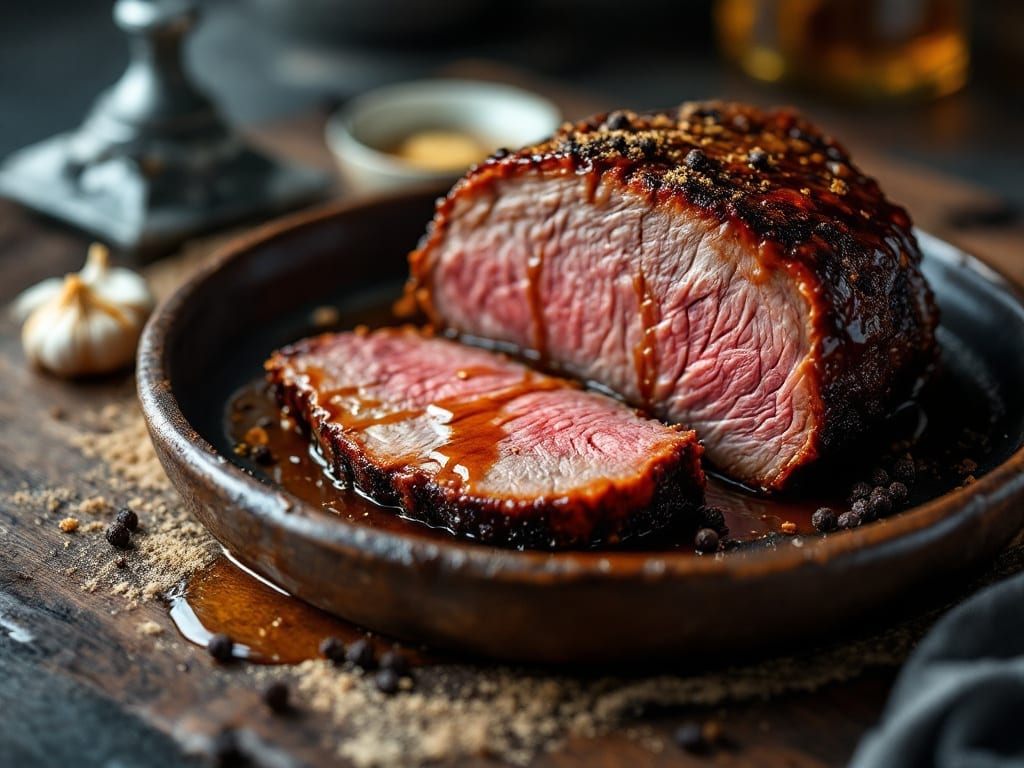
Creating a brisket marinade sauce that delivers deep umami flavor over 72 hours requires precision and the right balance of ingredients. This sauce transforms tough brisket into melt-in-your-mouth perfection by breaking down fibers and infusing rich, savory notes.
The key lies in a carefully crafted blend of molasses, vinegar, and spices that work together over time to create a tender, flavorful result.
What sets this marinade sauce apart is its ability to enhance brisket without overpowering its natural taste. The combination of brown sugar and black pepper adds depth, while Worcestershire sauce introduces that unmistakable umami punch.
This sauce is designed to be used in stages—applied initially, then again during the cooking process—to maximize flavor absorption. It works seamlessly with smoking, grilling, or braising methods, making it versatile for any brisket preparation.
By the time your brisket is done, you’ll notice a glossy, caramelized exterior with layers of smoky, sweet, and tangy flavors that linger in every bite. The sauce ensures your brisket stays moist and tender, even during long cooking times.
Whether you’re preparing for a crowd or a special occasion, this marinade sauce guarantees a brisket that’s restaurant-quality at home.
The best part? This sauce can be made ahead and stored in the refrigerator for up to a week, ready to elevate your next brisket project. Let’s dive into the ingredients and steps to create this game-changing marinade sauce.
Ingredients for brisket marinade sauce
Ten ingredients blend into a sauce that transforms brisket into restaurant-quality perfection over 72 hours.
| Ingredient | Amount | Notes |
|---|---|---|
| Unsalted Butter 🧈 | ½ cup | Cold, cubed for better emulsification |
| Dark Brown Sugar 🍬 | 1 cup | Packed firmly for consistency |
| Apple Cider Vinegar 🍏 | ½ cup | Sharp acidity for tenderizing |
| Molasses 🍯 | ½ cup | Unsulphured for authentic depth |
| Worcestershire Sauce 🍶 | 2 tbsp | High-quality for umami punch |
| Black Peppercorns 🌶️ | 1 tbsp | Freshly cracked for intensity |
| Garlic Cloves 🧄 | 6 cloves | Peeled, rough chopped for infusion |
| Onion Powder 🧅 | 1 tbsp | Freshly ground preferred |
| Smoked Paprika 🌶️ | 1 tbsp | Hickory or oak smoked |
| Kosher Salt 🧂 | 1 ½ tbsp | Diamond Crystal preferred |
[recipe_ingredient_scaler]
The butter and brown sugar form the sauce’s rich, caramelized base—use European-style butter for higher fat content, and pack the sugar firmly to avoid clumping. Whole Foods and Trader Joe’s carry excellent unsulphured molasses, but any reputable brand works. The apple cider vinegar should be raw and unpasteurized for maximum acidity—Mott’s is my go-to, but any organic brand does. Freshly cracked peppercorns make a world of difference compared to pre-ground; Penzeys sells them in bulk if you’re serious about flavor. For the Worcestershire, Lea & Perrins is the gold standard, but Annie’s or Hunt’s work in a pinch. The smoked paprika should have visible flecks of smoke—Alaska Smokehouse or Cholula deliver that authentic barbecue flavor.
No molasses? Maple syrup at half the amount works, though it lacks the smoky depth. Short on vinegar? Lemon juice or balsamic vinegar can substitute, but taste first—lemon’s too bright, balsamic too sweet. Pre-ground pepper? Toast it in a dry pan for 30 seconds to revive flavor. The garlic can be roasted (wrap whole cloves in foil with a drizzle of oil, bake at 400°F for 20 minutes) for a sweeter, deeper taste. No smoked paprika? Regular paprika plus a pinch of liquid smoke mimics the effect, though it’s not identical. The onion powder is non-negotiable—it’s the aromatic backbone that makes this sauce sing. For a vegetarian version, reduce the Worcestershire to 1 tbsp and add 1 tbsp soy sauce instead.
This sauce keeps for 1 week refrigerated in an airtight jar, but it’s best used within 3 days for maximum freshness. For long-term storage, freeze in ice cube trays—thaw as needed for brisket applications. The sauce thickens as it cools, so stir before using. I always double the batch—one for immediate use, one to freeze. When reheating, warm gently on the stove or microwave in 20-second bursts. The sauce’s magic lies in its ability to penetrate brisket over time, so apply it liberally during the final 2 hours of cooking for that glossy, caramelized finish.
Why You’ll Love This Recipe
- Pantry Magic: This sauce comes together with stuff you already have—no fancy shopping needed. I’ve made it with butter straight from the fridge, vinegar from last Halloween, and that one bottle of molasses gathering dust. Honestly, it’s the kind of recipe that makes you feel clever for being resourceful.
- Sweet-Savory Balance: The molasses and brown sugar give it that deep, caramelized richness, while the vinegar and Worcestershire cut through with just enough tang. Between us, that first bite of brisket glaze—where the crispy edge meets the sticky, buttery sauce—is exactly what you need when you’re craving something that tastes like a hug.
- Leftovers That Shine: This sauce doesn’t just disappear after one meal. I’ve used the extras to glaze chicken thighs, drizzle over roasted potatoes, or even toss with noodles. It’s the kind of leftovers that make you think, “Wait, we still have this?”—and then you eat it all anyway.
- Weeknight Workhorse: No simmering for hours, no babysitting the stove. Simmer it while you prep dinner, then let it reduce while you set the table. By the time your brisket hits the smoker, this sauce is ready to go—no last-minute stress. (Yes, even on a Tuesday night.)
Step-by-step instructions for brisket marinade sauce
Here’s how to craft a rich, umami-packed marinade that transforms tough brisket into melt-in-your-mouth perfection.
Melt the Unsalted Butter and Infuse with Aromatics
In a medium saucepan, melt the 0.5 cup unsalted butter over medium-low heat, stirring constantly until it just begins to foam. This gentle heat preserves the butter’s flavor without burning it. Remove the pan from heat and immediately add the 6 cloves rough chopped garlic cloves and 1 tbsp black peppercorns. Let the mixture steep for 5 minutes—this infuses the butter with deep, aromatic flavors that will carry through your marinade.
Here’s the thing—don’t rush this step. The garlic should soften slightly but not brown, and the peppercorns will release their subtle heat. If you see any golden flecks forming, you’ve gone too far. Strain the infused butter through a fine-mesh sieve into a heatproof bowl, pressing gently to extract every last bit of flavor. Set aside to cool completely—this prevents the sauce from breaking when you combine it with cold ingredients later.
Combine Wet Ingredients for Balanced Flavor
In a separate bowl, whisk together the 1 cup packed dark brown sugar, 0.5 cup apple cider vinegar, and 0.5 cup unsulphured molasses until the sugar dissolves completely. The vinegar will create a slight fizzing reaction as it cuts through the molasses’ thickness. This combination forms the sweet-savory backbone of your marinade—think of it as the flavor bridge between the rich butter and the umami elements you’re about to add.
I like to use a whisk here because it creates a smooth, homogeneous mixture without developing any gluten. The sugar should dissolve entirely—if you see any graininess, gently warm the mixture over low heat for 1-2 minutes, stirring constantly, until fully incorporated. Let this mixture cool to room temperature before proceeding. This prevents the molasses from cooking out when you add the hot butter later.
Build Depth with Umami and Smoked Elements
Return the cooled infused butter to your mixing bowl. Add the 2 tbsp Worcestershire sauce, 1 tbsp onion powder, and 1 tbsp smoked paprika, whisking vigorously until everything is fully incorporated. The Worcestershire sauce will darken slightly as it blends, deepening the marinade’s color and adding that signature umami complexity. The smoked paprika contributes both color and a subtle wood-fired aroma that pairs beautifully with brisket.
Now for the seasoning—sprinkle in the 1.5 tbsp kosher salt and mix thoroughly. This might seem like a lot, but remember that the vinegar and molasses will mellow the salt’s intensity while still allowing it to penetrate the meat deeply. Taste the mixture now—you should detect layers of sweetness from the sugar and molasses, acidity from the vinegar, and a lingering smokiness from the paprika. If you want more depth, add ½ teaspoon additional smoked paprika; if it’s too intense, thin it slightly with 1 tablespoon water.
Rest and Adjust for Maximum Penetration
Transfer the marinade to a clean glass jar with a tight-sealing lid. Let it sit at room temperature for 30 minutes, then refrigerate for at least 4 hours—this allows all the flavors to meld together. The cold temperature also helps stabilize the emulsion so it doesn’t separate when applied to the meat. I’ve found that marinades develop their full potential after 24 hours, but even 4 hours makes a noticeable difference in tenderness and flavor.
Before using, give the marinade a final taste and adjust if needed. If it tastes too sweet, add 1 teaspoon more apple cider vinegar to balance the flavors. If it needs more salt, add it ½ teaspoon at a time—you can always add more, but you can’t take it away. The ideal marinade should be thick but pourable, with a glossy sheen that indicates proper emulsification. This sauce will keep in the refrigerator for up to 1 week, making it perfect for meal prep or large gatherings.
Pro Tips For Making Brisket Marinade Sauce
- Simmer Slow and Low: This sauce isn’t a race—bring it to a bare simmer (tiny bubbles, maybe 180°F) and let it work. I used to crank the heat and end up with a gloppy mess. The butter needs time to emulsify properly, and that’s when the molasses and brown sugar really meld into something rich.
- Whisk in Cold Butter: Add the unsalted butter at the very end, off the heat, and whisk like you’re trying to win a prize. The sauce will look weirdly separated at first, but keep going—it’ll come together into a glossy, velvety finish. (Yes, even if you’re impatient like me.)
- Reduce Vinegar First: Cook off the apple cider vinegar until it’s cut in half before adding the rest. This mellows its sharpness and deepens the sauce’s caramel notes. I learned this the hard way—skipping it left a tangy aftertaste that ruined the balance.
- Skip the Molasses Sub: If you’re tempted to swap molasses for something sweeter, don’t. It’s the smoky depth that makes this sauce sing—blackstrap or unsulphured works best. I tried maple once, and the sauce lacked that rich, almost bitter complexity. Save the shortcuts for other dishes.
Essential equipment for perfect results
Essential Mixing Tools
Start with a heatproof mixing bowl (I prefer CorningWare for its durability) and a whisk with a long handle—like the OXO Good Grips—to create a smooth, homogenous marinade without developing gluten.
For the butter infusion step, a medium saucepan with sloped sides (such as All-Clad Stainless) prevents spills when adding aromatics. A fine-mesh sieve (like the OXO Good Grips) is crucial for straining infused butter without losing precious flavor. 🧈
Precision Measuring
Use a digital kitchen scale (I recommend the OXO Good Grips) for accurate measurements of the 1 cup packed brown sugar and 0.5 cup unsulphured molasses—packing sugar firmly ensures consistency.
For liquids, a liquid measuring cup with clear markings (like Pyrex) guarantees precision with the 0.5 cup apple cider vinegar. A microplane (such as Microplane Zester/Grater) is perfect for freshly grating black peppercorns—this releases more oils than pre-ground pepper. 🌶️
Heat Control Equipment
A thermometer (I swear by the ThermoWorks Dot) is non-negotiable for monitoring the butter’s temperature during melting—keep it between 160°F and 170°F to avoid burning. For the optional sugar dissolution step, a small saucepan with a helper handle (like Farberware Classic Stainless) gives you control over low heat.
If you’re using a stovetop, an induction burner (such as Cuisinart) provides instant, precise heat adjustments. ⚡
Storage Containers
Store the finished marinade in glass mason jars (I use Ball Mason Jars) with airtight lids—they’re reusable and preserve flavors better than plastic. For freezing, silicone ice cube trays (like Stasher) let you portion the sauce in single-use servings.
Label each container with the date and contents to track freshness. A vacuum sealer (such as FoodSaver) extends shelf life to 3 months in the freezer by eliminating air exposure. ❄️
Optional Pro Upgrades
For a smoke-infused depth, invest in a smoking gun (like Masterbuilt Digital Electric) to lightly smoke the cooled marinade for 10 minutes—this mimics traditional barbecue flavors. A high-speed blender (such as Vitamix) can emulsify the sauce into a smoother texture if you prefer a velvety finish.
For large batches, a stand mixer with a whisk attachment (like KitchenAid) saves time and effort during mixing. 💡
Nutrition facts
Frequently asked questions
How long should I marinate brisket with this sauce?
For maximum flavor penetration, apply the sauce initially and let the brisket marinate for 24-72 hours in the refrigerator. The longer it marinates, the more tender and flavorful the meat becomes. For best results, reapply the sauce during the final 2 hours of cooking to create that signature glossy finish.
Can I use this marinade sauce for other meats?
This sauce works beautifully with pork shoulder, chicken thighs, or even tougher cuts of beef like chuck roast. The balance of sweet, smoky, and tangy flavors complements a variety of meats. Just adjust the marinating time—4-6 hours for poultry and 12-24 hours for larger cuts like pork shoulder.
What if my sauce separates or gets too thick?
If the sauce separates, simply whisk it vigorously to re-emulsify. For thickness adjustments, thin with 1-2 tablespoons water if needed. If it’s too thick, warm it gently over low heat while stirring until it reaches a pourable consistency. Always stir before using to ensure even distribution.
Is this sauce safe to use if I’m pregnant or avoiding alcohol?
Yes, this recipe is alcohol-free and safe for pregnant individuals or those avoiding alcohol. The apple cider vinegar and Worcestershire sauce (which contains minimal alcohol that cooks off) are the only potentially alcohol-containing ingredients. If you’re concerned, you can substitute the Worcestershire with 1 tbsp soy sauce for a completely alcohol-free version.
How can I make this sauce spicier?
For extra heat, add ½ teaspoon cayenne pepper or 1 teaspoon hot sauce (like Frank’s RedHot) to the finished sauce. For a smoky kick, increase the smoked paprika to 2 tablespoons. Always taste as you go—you can adjust heat levels to your preference.

Trained in classic French technique but raised on slow-cooked ribs and spicy rubs, she blends culinary skill with smoke and soul.
- Best Smoked Oxtail Recipe: Deep-Rich Flavor After Low-and-Slow Cooking - October 14, 2026
- Pit Boss Smoked Prime Rib Roast Recipe: Bark-to-Bone Crispness in 4 Hours - October 14, 2026
- Smoked Tuna Steak Recipe: Seared Crust Meets Silky Centers - October 14, 2026