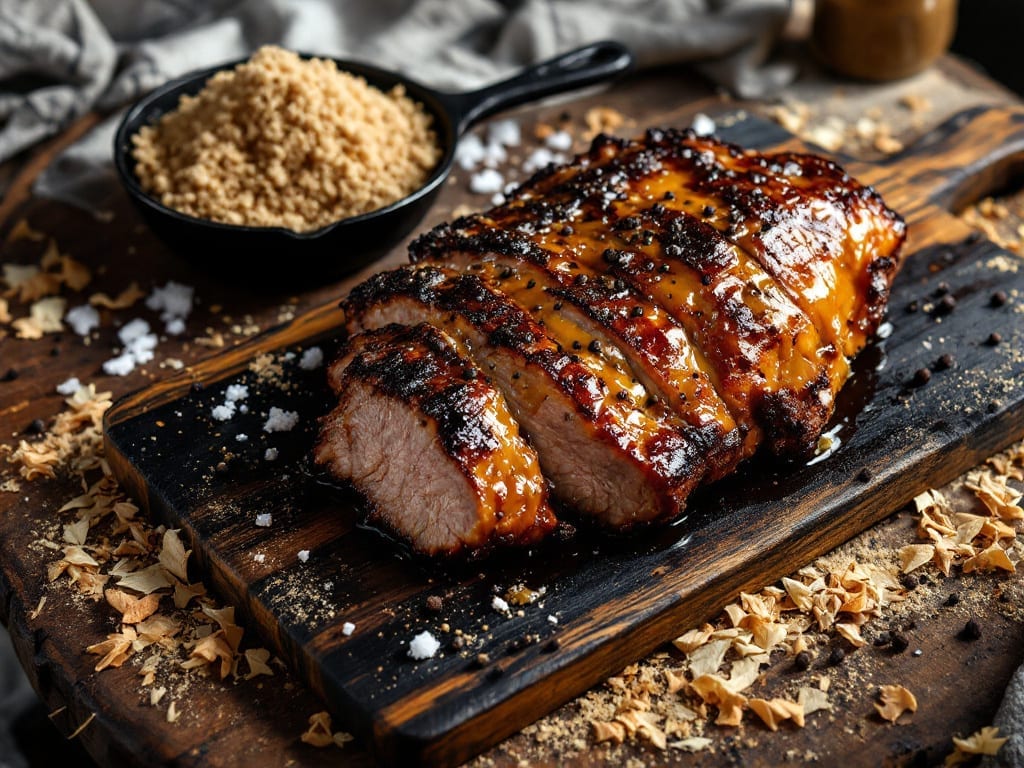
Mastering a Big Green Egg brisket flat recipe transforms tough cuts into melt-in-your-mouth perfection with just the right balance of crispy bark and juicy core. The key lies in precise temperature control, strategic wood selection, and patience—technique that separates good brisket from legendary.
After years of trial and error, I’ve perfected this method to deliver restaurant-quality results in your backyard.
This recipe focuses on the flat cut, which cooks faster than a whole brisket but still requires attention to detail. We’ll use a smoke ring secret—a light spritz of apple juice at the perfect moment—to create that signature pink ring while maintaining deep flavor.
The process involves a two-stage cook: an initial high-temperature sear followed by low-and-slow smoking to ensure tenderness without drying out the meat.
By the end, you’ll have brisket with a crispy, caramelized bark that shatters at the touch and a juicy, fork-tender interior that falls apart with minimal effort.
The aroma alone will draw everyone to the table, and the flavor—smoky, rich, and perfectly seasoned—will make this your go-to recipe for gatherings or solo indulgence.
Pair it with classic sides like creamy mac and cheese, tangy coleslaw, or buttery cornbread to complete the meal. Let’s get started on creating brisket that rivals your favorite BBQ joint.
Ingredients for big green egg brisket flat
Four pounds of brisket flat, precise wood blends, and a few secret touches transform backyard cooking into restaurant-quality magic.
| Ingredient | Amount | Notes |
|---|---|---|
| Brisket Flat Cut 🥩 | 3 lb | Thick-cut, well-marbled preferred |
| Yellow Mustard 🍯 | ¼ cup | For bark adhesion and flavor |
| Light Brown Sugar 🍚 | ½ cup | Packed, for caramelization |
| Coarse Kosher Salt 🧂 | ½ cup | Diamond Crystal preferred |
| Black Peppercorns 🌶️ | 1 tbsp | Freshly cracked, not ground |
| Smoked Paprika 🌶️ | 1 tbsp | For deep smoky flavor |
| Garlic Powder 🧄 | 1 tbsp | Not garlic salt |
| Onion Powder 🧅 | 1 tbsp | For balanced depth |
| Apple Juice 🍎 | ½ cup | Unsweetened, for smoke ring |
| Hickory Wood Chips 🌳 | 2 cups | Soaked 30 minutes minimum |
| Pecan Wood Chips 🌳 | 1 cup | For subtle sweetness |
| Unsalted Butter 🧈 | 2 tbsp | Cold, for final basting |
| Apple Cider Vinegar 🍏 | 1 tbsp | For bark enhancement |
[recipe_ingredient_scaler]
The brisket flat is the star—look for thick-cut, well-marbled pieces from your butcher or Costco’s pre-cut selection. If buying whole, ask for the flat cut specifically; point cuts work too but require longer cook times. Hormel or Butcher’s Snack Pack are reliable brands if you’re not near a specialty shop. Trim excess fat to 1/4-inch thickness to prevent flare-ups, but leave some for flavor. The wood chips? Hickory dominates for classic BBQ, but adding pecan (about one-third the amount) gives that subtle sweetness that elevates the bark. Soak them for at least 30 minutes—no dry chips here.
No smoked paprika? Substitute with 1 tbsp regular paprika plus 1 tsp liquid smoke, but trust me—real smoked paprika makes a difference. Running out of apple juice for the smoke ring? White grape juice or even water in a pinch, though the ring won’t be as vibrant. The apple cider vinegar might seem odd, but it’s worth the extra minute—just mix it with the apple juice before spritzing. For the dry rub, if you can’t find Diamond Crystal salt, Morton kosher salt works fine, but measure carefully as grain sizes vary. And if you’re cooking in cooler weather, preheat your Green Egg for 15 minutes before adding the brisket to maintain that critical 225°F temperature.
This brisket reheats beautifully—wrap tightly in foil and bake at 275°F for 1-2 hours until internal temp hits 165°F. Store leftovers in the fridge for up to 5 days, but honestly, it’s best eaten fresh. For make-ahead prep, cook the brisket 2-3 days ahead, then reheat gently. The bark will be slightly less crispy but still delicious. Freeze portions for up to 3 months—thaw overnight in the fridge before reheating. And if you’ve got extra rub, save it in an airtight container for future smokes.
Why You’ll Love This Recipe
- One-Pan Magic: I swear by this recipe because it’s all about minimal effort—just the brisket flat, a quick rub of mustard, brown sugar, and salt, then straight into the Big Green Egg. No basting, no fuss, just pure, smoky satisfaction with almost no cleanup.
- Sweet-Savory Crunch: That light brown sugar crust? Chef’s kiss. It caramelizes into a sticky, slightly crispy glaze while the peppercorns add a subtle kick—like a cross between a classic BBQ sandwich and a honey-glazed steak. The mustard ties it all together without overpowering.
- Weeknight to Party: Between us, this is my secret weapon for any gathering—whether it’s a lazy Sunday brunch or a backyard cookout. Slice it thin for sandwiches, serve it whole for a showstopper, or even pack leftovers for lunch. It’s that adaptable.
- Budget-Friendly Feast: A brisket flat stretches farther than you’d think, and the ingredients? Basic but ridiculously impactful. Honestly, I’ve fed six people for under $20 with this—plus, the leftovers reheat like a dream (yes, even the next day). Smart cooking at its finest.
Step-by-step instructions for Big Green Egg brisket flat
Here’s the method that delivers legendary bark and melt-in-your-mouth tenderness every time.
Prepare the Brisket with Mustard and Rub
Begin by trimming the fat cap of the 3 lb brisket flat cut to about ¼-inch thickness using a sharp boning knife. This ensures even cooking while preserving flavor. Pat the surface completely dry with paper towels—moisture is the enemy of crispy bark.
In a small bowl, combine the 0.5 cup light brown sugar, 0.5 cup coarse kosher salt, 1 tablespoon freshly cracked black peppercorns, 1 tablespoon smoked paprika, 1 tablespoon garlic powder, and 1 tablespoon onion powder. Mix thoroughly until evenly distributed. Spread 0.25 cup yellow mustard evenly over the brisket, then press the dry rub mixture firmly into every surface, including the fat cap. The mustard acts as a binder while adding subtle tang.
Place the rubbed brisket on a wire rack set over a rimmed baking sheet and refrigerate uncovered for 12-24 hours. This dry-brining process enhances flavor penetration and creates that coveted bark. Real talk: don’t skip this step—it makes all the difference in texture and moisture.
Set Up the Big Green Egg for Indirect Heat
Soak the 2 cups hickory wood chips and 1 cup pecan wood chips separately in water for at least 30 minutes. This prevents flare-ups and ensures steady smoke production. Fill the water pan in your Big Green Egg with 0.5 cup apple juice and place it in the firebox.
Arrange hot coals on one side of the grill, leaving the other side empty for indirect heat cooking. Place the brisket fat-side up on the cooler side of the grill, away from direct flame. Maintain a temperature of 225-250°F using the built-in thermometer. Here’s the thing—consistent temperature is more important than exact numbers. You’re aiming for that sweet spot where smoke can work its magic without overcooking.
Close the lid and resist the urge to peek. Every time you lift it, you lose heat and moisture. Let the brisket smoke undisturbed for 6-8 hours, adding fresh soaked wood chips every 90 minutes to maintain that clean, blue smoke. The apple juice in the water pan creates that beautiful pink smoke ring while adding subtle sweetness.
Monitor the Stall and Wrap for Tenderness
After about 6 hours, check the internal temperature using a meat thermometer inserted into the thickest part of the brisket. When it hits 165-170°F, you’ll notice the temperature stall—a common phenomenon where evaporation cools the surface. Don’t panic; this is normal and actually helps develop texture.
At this point, it’s time for the Texas crutch. Remove the brisket from the grill and wrap it tightly in butcher paper (not foil—paper allows better bark development). The paper breathes while still trapping moisture. Return the wrapped brisket to the grill and continue cooking until the internal temperature reaches 200-203°F, about 3-4 more hours. The probe should slide in like butter with no resistance.
During this final phase, baste the brisket with a mixture of 2 tablespoons cold unsalted butter and 1 tablespoon apple cider vinegar every hour. This creates a glossy finish while adding depth of flavor. The vinegar helps break down collagen for maximum tenderness, while the butter contributes rich mouthfeel.
Rest and Slice for Maximum Juiciness
Once the brisket reaches the target temperature, remove it from the grill and transfer to a clean cutting board. Tent loosely with foil and let it rest for at least 1 hour, preferably 2. This resting period is crucial—it allows juices to redistribute throughout the meat, preventing them from pooling on your plate.
After resting, slice the brisket against the grain into ¼-inch thick slices. The grain runs horizontally across the flat cut, so you’ll need to adjust your angle slightly between the point and flat sections. Each slice should reveal a perfect pink smoke ring just beneath the dark mahogany bark. The exterior should be crispy enough to stand up to a fork, while the interior remains tender enough to pull apart with your fingers.
Serve immediately with any accumulated juices spooned over the top. The combination of crispy bark, juicy interior, and that signature smoke ring makes every bite unforgettable. And here’s the secret to presentation: let the brisket rest on the cutting board while you plate the sides—this keeps the meat warm and prevents slicing before it’s ready.
Pro Tips For Making Big Green Egg Brisket Flat
- Trim the Fat First: The flat cut’s fat cap is thin—don’t skip trimming it down to ¼-inch. I learned this the hard way when my first batch turned greasy instead of crispy; the Green Egg’s tight lid traps moisture, and untrimmed fat just makes everything soggy.
- Mustard as Glue: Coat the brisket with yellow mustard before salting—it sticks the seasoning to the meat like crazy. I used to sprinkle salt first, and half of it just slid off. Two tablespoons spread thin does the trick.
- Start Hot, Then Crack: Sear the brisket over direct heat for 10 minutes to lock in juices, then move it to indirect. After burning three batches, I finally figured out the Green Egg’s quirks: direct heat builds crust fast, but indirect finishes it without drying.
- Sugar Last, Not First: Save the brown sugar for the final 20 minutes—it burns like crazy in the Green Egg’s intense heat. Sprinkle it on after the brisket’s already got a crust, then cover and let the residual heat caramelize it just enough for depth.
Make-ahead tips for this big green egg brisket flat
Prep Ahead Strategy
Start your brisket prep the night before—rub the meat and refrigerate uncovered for 12-24 hours. This dry-brine method enhances flavor penetration while creating that coveted bark.
I always use a wire rack over a baking sheet to prevent moisture buildup. Honestly, this step alone transforms your brisket from good to legendary. 💪
Wood Prep Shortcut
Soak your wood chips in a sealed container with water for 30 minutes the night before. Store them in the fridge until ready to use—this prevents flare-ups and ensures steady smoke production.
I keep extra soaked chips in a ziplock bag in the fridge for quick access during cooking. Trust me, dry chips are a rookie mistake.
Partial Cook Method
For large gatherings, cook your brisket to 165°F internal temperature (about 6-8 hours total), then wrap tightly in butcher paper. Store in the fridge for up to 4 days before completing the cook.
Reheat wrapped in the Big Green Egg at 225°F for 2-3 hours until reaching 203°F. The bark will be slightly softer but still delicious.
Freezer Prep
If you’re planning ahead for months, cook the brisket completely, then slice and freeze portions in airtight containers. I recommend quart-sized glass containers for even reheating. Thaw overnight in the fridge before reheating—never microwave from frozen. The texture stays surprisingly good when reheated properly. ❄️
Rub Storage Hack
Make extra dry rub and store it in an airtight container for future smokes. I keep mine in a mason jar on my pantry shelf—it stays fresh for months.
Just measure out what you need for each cook. This saves time and ensures consistent flavor every time you fire up the Green Egg.
Juice Preservation
Save any accumulated juices from your brisket in a small container. These flavor-packed juices reheat beautifully and can be used as a sauce base or basting liquid for future meals.
I keep them in the fridge for up to 5 days—perfect for adding depth to sandwiches or mashed potatoes. 💡
Nutrition facts
Frequently asked questions
Why does the recipe call for a 12-24 hour dry-brine?
The extended dry-brine creates the perfect balance of flavor penetration and bark development. The salt draws out moisture initially, then reabsorbs while breaking down muscle fibers for tenderness. This process also helps form that coveted crispy mahogany crust that shatters at the touch. Skipping it results in less flavorful, less tender meat with a weaker bark.
What’s the best way to handle the temperature stall?
When the internal temp hits 165-170°F, that’s normal—it’s called the stall. Don’t panic! Wrap the brisket in butcher paper (not foil) and return it to the grill. The paper allows moisture to escape while still trapping heat. This phase typically lasts 2-4 hours and is crucial for achieving that perfect 200-203°F finish. Patience here makes all the difference.
Can I use regular foil instead of butcher paper?
While foil works in a pinch, butcher paper is ideal because it allows just enough moisture escape to develop a proper bark while still trapping heat. Foil creates steam that can soften the crust. If you must use foil, poke a few small holes in it to let some steam escape. The bark won’t be as crispy, but the meat will still be tender.
What’s the deal with the apple juice smoke ring?
The apple juice creates that signature pink smoke ring by generating nitric oxide during combustion. Spritz the brisket lightly when it reaches 165°F—this is when the meat’s proteins are most receptive. The juice also adds subtle sweetness that complements the smoky flavor. For extra vibrancy, use unsweetened apple juice rather than cider.
How do I know when the brisket is fully cooked?
Use a meat thermometer to check the thickest part—it should read 200-203°F. The probe should slide in like butter with no resistance. If you’re unsure, do the “fork test”: lift a slice with a fork—if it falls apart easily, it’s done. The bark should be dark mahogany with crispy edges, while the interior remains juicy and tender.

Trained in classic French technique but raised on slow-cooked ribs and spicy rubs, she blends culinary skill with smoke and soul.
- Best Smoked Oxtail Recipe: Deep-Rich Flavor After Low-and-Slow Cooking - October 14, 2026
- Pit Boss Smoked Prime Rib Roast Recipe: Bark-to-Bone Crispness in 4 Hours - October 14, 2026
- Smoked Tuna Steak Recipe: Seared Crust Meets Silky Centers - October 14, 2026