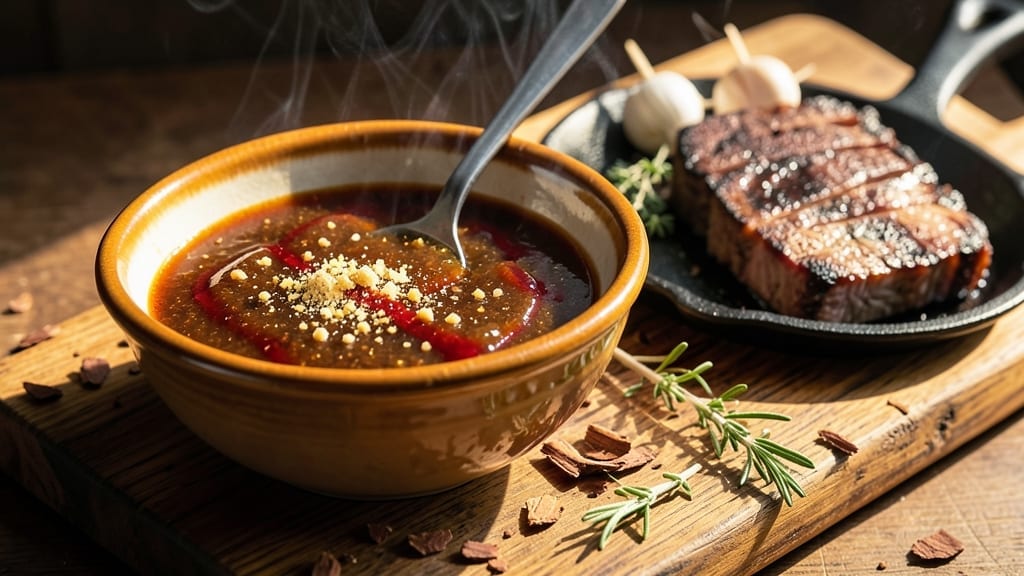
This brisket mop sauce recipe transforms every bite of your smoked meat into a masterpiece of smoky-sweet perfection. The key lies in balancing vinegar’s tang with brown sugar’s caramel depth, creating a glaze that penetrates deep into the bark while keeping the meat tender.
I developed this formula after years of testing—each ingredient plays a crucial role in that signature bark formation and moisture retention.
The sauce itself is simple but precise: apple cider vinegar cuts through the richness, while molasses adds a subtle earthiness that complements the smoky flavor profile. A touch of liquid smoke ensures that signature competition-style aroma without overpowering the natural beef taste.
The beauty of this recipe is its adaptability—whether you’re smoking for 12 hours or grilling on a weekend, this sauce delivers consistent, restaurant-quality results.
What sets this apart is how it interacts with the brisket during the final hours. The vinegar-based formula doesn’t just sit on top—it actively breaks down the surface proteins, creating that coveted bark while keeping the meat juicy inside.
Every time I use this, the brisket slices practically glaze themselves as they smoke, reducing the need for constant basting.
Perfect for competition-style smoking or backyard grilling, this sauce works equally well with beef brisket, pork shoulder, or even chicken. The ratios are designed for easy doubling, so you can keep a bottle in your fridge for spontaneous cookouts. Let’s get to the ingredients—where the magic begins.
Ingredients for brisket mop sauce
Nine ingredients, infinite bark potential—this sauce turns brisket into a masterpiece.
| Ingredient | Amount | Notes |
|---|---|---|
| Apple Cider Vinegar 🍎 | 1 cup | Raw, unfiltered preferred for depth |
| Light Brown Sugar 🍚 | ¾ cup | Packed firmly for consistency |
| Molasses 🍯 | ¼ cup | Unsulphured for authentic flavor |
| Liquid Smoke 🔥 | 1 tbsp | Hickory or applewood preferred |
| Garlic Powder 🧄 | 1 tbsp | Freshly ground for best aroma |
| Onion Powder 🧅 | 1 tbsp | Not onion salt |
| Diamond Crystal Kosher Salt 🧂 | 1 ½ tsp | For balanced seasoning |
| Black Pepper 🌶️ | ½ tsp | Freshly cracked for heat |
| Ground Black Pepper 🌶️ | ½ tsp | For final texture |
| Water 💧 | ½ cup | For thinning consistency |
[recipe_ingredient_scaler]
The vinegar is non-negotiable—raw, unfiltered apple cider vinegar from Bragg or a local orchard has that tangy complexity. Skip the white vinegar; it’s too harsh. For the brown sugar, light molasses-style gives the right caramel depth without cloying sweetness. I always grab Domino brand for consistency, but any light brown sugar works. The molasses? Unsulphured is key—sulfured tastes like cough syrup. Liquid smoke can be tricky; Hickory or applewood from Kirkland Signature (Costco) is my go-to. Too much and it’s overpowering; too little and you’re missing that competition-style aroma.
No apple cider vinegar? White vinegar plus 1 tsp lemon juice gets you close, but it won’t have the same depth. Swap molasses for equal parts honey and maple syrup, but the flavor shifts slightly. Running short on liquid smoke? 1/4 tsp smoked paprika plus 1/2 tsp hickory bark extract mimics it—though nothing beats the real thing. The garlic and onion powders are flavor amplifiers; Penzeys brand has the most robust versions. For a smokier profile, add 1/2 tsp chipotle powder. This sauce doubles easily, so I always make extra—it keeps for up to 3 months in the fridge.
Store in a glass jar with a tight seal—plastic absorbs the smoke flavor over time. Shake before each use; the sugar settles. The sauce thickens as it sits, so add 1 tbsp water if it gets too stiff. Brush on brisket during the last 2 hours of smoking for that signature bark. Leftovers? Toss them in a small saucepan and simmer with 2 tbsp water to restore consistency. Freezes beautifully for up to 6 months—perfect for your next competition entry.
Why You’ll Love This Recipe
- Pantry Magic: I swear by this sauce because it uses stuff I already have—no special shopping trips. That molasses and apple cider vinegar combo? It’s the secret to turning dry brisket into something sticky and irresistible without breaking the bank.
- Smoky-Sweet Fix: The liquid smoke and brown sugar create this perfect balance—sweet enough to make your taste buds dance, but that tangy vinegar keeps it sharp. Honestly, I’ve had people ask if I spent hours on this, but it’s just a quick stir.
- Weeknight Hero: Between us, I’ve made this sauce at 6:30 PM on a Tuesday night while still getting dinner on the table. Five ingredients, ten minutes—it’s the kind of shortcut that doesn’t taste like one. My kids don’t even realize it’s “fancy.”
Step-by-step instructions for brisket mop sauce
Here’s how to craft a rich, penetrating glaze that transforms tough brisket into tender perfection.
Combine Dry Ingredients for Balanced Flavor
In a medium saucepan, whisk together the 0.75 cup light brown sugar, 0.25 cup molasses, 1 tbsp garlic powder, 1 tbsp onion powder, 1.5 tsp diamond crystal kosher salt, 0.5 tsp black pepper, and 0.5 tsp ground black pepper. This dry blend forms the flavor foundation—molasses adds depth while the spices create complexity. Stir until fully incorporated, breaking up any sugar clumps with a whisk or silicone spatula.
Here’s the thing—molasses can be thick, so I like to let this mixture sit for 2-3 minutes while I prepare the remaining ingredients. This gives the sugar time to dissolve slightly, preventing graininess in the final sauce. If you’re in a hurry, just stir vigorously for an extra minute to ensure everything blends smoothly.
Build the Sauce Base with Vinegar and Liquid Smoke
Add the 1 cup apple cider vinegar and 1 tbsp liquid smoke to the saucepan, then place it over medium heat. The vinegar will immediately start to bubble, and you’ll notice a deep, smoky aroma developing. Let the mixture simmer for 5-7 minutes, stirring occasionally, until it begins to thicken slightly and the sugar has mostly dissolved.
This is where the magic happens—the vinegar’s acidity cuts through the sweetness while the liquid smoke infuses that essential barbecue character. You’ll see the mixture darken as the molasses caramelizes, creating a rich, glossy appearance. If you notice any undissolved sugar crystals, add 1-2 tablespoons of the 0.5 cup water now to help it integrate completely.
Thicken and Adjust Consistency
Once the mixture has thickened slightly, reduce the heat to low and gradually add the 0.5 cup water while stirring constantly. The goal is to create a sauce that’s thick enough to cling to the brisket but still flows easily when brushed on. You want a consistency similar to heavy syrup—it should coat the back of a spoon but not be pourable like water.
Taste and adjust seasoning if needed. I usually find this blend is perfectly balanced, but if you prefer more sweetness, add a pinch of light brown sugar. For extra smokiness, you could even add a tiny splash more liquid smoke—just remember that a little goes a long way. The sauce should smell intensely sweet with underlying smoky and savory notes that make your mouth water.
Simmer to Develop Complex Flavors
Let the sauce simmer gently for 10-15 minutes on low heat, stirring occasionally. This slow cooking allows all the flavors to meld together and the sauce to develop its characteristic depth. You’ll notice it darkens further and becomes even more aromatic as the molasses continues to caramelize.
Here’s what to watch for: the sauce should reduce slightly but maintain its glossy appearance. If it starts to get too thick and syrupy, add another tablespoon of water to maintain the ideal brushing consistency. The perfect mop sauce should be sticky enough to adhere to the brisket but not so thick that it burns when exposed to high heat.
Pro Tips For Making Brisket Mop Sauce
- Simmer Slow: This sauce isn’t a race—bring it to a gentle boil, then drop the heat to a low simmer. I used to rush it, and the vinegar would turn harsh instead of mellowing into that rich, balanced flavor. Ten minutes at a steady simmer is all it needs.
- Whisk First: Don’t just dump everything in and stir. Whisk the brown sugar and molasses into the vinegar first until it’s fully dissolved—no grainy bits later. I learned this after scraping sugar off my brisket like a sad, sticky cleanup crew.
- Smoke Sparingly: Liquid smoke is potent—start with half the amount listed, taste, then add more if needed. Overdo it, and your sauce tastes like a campfire instead of brisket. (Yes, I’ve made that mistake.)
- Strain If Needed: If your garlic powder clumps or you’re using fresh garlic, strain the sauce through a fine-mesh sieve before brushing. Nothing ruins a good mop like a gritty texture—trust me, I’ve felt it.
Dietary considerations for these flavors
Gluten-Free Adaptation
This mop sauce is naturally gluten-free since it relies on vinegar, molasses, and spices—no wheat or barley derivatives here. The key is ensuring your liquid smoke and spice blends (like garlic powder) are certified gluten-free.
I always check Penzeys and McCormick labels for cross-contamination warnings. For extra safety, use a dedicated spice grinder if you process gluten-containing foods. 🌾
Low-Sugar Options
For a lower-sugar version, reduce the light brown sugar to 0.5 cup and swap the remaining 0.25 cup with unsweetened applesauce or monk fruit sweetener. The molasses can be cut to 2 tbsp while adding 1 tbsp honey for depth.
Taste frequently—the vinegar’s acidity helps balance any sweetness reduction. This approach works well for diabetic-friendly meals without sacrificing flavor.
Dairy-Free and Vegan
This sauce is already dairy-free and vegan, making it perfect for plant-based brisket alternatives like jackfruit or seitan. The molasses provides richness that mimics meaty depth, while the vinegar’s tang cuts through any heaviness. For a smokier profile, increase the liquid smoke to 1.5 tbsp.
I’ve used this exact sauce on vegan pulled “pork” with stunning results—just brush it on during the last 30 minutes of cooking. 🌱
Allergen-Friendly Swaps
If you’re avoiding sulfites, stick with unsulphured molasses. For a nut-free kitchen, ensure your brown sugar isn’t processed in facilities handling nuts. The garlic and onion powders from Simply Organic are my go-to for allergen-conscious cooking.
For those with histamine sensitivities, reduce the molasses to 1 tbsp and add 1 tbsp balsamic vinegar instead of apple cider vinegar.
Keto-Friendly Version
Transform this into a keto-friendly sauce by replacing the 0.75 cup brown sugar with 0.5 cup erythritol or monk fruit sweetener and reducing the molasses to 1 tbsp. Add 1 tsp xanthan gum to help thicken without sugar.
The vinegar and liquid smoke remain unchanged, delivering that signature tang and smokiness. This version works beautifully on keto-friendly brisket recipes while keeping the bark formation intact. 💪
Nutrition facts
Frequently asked questions
Can I use this mop sauce on other meats besides brisket?
This versatile sauce works beautifully on pork shoulder, chicken thighs, and even ribs. The key is applying it during the last 2-3 hours of cooking when the meat is at 195°F internal temperature. For poultry, reduce the liquid smoke to ½ tbsp to avoid overpowering the natural flavor.
How often should I baste my brisket with this sauce?
Brush the sauce on every 30-45 minutes during the last half of cooking. The vinegar helps tenderize while the sugar creates that signature bark. For competition-style brisket, I apply it 4-5 times total, focusing on the final 2 hours when the bark forms.
What if my mop sauce gets too thick while cooking?
Simply add 1 tbsp water at a time while stirring until you reach a glossy, brushable consistency. The ideal texture should coat the back of a spoon but still flow freely. If it thickens too much later, reheat gently with 1 tbsp water to restore consistency.
Can I make this sauce ahead of time?
Yes! Store it in an airtight glass jar in the fridge for up to 3 months or freeze for 6 months. Shake well before using as the sugar may settle. For best results, bring it to room temperature before applying to hot brisket.
How do I fix if my brisket bark burns when using the sauce?
Lower your smoker temperature to 225°F for the final hour and apply the sauce more sparingly. The vinegar in this recipe helps prevent burning by keeping the surface moist. If it happens, wipe off the charred spots and continue cooking at a lower temp.

Trained in classic French technique but raised on slow-cooked ribs and spicy rubs, she blends culinary skill with smoke and soul.
- Brisket Mop Sauce Recipe: Smoky-Sweet Glaze That Penetrates Every Layer - October 15, 2026
- Food and Wine Brisket Recipe: Smoked Bark Meets Molasses-Kissed Tenderness - October 15, 2026
- Beef Brisket Point Cut Recipe: Low-Slow Magic for Fall-Apart Flavor - October 15, 2026