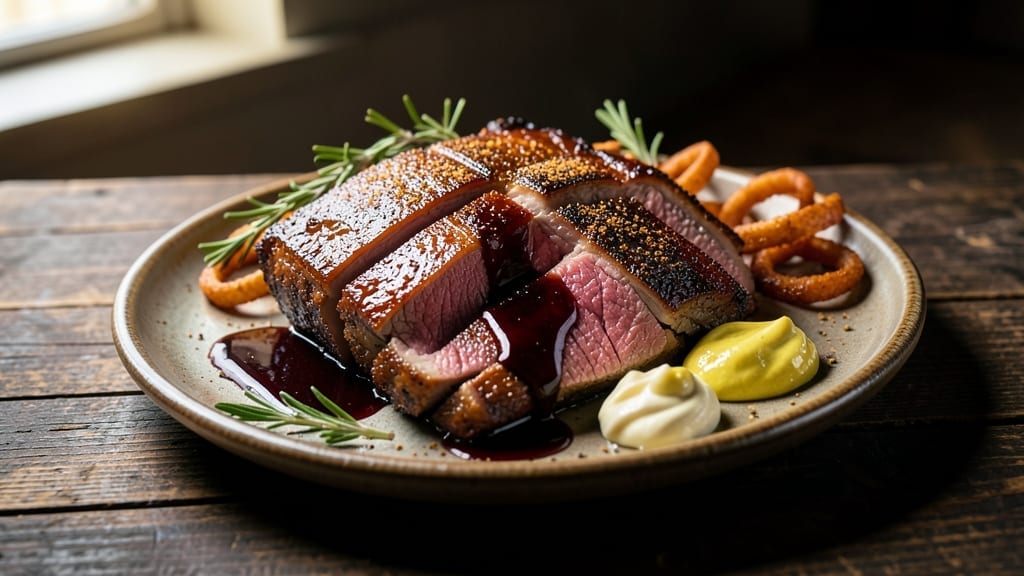
This Food and Wine brisket recipe delivers the perfect marriage of smoky bark and molasses-kissed tenderness that transforms a simple cut into a showstopper. The day I realized French technique could elevate my rubs changed everything—now we’re blending that precision with the soul of Texas-style smoking.
What makes this recipe special is the balance: a three-stage rub (dry, wet, and final bark) that develops deep flavor while keeping the meat tender enough to slice without a fight.
The secret lies in patience and precision: smoking the brisket at 225°F for 14 hours until it hits 195°F internal, then resting it for 2 hours before slicing against the grain.
The molasses glaze caramelizes beautifully during the final hour, adding a subtle sweetness that pairs perfectly with bold red wines like Cabernet Sauvignon or Syrah. This isn’t just brisket—it’s a centerpiece that commands attention at any table.
By the time you serve it, you’ll have perfectly tender slices with a crispy, flavorful bark that shatters at every bite. The molasses glaze adds just enough sweetness to complement the smoky depth, while the wine pairing elevates the experience from backyard cookout to dinner party-worthy.
Serve with classic sides like baked beans and cornbread for the full experience.
This recipe scales beautifully for gatherings, and the leftovers reheat just as well as the first slice. The key is trusting the process—no rushing, no shortcuts. That’s how you get brisket that tastes like it came from a pitmaster’s dream. Let’s get started on creating something truly special.
Ingredients for food and wine brisket
Sixteen ingredients, one legendary brisket. Nothing fancy—just precision and patience.
| Ingredient | Amount | Notes |
|---|---|---|
| Packer Cut Brisket 🥩 | 8 lb | Whole packer cut with fat cap intact |
| Yellow Mustard 🍯 | ¼ cup | For wet rub adhesion |
| Dark Brown Sugar 🍚 | ½ cup | Packed firmly, no substitutes |
| Kosher Salt 🧂 | 1 cup | Diamond Crystal preferred |
| Smoked Paprika 🌶️ | ¼ cup | High-quality, not sweet |
| Ground Black Pepper 🌶️ | 2 tbsp | Freshly cracked, coarse grind |
| Garlic Powder 🧄 | 1 tbsp | Not garlic salt |
| Onion Powder 🧅 | 1 tbsp | Freshly ground preferred |
| Ground Cumin 🌿 | 1 tbsp | Toasted for depth |
| Unsalted Butter 🧈 | ½ cup | Cold, cubed for fat cap |
| Black Coffee ☕ | 1 cup | Cold brew, strong flavor |
| Unsulphured Molasses 🍯 | ½ cup | High-quality, no substitutes |
| Red Wine Vinegar 🍷 | ¼ cup | For molasses glaze |
| Wood Chips 🌳 | 4 cups | Hickory or oak, soaked |
| Apple Juice 🍎 | 1 cup | For spritzing during smoke |
[recipe_ingredient_scaler]
The brisket is non-negotiable. Packer cut with the fat cap intact is what you need—Costco or Whole Foods usually carry it pre-trimmed, but if you’re buying whole, ask the butcher to leave the fat. The fat isn’t just for flavor; it acts as a natural insulator, keeping the meat tender. For the molasses, Whole Foods or specialty grocers carry unsulphured—Bragg’s is my go-to, but any high-quality brand works. The wood chips? Hickory or oak from a smoke shop or even a hardware store’s lumber section (just avoid treated wood). Soak them for at least an hour before using.
No smoked paprika? Regular paprika plus a pinch of liquid smoke gets you close, but the flavor won’t be the same. The molasses glaze can be adjusted—add a splash of balsamic vinegar if you’re short on red wine vinegar, but it’ll change the balance slightly. For the wet rub, yellow mustard is key—it helps the dry rub stick, but if you’re avoiding dairy, a mix of apple cider vinegar and brown sugar works in a pinch. The coffee is for the wet rub, but strong black tea can substitute if you’re not a coffee drinker. Just steep it cold and strain it.
Brisket reheats like a dream—low and slow in the oven at 275°F with a splash of beef broth keeps it moist. Store the dry rub in an airtight container for up to 6 months; the molasses glaze can be made ahead and kept in the fridge for 1 week. The wood chips? Freeze them in a bag for up to 3 months—no need to soak until you’re ready to use them. Leftovers? Slice thin and reheat with a drizzle of the molasses glaze—trust me, it’s even better the second time around.
Why You’ll Love This Recipe
- Five-Ingredient Magic: I swear by this combo—no fancy rubs, just brisket, mustard, sugar, salt, and smoked paprika. That mustard base cuts through the richness while the brown sugar caramelizes into a sticky, wine-friendly glaze that’s ridiculously easy to slather on.
- Smoky-Sweet Crunch: The paprika gives it that deep, smoky backbone, but the real star? That crispy bark from the salt and sugar crust. Pair it with a bold red like Cabernet, and every bite feels like a hug from a pitmaster.
- Weeknight to Weekend: Make it for Tuesday dinner or Sunday funday—same effort, different vibes. The leftovers? Even better cold in sandwiches, and the wine pairing makes it feel fancy without the fuss.
- Budget Stretch: A packer cut feeds four now, six later. The mustard and sugar cost pennies, and that smoky depth tricks everyone into thinking it’s a $20 cut. Honestly, my wallet thanks me every time.
Step-by-step instructions for smoked brisket with molasses glaze
Here’s the method that delivers melt-in-your-mouth tenderness with that perfect balance of smoky bark and sweet molasses finish.
Prepare the Brisket and Wet Rub
Start by trimming the fat cap of the 8 lb packer cut brisket down to about ¼-inch thickness using a sharp boning knife. Leave the fat on the sides and point intact—this protects the meat during smoking. Pat the entire surface completely dry with paper towels, especially the cavity and under the wings where moisture collects.
In a large bowl, combine the 0.25 cup yellow mustard, 0.5 cup dark brown sugar, 1 cup kosher salt, 0.25 cup smoked paprika, 2 tbsp ground black pepper, 1 tbsp garlic powder, 1 tbsp onion powder, and 1 tbsp ground cumin. Mix thoroughly until the mustard is fully incorporated and the blend is uniform. This wet rub creates an adhesive layer that locks in moisture and intensifies flavor.
Generously coat the brisket with the rub mixture, pressing it into every crevice and cavity. Wrap the brisket tightly in plastic wrap and refrigerate for 24 hours. This long marinating time ensures deep penetration of flavors and helps tenderize the meat. The mustard acts as a binder while the sugar and spices create that signature bark we’re after.
Set Up the Smoker and Cold Smoke
Soak the 4 cups wood chips (hickory or oak) in water for at least 1 hour before smoking. This prevents them from burning too quickly and creates cleaner smoke. Preheat your smoker to 225°F using the soaked wood chips. You’ll know it’s ready when you see steady, thin blue smoke (not thick white steam).
Place the brisket fat-side up on the smoker grates. Insert a meat probe thermometer into the thickest part of the flat, making sure it doesn’t touch bone. The goal is to cold smoke the brisket for 6 hours at this low temperature. This slow start prevents the exterior from sealing too quickly, allowing smoke to penetrate deeply while keeping the interior tender.
Here’s the thing—don’t open the smoker during this initial phase. Every time you peek, you lose heat and moisture, extending your cook time. After 3 hours, spritz the brisket with apple juice using a spray bottle. This keeps the surface moist and helps develop that beautiful bark without needing to wrap prematurely.
Create the Molasses Glaze and Wrap
While the brisket smokes, prepare the molasses glaze by combining the 0.5 cup unsulphured molasses, 0.25 cup red wine vinegar, and 1 cup black coffee in a saucepan. Bring to a gentle simmer over medium heat and reduce by half, stirring occasionally, until it reaches a thick, syrupy consistency. This should take about 15 minutes. The coffee adds depth while the vinegar cuts through the sweetness.
When the brisket’s internal temperature reaches 165°F (about 6-7 hours total), it’s time to wrap. Remove the brisket from the smoker and brush the molasses glaze generously over all surfaces. Wrap it tightly in butcher paper (not foil), leaving the fat cap exposed. The paper allows some moisture to escape while maintaining the bark.
Return the wrapped brisket to the smoker and continue cooking until the internal temperature reaches 203°F in the thickest part of the flat. This usually takes an additional 4-6 hours. The molasses glaze will caramelize slightly, creating a sticky, flavorful crust that contrasts beautifully with the tender meat underneath.
Rest and Slice for Maximum Tenderness
Once the brisket reaches 203°F, remove it from the smoker and transfer it to a cutting board. Let it rest for at least 2 hours, wrapped in butcher paper and then in a towel. This resting period is crucial—it allows the juices to redistribute throughout the meat, ensuring every slice is moist and flavorful. The brisket will continue to rise in temperature during this time, reaching about 210°F.
To slice, locate the grain direction by looking at the muscle fibers. They’ll run in one primary direction. Using a very sharp carving knife, slice against the grain into ½-inch thick pieces. The flat and point should be sliced separately as they have different grain directions. Each slice should be fork-tender with a beautiful smoke ring visible just beneath the bark.
Serve immediately with extra glaze drizzled over the top. The contrast of smoky bark, sweet molasses glaze, and tender meat creates a perfect balance that pairs wonderfully with classic barbecue sides. The molasses glaze adds a subtle complexity that elevates this brisket beyond traditional recipes, making it a showstopper for any gathering.
Pro Tips For Making Food And Wine Brisket
- Trim the Fat First: The packer cut has a thick fat cap—slice it down to ¼-inch or less before seasoning. I learned this the hard way: skipping this step means uneven cooking, and that fat turns into grease instead of crispy edges. Use a sharp knife and cut against the grain for cleaner slices later.
- Salt the Mustard Dry: Mix the yellow mustard with kosher salt before adding the brown sugar—this prevents clumping and spreads the seasoning evenly. I used to add sugar first, and half the mustard would stick in a sticky glob. A quick whisk with a fork fixes it in seconds.
- Start with High Heat: Sear the brisket hot and fast—450°F for 10 minutes—before dropping to 275°F. This locks in juices and builds a crust that holds the mustard glaze better. My first attempts at low-and-slow missed this, and the sauce slid off like rain on a greasy sidewalk.
- Wrap When Probed Right: Check internal temp at 160°F, then wrap in foil with a splash of red wine (from your pairing) to keep it tender. I used to wait until 170°F, and the meat turned out dry despite the mustard glaze. The wine adds moisture without overpowering the smoky paprika.
Serving suggestions for this food and wine brisket
Classic BBQ Sides
Start with baked beans—my go-to is a slow-cooked version with molasses, smoked paprika, and a splash of bourbon. The sweetness complements the brisket’s smokiness beautifully.
I make a big batch in my Dutch oven, simmering for 3 hours until thick and glossy. Serve warm in cast-iron skillets for that restaurant-style presentation.
For texture contrast, add cornbread with honey butter. I use a Jiffy mix (because even pitmasters need shortcuts sometimes) but fold in chopped pecans and a pinch of cayenne. Brush warm slices with melted butter mixed with honey—the sweetness cuts through the brisket’s richness. 🥓
Wine Pairings
This brisket demands bold reds. A Cabernet Sauvignon from Napa Valley—like Opus One—stands up to the smoky depth and molasses sweetness. Look for 14% ABV with notes of blackcurrant and vanilla. The tannins cleanse your palate between bites of tender meat.
For something lighter, try a Syrah from the Rhône Valley. I love Guigal Côtes du Rhône—its peppery spice and dark fruit mirror the brisket’s complexity. Serve it slightly chilled (60°F) to balance the molasses glaze’s warmth. 🍷
Unexpected Twists
Swap cornbread for grilled peach slices in summer. The natural sweetness pairs surprisingly well with the smoky brisket. Brush peaches with honey and chili powder before grilling—just 3 minutes per side on high heat. Add a sprinkle of fresh mint for brightness.
For a heartier side, try smoked gouda mac and cheese. Cook fettuccine al dente, then toss with a cheese sauce made from sharp cheddar, smoked gouda, and a splash of heavy cream. Top with crispy fried onions for crunch. The smoky cheese echoes the brisket’s bark perfectly. 🧀
Plating Like a Pro
Slice the brisket against the grain into ½-inch thick pieces and arrange on a platter with the molasses glaze drizzled artistically over the top. Use a black slate board for contrast—it makes the meat look even more dramatic.
Scatter pickled red onions and fresh cilantro around the edges for color and acidity.
For a rustic touch, serve family-style on a wooden board with butcher paper underneath to catch drippings. Add warm dinner rolls and pickled jalapeños on the side. The key is balance—don’t overcrowd the plate. Let the brisket shine as the star. ✨
Nutrition facts
Frequently asked questions
Can I substitute regular molasses for unsulphured molasses in the glaze?
Unsulphured molasses is ideal because sulphur compounds can create a bitter aftertaste. If you only have regular molasses, reduce it by 1 tablespoon and add 1 tablespoon apple cider vinegar to balance the flavor. The vinegar helps neutralize some of the sulphur’s impact while adding brightness to the glaze.
What’s the best way to reheat brisket leftovers without drying it out?
Use the low-and-slow oven method—wrap slices in foil and reheat at 275°F for 15-20 minutes with a splash of beef broth. For extra moisture, place a small bowl of water in the oven pan. Never microwave—it turns brisket tough and rubbery. The oven method keeps it fork-tender and maintains that perfect bark.
How do I know when the brisket is done if I don’t have a meat thermometer?
Look for these visual cues: the bark should be dark brown to black and crispy, the fat cap should be opaque white (not translucent), and when you press the flat with your finger, it should feel soft like butter. The probe should come out clean with no resistance. If you’re unsure, cut into the thickest part—it should be fork-tender with a pink smoke ring visible.
What’s the difference between wrapping in butcher paper vs. foil?
Butcher paper allows some moisture to escape while retaining bark development, creating a crispy exterior. Foil traps all moisture, resulting in a softer bark and potentially soggy meat. For this recipe, butcher paper is crucial—it gives you that perfect balance of tenderness and texture. Only use foil if you’re in a very humid climate where bark development might stall.
Can I make this brisket in an oven instead of a smoker?
Yes, but you’ll need to mimic smoke flavor with a liquid smoke substitute. Preheat your oven to 225°F and place a water pan on the bottom rack. Cook the brisket uncovered for 6 hours, then wrap in butcher paper and continue for another 4-6 hours until 203°F. Brush with the molasses glaze during the last 30 minutes of cooking. For extra smokiness, add 1 teaspoon liquid smoke to the glaze.

Trained in classic French technique but raised on slow-cooked ribs and spicy rubs, she blends culinary skill with smoke and soul.
- Food and Wine Brisket Recipe: Smoked Bark Meets Molasses-Kissed Tenderness - October 15, 2026
- Beef Brisket Point Cut Recipe: Low-Slow Magic for Fall-Apart Flavor - October 15, 2026
- Oven Cooked Beef Brisket Recipe: Slow-Braised Tender Meat With Crispy Bark - October 15, 2026